Cape Verde has been this World Cup's biggest surprise. The tiny African island nation made its tournament debut and stormed into the knockout stage, spinning fairy tale after fairy tale along the way. Argentina, the defending champion, finally stopped the run with a 2-3 win in the round of 32, but Cape Verde's fighting spirit and dazzling play had already won over fans worldwide.

Cape Verde is this World Cup's biggest surprise.
Cape Verde's ambassador to China, Arlindo Do Rosario, says the story doesn't end on the pitch. Speaking to The Paper in Beijing on July 4, he credited China's years of selfless assistance for helping the national team shine on the world stage.
Click to Gallery
Cape Verde is this World Cup's biggest surprise.
Tiny nation, big heart: 4,033 square kilometers, under 600,000 people, the size of a Chinese county.
Cape Verde's Ambassador to China, Arlindo Do Rosario.
The World Cup run is over. The name "Cape Verde", first timer of the global event, stays.
The World Cup run is over. The name "Cape Verde", first timer of the global event, stays.

Tiny nation, big heart: 4,033 square kilometers, under 600,000 people, the size of a Chinese county.
Size tells only part of Cape Verde's story. The country covers just 4,033 square kilometers and holds fewer than 600,000 people, roughly the population of a single Chinese county. It gained independence only in 1975, and its climb from poverty in football and in society more broadly echoes China's own development path.
Cape Verde has no big budget, no long football history, and no elite youth academy system. What it has built instead is half a century of steady, patient progress, laying infrastructure and nurturing talent one step at a time.

Cape Verde's Ambassador to China, Arlindo Do Rosario.
Every training session and every decisive World Cup qualifier ran through one venue: the China-built Praia National Stadium. Handed over in 2013, it gave Cape Verde its first international-standard sporting facility since independence, closing a long-standing gap in proper competition venues. Eleven Chinese staff members still work there today. Then-Prime Minister José Maria Neves once called the stadium "a dream China helped us realize" and named it one of the largest projects since Cape Verde's independence.
Do Rosario still can't hide his excitement over the team's run. He thanked Beijing residents for the attention and praise they showered on Cape Verde, and pointed to a friendship that has only deepened over half a century. "Football has this power. It can bring people's hearts together, making the already deep friendship between our two peoples even stronger," he said. He recalled Cape Verde's opening match against heavily favored Spain as proof of that conviction: "Cape Verde may be a small team, but we have a strong heart!"
Cape Verde's opening-match heroics set Chinese social media alight. Congratulations and praise flooded mainland platforms, and Do Rosario says the goodwill genuinely moved him. He stressed that Cape Verde's sporting progress owes much to Chinese support. "Since the stadium was built, we've been able to host more international competitions, and every Cape Verdean takes pride in that," he said. China has also helped Cape Verde upgrade its education system and build school sports infrastructure, laying a solid foundation for the country's sporting development.
China's footprint in Cape Verde goes well beyond the stadium. Do Rosario listed a string of China-assisted projects: the National Assembly Building, government offices, the Poilão Dam, the new campus of the University of Cape Verde, the Safe City program, social housing projects, and the maternity wing of Baptista de Sousa Hospital, handed over just last year. These traces of China woven into everyday life give Cape Verde's World Cup journey a natural sense of familiarity for Chinese audiences.
The Chinese connection even runs through Cape Verde's match gear. Goalkeeper Vozinha, whose spectacular saves proved instrumental to Cape Verde's success, wore boots made by a footwear factory in Putian, Fujian. Cape Verde player Willy Semedo signed with Li-Ning on the very day the World Cup kicked off, turning him into a showcase for Chinese sportswear brands on the global stage.

The World Cup run is over. The name "Cape Verde", first timer of the global event, stays.

The World Cup run is over. The name "Cape Verde", first timer of the global event, stays.
This year marks the 50th anniversary of diplomatic relations between China and Cape Verde. The Cape Verdean Football Federation has announced a friendly match against the Chinese men's national team once the World Cup concludes. Paulo Santos, the federation's vice president, put it plainly: "Local Chinese businesspeople supply most of our national team jerseys. They are our friends, our brothers."
Do Rosario has lived in China for four years now. Asked to sum up Beijing in one word, he chose "attractive." He found the ancient capital warm, beautiful, and inclusive from the moment he arrived, and its safe, convenient living environment helped him and his family settle in quickly. "The pace of life here is quite fast, yet everything runs in an orderly, secure way," he said. "There's also an extensive transport network, excellent international schools, efficient healthcare services, and plenty of leisure options. My family and I are very happy living here!"
Cape Verde's magical World Cup run may be over, but its debut appearance has already etched the country's name into the world's memory. Football gave this small island nation the power to show the world its dreams, and its dignity.
Mao Paishou
** 博客文章文責自負,不代表本公司立場 **
Bloomberg reported on October 14 local time that the EU is negotiating with China. Brussels hopes Beijing will lift sanctions on the small German company Sindlhauser Materials GmbH. That small firm supplies the Dutch ASML, the world's most important chip equipment manufacturer. The sanctions now threaten its survival.
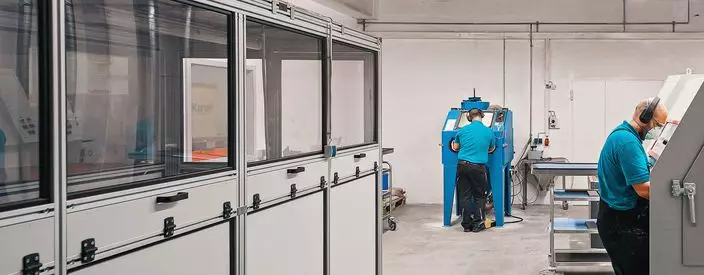
EU seeks China deal to free ASML supplier Sindlhauser.
The Deal on the Table
Bloomberg cited people in the know as saying the EU will remove trade restrictions on an unnamed Chinese company in exchange. That company is accused of assisting Russia in launching war against Ukraine.
In July this year, China imposed sanctions on Sindlhauser and 13 other European companies. The move retaliated for the EU's 21st round of sanctions against Russia. Sindlhauser is a small German company specializing in precision manufacturing and advanced coating technology for semiconductors and other industries.
In that round of sanctions, the EU listed several Chinese entities as sanctions targets. The EU said they were suspected of providing Russia with key components that could be used to manufacture weapons. Companies placed on the relevant EU and Chinese lists are subject to export controls.
People familiar with the matter said Sindlhauser relies on Chinese supplies of rare earths and critical minerals. If China's sanctions continue, the company will face the risk of bankruptcy within the coming months. It was also said this German company is part of ASML's supply chain.
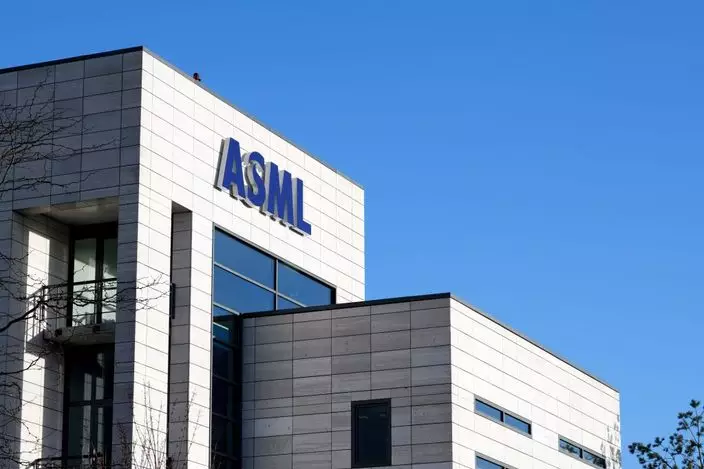
ASML, Dutch semiconductor equipment giant.
Berlin and Brussels Race to Rescue Sindlhauser
Bloomberg sees a message in China's choice of target. Imposing controls on such an obscure company, the report argues, shows China knows exactly where Europe's economic bottlenecks sit.
An EU official says the European Union has begun discussions with China on whether each side would remove the entities from its own list. That means China's export control framework on one side, and the entities the EU has listed under its own regulations on the other.
The official added that any removal decision on the EU side would require unanimous support from all member states.
The trouble began in July when China's Ministry of Commerce put Sindlhauser on its export control list, and the company's first reaction was panic.
For weeks after the announcement, Sindlhauser had no clear view of whether, or how, it could keep operating.
Help came quickly. According to the people who knows what’s happening, the German government and the Bavarian state government, where Sindlhauser is headquartered, stepped in immediately to help the company find alternative suppliers wherever possible.
The two governments also explored other workarounds, such as recycling existing materials and seeking whatever financial support was available.
Brussels was watching too. Some officials there understood the company's plight and raised the matter with the Chinese side for several weeks.
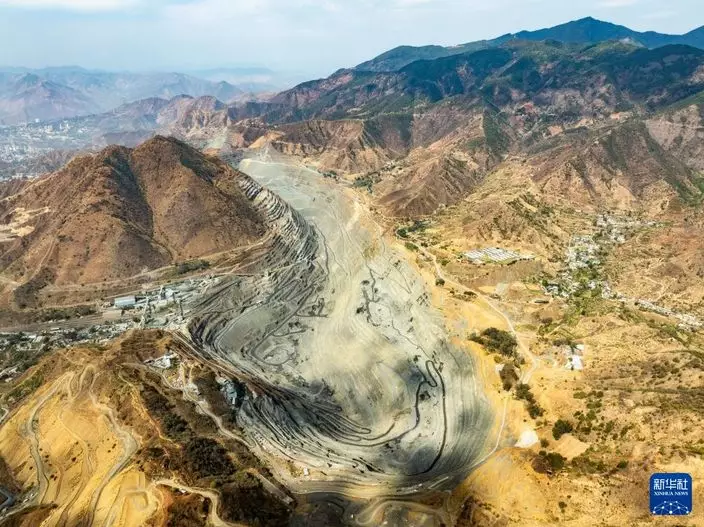
Sindlhauser's rare earth supply nearly all Chinese.
A Policy Dilemma, an Intelligence Blind Spot
Sindlhauser sits squarely inside China's rare earth grip. According to the report, the company relies almost entirely on Chinese rare earths, and its placement on the export control list dealt a direct blow to its supply chain.
The company had previously taken almost no measures to diversify its supply sources or reduce its dependence on Chinese raw materials.
Some officials see a problem with the rescue. Removing companies such as Sindlhauser from the sanctions list, they worry, could once again weaken the urgency for these European companies to build supply chain networks outside China.
That leaves the German government and EU officials in a bind. Deciding through negotiations which companies go onto or come off trade restriction lists could set a bad precedent for other companies also hoping for sanctions exemptions. It would also mean the EU must make concessions on the question of certain Chinese entities.
But officials involved in handling the matter see a deeper problem. The situation behind the case, they argue, is more concerning, though not surprising.
The explanation: over the past year and a half, China has been collecting information on global supply chains as much as it possibly can. That is how China identified a small company in Bavaria as a supplier to the world's most important chip equipment manufacturer.
Beijing's map of global supply chains runs remarkably deep. The report credits that insight to the licensing system China has built for exports of critical minerals and rare earths.
The system requires foreign companies to submit detailed information, including their customers, how and where Chinese raw materials are used, and photos of the final products.
Germany shows the cost. Some companies have been leaking business secrets to China, while the German government remained completely unaware and unable to obtain the same or even similar information.
More important, the German government still has not formulated any strategy to address its shortcomings in economic intelligence.
A Possible Template, and China's Stated Position
The talks went straight to the top. According to the report, EU Trade Commissioner Maroš Šefčovič visited Beijing last week and met with Chinese Commerce Minister Wang Wentao. The two sides discussed lifting restrictions on Sindlhauser in exchange for relief for a Chinese company.
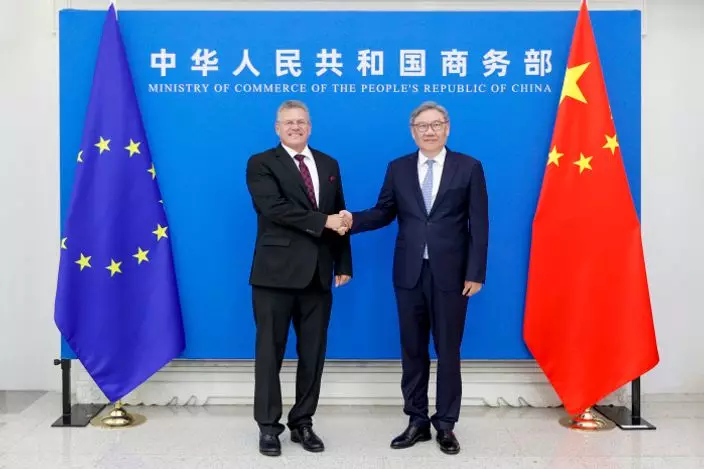
EU trade chief Šefčovič met Wang Wentao in Beijing.
The backdrop is stark. The EU is hunting for a fix to a massive trade deficit that exceeds $1 billion every single day.
People familiar with the matter say the two sides agreed in Beijing to strengthen information sharing and to give each other advance notice of export restriction measures.
The "one-for-one" arrangement around Sindlhauser, in which each side takes the other's company off its restriction list, could become a template for similar moves in the future. The EU is expected to act first. Only then would China lift its restrictions on the German company.
China's message has stayed consistent. The Chinese side has repeatedly stressed that China holds an objective and impartial position on the Ukraine crisis, stays committed to promoting peace talks, and plays a constructive role in advancing a political resolution of the crisis.
The opposition is just as firm. China firmly rejects the EU's blame-shifting, smears and denigration over the Ukraine crisis. It equally and firmly opposes the EU's unjustified listing and sanctions against Chinese companies and citizens.