A new meme word is taking over Western social feeds: Chinamaxxing. It captures a sudden, strange shift: young people are now mimicking Chinese daily life.
Some are drinking hot water, eating porridge, and wearing slippers. They're bingeing Chinese dramas, practicing qigong, and even declaring they've entered a 'China era.'
Click to Gallery
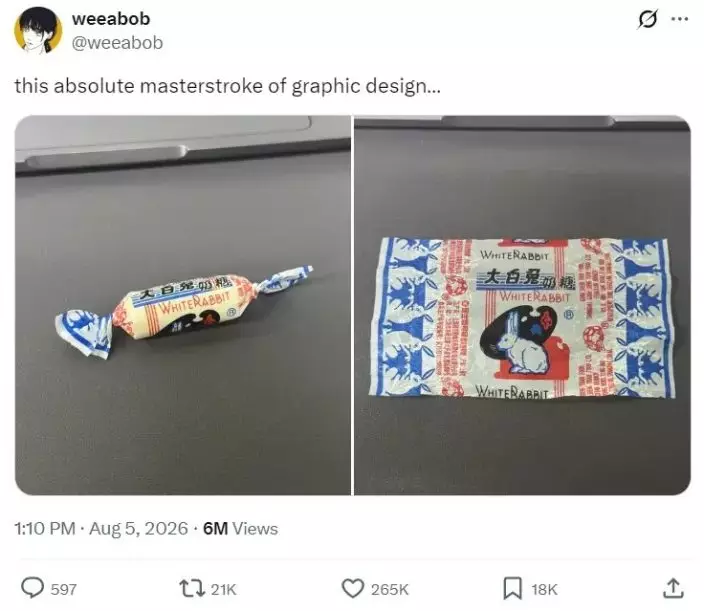
The White Rabbit wrapper, born in 1959, suddenly went viral. Netizens hailed it as a masterpiece of graphic design.
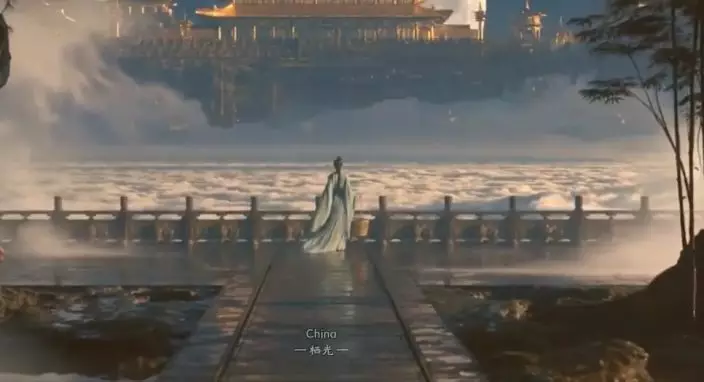
No dialogue, just pure visual awe: the AI-generated 'Chinese Heavenly Court' video stunned overseas viewers.

Drinking hot water? It's now a lifestyle experiment for Western youth.

Cooking apples with goji berries and red dates: health-preserving diets are hitting daily menus.

Tai chi and qigong are pulling foreign tourists into urban parks for real-life practice.
Take the White Rabbit candy wrapper. Born in 1959, it suddenly exploded on overseas social networks. In just three days, it racked up over 6 million views and 265,000 likes. Netizens called it 'this absolute masterstroke of graphic design.'
The White Rabbit wrapper, born in 1959, suddenly went viral. Netizens hailed it as a masterpiece of graphic design.
Then there's the 34-second AI-generated 'Chinese Heavenly Court' video. No dialogue. Just rolling seas of clouds, vast celestial stairways, flying eaves and jade towers floating among the clouds, and immortals with fluttering robes. It left countless people stunned.
No dialogue, just pure visual awe: the AI-generated 'Chinese Heavenly Court' video stunned overseas viewers.
And when 'Spider-Man 4' dropped a China-exclusive art poster, it reimagined a Western hero story with Eastern aesthetics. Foreign netizens were quick to praise: 'China never misses.'
Chinese aesthetics have truly gone viral overseas, all of a sudden.
But if you only scroll through mainland social platforms, a nagging question pops up: Are trends like Chinamaxxing, #becomingchinese, #iwannabeChinese, and #veryChinese actually sweeping the West? Or is this just another round of packaging a few overseas anecdotes as 'Chinese style conquering the world'?
This time, the answer is clear. This online phenomenon, at least, is not some fabrication by mainland media.
Where Did 'Chinamaxxing' Come From?
The term "Chinamaxxing" is born from the "maxxing" suffix, a staple of English internet slang.
You see it in words like "looksmaxxing". The idea is to push a trait or lifestyle to the extreme. Then someone applied that logic to different cultures and lifestyles. And "Chinamaxxing" was born.
Online sources trace the earliest usage to no later than 2025. By January 2026, it was spreading fast.
Know Your Meme now lists "Chinamaxxing" as an internet slang term and hashtag born on American TikTok. The site records the trend heating up from late 2025 into early 2026.
But here's the interesting part: it's not just Chinese media covering this.
CNA reported on February 25 that "Chinamaxxing" exploded in January. It noted that many Western Gen Z TikTok users were showcasing Chinese-style habits: drinking hot water, eating meals, foot soaking.
Drinking hot water? It's now a lifestyle experiment for Western youth.
That same month, US Business Insider jumped on the story. It listed activities like drinking hot water, eating congee, cooking apples, wearing house slippers, and practicing qigong.
By March, the UK's Guardian had weighed in. It described young people on TikTok and Instagram weaving Chinese cultural elements into their daily lives.
Then in April, the term landed in Know Your Meme's internet meme database.
Meme or Genuine Love for China?
Make no mistake: this wasn't Chinese Mainland cooking up an English buzzword and then announcing that 'Chinese style is sweeping the globe.'
The term genuinely took off in Western online spaces first. Only later did Chinese media sit up and take notice.
However: does Chinamaxxing mean Westerners actually like China now? Or is it just another internet meme rush?
The answer? Probably both.
The earliest viral content was strikingly lifestyle-oriented: drinking hot water, eating congee, cooking apples. Wearing slippers, soaking feet, practicing qigong. Watching Chinese dramas.
Cooking apples with goji berries and red dates: health-preserving diets are hitting daily menus.
All of it came wrapped in Chinese music, Spring Festival elements, or Chinese-style clothing.
Some TikTok videos even drop lines like 'You met me at a very Chinese time in my life.' Roughly translated, that means 'you met me when I was in the most Chinese period of my life.'
From Hot Water to Hot Pot: The Content Expands
Sure, these videos have a meme-like quality. But here’s what’s so interesting about it: Western Gen Z is truly mimicking the everyday lifestyle habits that Chinese people have long taken for granted.
Hot water. Slippers. Congee. Foot baths. The most ordinary things imaginable. Suddenly, they've become the 'Chinese lifestyle' on TikTok.
Business Insider picked up the trend in February this year. It noted that non-Chinese American creators were posting these videos, some racking up over a million views.
CNA also pointed out that the trend is spreading mainly among Western Gen Z TikTok users.
And the trend didn't stop at the punchline of 'drinking hot water'.
The content has ballooned. It now spans Chinese cuisine, Chinese film and TV, tai chi, qigong, Chinese cityscapes, Chinese tech products, and even travel to China.
Tai chi and qigong are pulling foreign tourists into urban parks for real-life practice.
When Spain's El País reported on 'Chinamaxxing' from Beijing on June 20, it drew a direct line to foreign young people's interest in Chinese tai chi, hot pot, traditional Chinese medicine, and technology.
The Offline Shift: When Memes Become Travel Plans
By August, Chinamaxxing had jumped from the screen to the street. On August 5, mainland media reported that overseas travel bloggers were sharing their China trips on platforms like Xiaohongshu, linking the trend with deep immersion into Chinese life.
The content had expanded far beyond hot water, congee, and qigong. Now it was riding high-speed trains, using mobile payments, strolling through city neighborhoods, tasting local cuisine, and visiting museums and art galleries. In short, a TikTok meme had morphed into a real-world travel experience for some foreign tourists 'entering Chinese life.'
A country's cultural elements start being imitated, consumed, and repackaged by another society. That's no longer just 'someone joking around online.'
The real story isn't how many Americans suddenly switch to hot water. It's the subtle shift in how young Westerners see China.
For a long time, the Western cultural current flowed one way. American movies, European fashion, Japanese anime, Korean pop music, and more swept the globe.
Young people elsewhere learned, imitated, and even idolized them.
China, meanwhile, more often appeared in Western news as the 'world's factory,' an 'export powerhouse,' or a 'geopolitical rival.'
The Bigger Picture: China's Cultural Position Shifts
But the tide is turning. Chinese brands, short videos, internet culture, films, and city life are becoming raw material for Western youth to watch, imitate, and consume.
On August 11, the Beijing Daily's new media account 'Chang’anjie Zhishi' weighed in. The biggest backdrop, it argued, is China's hard power surge. As China moves to the center of the world stage, the world feels its charm intuitively, from high-speed rail and EVs to robots, from complete infrastructure and refined social governance to inclusive livelihood security.
The Western perspective on the East is becoming more equal. It's no longer a condescending curiosity; it's a natural appreciation.
At its core, the chase for Chinese aesthetics and lifestyle is an instinctive pursuit of stability, health, and spiritual richness. "It is not about being deified overseas; it is inherently 'divine'".
Social media poured fuel on the fire. In January 2025, as the U.S. TikTok ban loomed, American users flooded into Xiaohongshu (Little Red Book). For the first time, many Americans saw the daily lives of ordinary Chinese netizens directly. Compared with the old way of 'seeing China' through Western media, this direct cross-platform contact sparks cultural collisions at the life level.
That's the soil in which 'Chinamaxxing' took root. Western media are now framing it as a soft power play in the Sino-American rivalry.
On July 19, The Guardian even ran the headline "the world isn’t Chinamaxxing, it’s America-avoidant". The paper argued that the growing interest in China is tied to America's declining image.
It cited a Pew Research Center survey showing that in most of the 36 countries surveyed, China and President Xi Jinping enjoyed higher favorability than the United States and its president.
Soft Power and the America-Avoidant Factor
The shift is clear: China is no longer just a subject for Western study and commentary. Some Western young people are now imitating it.
Chinamaxxing is, at its heart, a meme. Some people genuinely love it. Others are just playing with the trend. And plenty simply find Chinese elements novel and fun.
Some videos even deliberately exaggerate Chinese customs. But that doesn't erase the cultural significance.
Can a lifestyle be imitated? Can a cuisine become a trend? Can a country's cityscapes, brands, films, and daily habits inspire content from foreign youth? All of that is cultural influence.
But what's being imitated this time isn't some polished, high-end image China deliberately crafted. It's the most ordinary daily life.
Western young people are suddenly discovering a different world. Hot water, drunk this way. Slippers, worn indoors. Porridge as breakfast as. Hot pot as a ritual. And China's slick urban transit and tech gadgets? They become social media novelties.
Cultural output rooted in daily life seeps into ordinary lives far more effectively than any grand national image campaign.
The Real Takeaway
Forget proving that Americans finally love China. The real takeaway from Chinamaxxing is far more practical. China is gradually shifting from a distant object of Western observation into a cultural source that some Western young people can directly use, imitate, and consume.
Sure, some people drink a few cups of hot water, slip on some slippers, and declare they've entered their 'China era.' How many of them truly understand China? That's a different question entirely.
But here's what matters: Chinese culture is now being played with, learned from, filmed, and even adopted as a lifestyle by Western young people. That shift alone is worth watching.
Mao Paishou
** 博客文章文責自負,不代表本公司立場 **