Sanae Takaichi's "Taiwan contingency" remarks on November 7 last year sent China-Japan relations into a deep freeze. Days later, Xue Jian, China's Consul General in Osaka, hit back on social media with a "decapitation" post that ignited a firestorm.
The Secret Standoff Revealed
Now, a year on, Japanese media are lifting the lid on what happened behind closed doors. On November 18 last year, as the Japanese government weighed expelling a Chinese diplomat over a social media post, Foreign Ministry officials delivered the message during talks with senior Chinese officials in Beijing.
Beijing's answer was to double down. The Chinese side named specific Japanese consuls general in China and issued a blunt warning: "If you expel one, we will expel two." The toughness caught Tokyo off guard. In the end, Takaichi backed down and scrapped the move.
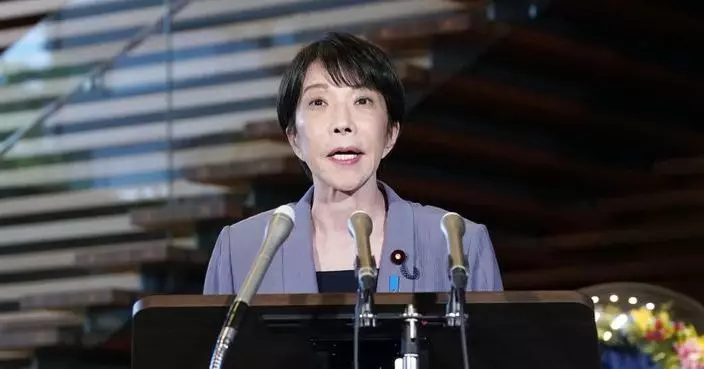
Takaichi's Taiwan remarks froze China-Japan ties.
The fresh disclosures came on November 8, one day after the first anniversary of Takaichi's "Taiwan contingency" remarks. Japan's Yomiuri Shimbun revealed more inside details of this China-Japan diplomatic standoff.
Showdown in Beijing
According to the report, the Takaichi government protested over Xue Jian's remarks and demanded that the post be deleted. It also tried to have Xue declared persona non grata and expelled from the country.
In mid-August, Takaichi summoned Chief Cabinet Secretary Minoru Kihara and senior Foreign Ministry officials. She told them to deliver the message: if China did not immediately recall Xue, the Japanese government would expel him directly.
A little over a week later, Masaki Kanai, director-general of the Asian and Oceanian Affairs Bureau at Japan's Foreign Ministry, went to Beijing to negotiate with Liu Jinsong, then director-general of the Department of Asian Affairs at China's Foreign Ministry. Kanai delivered Sanae Takaichi's message to the Chinese side.
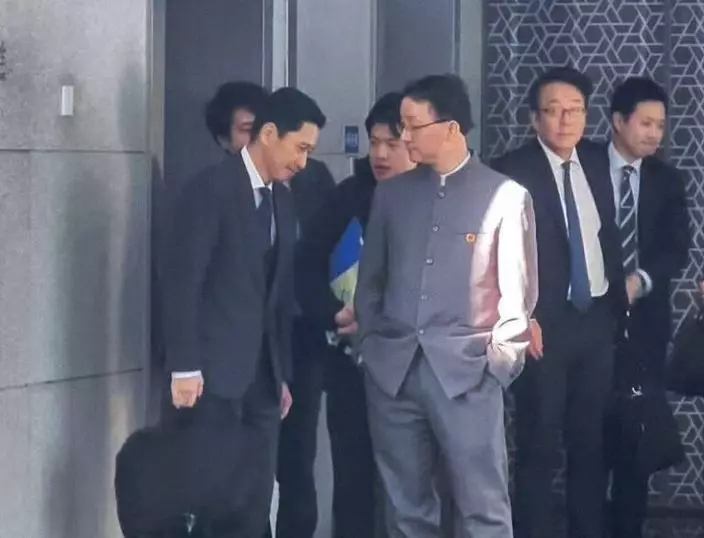
Japan's Kanai met China's Liu in Beijing.
But Liu did not budge under Japanese pressure. He listed the names of Japanese consuls general in China and warned: "If you expel one, we will expel two".
Japan had counted on a "one-for-one" retaliation: each side would expel one diplomat, allowing both to save face.
Instead, China answered with "double retaliation," a show of toughness far beyond anything Japan had expected.
Why Tokyo Backed Down
Takaichi talks tough on China. But Tokyo got cold feet when the stakes turned real. Officials worried that expelling diplomats would spark tit-for-tat retaliation and send the dispute spiraling out of control.
Japanese government officials told the Yomiuri Shimbun that Tokyo feared a chain of retaliation would poison bilateral ties even further. So it chose to back down and keep the door open for future dialogue.
A year has passed since Takaichi made her "Taiwan contingency" remarks, the Yomiuri Shimbun said. China-Japan relations remain tense, and she still has not retracted the comments as the Chinese side demands.
The reason, the paper's analysis suggested, is simple. Takaichi does not want to lose the backing of conservatives at home.
Beijing's Blame and Demands
The Foreign Ministry was blunt about who owns this mess. China–Japan relations are in serious difficulty, it said, and the responsibility lies entirely with Japan.
The root cause is the erroneous Taiwan-related remarks Japan's leader made a year ago. Those remarks openly sent a wrong signal of attempting to use force to intervene in the Taiwan question, challenged China's national sovereignty and shook the political foundation of China–Japan relations.
A year has passed, and nothing has moved. To Beijing's regret, Japanese authorities are still going in circles, dodging the issue and showing neither the sincerity nor the action to reflect on and correct their mistakes.
On China–Japan relations, Beijing's position has never wavered. For Japan, the urgent task is to correct its erroneous words and deeds on the Taiwan question as soon as possible. What matters is adopting a correct attitude on historical issues, and what is fundamental is truly being objective and rational in how it views China.
Mao Paishou
** 博客文章文責自負,不代表本公司立場 **