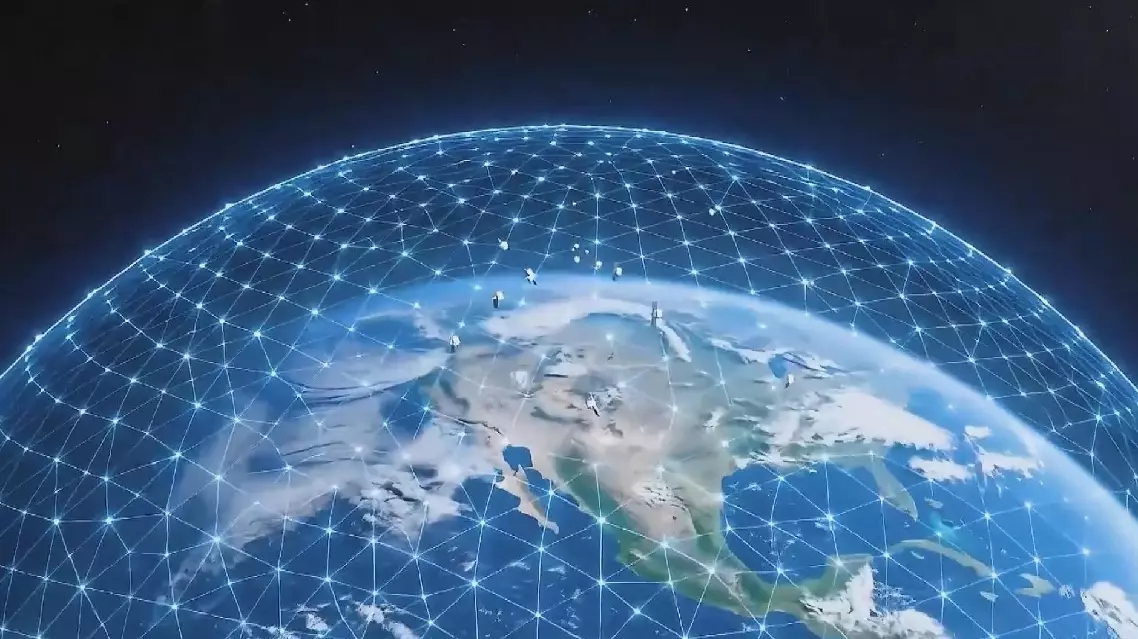
The Beijing Space Computing Innovation Center, unveiled on June 29 in the capital city's satellite town in the northwestern district of Haidian, is expected to gather talent across sectors and drive growth in the space computing industry, according to industry insiders.
Jointly led by the Beijing University of Posts and Telecommunications and leading enterprises in the space computing sector, the center will work on tackling common technological challenges such as large-scale space models, while advancing the construction of public platforms, the formulation of industry standards, and the commercialization of application scenarios.
The Beijing Space Computing Innovation Alliance was also launched at the same time, expected to bring together 108 diverse innovation entities ranging from universities and research institutes to state-owned enterprises and private companies to pool resources and strengthen industry collaboration.
"Space computing power in effect is a field with a very long industrial chain, covering commercial aerospace -- which has developed rapidly in recent years -- as well as chips, artificial intelligence, cloud-related technologies, and specific application scenarios -- integrating all of these together for organized research and development," said Fu Yunhao, CEO of Beijing Tiansuan Xinglian Technology Company.
"As satellite networks become increasingly advanced, they will inevitably host a variety of value-added services and applications. And these value-added services and applications will certainly require computing," said Wang Shangguang, dean of the School of Computer Science at the Beijing University of Posts and Telecommunications.
Space computing power technologies refer to deploying computing facilities within an orbital satellite system so that massive volumes of data can be processed, stored and transmitted in orbit. Compared with traditional space information processing method, where data collected by satellites need to be sent back to the Earth for processing, space computing power technologies can break through latency bottlenecks and be applied to numerous scenarios such as remote sensing and monitoring.
Beijing's new space computing innovation center to attract talent, drive growth: insiders
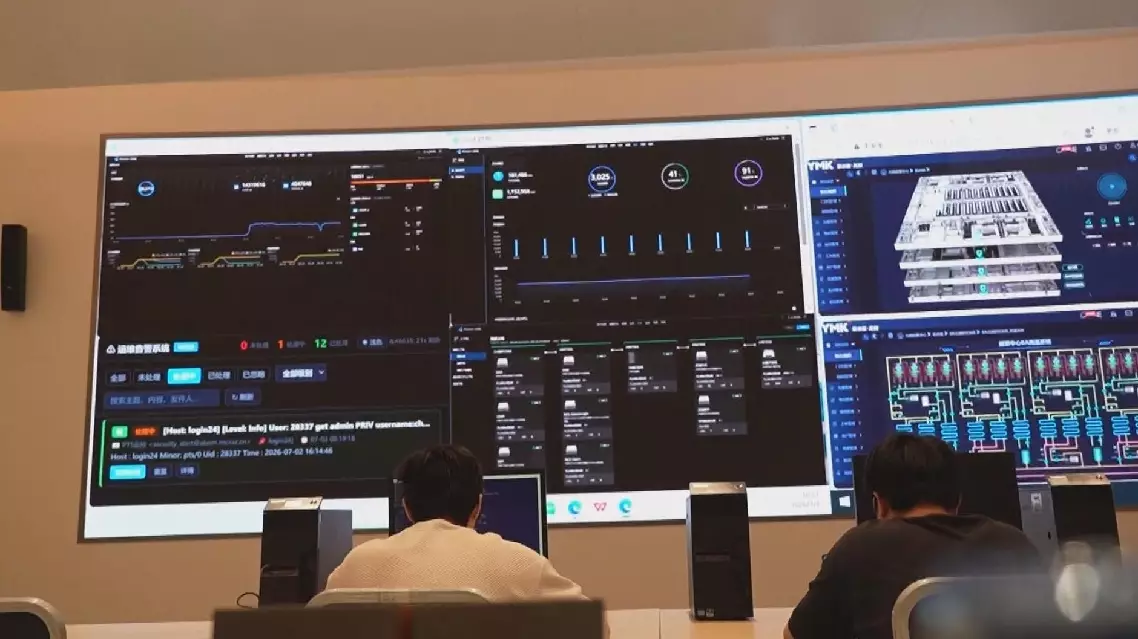
China's domestically developed LineShine supercomputer is charting a new path for next-generation computing, combining independent innovation with world-class performance to advance scientific-technological research and artificial intelligence applications.
A breakthrough is the culmination of years of research by Chinese scientists.
At the International Supercomputing Conference (ISC) High Performance 2026 in Germany in June, LineShine topped the latest TOP500 ranking with a sustained performance of 2.198 EFLOPS, becoming the world's first supercomputer to sustain more than 2 EFLOPS on the High Performance Linpack benchmark.
After LineShine received the award, LineShine chief designer Lu Yutong said the recognition marked a milestone for China's supercomputing industry.
"It's an exciting moment because we have fulfilled our mission. China's supercomputing has returned to the world stage. In fact, China's supercomputing has never stopped moving forward," said Lu, who also serves as director of the National Supercomputing Center located in south China's tech hub of Shenzhen City.
For years, most of the world's leading supercomputers have relied on a heterogeneous CPU-GPU architecture.
However, because key technologies for high-end GPUs have long been dominated by overseas suppliers, the LineShine team pursued a different technological route.
Instead of depending on GPUs for AI acceleration, researchers embedded AI matrix acceleration units directly into domestically designed CPUs, creating an all-CPU architecture that reduces data-transfer bottlenecks and makes it easier to develop and migrate scientific applications.
"We've introduced the matrix acceleration units used in graphics processing units (GPUs) into central processing units (CPUs). As a result, researchers can accelerate computing efficiently under the same programming model. It is one of the most user-friendly architectures because it allows more applications to be quickly transplanted into the system and deliver practical benefits," Lu said.
The new architecture also required breakthroughs across the entire technology chain. From processor design and memory packaging to networking and system software, every key component was developed domestically, laying the foundation for broader scientific and industrial applications.
The system has already been deployed in fields including atmospheric and ocean science, engineering simulation, materials science, drug discovery, brain science and AI.
Looking ahead, developers said the next step is to expand the software ecosystem so that the system can better serve both key national projects and a wider range of users.
"We will continue improving the LineShine software ecosystem step by step for both key sectors and broader application fields, and build a more efficient and faster supercomputing service environment," she said.
The TOP500 list, released twice a year, is widely regarded as one of the world's leading rankings of supercomputers.
Chinese systems have topped the list on multiple occasions, including Tianhe-1, Tianhe-2 and Sunway TaihuLight.
China's LineShine supercomputer charts new path for next-generation computing