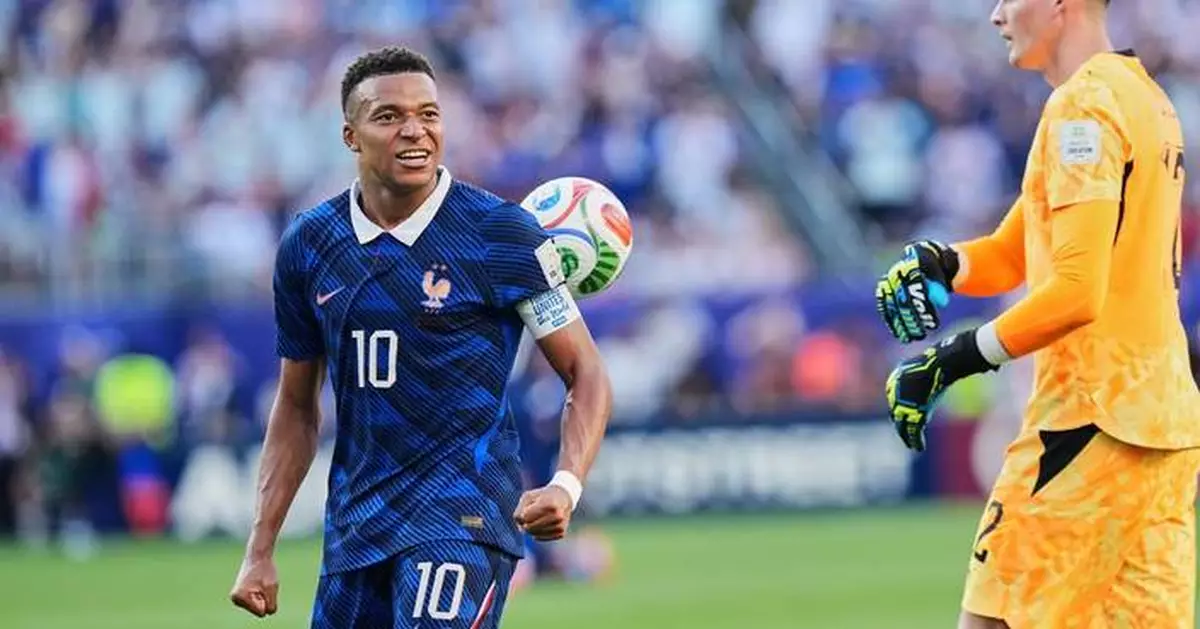
France star Kylian Mbappé on Monday condemned a Paraguayan senator over racist remarks she made following Paraguay’s loss to France in the round of 16 at the World Cup.
Mbappé called Celeste Amarilla, a senator from Paraguay’s Liberal Radical Party, a “despicable woman” who was “unworthy” of serving in Paraguay's Congress.
Click to Gallery
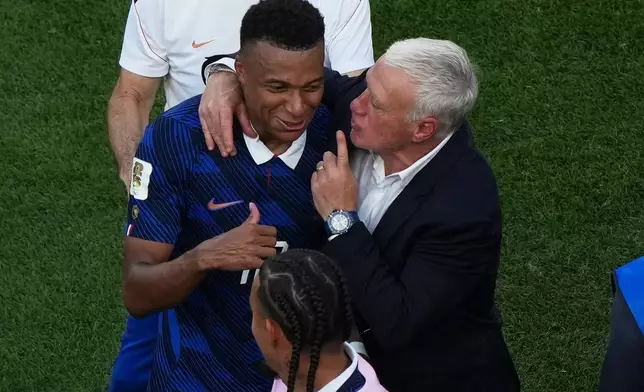
France's Kylian Mbappe, left, and France head coach Didier Deschamps celebrate after the World Cup round of 16 soccer match against Paraguay in Philadelphia, Saturday, July 4, 2026. (AP Photo/Matt Rourke)
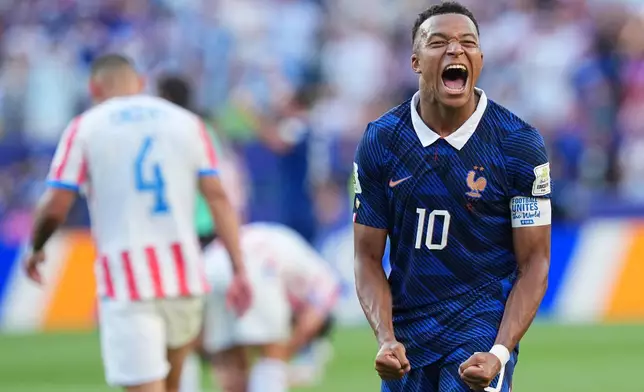
France's Kylian Mbappe (10) celebrates his team victory at the end of the World Cup round of 16 soccer match between Paraguay and France in Philadelphia, Saturday, July 4, 2026. (AP Photo/Martin Meissner)
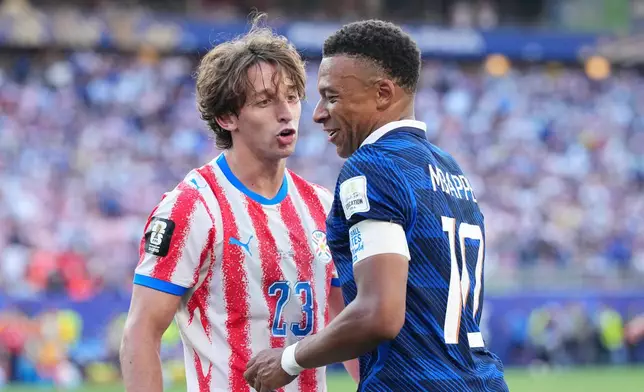
Paraguay's Matias Galarza (23) talks with France's Kylian Mbappe (10) during the World Cup round of 16 soccer match between Paraguay and France in Philadelphia, Saturday, July 4, 2026. (AP Photo/Martin Meissner)
Paraguay goalkeeper Orlando Gill (12) throws the ball at France's Kylian Mbappe (10) at the end of the World Cup round of 16 soccer match between Paraguay and France in Philadelphia, Saturday, July 4, 2026. (AP Photo/Martin Meissner)
“Through your recklessness and your brazen racism, the entire world has already forgotten the journey and the historic effort that your players accomplished during this World Cup,” Mbappé wrote on X.
Amarilla posted a series of racist comments on X after Mbappé converted the winning penalty in France’s victory over Paraguay on Saturday, mocking the French captain’s origins, upbringing, education and appearance. France advanced to the quarterfinals, where it will face Morocco on Thursday.
The Paraguayan government released a statement Monday afternoon condemning Amarilla’s remarks as “contrary to the values and principles that inspire peaceful coexistence and respect for human dignity that our country promotes.” It added that the senator’s comments do not represent either the Paraguayan government or the Paraguayan people.
The French Football Federation on Monday denounced Amarilla’s comments as “utterly abhorrent” and “unacceptable,” adding that it would refer the matter to prosecutors.
Marina Ferrari, France’s sports minister, said she was “outraged” by Amarilla’s remarks and voiced her support for the national team’s captain.
“By targeting Kylian Mbappé, the senator is attacking everything our captain embodies and everything our country stands for: liberty, equality and fraternity,” Ferrari wrote on X.
France's assistant coach Guy Stéphan also condemned the remarks on Monday.
“In three words, it’s indignant, abject, scandalous,” he said.
The Associated Press sent a request for comment to Amarilla on Monday through her social media accounts.
Before Saturday’s match, former Paraguay goalkeeper José Luis Chilavert referred to France as “a squad from Africa.” Philippe Diallo, president of the FFF, said Chilavert “was once a great goalkeeper” who had now “fallen into disgrace.”
See more of AP’s World Cup coverage here
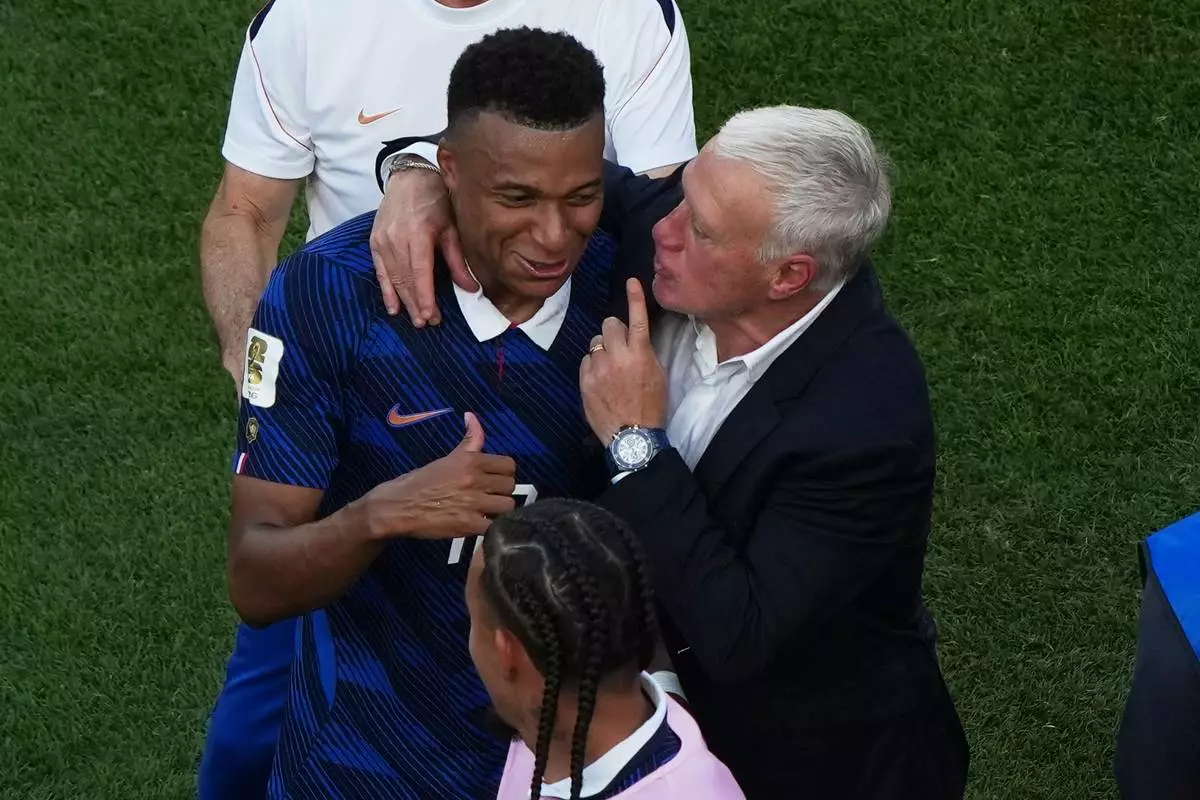
France's Kylian Mbappe, left, and France head coach Didier Deschamps celebrate after the World Cup round of 16 soccer match against Paraguay in Philadelphia, Saturday, July 4, 2026. (AP Photo/Matt Rourke)

France's Kylian Mbappe (10) celebrates his team victory at the end of the World Cup round of 16 soccer match between Paraguay and France in Philadelphia, Saturday, July 4, 2026. (AP Photo/Martin Meissner)

Paraguay's Matias Galarza (23) talks with France's Kylian Mbappe (10) during the World Cup round of 16 soccer match between Paraguay and France in Philadelphia, Saturday, July 4, 2026. (AP Photo/Martin Meissner)
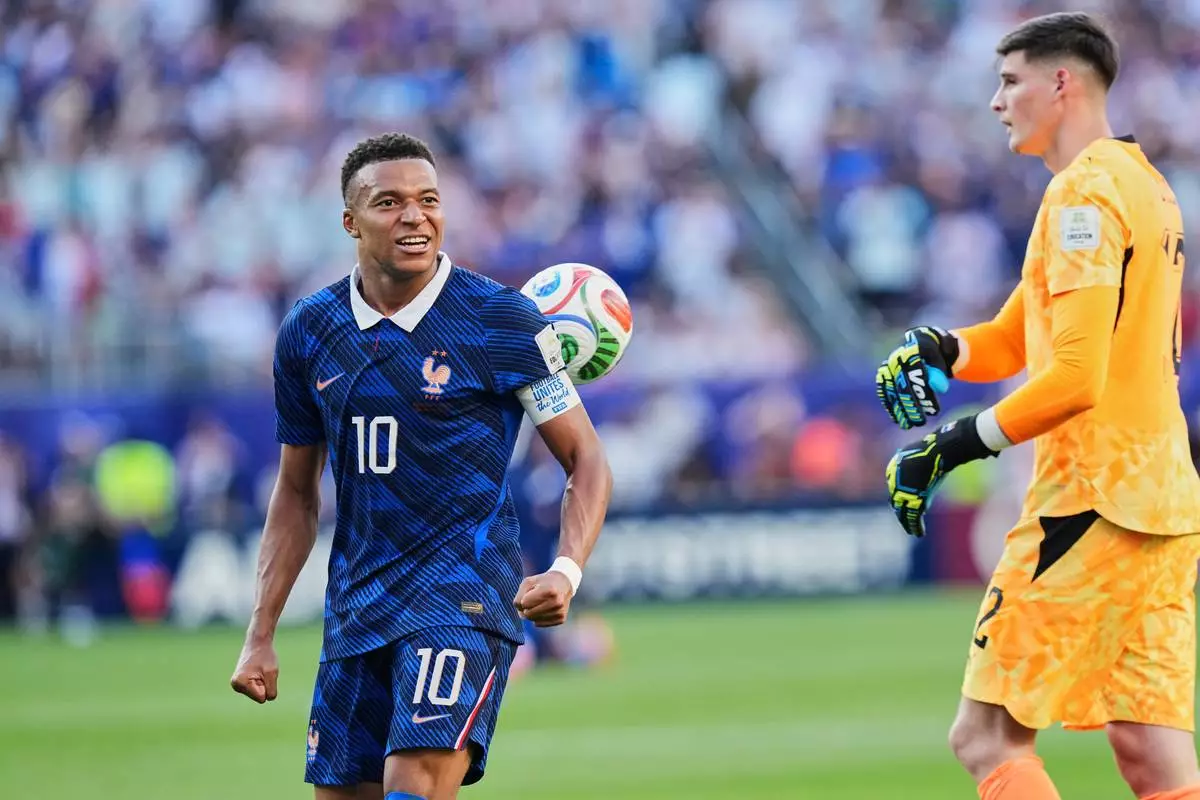
Paraguay goalkeeper Orlando Gill (12) throws the ball at France's Kylian Mbappe (10) at the end of the World Cup round of 16 soccer match between Paraguay and France in Philadelphia, Saturday, July 4, 2026. (AP Photo/Martin Meissner)
LA GUAIRA, Venezuela (AP) — When the high-rise where Noel Márquez lived with his family crashed to the ground and burst into flames in Venezuela's twin earthquakes, Márquez, who happened to be at his girlfriend’s apartment, raced home and called out for his mother, grandparents and siblings. Only his 17-year-old brother, his legs pinned under columns that required heavy machinery to lift, responded.
Márquez and his father, who also survived, spoke through layers of concrete, hearing Leonel suffer, shout for help and inhale suffocating smoke as he waited for a crane to remove the columns crushing him. But it never came. After several hours, Leonel's cries gave way to silence, Márquez said.
But even that, terrible as it was, was not what disturbed him the most. The worst, Márquez said, was trying to recover his families' tangled remains with little more than his bare hands and a saw. He sliced off limbs to free the corpses of Leonel and his mother but was forced to abandon his sister, who was eight-months' pregnant, grandmother and other relatives beneath the ruins — and with their bodies, the hope that if he couldn't save them, he could at least give them proper burials.
“It’s unfair. It’s inhumane, everything that is happening,” 26-year-old Márquez said from the overflowing makeshift morgue at La Guaira port. "We couldn’t get my brother out because we didn’t get a response from the state ... and after 11 days, we are still requesting a crane.”
Márquez is one of countless Venezuelans who, after days of torment, has been left alone to search, if not for signs of life, then for loved ones’ remains — and for some semblance of closure.
International rescue teams, quietly acknowledging the possibility that no more victims would be found alive after 12 days under the rubble, are preparing to depart. Local authorities are turning their focus to finding shelter for thousands of displaced people. But the recovery of the dead has become a pressing, and horrifying, duty for Venezuelans still missing their loved ones.
“I found her hand, but her torso is crushed," said Norely Rodríguez, trying to get her 5-year-old daughter out of the ruins in the hardest-hit state of La Guaira. “I want to see if I can get her out whole."
Many say that just as they were left without government help to rescue survivors in the immediate aftermath of the quakes, so too are they now under-equipped to unearth their dead nearly two weeks later.
The more time passes, the more gruesome the recovery process becomes, said William Gomez, a firefighter in La Guaira. “It has been difficult because the bodies are already in an advanced state of decomposition, decomposed to such an extent that many times when we try to remove them, they fall apart.”
Authorities announced that the death toll rose on Monday to 3,535, with another 16,740 people injured. Beyond that is an untold toll: those whose bodies have yet to be found. There are no official statistics on how many people are buried under the rubble, but more than 30,000 reports of missing people have been sent to a website set up by the Venezuelan opposition.
Over the weekend in La Guaira, no government civil defense crews or security forces could be seen helping families dig. The vast majority of those working their way through the wreckage were civilians using their bare hands or rudimentary tools like pickaxes and shovels, occasionally accompanied by firefighters and Mexican rescuers who remain in the country.
There are 1.2 million tons of debris in the most affected parts of La Guaira, according to the United Nations Development Program.
“We are the ones helping ourselves: our family. Nobody else helps us except for a few volunteers,” said Yeikhary Urbina, who found the bodies of her mother and brother on Saturday suspended under piles of concrete, seemingly locked in an embrace.
In several WhatsApp chats on Monday, neighbors who could no longer wait for authorities to help them recover their dead discussed pooling their own money to rent a crane — for the price of $11,500, in one case.
Search teams from Italy, Argentina, Spain and other countries have already returned home. The Venezuelan government has not yet called off the search for survivors. But officials have pivoted from promoting heroic rescue stories on social media to announcing reconstruction plans under a program called Venezuela Reborn.
“Venezuela is entering a process of infrastructure recovery, of housing recovery,” acting President Delcy Rodríguez told state TV on Saturday. She has fiercely rejected widespread criticism that her government reacted too slowly to the disaster and accused media outlets of spreading misinformation.
Families with missing loved ones face fresh horrors as they scour the rubble. Some have searched for days to find corpses of loved ones so decomposed, they cannot tell them apart.
Others have dug and dug only to find nothing at all. “She kept asking, ‘Why did God play this trick on me?’" Geraldine Perdomo said of her sister, who was feverishly clawing at the ruins of her home for anything that would confirm the death of her two daughters.
And some, like Márquez, have agonized for days to extract their loved ones' bodies only to lose them again in the chaos of the impromptu morgue beneath grain silos at the La Guaira port, where a near-constant stream of bodies has been arriving since the June 24 quakes.
Márquez said that on Sunday, a week after delivering their corpses, he heard authorities had located his mother and grandfather. But Leonel, he said, "is still missing because of the negligence here.”
He and many other residents of the country’s public housing blocks — built years ago for low-income families by former socialist leader Hugo Chávez — say their complaints of negligence long predate this disaster. High-rise buildings housing hundreds of apartments pancaked in the earthquakes, reviving questions about substandard construction.
Alexander, a 42-year-old police officer who lived in one of the towers, was trembling with fury at the government on Sunday — for not addressing what he said were long-running resident concerns that his concrete housing complex was shoddily constructed, for not sending rescue teams in time to save his wife and three daughters, and now, for not delivering heavy machinery to help him recover their bodies.
"Not a single person from the government was here," he said, requesting to be identified only by his first name because, as a government employee, he feared retaliation for criticizing authorities.
After 11 days of searching, he reached the last missing member of his family — his 12-year-old daughter, her corpse decomposed but intact.
“She was waiting for me to pull her out,” he said, cradling the black plastic body bag in his arms.
DeBre reported from Buenos Aires, Argentina.
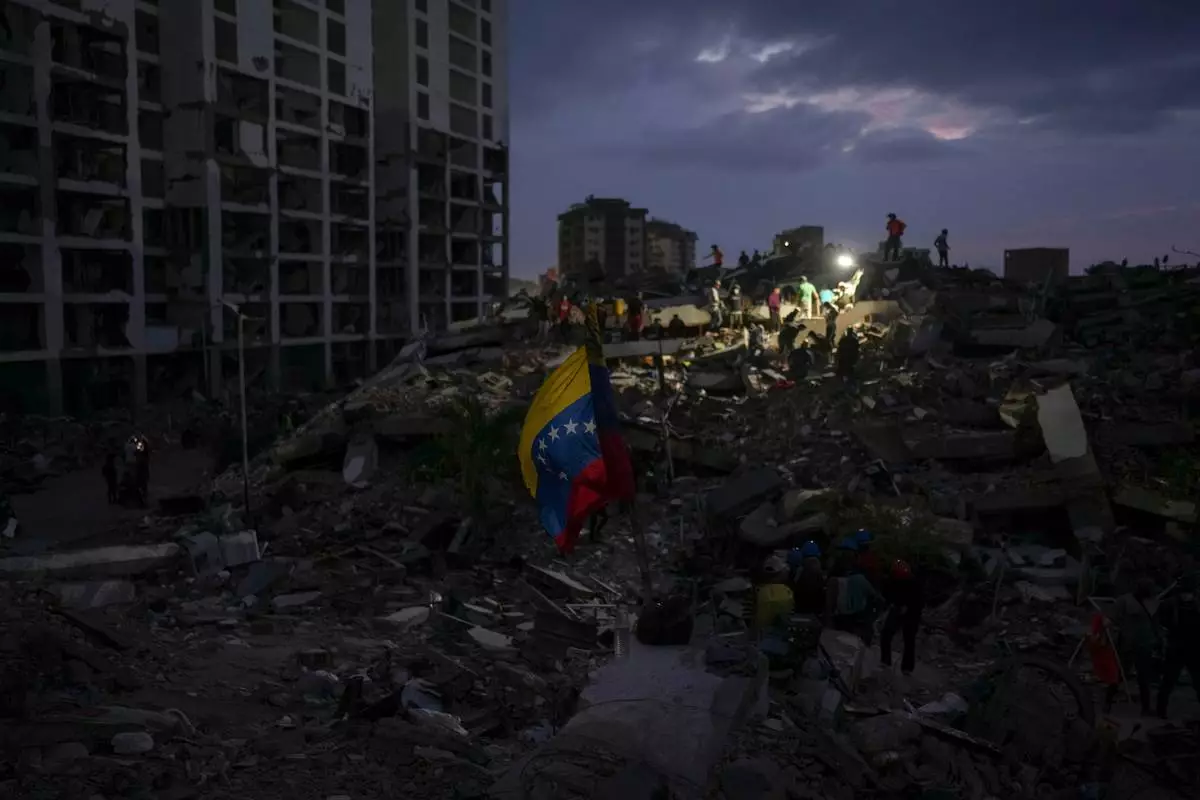
Residents and rescue workers search through the rubble of buildings damaged in the earthquakes that struck La Guaira, Venezuela, Thursday, July 2, 2026. (AP Photo/Matias Delacroix)
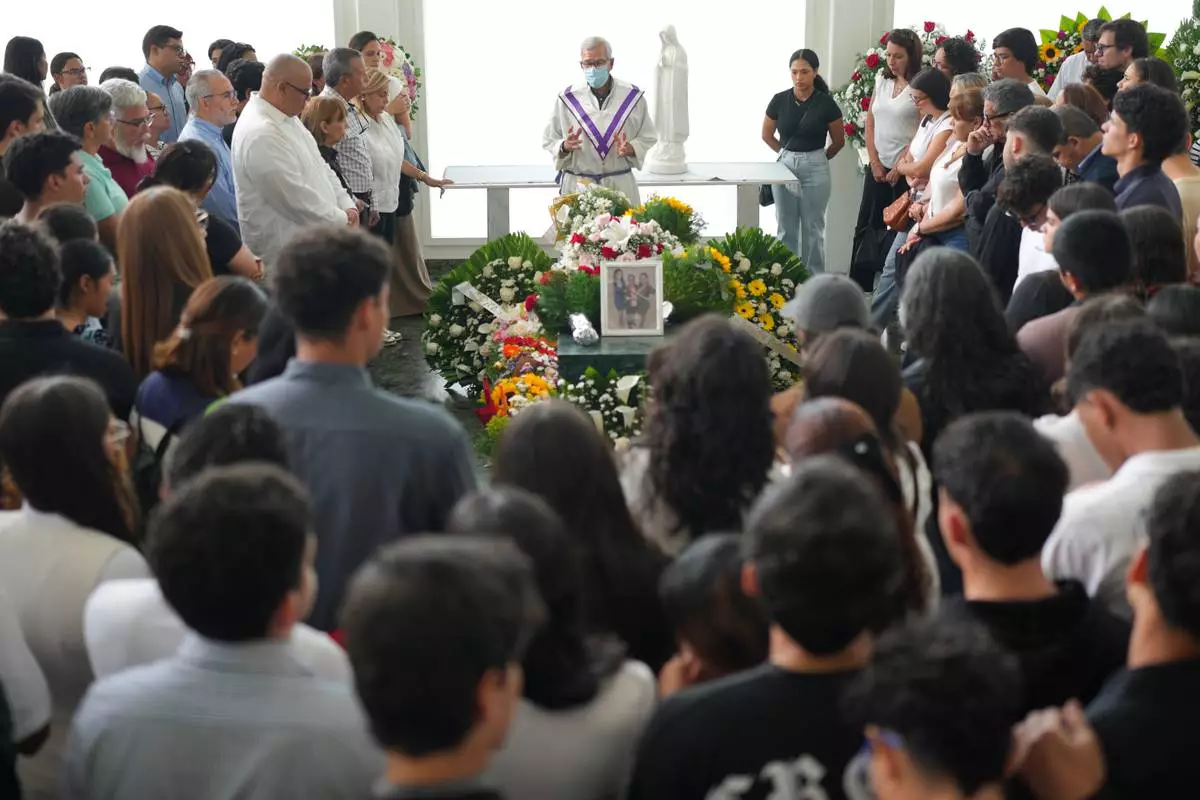
Relatives and friends attend the funeral Mass for Daniela Mora, her mother, Maria Cruz, and her grandmother, Judith Padron, who died when their apartment building collapsed during the earthquake in the San Bernardino neighborhood of Caracas, Venezuela, Saturday, July 4, 2026. (AP Photo/Matias Delacroix)
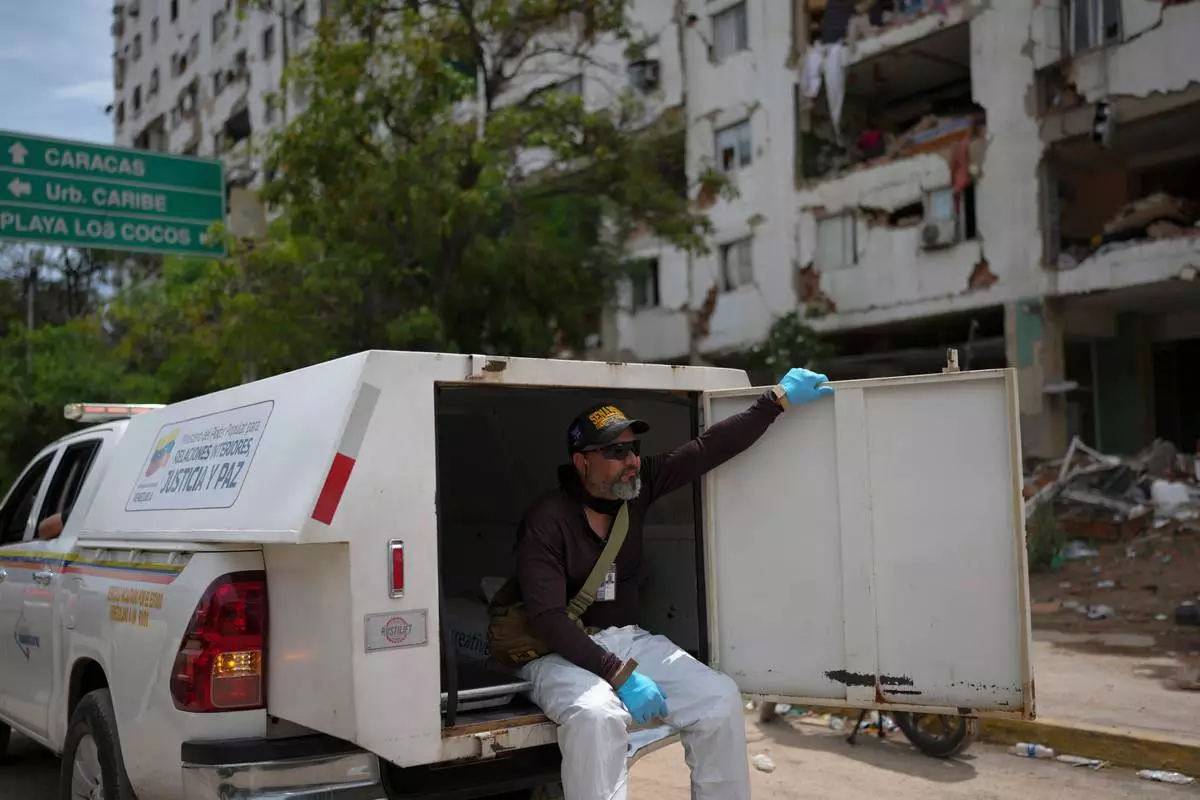
Forensic technician Joel Mirabal rides through the area struck by the earthquakes collecting bodies recovered from the rubble in La Guaira, Venezuela, Tuesday, June 30, 2026. (AP Photo/Matias Delacroix)
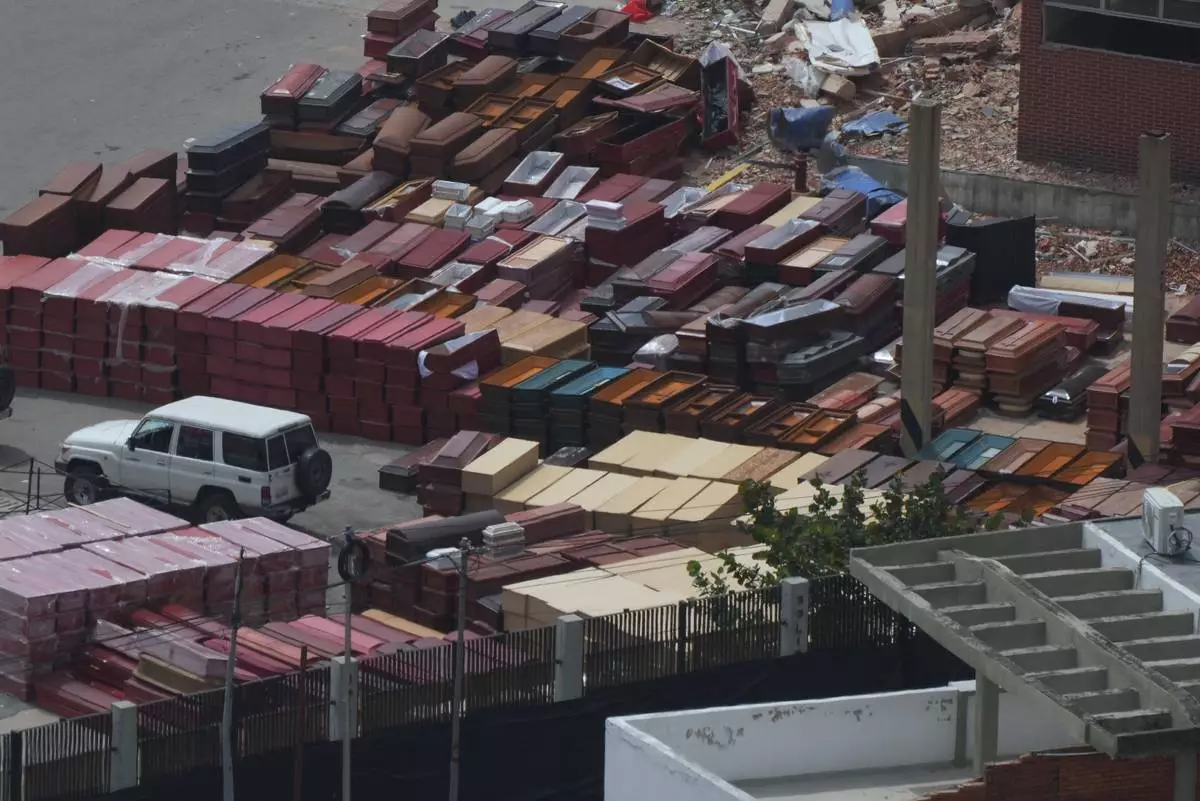
Coffins are stacked at the seaport where forensic workers sort the bodies of earthquake victims in La Guaira, Venezuela, Saturday, July 4, 2026. (AP Photo/Ariana Cubillos)
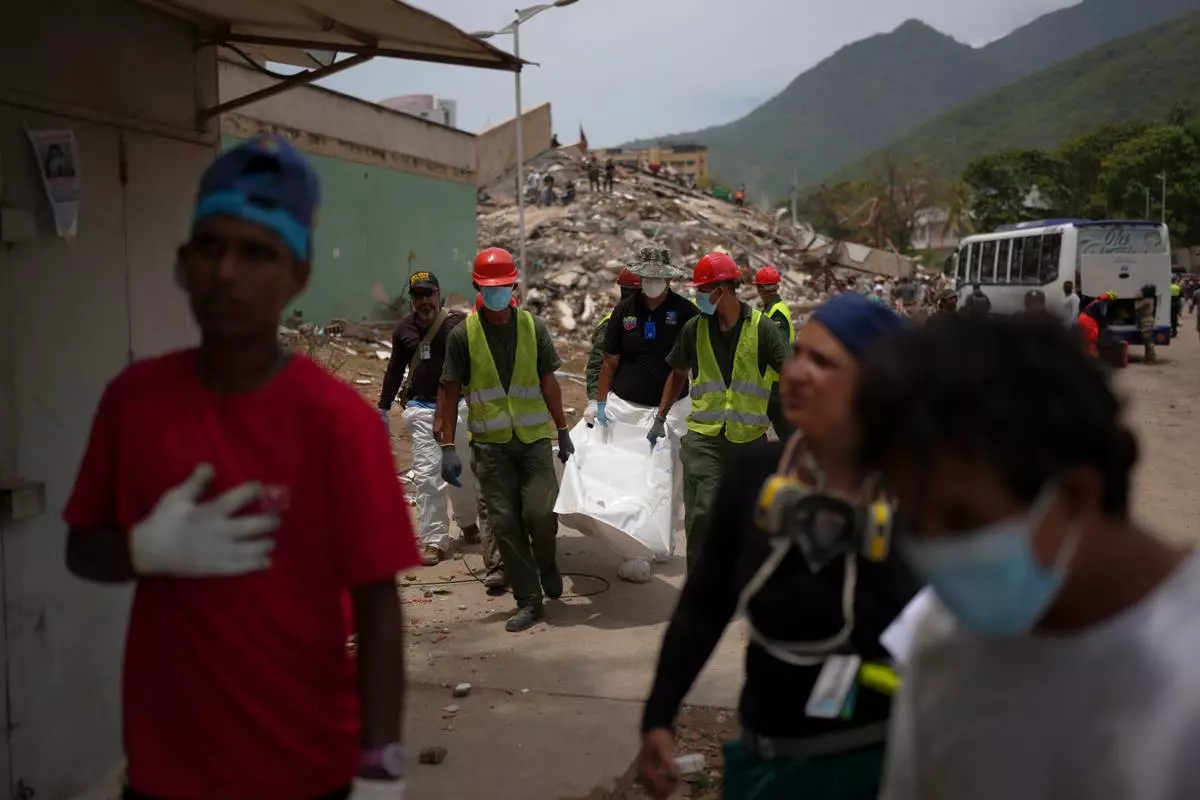
Rescue workers and forensic technician Joel Mirabal, back left, recover the body of an earthquake victim in La Guaira, Venezuela, Tuesday, June 30, 2026. (AP Photo/Matias Delacroix)