Russia on Monday said its forces had struck multiple Ukrainian military facilities, while Ukraine reported targeting a Russian oil refinery about 2,500 kilometers from its border over the past 24 hours.
The Russian Ministry of Defense said in its latest report that its forces had struck seven military-industrial enterprises and energy infrastructure in Kiev and the Kiev region. The targets included five factories in Kiev that produce drones, unmanned boats, and develop "Neptune" cruise missiles, as well as a missile component plant and a fuel depot in the Kiev region.
According to the ministry, the strikes also hit military airfield infrastructure in the Dnipropetrovsk, Poltava, Cherkasy, Chernihiv and Kiev regions.
The General Staff of the Ukrainian Armed Forces said on Monday that its special forces had struck the Omsk oil refinery, one of Russia's largest.
The facility lies nearly 2,500 kilometers from the Ukrainian border. An explosion and subsequent fire were reported at the site, and the extent of the damage is still being verified.
According to the Ukrainian military, the refinery provides the logistical supply for the Russian armed forces.
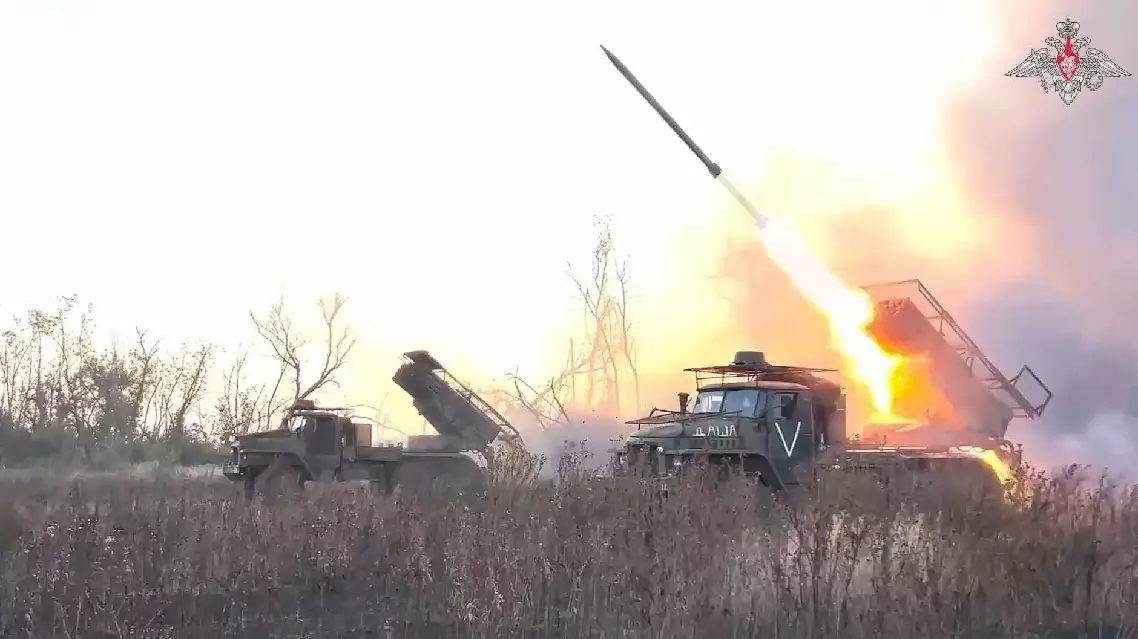
Russia strikes Ukrainian military facilities, Ukraine hits Russian oil refinery
Chinese President Xi Jinping arrived in Bishkek, the capital city of Kyrgyzstan, on Sunday afternoon for the Shanghai Cooperation Organization (SCO) Summit 2026 and a state visit to Kyrgyzstan at the invitation of Kyrgyz President Sadyr Japarov.
Upon arriving at the Manas International Airport, Xi and his wife, Peng Liyuan, were warmly welcomed by Japarov and his wife, Aigul Japarova.
Xi and Peng were treated to Kyrgyz delicacies and accorded a greeting steeped in the nation's traditions by local women.
Guards of honor lined up on both sides of a red carpet to salute the Chinese leader.
Both president and their spouses watched Kyrgyz cultural performances and displays, and listened to Chinese songs performed by local youngsters.
In a written speech, Xi extended sincere greetings and best wishes to Japarov and the people of Kyrgyzstan on behalf of the Chinese government and people.
Noting that China and Kyrgyzstan share a time-honored traditional friendship, Xi said that the majestic Tianshan Mountains stands as witnesses to the millennia of friendly exchanges between their peoples.
Over the 34 years since the establishment of diplomatic relations, the China-Kyrgyzstan relationship has withstood the test of a changing international landscape, maintained sound and steady development throughout, and reached the high level of a comprehensive strategic partnership for a new era.
In recent years, bilateral trade volume and people-to-people exchanges have reached new highs, Xi said, noting that major projects including the China-Kyrgyzstan-Uzbekistan railway have been successfully implemented, and the tangible results of mutually beneficial cooperation have broadly benefited the two peoples.
Xi said that during the visit he will have in-depth exchanges of views with Japarov on China-Kyrgyzstan relations, cooperation in various fields between the two countries, and international and regional issues of common concern, and draw a new blueprint for building a China-Kyrgyzstan community with a shared future.
Xi said he looks forward to attending the SCO Bishkek Summit, working with all parties to revisit the 25-year development experience of the SCO, jointly discuss cooperation plans, create the future of the organization, and promote the continuous new development of the organization.
Xi's entourage also includes Cai Qi, a member of the Standing Committee of the Political Bureau of the Communist Party of China (CPC) Central Committee and director of the General Office of the CPC Central Committee, and Wang Yi, a member of the Political Bureau of the CPC Central Committee and Chinese foreign minister.
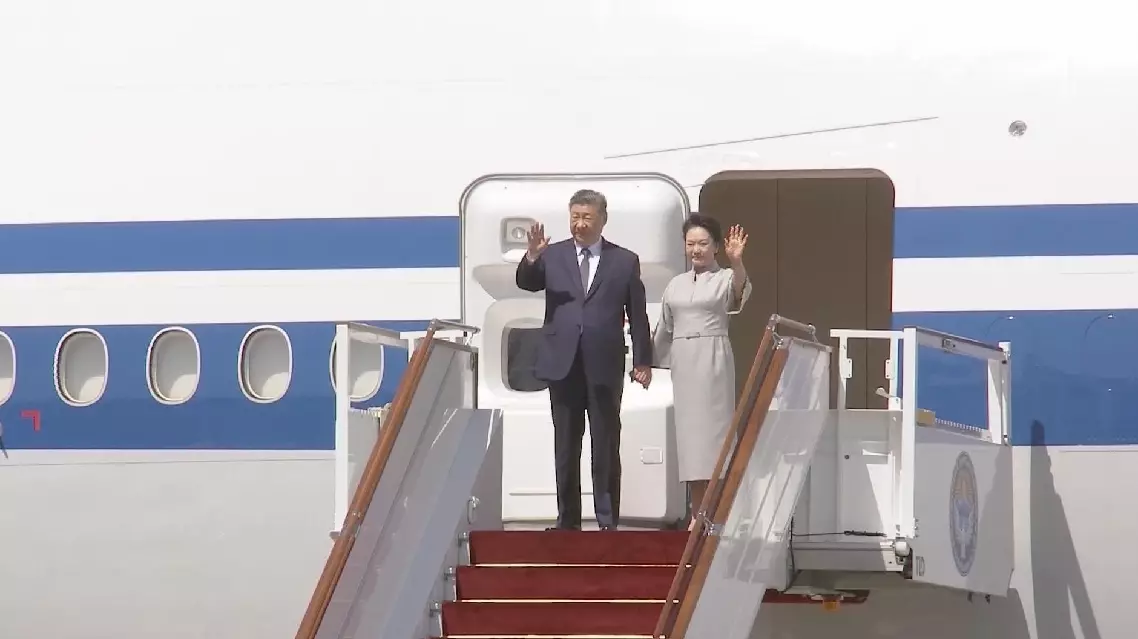
Xi arrives in Kyrgyzstan for SCO summit, state visit