Skip to Content Facebook Feature Image

UN chief urges stronger actions to prevent mass atrocities amid rising global conflicts

China

China

China

UN chief urges stronger actions to prevent mass atrocities amid rising global conflicts

2026-07-07 16:56 Last Updated At:17:37

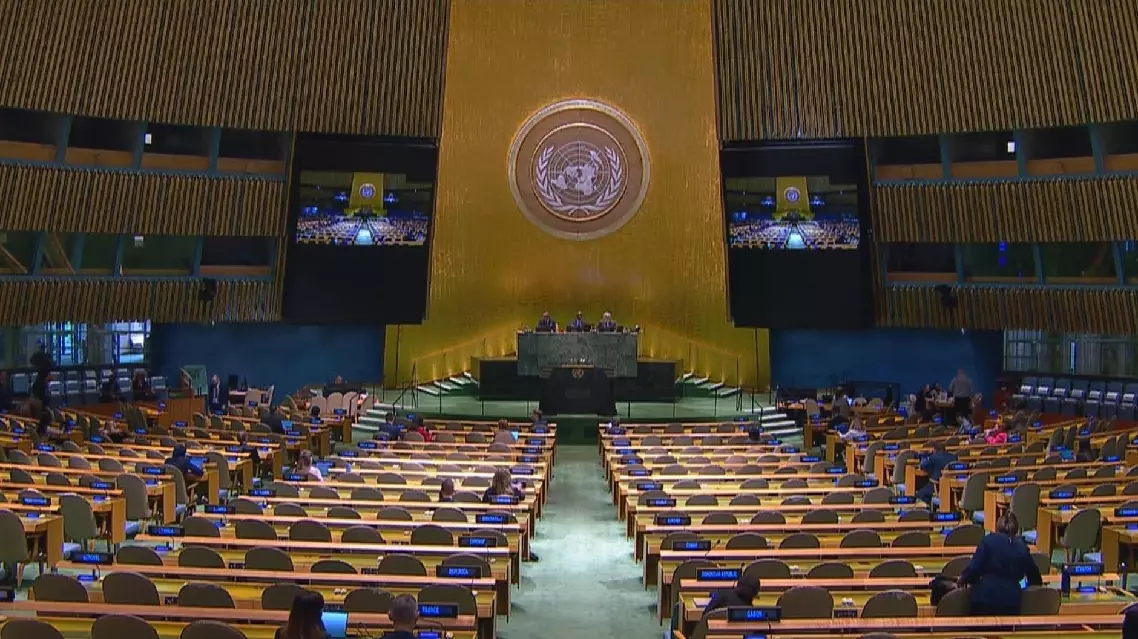
UN Secretary-General Antonio Guterres on Monday warned that rising global conflicts, impunity and emerging technologies are increasing the risk of mass atrocities, urging the international community to act "before warning signs become mass graves."

The world sees "widespread violations of international law and a growing sense of impunity," Guterres said in remarks to the UN General Assembly on the Responsibility to Protect, delivered by his chef de cabinet, Earle Courtenay Rattray.

The Responsibility to Protect commitment is "more vital than ever," he said.

In 2025, the world faced more than 120 conflicts that have become "more protracted, more complex, and more interconnected," said Guterres.

The UN chief warned that technology is heightening the danger, with sophisticated and increasingly autonomous new weaponry, including drones, able to inflict massive harm on populations, and online hate speech, misinformation and disinformation are spread and amplified in an instant.

"Too often, early warning signs are ignored. And responses are often too little, too late. This report makes specific calls to strengthen the Responsibility to Protect norm for this new era of instability and geopolitical risk," he said in the remarks delivered by Rattray.

Noting that 21 years ago, world leaders made a milestone commitment to protect populations from genocide, war crimes, ethnic cleansing and crimes against humanity, Guterres said each state has a primary responsibility to protect its own people. When national authorities fail to do so, UN member states have committed to taking collective, timely and decisive action in line with the UN Charter, he said.

While prevention begins at home, it can be supported collectively, he added.

The UN secretary-general noted that the report being discussed, the 18th since the Responsibility to Protect commitment was made, takes stock of two decades of progress and makes specific calls to strengthen the Responsibility to Protect norm for this new era of instability and geopolitical risk.

"At the national level, it (the report) calls on Member States to invest in national prevention and protection programming, and forge partnerships with civil society by designating focal points and establishing new domestic institutional arrangements," the remarks said.

"At the regional level and the multilateral levels, it calls for integrating atrocity prevention right across all the tools of peacemaking, conflict prevention and humanitarian efforts -- including mediation and preventive diplomacy and dialogue, as well as security, technological, human rights and accountability frameworks," said the remarks.

Stressing that the Responsibility to Protect goes to the heart of the mission at the United Nations, Guterres encouraged UN member states to join and implement relevant international legal instruments, including the Convention on the Prevention and Punishment of the Crime of Genocide.

Guterres called on member states to ensure that atrocity prevention and protecting populations become permanent and universal practice everywhere.
UN chief urges stronger actions to prevent mass atrocities amid rising global conflicts

UN chief urges stronger actions to prevent mass atrocities amid rising global conflicts

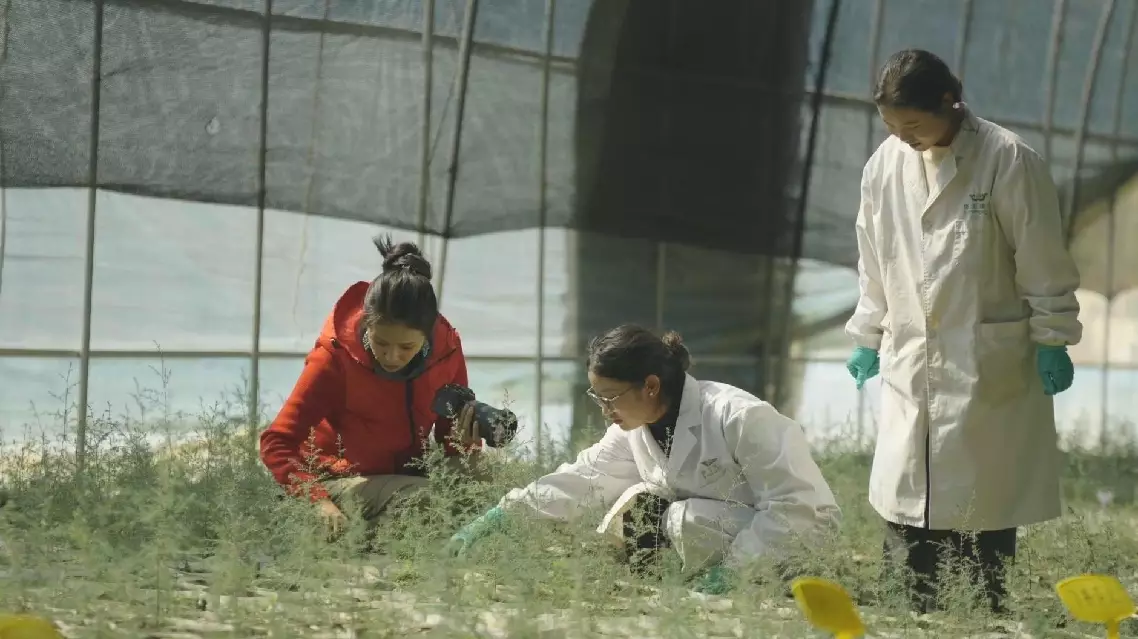
Dawa Yangdron, an early participant in a large-scale afforestation project in southwest China's Xizang Autonomous Region, has led her team in using native seedlings, which boast higher survival rates and lower maintenance costs, to restore barren highland slopes, showing a locally adapted approach to ecological restoration.

The afforestation project in the mountains to the north and south of Lhasa, the first large-scale tree planting and afforestation initiative in the history of Xizang, aims to complete 2.0672 million mu (about 137,813 hectares) of land greening over a period of 10 years since its launch in 2021.

Yangdron, general manager of Xizang Zangjian Wusheng Greening Co., is one of the earliest builders who joined the decade-long project in 2022. She has led her team at Xizang's largest native seedling breeding base, where they are dedicated to growing indigenous trees.

"This is the largest native seedling breeding base in Xizang. It covers 80 hectares and stores the seeds of more than 70 species of local plants. After collecting the seeds from across the region, we cultivate them here. On the one hand, the base supports early-stage scientific research. On the other, it supplies seedlings for the afforestation project in the mountains to the north and south of Lhasa," Yangdron said.

"When we talk about native seedlings, we mean seedlings that originated here. We've recruited more than 100 college graduates and are training local students from Xizang to research and cultivate indigenous species. To date, we've supplied 10 million native seedlings for the afforestation project. Using local seedlings for afforestation has clear advantages. The survival rate's higher, and subsequent maintenance costs are much lower. Later this year, we'll provide three million seedlings of the Piptanthus concolor variety. It's an evergreen species native to Xizang that doesn't shed its leaves in winter," she said.

Ecological protection on the plateau is no easy feat, Yangdron noted.

"The environment in Xizang is quite fragile and the climate is unique. From collecting the seeds to cultivating the seedlings, the process is highly complex and demanding, and takes a long time. While everyone talks about protecting the plateau environment, I believe Xizang Autonomous Region has stressed adapting measures to the local conditions and respecting nature. What we need to do is work even harder to put these principles into practice and safeguard the environment on the Qinghai-Xizang Plateau," Yangdron said.

Since the afforestation project took root, Yangdron said, the local climate has grown noticeably more humid, and the air feels richer in oxygen. The barren hills of the past are now draped in green, and in winter, the landscape is dotted with reds and yellows. What started as a mission to green the mountains, she added, has become a quest to make them beautiful.

Locals foster indigenous species for ecological restoration in Xizang

Locals foster indigenous species for ecological restoration in Xizang

Recommended Articles