Danish shipping giant A.P. Moller Maersk said on Monday it will resume some sailings through the Suez Canal under the joint network with its German peer Hapag-Lloyd, instead of sending vessels around Africa's Cape of Good Hope.
The global diversion of vessels away from the Red Sea, the Bab el-Mandeb Strait and the Suez Canal began in November 2023, when Yemen's Houthis launched attacks on Israel-linked vessels in the Red Sea and the Gulf of Aden amid the outbreak of the latest Palestinian-Israeli conflict.
Over the nearly three years that followed, thousands of container ships took the longer route around the southern tip of Africa, adding about 3,500 to 4,000 nautical miles (6,482 to 7,408 kilometers) and 10 to 14 days of transit time to each voyage.
The detour sent freight rates soaring and pushed up shipping costs across the board. Now, with the Middle East situation showing signs of de-escalation, major carriers are beginning to weigh a return to the Red Sea route.
In a statement, Maersk said it will reroute the AE15 -- one of the services shared under its Gemini Cooperation with Hapag-Lloyd -- via the Suez Canal, dropping the Cape of Good Hope detour.
The Gemini Cooperation is a shipping network jointly established by Maersk and Hapag-Lloyd. The AE15 service connects Asia, the Mediterranean Sea and Europe.
According to a Hapag-Lloyd spokesperson, the adjustment is expected to cut the overall voyage duration by up to four weeks.
Maersk said the decision to resume Suez Canal transits came after "a comprehensive assessment of the security situation in the Red Sea region," adding that it marks "a step toward gradually returning to the Suez Canal route." Both companies have contingency plans in place that would allow for swift adjustments if the Red Sea security situation deteriorates.
However, neither of them plans to change the rest services of the Gemini network for now, and both said they will keep a close watch on developments in the Middle East. Any future adjustments, they said, will hinge on whether the Red Sea remains stable and regional conflicts do not escalate.
According to data from Clarksons Research, a leading global shipping consultancy, the route through the Suez Canal and the Red Sea -- the fastest link between Europe and Asia -- carried approximately 10 percent of global seaborne trade before the crisis.
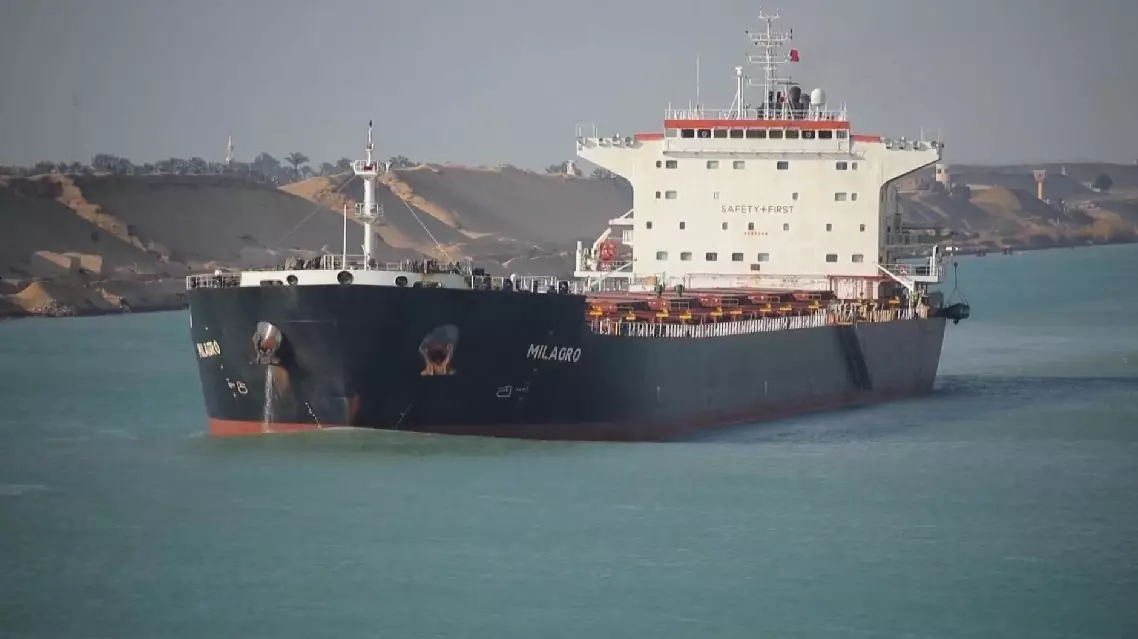
Two global shipping giants to resume sailing through Suez Canal

Dawa Yangdron, an early participant in a large-scale afforestation project in southwest China's Xizang Autonomous Region, has led her team in using native seedlings, which boast higher survival rates and lower maintenance costs, to restore barren highland slopes, showing a locally adapted approach to ecological restoration.
The afforestation project in the mountains to the north and south of Lhasa, the first large-scale tree planting and afforestation initiative in the history of Xizang, aims to complete 2.0672 million mu (about 137,813 hectares) of land greening over a period of 10 years since its launch in 2021.
Yangdron, general manager of Xizang Zangjian Wusheng Greening Co., is one of the earliest builders who joined the decade-long project in 2022. She has led her team at Xizang's largest native seedling breeding base, where they are dedicated to growing indigenous trees.
"This is the largest native seedling breeding base in Xizang. It covers 80 hectares and stores the seeds of more than 70 species of local plants. After collecting the seeds from across the region, we cultivate them here. On the one hand, the base supports early-stage scientific research. On the other, it supplies seedlings for the afforestation project in the mountains to the north and south of Lhasa," Yangdron said.
"When we talk about native seedlings, we mean seedlings that originated here. We've recruited more than 100 college graduates and are training local students from Xizang to research and cultivate indigenous species. To date, we've supplied 10 million native seedlings for the afforestation project. Using local seedlings for afforestation has clear advantages. The survival rate's higher, and subsequent maintenance costs are much lower. Later this year, we'll provide three million seedlings of the Piptanthus concolor variety. It's an evergreen species native to Xizang that doesn't shed its leaves in winter," she said.
Ecological protection on the plateau is no easy feat, Yangdron noted.
"The environment in Xizang is quite fragile and the climate is unique. From collecting the seeds to cultivating the seedlings, the process is highly complex and demanding, and takes a long time. While everyone talks about protecting the plateau environment, I believe Xizang Autonomous Region has stressed adapting measures to the local conditions and respecting nature. What we need to do is work even harder to put these principles into practice and safeguard the environment on the Qinghai-Xizang Plateau," Yangdron said.
Since the afforestation project took root, Yangdron said, the local climate has grown noticeably more humid, and the air feels richer in oxygen. The barren hills of the past are now draped in green, and in winter, the landscape is dotted with reds and yellows. What started as a mission to green the mountains, she added, has become a quest to make them beautiful.
Locals foster indigenous species for ecological restoration in Xizang