As extreme weather events grow more frequent and intense, the risk of falling trees in urban areas has become a pressing public safety concern. For Hong Kong, where dense urban development meets a high-volume pedestrian and vehicular environment, pre-season risk assessments and technology-assisted maintenance strategies are critical to safeguarding the community.
The Development Bureau (DEVB), the Highways Department (HyD), and the Leisure and Cultural Services Department (LCSD) have in recent years been actively deploying technologies including micro-drilling, sonic tomography, and drones to enhance the efficiency of tree inspection and management.
Click to Gallery
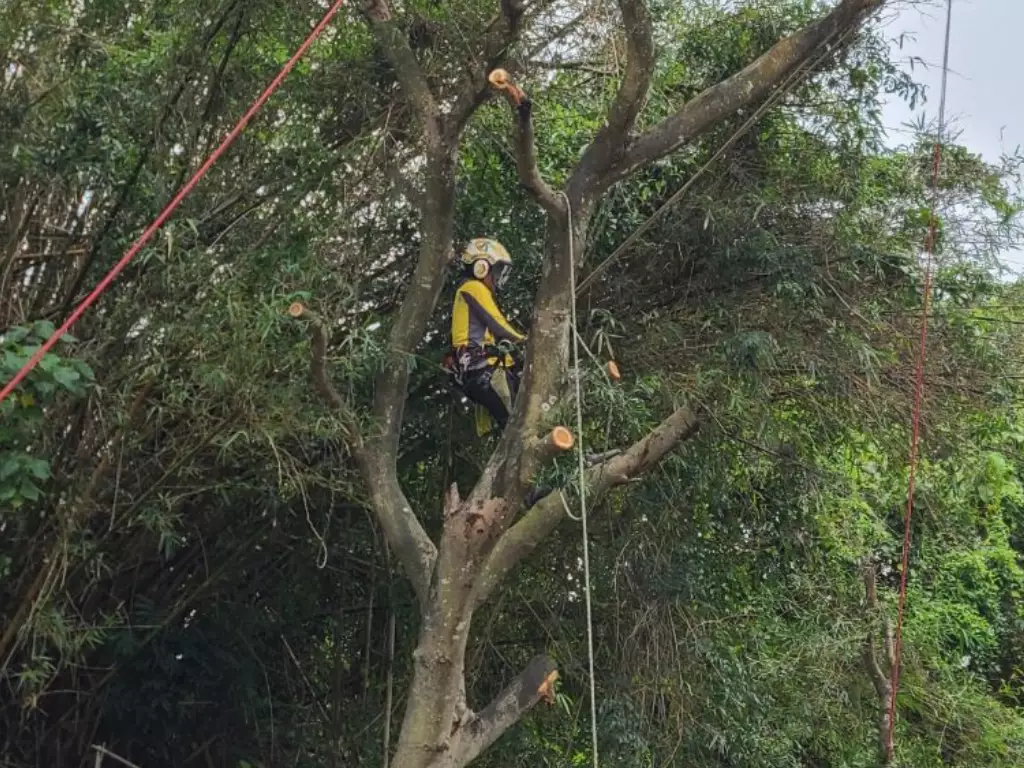
The Highways Department takes timely and necessary risk mitigation measures, arranging for qualified tree climbers to prune or remove hazardous branches. Photo source: HyD
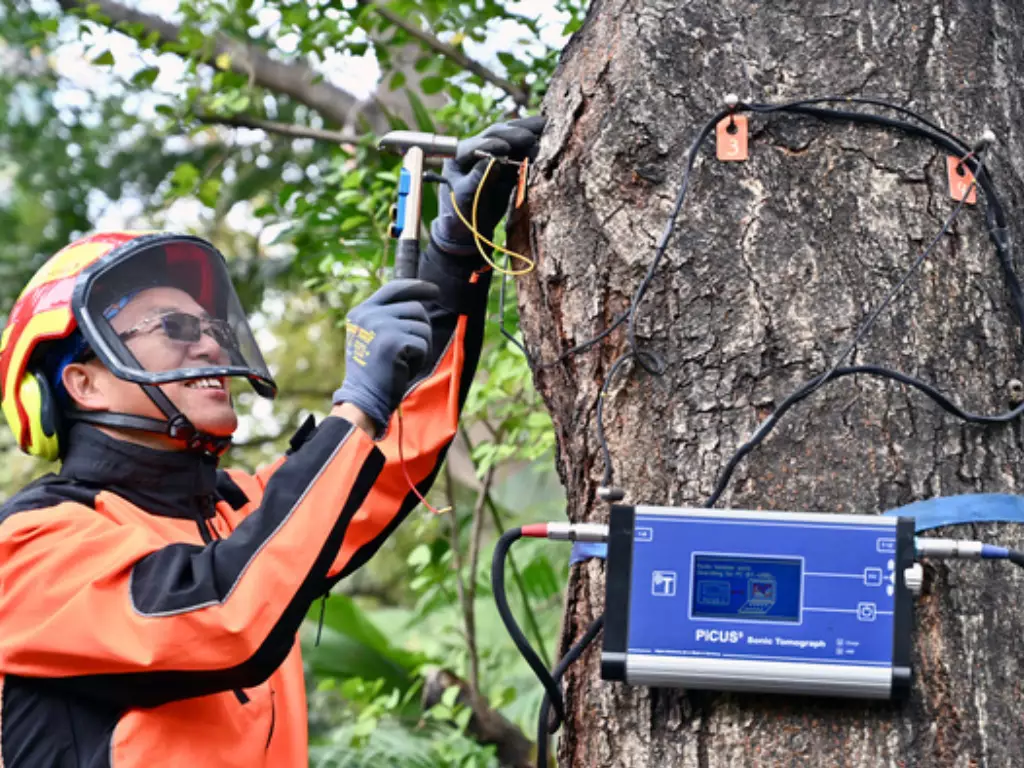
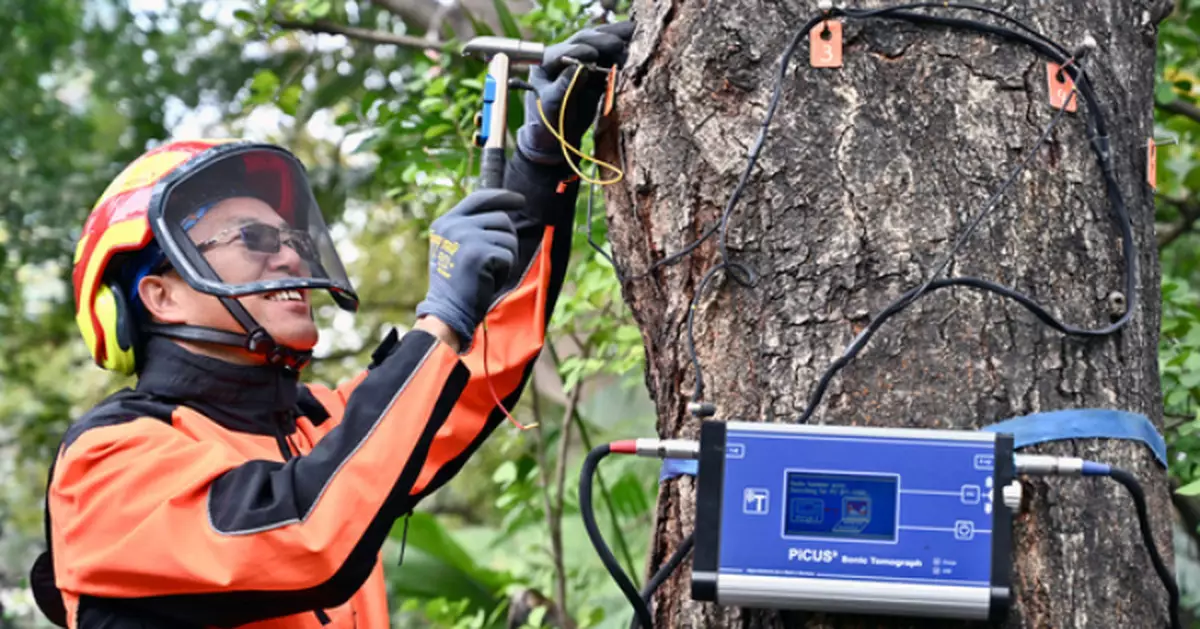
LCSD personnel employ sonic tomography equipment to assess the internal health of trees. Photo source: LCSD
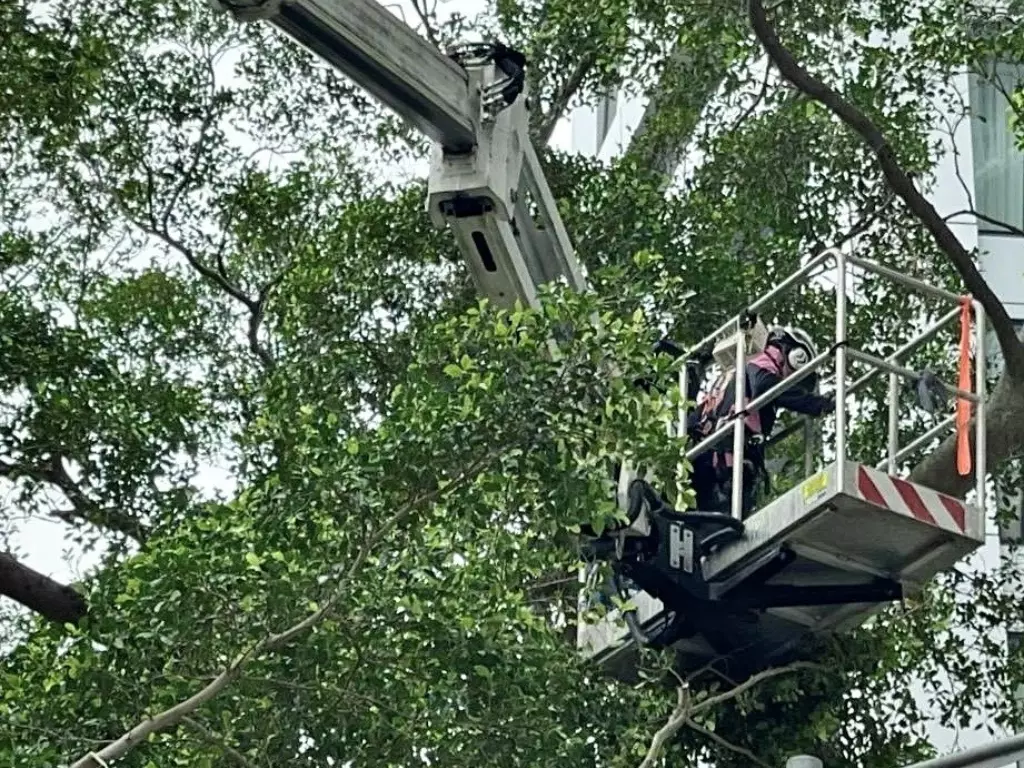
The Highways Department takes timely and necessary risk mitigation measures, arranging for qualified personnel to operate elevated work platforms to prune or remove hazardous branches. Photo source: HyD
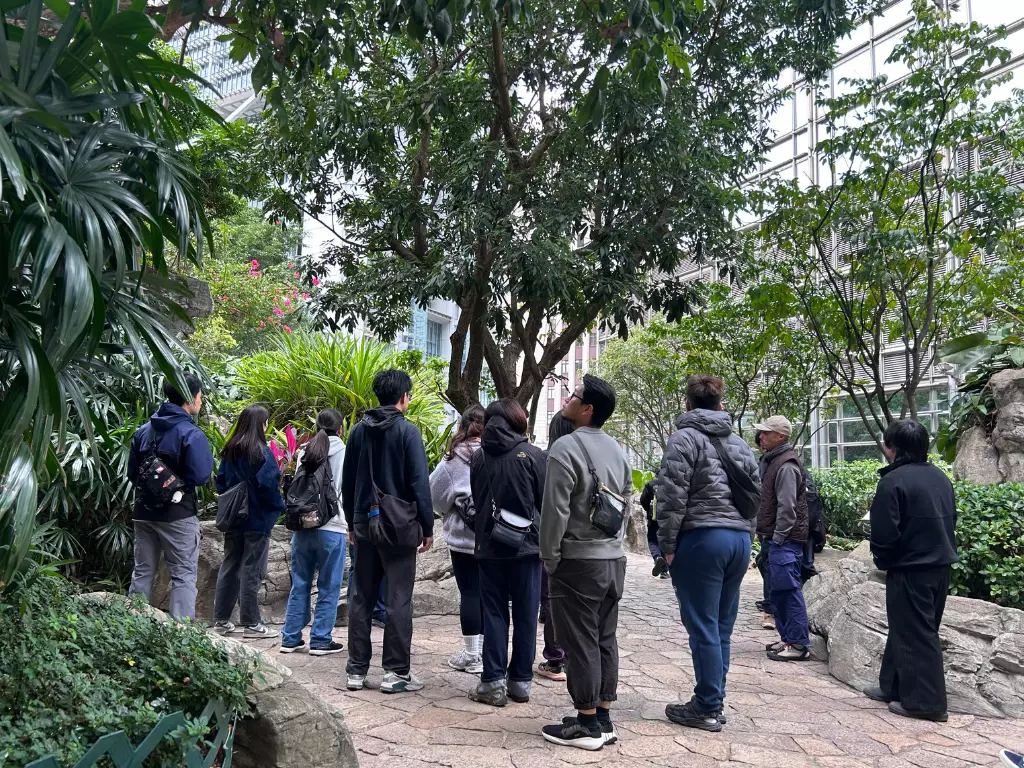
Arborist trainees conduct on-site inspections to assess tree growth conditions. Photo source: DEVB
The Highways Department takes timely and necessary risk mitigation measures, arranging for qualified tree climbers to prune or remove hazardous branches. Photo source: HyD
In response to enquiries from Bastille Post, the three departments said they are stepping up efforts to deploy advanced technologies for more precise tree risk assessment. The Development Bureau noted that its Tree Management Office (TMO) and frontline departments have widely adopted Resistograph testing and tomographic scanning to evaluate the internal health and structural integrity of trees with greater accuracy. Currently, DEVB is piloting tree-tilt sensors, remote-sensing multispectral imaging, 3D LiDAR scanning, and drone-assisted inspections, while also exploring the potential of artificial intelligence (AI) to further enhance efficiency.
Sonic Tomography for Trunk Decay Assessment
The Highways Department and the Leisure and Cultural Services Department have each adopted tailored approaches to tree risk management. HyD employs sonic tomography for non-invasive assessment of trunk decay, Resistograph to pinpoint decayed areas with precision, and measuring instruments to monitor tree movement. LCSD, for its part, utilises Resistograph, sonic tomography, tree root mapping, small drones, and LiDAR scanning technology, alongside QR-coded tree tags and mobile applications, to systematically record monitoring data and enhance overall management efficiency.
Building on these technology-assisted maintenance efforts, the three departments step up risk assessment work annually before the rainy season. Regarding pre-typhoon tree risk management, the Highways Department accelerates the handling of known risk cases before typhoons arrive and requires contractors to deploy tree management teams to address fallen trees promptly when conditions are safe, once the Hong Kong Observatory announces that a Tropical Cyclone Warning Signal No. 8 or above will take effect within hours. In the aftermath, the Department also conducts rapid inspections of trees in high-traffic areas.
LCSD's tree care team and horticulture contractors reinforce preparedness before each typhoon season. This includes prioritising inspections of old and valuable trees and high-risk locations, pruning overly dense canopies to reduce wind resistance based on species characteristics, and strengthening support for young trees.
LCSD personnel employ sonic tomography equipment to assess the internal health of trees. Photo source: LCSD
Nine Departments Manage 1.6 Million Trees
To underpin these efforts, the Government has established a clear management framework. The Development Bureau states that trees on government land are managed under an "integrated management approach," whereby the department responsible for maintaining a government facility or land under its jurisdiction is also responsible for the trees within that area. The nine core tree management departments are: the Agriculture, Fisheries and Conservation Department; the Architectural Services Department; the Civil Engineering and Development Department; the Drainage Services Department; the Highways Department; the Housing Department; the Lands Department; the Leisure and Cultural Services Department; and the Water Supplies Department.
By way of example, as of the end of 2025, the Leisure and Cultural Services Department managed approximately 526,000 trees, while the Highways Department managed around 583,000. Currently, roughly 1.6 million trees are under the care of these nine core departments. This figure, however, does not include trees on unallocated or unleased government land under the purview of the Lands Department, nor trees within country parks, which are only counted at frequently used locations and around facilities.
The Highways Department takes timely and necessary risk mitigation measures, arranging for qualified personnel to operate elevated work platforms to prune or remove hazardous branches. Photo source: HyD
The Tree Management Office (TMO) of the Development Bureau is responsible for formulating overall tree management strategies and measures, and for coordinating and supervising the tree maintenance work of frontline departments at the central level. The frontline tree management departments, in turn, assign appropriate personnel or outsourced contractors to carry out the necessary maintenance work.
The Development Bureau said that, to ensure public safety, tree management departments conduct tree risk assessments annually before the rainy season in accordance with the Guidelines for Tree Risk Assessment and Management Arrangement for trees at high-traffic areas. The process begins with tree group inspections. Where problems are identified, immediate mitigation measures, such as canopy pruning and deadwood removal, are taken; trees at risk of collapse are removed as soon as possible. Departments also identify trees requiring enhanced maintenance through the group inspections, conduct individual risk assessments, and take appropriate action based on their health and structural condition.
Arborist trainees conduct on-site inspections to assess tree growth conditions. Photo source: DEVB
Beyond species selection and planting arrangements, talent development is equally important. In 2020, the Development Bureau established a HK$200 million Urban Forestry Support Fund, launching a learning grant scheme, an internship scheme, and a tree management personnel registration system to encourage young people to enter the industry and raise professional standards to meet future tree maintenance needs.