China's plan to develop indigenous 6G technology solutions by 2029 will power booming sectors such as the low-altitude economy and logistics, and accelerating the rollout of communication networks for intelligent AI agents, an industry researcher said.
As the next-generation mobile infrastructure succeeding 5G, 6G represents a fundamental shift from simply connecting devices to intelligently connecting everything. The technology is expected to achieve peak speeds of up to 1 terabit per second -- up to 100 times faster than 5G, while seamlessly integrating communications with sensing, computing, and AI across a network spanning space, air, and ground.
"With our three-dimensional coverage, ultra-low-latency and high-bandwidth capabilities, we can empower sectors such as the low-altitude economy, public security, and logistics. In terms of AI applications, we can enable intelligent-agent communication, accelerate the deployment of these use cases, and drive their commercial rollout," said Wang Guanli, a researcher on space-air-ground integrated network at China Unicom.
Globally, no country has launched commercial 6G yet, with all major players currently locked in the research and development and standards-defining phases. China began its 6G push early and has completed its first phase of technical trials. During these trials, the country validated over 300 key technology reserves, providing proven, working solutions for the next stage. China also holds roughly 40 percent of global 6G core patents. The first global standard is expected to be finalized by 2029, with commercial rollout targeted for 2030.
China's Ministry of Industry and Information Technology (MIIT) launched a joint ministry-provincial collaborative pilot program for 6G innovation and development in June. The program aims to provide strong support for the future commercial rollout of 6G.
Key priorities include advancing frontier 6G technologies, deepening integration of communications with artificial intelligence, satellite internet, and wireless sensing, as well as stepping up research and development on 6G base stations, core network equipment, terminals, chips, and operating systems.
Pilot regions will explore 6G use cases tailored to local conditions, targeting sectors such as immersive communications, industrial manufacturing, low-altitude economy, embodied intelligence, and smart maritime operations.
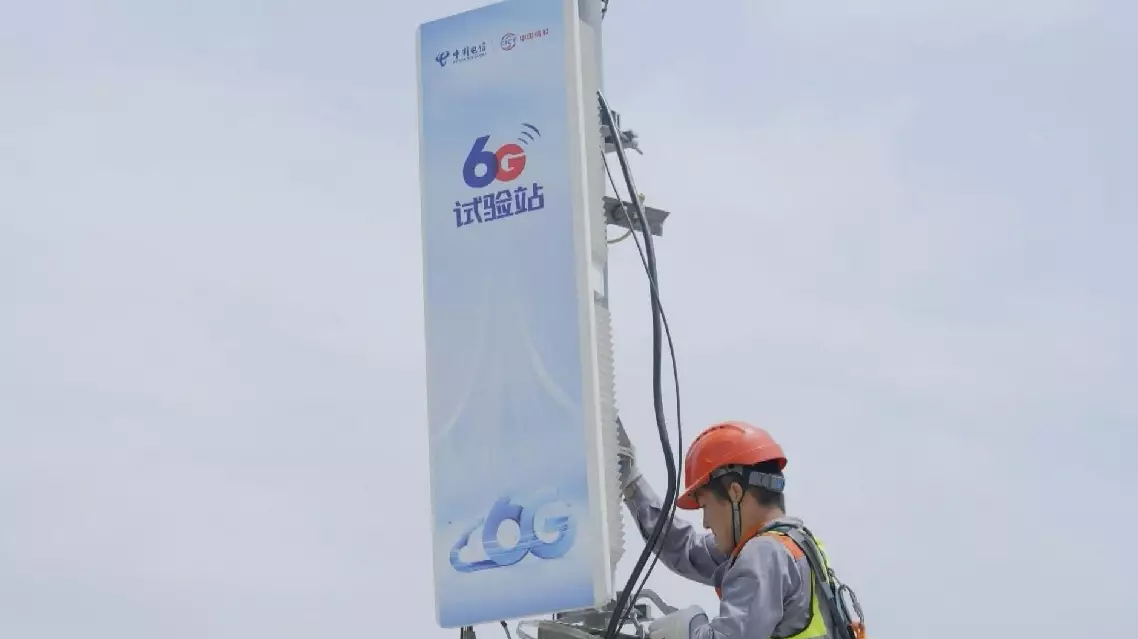
China's 6G development plan will power emerging sectors: researcher