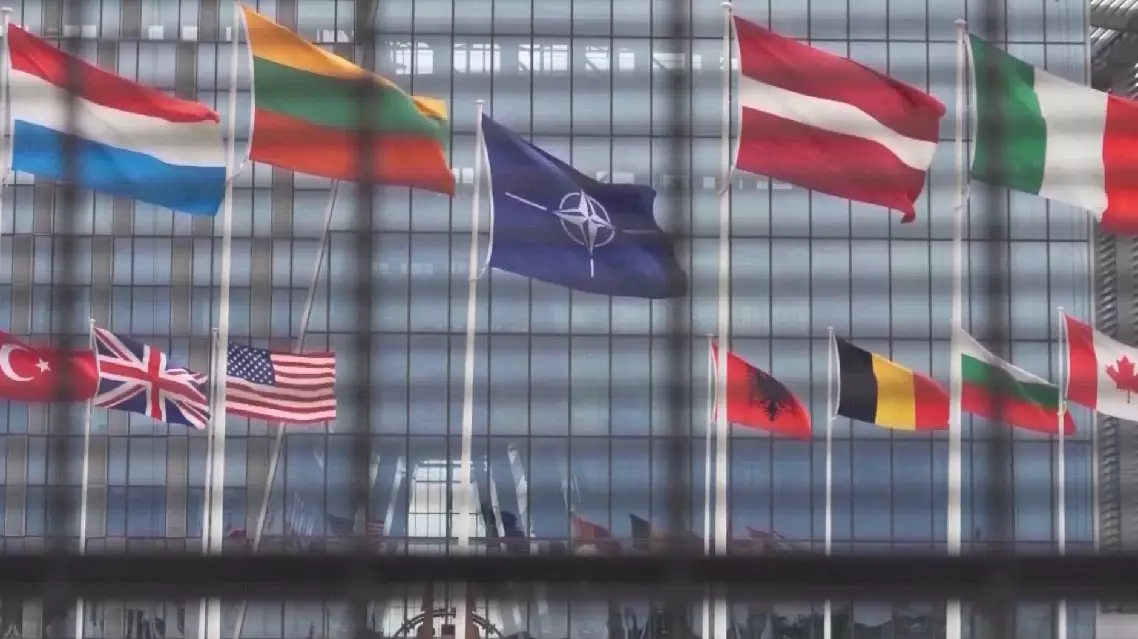
North Atlantic Treaty Organization (NATO)'s perception that Russia would attack European countries could come at a high cost, with defense spending squeezing social budgets in the EU, eventually hurting people's livelihood, an expert has warned.
NATO held its first Defense Industry Forum on Tuesday alongside its summit in Ankara, signaling a new push to strengthen the alliance's military-industrial base. Analysts say the move could harm social spending and daily life in Europe.
The forum brought together political leaders, senior military officials, and defense industry executives as NATO urges members to increase defense spending, boost arms production, and deepen industrial cooperation.
In his opening remarks, NATO Secretary General Mark Rutte said that there could be "no strong defense without a strong defense industry," calling for faster procurement, closer cooperation between governments and industry, and expanded production capacity.
Rutte announced new multinational procurement initiatives worth billions of U.S. dollars, covering airborne surveillance aircraft, high-altitude surveillance drones, and counter-drone systems.
The Ankara summit took place against the backdrop of mounting U.S. pressure on European allies to assume greater responsibility for their own defense.
A key agenda expected at the summit is how to implement the agreement reached at last year's NATO summit in The Hague, where its member states were committed to increasing defense-related expenditure to 5 percent of gross domestic product by 2035.
On the same day, European Commission President Ursula von der Leyen emphasized in a statement that the European Union is determined to mobilize 800 billion euros into its defense system by 2030.
Huseyin Bagci, professor of international relations at the Middle East Technical University, criticized the move, warning that it would come at a high cost.
"In order to protect this perception that Russia would attack European countries, the price is very high. Social life will suffer from this because military industry will take more money and social spendings will be less," he said.
Also at the summit, Ukrainian President Volodymyr Zelensky called on Europe to establish its own missile defense system and immediately acquire affordable, mass-producible anti-ballistic missile capabilities.
In a joint brief statement with Rutte on the same day, Zelensky reiterated Ukraine's urgent hope for NATO to swiftly deliver military aid, particularly missile support from the United States.
NATO's Russian threat perception could squeeze EU's social spending: analyst