PRINCETON, N.J.--(BUSINESS WIRE)--Jul 8, 2026--
Lingraphica, a leader in augmentative and alternative communication (AAC), has launched Conversations, a new tool for people with communication challenges to engage in more spontaneous discussions.
This press release features multimedia. View the full release here: https://www.businesswire.com/news/home/20260708229328/en/
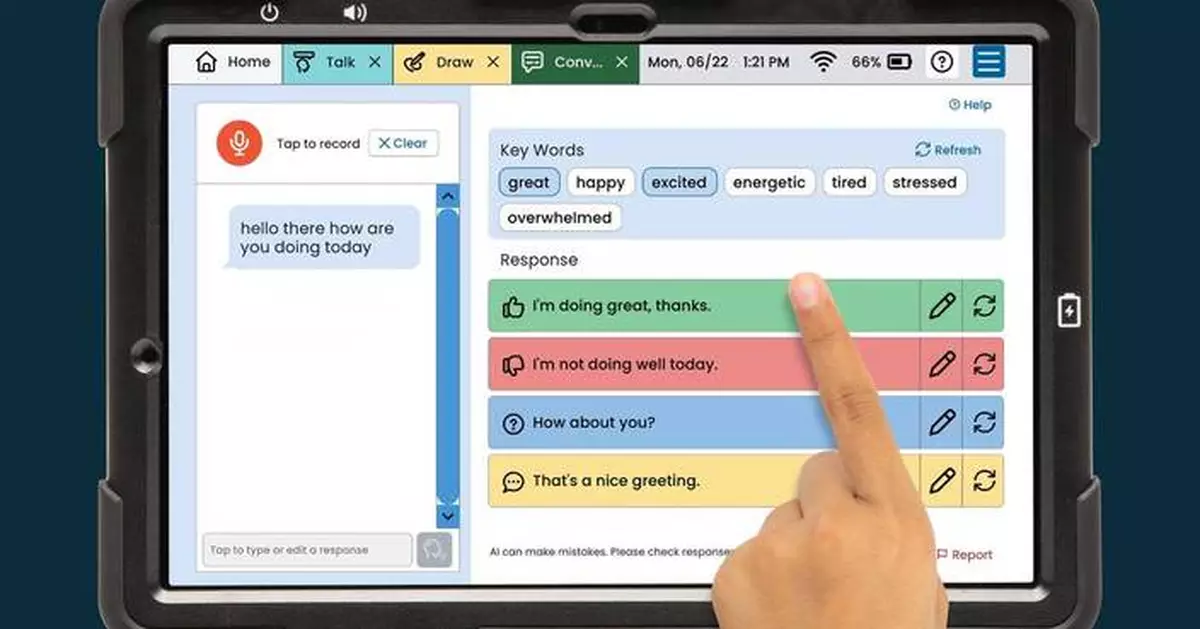
The communication tool, available as an app within Lingraphica devices on the Hub suite, leverages artificial intelligence (AI) to suggest responses based on transcribed spoken input so that device users can participate more fully in spur-of-the-moment conversations.
“Conversations represents where Lingraphica is headed: toward more connected, responsive communication support that helps people participate more fully in everyday life,” said Kevin Self, CEO of Lingraphica. “By combining clinical insight, user-centered design, and thoughtful AI, we’re expanding what AAC can make possible.”
New technology for new tools
Lingraphica has always been at the forefront of using technology to improve communication for people with communication impairments. Spontaneous conversation has long been a challenge for AAC device users. Based on user research, real-world data, and clinical expertise, Lingraphica chose AI to help people communicate more effectively in life’s unscripted moments.
Lingraphica wanted to ensure device users remain in control of what and how they choose to communicate, with AI serving as a tool to support their own voices. The product team was fully committed to making sure any AI integrations were implemented ethically.
“Lingraphica device users have highly personalized tools to help them express themselves, including traditional AAC methods like images, icons, text-to-speech, and pre-recorded phrases and statements,” said Caitlin Mueller, M.S., CCC-SLP, director of education and research at Lingraphica. “But sometimes casual conversations can move more quickly than a device user can access these tools. Conversations gives them a quick, flexible method of responding and engaging in these situations.”
Initial results in everyday conversations
In an early test of 13 adult Lingraphica device users, Lingraphica found promising results that Conversations could make a real impact.
Lingraphica rolled out Conversations beta version to a group of device users in Q2 2026. Since then, SLPs and users have reported using the tool in everyday situations to have fuller conversations with physicians and medical teams, make daily plans with family and friends, and even practice social situations like ordering a favorite coffee. Many users integrate Conversations into their workflow with other tools on the device to fill in gaps.
“Results in the beta test showed a wide range of innovative uses for Conversations,” said Katie Driscoll, vice president of product at Lingraphica. “Anytime we introduce new technology to AAC users, they find novel ways to use the tool to benefit their everyday lives. Communication tools like AAC must adapt and be individualized for different experiences, lifestyles, and abilities. We will continue to leverage user feedback and use cases to improve Conversations and create new capabilities. We will always focus on improving the lives of those we serve and helping people participate in the conversation again, and we’re excited about how Conversations and other features currently in development will serve this need.”
Conversations today and in the future
Conversations is now available on any Lingraphica device running the updated Hub software platform for adult users age 18+.
Because AAC device users and people with communication challenges have varying needs for communication, Conversations includes configurable settings that allow clinicians and users to tailor how the experience works based on individual needs and preferences.
As with all Lingraphica technology, the team is constantly seeking ways to improve Conversations. Future development plans include allowing for deeper personalization, more relevant responses, and changes to the layout of the tool based on user input. Additionally, Lingraphica is looking to expand Conversations into Spanish language capabilities.
About Lingraphica
Lingraphica is a pioneer and leading innovator in augmentative and alternative communication technology. Empowering individuals with speech and language challenges, Lingraphica develops state-of-the-art devices, software, and tools to foster connection and improve quality of life. Headquartered in Princeton, NJ, Lingraphica serves users, caregivers, and speech-language professionals nationwide with compassionate support and evidence-based solutions. To learn more, visit Lingraphica.com.
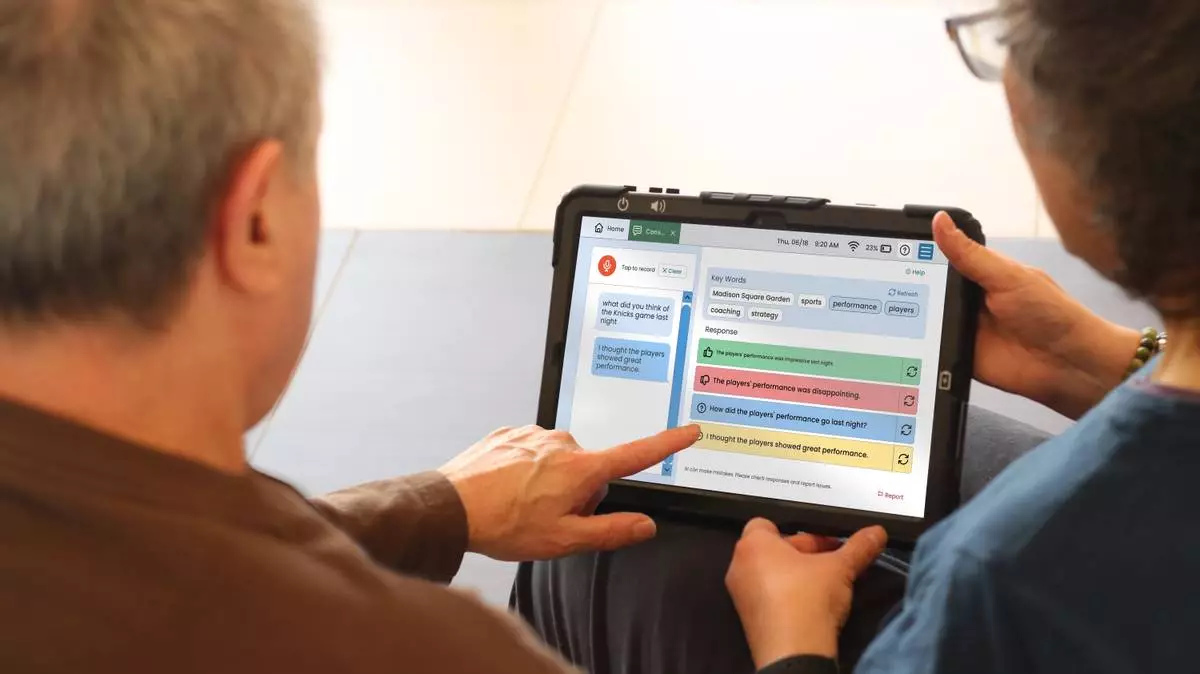
Lingraphica's new Conversations tool is being used for spontaneous conversations within AAC devices.
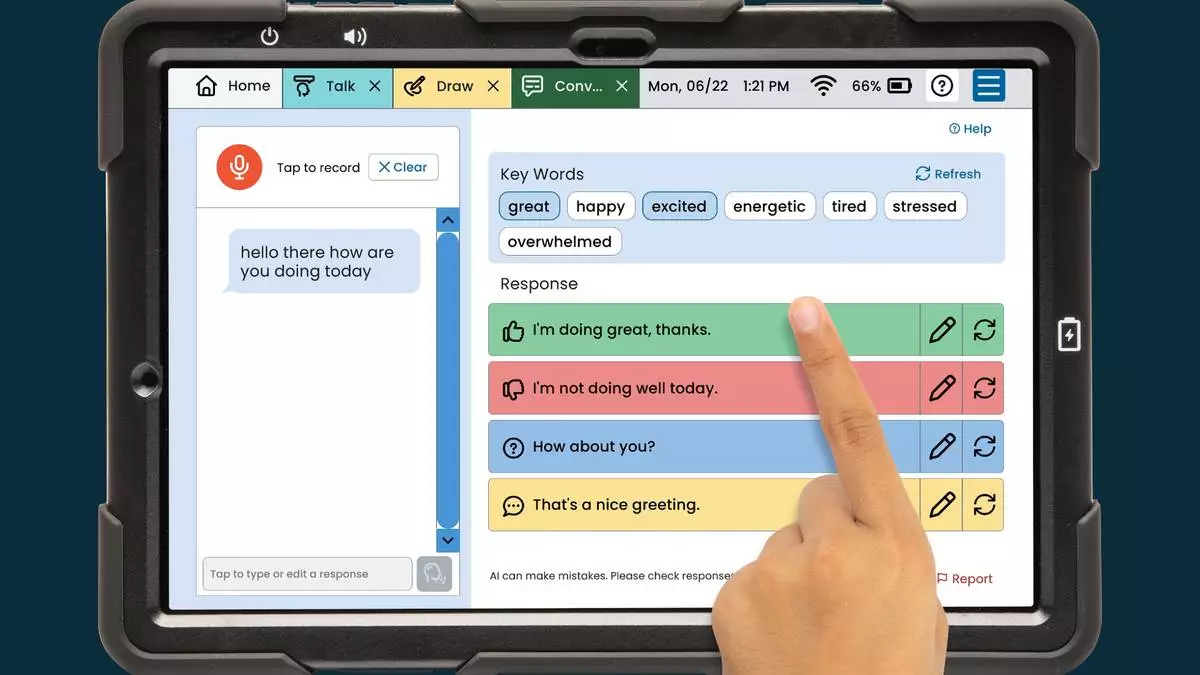
Close-up of the AI-supported Conversations tool that is available within Lingraphica devices.
NEW YORK (AP) — Oil prices are rising, and stock markets are dropping worldwide Wednesday after President Donald Trump raised doubts about the temporary truce in the war with Iran.
The S&P 500 fell 1% after Trump said the agreement to pause fighting was “over,” though he added that he would allow negotiations to continue. The Dow Jones Industrial Average was down 831 points, or 1.6%, as of 11:45 a.m. Eastern time, and the Nasdaq composite was 1% lower.
The action was stronger in the oil market, where the price for a barrel of Brent crude climbed 8% to $80.09. That’s well below its peak from earlier in the war, when the price for the most actively traded contract reached nearly $120. But the jump is unsettling because oil prices had just dropped back to where they were before the war.
The worry is that a continuation of the war will block the Strait of Hormuz and prevent the delivery of crude from the Persian Gulf to customers worldwide. That could worsen inflation, which economists expected would ease with oil prices, and in turn force the Federal Reserve and other central banks to raise interest rates.
Higher rates can keep a lid on inflation, but they also slow the economy and hurt prices for all kinds of investments.
Losses for stock markets in Europe accelerated, and oil prices climbed immediately after Trump said, “For me, I think it’s over” about the status of the ceasefire. He added that U.S. representatives can continue negotiations, “but I think they’re wasting their time.”
Trump later said the United States was preparing for another night of strikes against Iran.
On Wall Street, companies with big fuel bills fell sharply. American Airlines lost 5.9%, and United Airlines fell 4.9%.
Stocks of companies in the housing industry were also weak. They were hurt by worries that rising Treasury yields in the bond market will lead to higher rates for mortgages and chill the industry.
Builders FirstSource, which sells countertops, windows and other building supplies, fell 6.6%. Homebuilders PulteGroup fell 4.6%, and D.R. Horton sank 4.5%.
Drops of 4% for Sherwin-Williams and 3.3% for Home Depot were two of the biggest reasons the Dow was heading toward its worst loss in about a month.
Helping to offset those losses was a steadying for some influential stocks in the artificial-intelligence industry. They’ve been under pressure in recent weeks on worries that their prices shot too high and that AI may not produce enough productivity and profits to make all the investments in chips and data centers worth it.
Their swings carry a lot of weight on Wall Street because AI stocks have grown into some of the U.S. market’s biggest, giving their movements more effect on the S&P 500 than other stocks.
Nvidia rose a modest 0.3%, for example, and was the second-strongest force pushing upward on the S&P 500 because it's the largest stock on Wall Street.
The strongest push upward on the market came from Broadcom, which rose 4.1%. Apple announced a multiyear commitment with Broadcom to design and produce custom components for its products. Apple said the agreement's value could top $30 billion.
In the bond market, Treasury yields rose with the price of oil. The yield on the 10-year Treasury climbed to 4.59% from 4.55% late Tuesday and from just 3.97% before the war with Iran began.
In stock markets abroad, losses for European markets worsened after Trump made his comments, and Germany’s DAX lost 2.2%.
In Asia, South Korea’s Kospi dropped 5.3% and continued its sharp swings amid dueling worries and euphoria about the AI stocks that dominate its market.
Hong Kong’s Hang Seng index was an outlier and rose 3%.
Shares that trade in Hong Kong of Chinese AI startup Zhipu, known also as Z.ai and traded as Knowledge Atlas Technology, jumped 13.4%.
A six-month lock-up period for “cornerstone” investors following its January trading debut in Hong Kong expires this week. China National Radio reported late Tuesday that nearly 70% of Zhipu’s cornerstone investors are committed to stay on, despite previous worries that the lock-up period expiration could trigger a sell-off.
Zhipu’s share price has risen more than 1,300% since its debut.
AP Business Writers Matt Ott, Chan Ho-him and Elaine Kurtenbach contributed to this report.
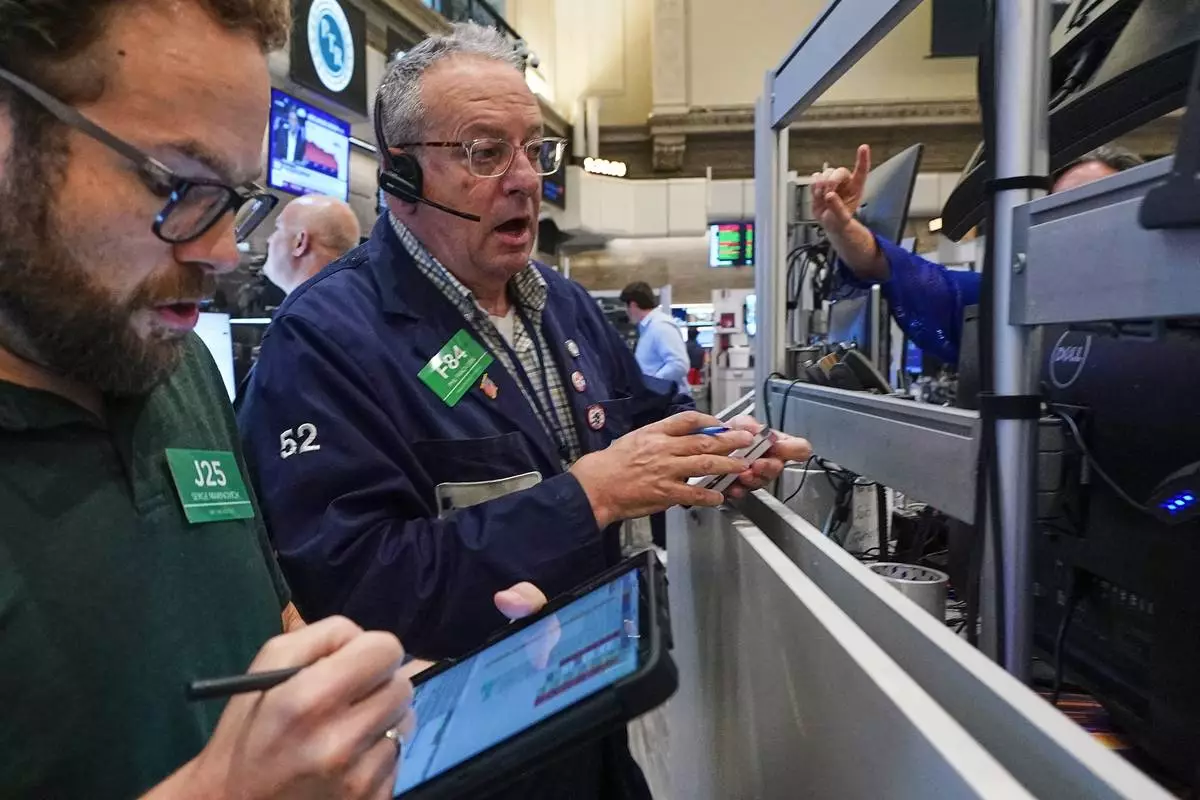
Options traders Serge Marinovich, left, and Phil Phil Fracassini work on the floor of the New York Stock Exchange, Friday, June 26, 2026. (AP Photo/Richard Drew)
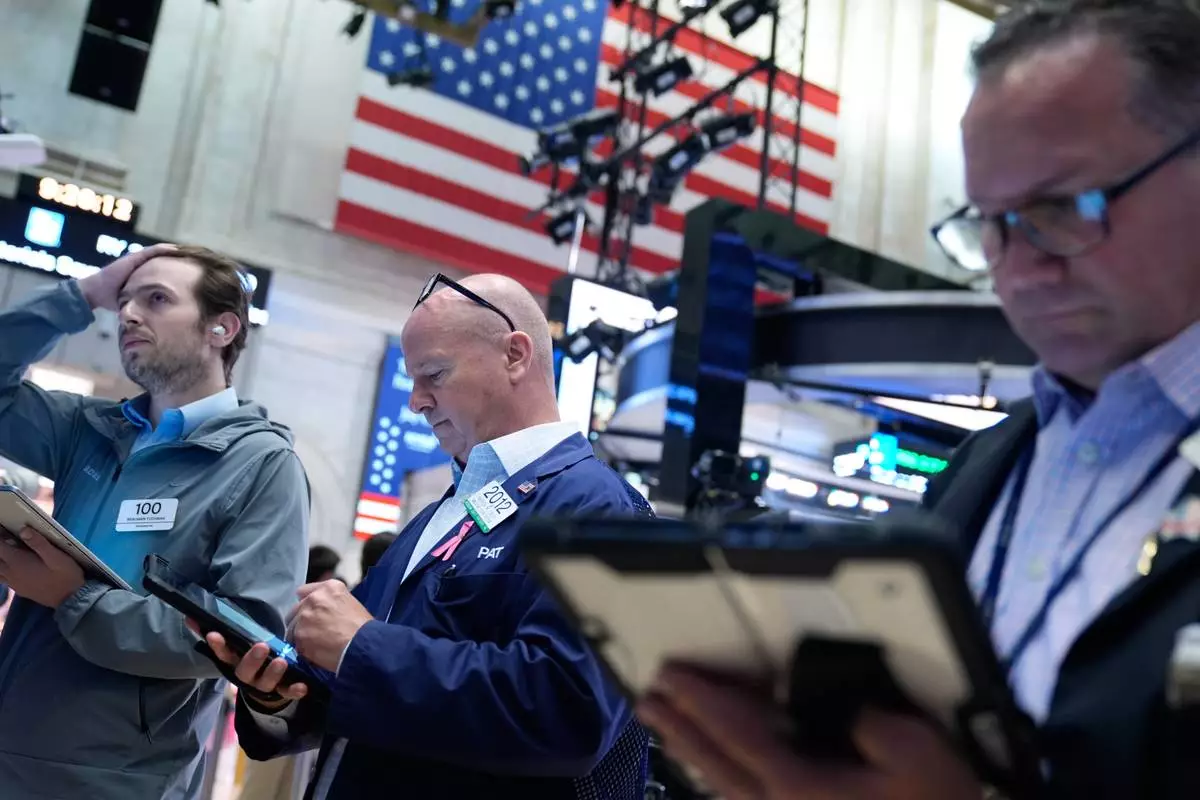
Traders work on the floor at the New York Stock Exchange in New York, Monday, July 6, 2026. (AP Photo/Seth Wenig)
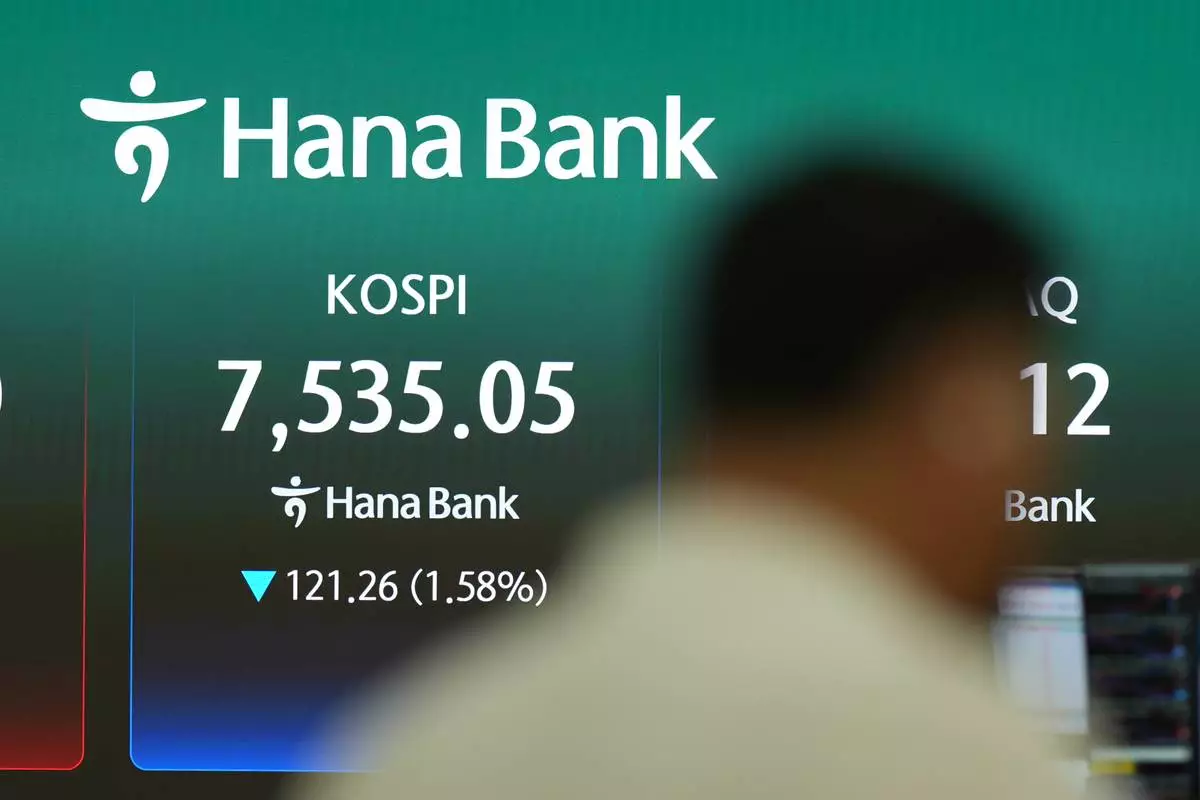
A member of media stands near the screen showing the Korea Composite Stock Price Index (KOSPI) at a dealing room of Hana Bank in Seoul, South Korea, Wednesday, July 8, 2026. (AP Photo/Lee Jin-man)
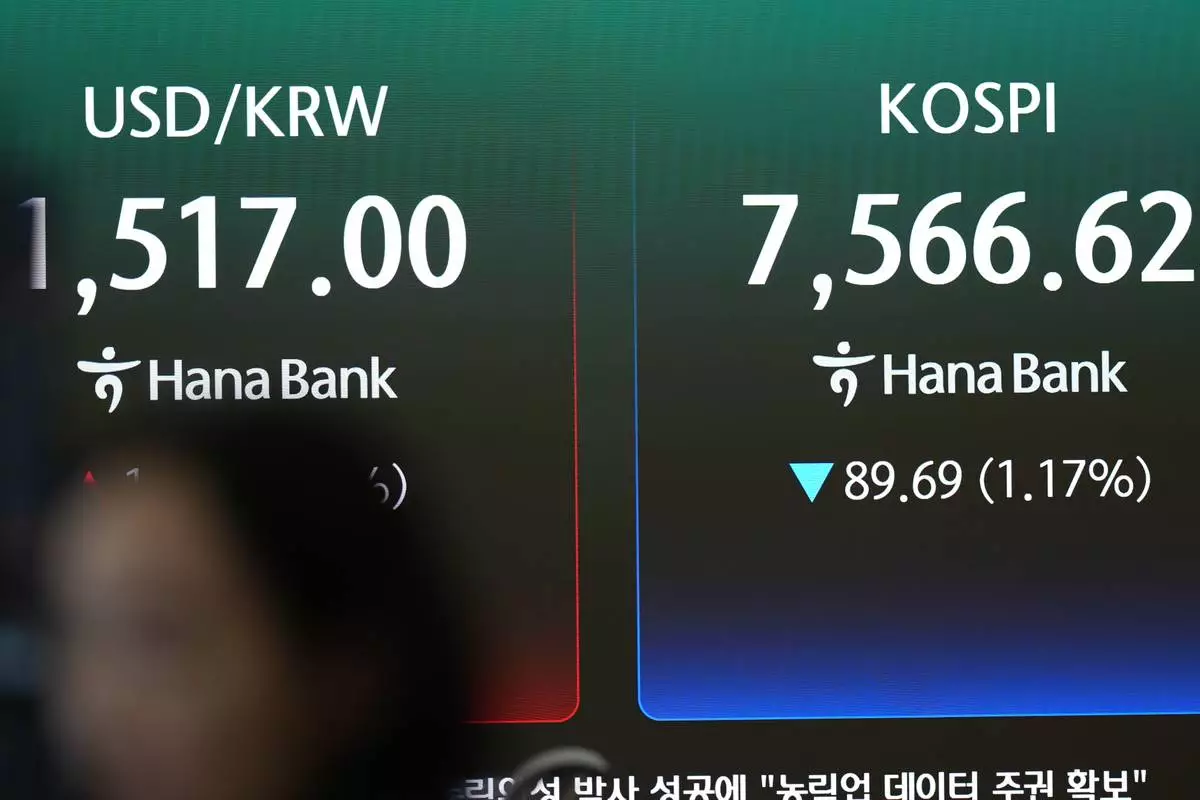
A dealer watches computer monitors near the screens showing the Korea Composite Stock Price Index (KOSPI) and the foreign exchange rate between U.S. dollar and South Korean won at a dealing room of Hana Bank in Seoul, South Korea, Wednesday, July 8, 2026. (AP Photo/Lee Jin-man)

Currency traders pass by a screen showing the Korea Composite Stock Price Index (KOSPI), left, SK Hynix and Samsung Electronics Co., right, stock price at the foreign exchange dealing room of the Hana Bank headquarters in Seoul, South Korea, Tuesday, July 7, 2026. (AP Photo/Ahn Young-joon)
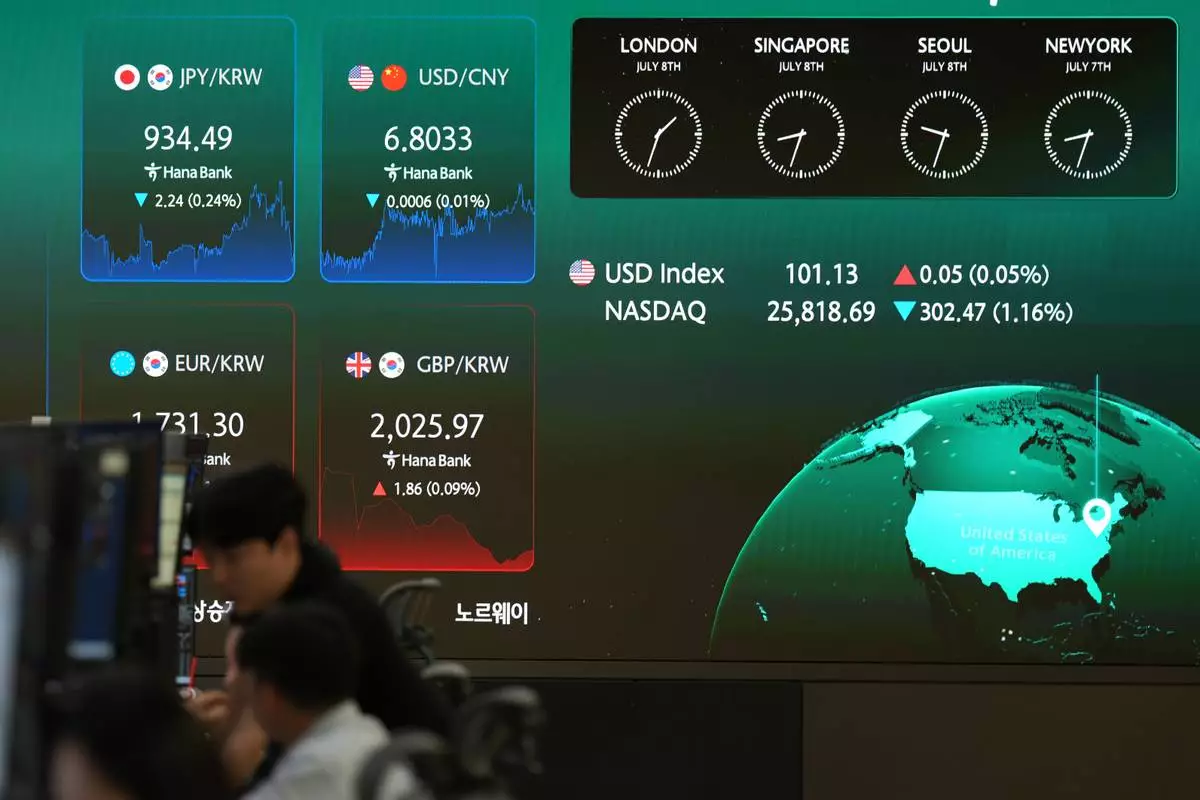
Dealers talk near the screens showing foreign exchange rates at a dealing room of Hana Bank in Seoul, South Korea, Wednesday, July 8, 2026. (AP Photo/Lee Jin-man)
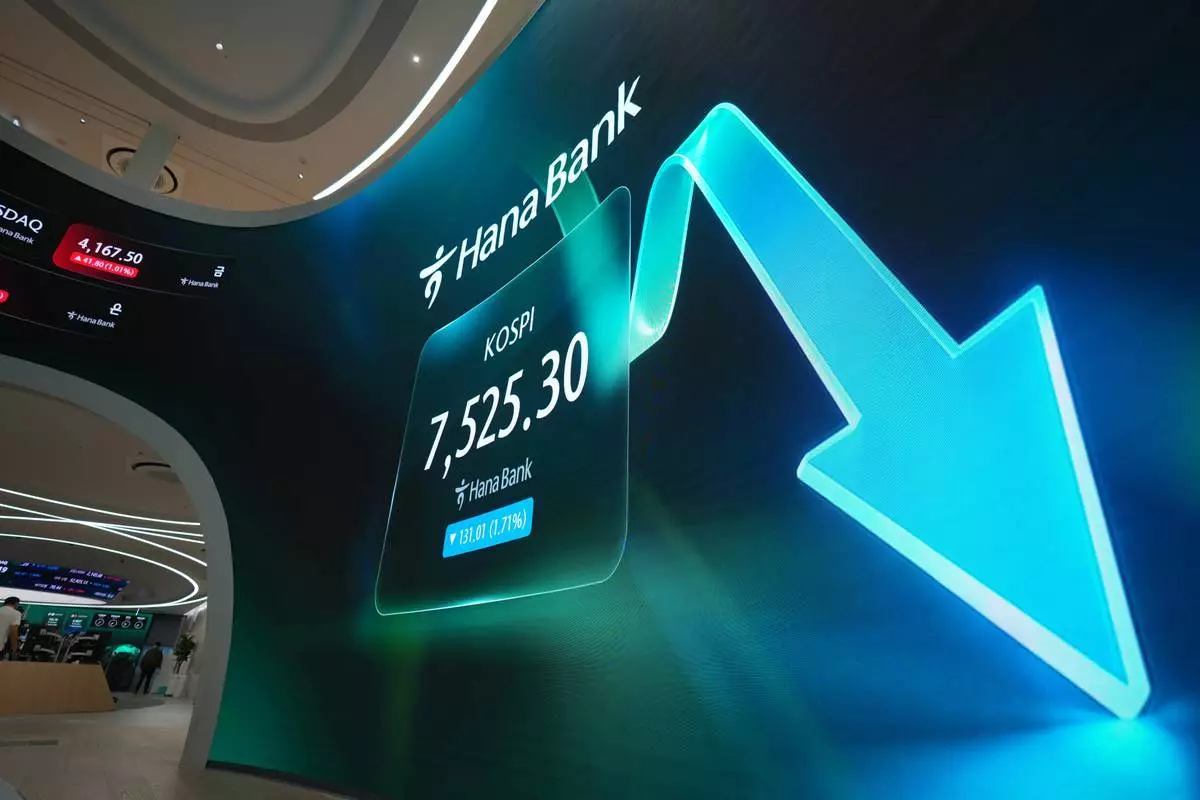
A screen shows the Korea Composite Stock Price Index (KOSPI) at a dealing room of Hana Bank in Seoul, South Korea, Wednesday, July 8, 2026. (AP Photo/Lee Jin-man)