American officials used to preach the "rules-based international order" at every turn. That phrase now sounds like a punchline. Add one word and it tells the truth: an international order based on American rules.
The World Cup has produced a scandal, and the United States is at the center of it. In the Round of 32 on July 1, the US beat Bosnia and Herzegovina 2-0. But star striker Folarin Balogun stepped on an opponent's heel and picked up a red card. FIFA rules say a red card triggers a one-match ban. That should have kept Balogun out of the Round of 16 clash with Belgium on July 6.
The New York Times reports that Donald Trump got personally involved. He called FIFA President Gianni Infantino the same day. Trump argued the red card was controversial and pressed FIFA to reconsider the suspension.
FIFA folded, but with a twist. On July 5, the governing body confirmed Balogun had violated Articles 14 and 26 of its Disciplinary Code and handed down a one-match ban. Then it invoked Article 27, which allows disciplinary measures to be suspended in full or in part, to defer the ban for a year. Balogun was free to keep playing through the rest of the tournament.
The backlash was immediate and global. Trump, unmoved by the criticism, thanked FIFA for making the "correct decision" and for "correcting a grave injustice."
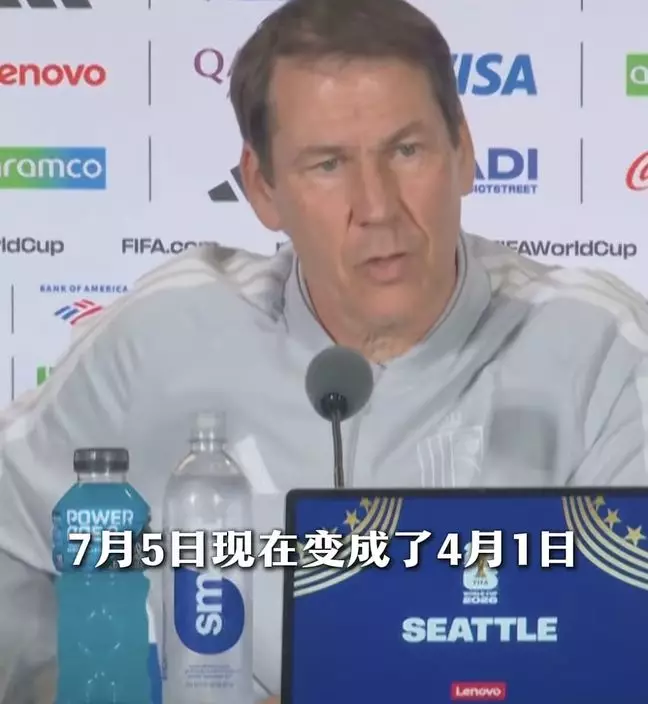
Belgium did not take it quietly. Deputy Prime Minister and Foreign Minister Maxime Prévot, a former referee himself, said he had spent his career upholding fair rulings. He put it bluntly: "If a phone call truly underpins this incomprehensible decision, then it amounts to undermining the most fundamental rules of football and sport." Belgium's head coach, Rudi Garcia, was even sharper. "I didn’t know that July 5 was equal to April 1 at FIFA," he said, adding that his complaint wasn't about defending Belgium or attacking FIFA. It was about "defending in football".
Other national teams piled on. England manager Thomas Tuchel asked the question everyone was thinking: "Where does this precedent begin, and where does it end?" His point cuts to the core of the scandal. Power and influence can now override sporting judgment, and a single phone call from a global superpower was enough to erase the idea of fair competition.
Maybe football still has a sense of justice. On July 6, Balogun started despite his dirty play, but Belgium still thrashed the United States 4-1. The score itself felt like a curse, a brutal callback to the tournament's own April Fool's farce.
There was a time when the United States looked both powerful and admirable, a country that was simply always right. I grew up watching American Westerns, the kind starring Clint Eastwood, where heroic cowboys gunned down "Indians" cast as savage and brutal. Even the word "Indians" carries that discrimination baked in, reducing Native Americans to "redskins". Those films erased a brutal history: European colonizers massacring Indigenous peoples across the Americas with superior weapons.
Seize the land, wipe out the people, then cast yourself as the hero. American ideology in a nutshell. Turning bloody history into entertainment and exporting it to the world is something only the United States has pulled off this well, and Hong Kong has not been spared its influence.
At the height of American power, even scandals got repackaged as virtues, seamless and airtight. That is no longer the case. As US power declines and its position weakens, the cracks are showing everywhere. A president meddling in a football ruling has now become global news. Similar things likely happened before, when America's power was unquestioned, but back then nobody dared expose them.
Lo Wing-hung
Bastille Commentary
** 博客文章文責自負,不代表本公司立場 **
China's strategy is simple: throw one punch to avoid a hundred.
On Wednesday, August 5, China fired back with five consecutive moves to counter a string of recent US measures that Beijing sees as hostile. A spokesperson for China's Ministry of Commerce called the countermeasures "generally restrained." The message was clear: since the China-US presidential meeting in Busan, the US Federal Communications Commission has ignored China's strong opposition and industry appeals. It keeps stretching the concept of national security to roll out restrictions on China.
Meanwhile, the US has added over 40 Chinese entities to the so-called Uyghur Forced Labor Prevention Act entity list. China demands the US immediately revoke these measures. And if Washington insists on new restrictions, "China will further retaliate."
China's moves are a direct answer to a series of petty US actions that fall into two main areas.
First, the FCC. Before the government took action, the People's Daily fired a warning shot. Under the byline "Zhong Sheng," it blasted the FCC for hiding behind banners like "non-discrimination" and "national security" to discriminate against and suppress Chinese companies.
The FCC recently added foreign-made power inverters and advanced robotic equipment to its so-called "Covered List." That means new models can't get certification and are locked out of the US market. The paper called the tactic typical unilateral bullying.
This isn't new. Back in 2021, the FCC put telecom and video surveillance gear from five Chinese companies on the list. Since then, it has steadily widened the net. In April, it proposed revoking the qualifications of testing and certification bodies from countries that haven't signed a "Mutual Recognition Agreement" with the US. That artificially raises the compliance bar for Chinese products.
And now, Reuters reports the FCC is drafting a ban on imports of new Chinese-made optical communication transceivers for data centers.
Second, the Xinjiang sanctions. On July 30, the US Department of Homeland Security added over 40 Chinese entities to the entity list under the Uyghur Forced Labor Prevention Act. The move, effective August 3, swells the list from 144 to 187, the biggest expansion since it was created. The new targets span food, clothing, and cotton. They include snack maker Qia Qia melon seeds, frozen food producer Zhengzhou Synear dumplings, and apparel brand Fujian Septwolves.
When the news hit the Chinese internet, netizens erupted in mockery. The joke going around teasing that "eating melon seeds can easily damage US soldiers' teeth."
China didn't waste a second. It fired back with five countermeasures, and the first one hits where it hurts: drones. Beijing is tightening export controls on drones and related technologies to the US. From now on, every shipment of drones, key components, and controlled technologies will face a strict case-by-case review.
And forget about any 'licensing facilitation' exemptions—those are off the table. Think about it: China is the world's drone superpower. The US wanted to block Chinese drones from coming in. Now China is flipping the script—it's restricting what goes out. The message is blunt: just because you want to buy doesn't mean we'll sell. Especially not advanced drones and components with military uses.
The second measure is a highly targeted strike: China has added six US entities to its Countermeasures List, all of which it says assisted US sanctions on Xinjiang-related companies.
Applied DNA Sciences, Inc. is believed to provide DNA-based traceability and verification services for relevant products.
Stratum Reservoir, LLC is believed to conduct stable-isotope testing and related analysis to determine the origin of Xinjiang-linked materials.
Altana Technologies, Inc., which operates a global supply-chain mapping and management platform, is believed to help the US government trace supply chains involving Xinjiang-linked products.
The Responsible Business Alliance, which promotes responsible business conduct in global supply chains and operates assessment programmes for member companies, is believed to help companies exclude Xinjiang-linked products from their supply chains.
Verité Group, Inc., a nonprofit focused on labour rights and human rights, examines alleged forced labour in global supply chains.
Human Rights in China, a New York-based human-rights organization, advocates sanctions related to Xinjiang.
China’s countermeasures against these six entities are therefore highly targeted.
The third measure targets a US compliance testing company that helped the FCC impose China-related sanctions. That company will now be locked out of the compliance testing business in the Chinese market. The ripple effect: it could drive up compliance costs for US products trying to enter China.
The fourth measure hits at the heart of product certification. China is suspending the entrustment of US agencies to conduct factory follow-up inspections for CCC certification. Remember, CCC certification is a must-have for US products to enter the Chinese market. By pulling the plug on US inspectors, China shifts the review work to its own agencies. That spells more time and more uncertainty for American exporters.
The fifth measure, a national security investigation into imported US printing and copying office equipment. On the surface, this one looks like a light tap.
China imported about $2.08 billion worth of such equipment in 2025, mostly from Japan ($1.72 billion). The US slice was small. But this is just the opening move.
The US has banned Chinese software and hardware from connected and autonomous vehicles on American roads—and until now, China held its fire.
Now Beijing is investigating US printers and copiers on national security grounds. The message is unmistakable: if Washington plays the national security card at every turn, Beijing can just as easily slap an 'unsafe' label on American phones and EVs running US software.
But that's not the main battlefield. Artificial intelligence is the real arena. Over the past month, Chinese companies have rolled out one high-performance, low-cost AI model after another, sending US AI giants reeling. When Anthropic released a new model in June, the US government demanded it be kept out of non-American hands. The clash forced Anthropic to pull the model. Trump signed an executive order in June setting up an AI safety framework, including a voluntary program for companies to submit cutting-edge models for government review.
Then Chinese developers like Moonshot AI and DeepSeek unleashed open-source systems that rival top-tier US models, fueling a fierce debate in Washington over how to regulate open-weight models. Anthropic CEO Dario Amodei pushed for mandatory government safety reviews for both open and proprietary models, taking direct aim at Chinese open-source systems. He won backing from Treasury Secretary Bessent and others, but ran into a wall of opposition from US tech giants, including Nvidia.
On August 4, the Trump administration delivered its verdict. In a meeting led by the Office of the National Cyber Director, top US AI companies were told that under the new AI safety framework, open-source models from Chinese rivals would not face US government safety testing.
For Anthropic, it was a crushing defeat. US National Cyber Director Sean Cairncross later spelled out the thinking at a cybersecurity conference in Las Vegas: the US government wants to back the American open-source AI ecosystem. He called such models 'tremendously valuable' and insisted the regulatory framework must stay 'flexible.'
Otherwise, he warned, 'it would not only stifle growth, development, and innovation, but the regulatory regime would become obsolete within 48 hours of completing its process.'
The bottom line: Washington keeps chipping away at China with petty moves. But when the pile gets high enough, Beijing punches back hard—and signals it has heavier blows ready.
President Xi is due to visit the US in September, and Trump will be in Shenzhen in mid-November for the APEC summit. Trump doesn't want things to spiral out of control; at crunch time, he'll yank the leash on his officials.
The real battlefield is artificial intelligence. It was almost certain that the White House's decision to leave Chinese open-source models alone came after fierce pushback from China.
Lo Wing-hung