When a country cycles through leaders at breakneck speed, the problem runs deeper than personnel. Some systems are simply incapable of producing good leaders. Britain is the textbook case.
Labour Prime Minister Keir Starmer has announced his resignation, making him the seventh prime minister Britain will have churned through in a single decade. Starmer served less than two years in office. The previous six were dominated by five Conservatives: David Cameron, Theresa May, Boris Johnson, Liz Truss, and Rishi Sunak.
Then, in 2024, Labour won power with just 34% of the vote. Thanks to Britain's first-past-the-post, winner-takes-all electoral system, it secured a parliamentary majority and governed alone. Two years on, swapping the party in power has done nothing to revive Britain's fortunes.
The political force enjoying the highest approval ratings today is the far-right Reform Party, led by Nigel Farage. Before 1992, Farage was a Conservative member. His Euroscepticism — his opposition to Britain joining the EU — drove him out. This anti-immigration, far-right figurehead has since become Britain's most popular politician.
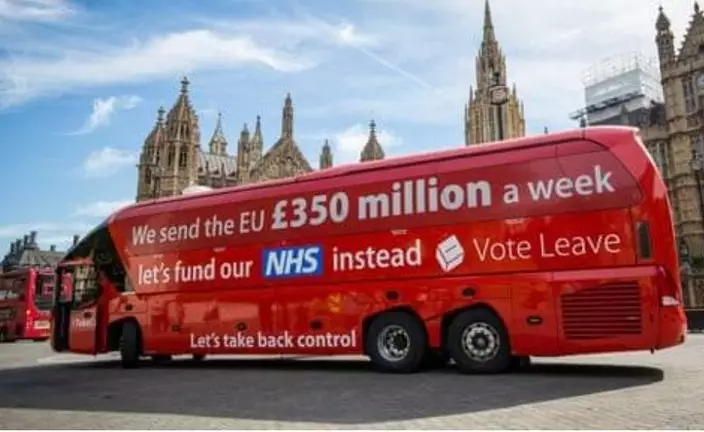
Cast your mind back ten years to today — the eve of the Brexit referendum. A red campaign bus plastered with pro-Brexit slogans became "a beautiful sight to behold". Its message read: "We send the EU £350 million a week - let's fund our NHS instead. Vote Leave."
Standing in front of that bus, freshly departed as Mayor of London, was a buoyant Boris Johnson, training his sights on his old Eton and Oxford classmate, Prime Minister David Cameron. Both were Conservatives, but at university Johnson commanded the room while Cameron kept a low profile. Johnson clearly could not stomach watching his old classmate rise to the top job. So when Cameron recklessly called a referendum on EU membership, Johnson seized the moment, positioning himself as a sniper waving the Brexit flag.
Dominic Cummings, the enigmatic architect of the Leave campaign, later admitted that it was precisely that red bus slogan that drove them to victory. With the benefit of hindsight, every Brexit promise Johnson made — chasing away migrants, saving on EU membership fees, improving British healthcare — now reads as pure farce. Johnson also served as Prime Minister from 2019 to 2022, holding real power. None of those promises were kept.
Start with the claim about NHS funding. The £350 million-a-week figure was itself inflated — the net contribution was closer to £250 million. But that deception is only the tip of the iceberg. The NHS waiting list stood at roughly 3.7 million patients in 2016. By April this year, it had ballooned to 7.22 million. The median waiting time for treatment climbed from 6.9 weeks in September 2011 to 11.9 weeks as of April this year.
The most direct cause is Brexit's dismal return on investment. Leave campaigners had promised to redirect EU membership savings into the NHS. Instead, Brexit slashed Britain's revenues. The Office for Budget Responsibility estimates that Brexit has permanently reduced UK productivity by 4%, with the overall economic cost shrinking the economy by between 4% and 8%.
The financial damage and fiscal pressure from Brexit far outstripped any savings on EU contributions. Meanwhile, inflation and an aging population have continued to push NHS running costs ever higher. Beyond empty promises, the Conservatives proved utterly incapable of addressing the NHS crisis.
The healthcare debacle, however, is only a small part of Britain's political comedy. The bigger punchline is "Brexit will drive out migrants."
Johnson pledged to bring net migration down to 100,000 a year after leaving the EU. Reality delivered the exact opposite. According to the Office for National Statistics, net migration in the year of Brexit stood at 252,000. During Johnson's three years as Prime Minister, the figure surged dramatically — peaking at 891,000 in 2022, a wave widely dubbed the "Johnson surge." Only after Labour took office did net migration begin to ease, falling to 171,000 last year.
Johnson's immigration record is steeped in irony. The core Brexit promise was to "take back control of our borders" — primarily by curbing immigration — a rallying cry that resonated with voters in England's old industrial heartlands in the north. Brexit did succeed in severing the free movement of EU nationals into the UK. Data from 2025 shows that net migration from Europe has actually turned negative, at minus 70,000 — meaning more Europeans are leaving Britain than arriving.
Plot twist: a massive influx of non-EU migrants filled that gap: care worker visas shot up from 22,000 to 101,000, and international student and academic visas poured in alongside them.
Brexit drove out the Polish lorry drivers and French chefs. First came a wave of Hong Kong BNO holders driving Ubers, then far larger numbers of refugees, workers, and students from South Asia and Africa. By year-end last year, under Labour's aggressive intervention, net migration had finally retreated to 171,000 — close to pre-referendum levels.
Oxford University's Migration Observatory, nonetheless, put it sharply in its ten-year retrospective: while the numbers may have returned to pre-Brexit levels, the composition is entirely different.
Why did Johnson's promise of Brexit reducing migration produce the exact opposite result? Brexit dramatically reduced the supply of working-class labor from EU countries, leaving the government little choice but to admit more refugees and new migrants to fill low-wage roles. Brexit also drove large numbers of high-net-worth Europeans out of the UK.
Johnson then exploited Hong Kong's social unrest in 2019 to attract Hong Kong people — along with their assets — to migrate to Britain, propping up a faltering economy. Johnson was not motivated by compassion. Using new migrants, Johnson merely robbed Peter to pay Paul , to plug the labor and capital shortfalls that Brexit itself had caused.
This is how British policy operates. The system elects a performer like Johnson — a man who perfects the art of disheveled hair and studied eccentricity. It lets him champion a catastrophic Brexit referendum. It watches him quietly abandon every campaign promise he made. Then it stands by as he imports waves of migrants as damage control. He went on to interfere in Ukrainian-Russian peace negotiations, prolonging the war. Ordinary Britons footed the bill for soaring energy prices.
And what became of this former Prime Minister? Globetrotting for paychecks — traveling all the way to Mumbai, India, to attend the lavish wedding of the younger son of Mukesh Ambani, India's wealthiest man. Collecting appearance fees and continued to rake in easy money.
Johnson faces zero consequences for the ruinous decisions he made while in power. That, apparently, is British democracy.
Some commentators say Britain has been asleep for ten years. The reality is far worse: Britain has gone bonkers for ten years, and will continue to be mad for years to come. The British system churns through accountability and prime ministers in equal measure, yet the issues people care most about only get worse. The process looks right, but it never produces the right results.
Friends who have emigrated to Britain truly need to take heed. Raising the next generation under this kind of system offers no promising future in sight.
Lo Wing-hung
Bastille Commentary
** 博客文章文責自負,不代表本公司立場 **
China's strategy is simple: throw one punch to avoid a hundred.
On Wednesday, August 5, China fired back with five consecutive moves to counter a string of recent US measures that Beijing sees as hostile. A spokesperson for China's Ministry of Commerce called the countermeasures "generally restrained." The message was clear: since the China-US presidential meeting in Busan, the US Federal Communications Commission has ignored China's strong opposition and industry appeals. It keeps stretching the concept of national security to roll out restrictions on China.
Meanwhile, the US has added over 40 Chinese entities to the so-called Uyghur Forced Labor Prevention Act entity list. China demands the US immediately revoke these measures. And if Washington insists on new restrictions, "China will further retaliate."
China's moves are a direct answer to a series of petty US actions that fall into two main areas.
First, the FCC. Before the government took action, the People's Daily fired a warning shot. Under the byline "Zhong Sheng," it blasted the FCC for hiding behind banners like "non-discrimination" and "national security" to discriminate against and suppress Chinese companies.
The FCC recently added foreign-made power inverters and advanced robotic equipment to its so-called "Covered List." That means new models can't get certification and are locked out of the US market. The paper called the tactic typical unilateral bullying.
This isn't new. Back in 2021, the FCC put telecom and video surveillance gear from five Chinese companies on the list. Since then, it has steadily widened the net. In April, it proposed revoking the qualifications of testing and certification bodies from countries that haven't signed a "Mutual Recognition Agreement" with the US. That artificially raises the compliance bar for Chinese products.
And now, Reuters reports the FCC is drafting a ban on imports of new Chinese-made optical communication transceivers for data centers.
Second, the Xinjiang sanctions. On July 30, the US Department of Homeland Security added over 40 Chinese entities to the entity list under the Uyghur Forced Labor Prevention Act. The move, effective August 3, swells the list from 144 to 187, the biggest expansion since it was created. The new targets span food, clothing, and cotton. They include snack maker Qia Qia melon seeds, frozen food producer Zhengzhou Synear dumplings, and apparel brand Fujian Septwolves.
When the news hit the Chinese internet, netizens erupted in mockery. The joke going around teasing that "eating melon seeds can easily damage US soldiers' teeth."
China didn't waste a second. It fired back with five countermeasures, and the first one hits where it hurts: drones. Beijing is tightening export controls on drones and related technologies to the US. From now on, every shipment of drones, key components, and controlled technologies will face a strict case-by-case review.
And forget about any 'licensing facilitation' exemptions—those are off the table. Think about it: China is the world's drone superpower. The US wanted to block Chinese drones from coming in. Now China is flipping the script—it's restricting what goes out. The message is blunt: just because you want to buy doesn't mean we'll sell. Especially not advanced drones and components with military uses.
The second measure is a highly targeted strike: China has added six US entities to its Countermeasures List, all of which it says assisted US sanctions on Xinjiang-related companies.
Applied DNA Sciences, Inc. is believed to provide DNA-based traceability and verification services for relevant products.
Stratum Reservoir, LLC is believed to conduct stable-isotope testing and related analysis to determine the origin of Xinjiang-linked materials.
Altana Technologies, Inc., which operates a global supply-chain mapping and management platform, is believed to help the US government trace supply chains involving Xinjiang-linked products.
The Responsible Business Alliance, which promotes responsible business conduct in global supply chains and operates assessment programmes for member companies, is believed to help companies exclude Xinjiang-linked products from their supply chains.
Verité Group, Inc., a nonprofit focused on labour rights and human rights, examines alleged forced labour in global supply chains.
Human Rights in China, a New York-based human-rights organization, advocates sanctions related to Xinjiang.
China’s countermeasures against these six entities are therefore highly targeted.
The third measure targets a US compliance testing company that helped the FCC impose China-related sanctions. That company will now be locked out of the compliance testing business in the Chinese market. The ripple effect: it could drive up compliance costs for US products trying to enter China.
The fourth measure hits at the heart of product certification. China is suspending the entrustment of US agencies to conduct factory follow-up inspections for CCC certification. Remember, CCC certification is a must-have for US products to enter the Chinese market. By pulling the plug on US inspectors, China shifts the review work to its own agencies. That spells more time and more uncertainty for American exporters.
The fifth measure, a national security investigation into imported US printing and copying office equipment. On the surface, this one looks like a light tap.
China imported about $2.08 billion worth of such equipment in 2025, mostly from Japan ($1.72 billion). The US slice was small. But this is just the opening move.
The US has banned Chinese software and hardware from connected and autonomous vehicles on American roads—and until now, China held its fire.
Now Beijing is investigating US printers and copiers on national security grounds. The message is unmistakable: if Washington plays the national security card at every turn, Beijing can just as easily slap an 'unsafe' label on American phones and EVs running US software.
But that's not the main battlefield. Artificial intelligence is the real arena. Over the past month, Chinese companies have rolled out one high-performance, low-cost AI model after another, sending US AI giants reeling. When Anthropic released a new model in June, the US government demanded it be kept out of non-American hands. The clash forced Anthropic to pull the model. Trump signed an executive order in June setting up an AI safety framework, including a voluntary program for companies to submit cutting-edge models for government review.
Then Chinese developers like Moonshot AI and DeepSeek unleashed open-source systems that rival top-tier US models, fueling a fierce debate in Washington over how to regulate open-weight models. Anthropic CEO Dario Amodei pushed for mandatory government safety reviews for both open and proprietary models, taking direct aim at Chinese open-source systems. He won backing from Treasury Secretary Bessent and others, but ran into a wall of opposition from US tech giants, including Nvidia.
On August 4, the Trump administration delivered its verdict. In a meeting led by the Office of the National Cyber Director, top US AI companies were told that under the new AI safety framework, open-source models from Chinese rivals would not face US government safety testing.
For Anthropic, it was a crushing defeat. US National Cyber Director Sean Cairncross later spelled out the thinking at a cybersecurity conference in Las Vegas: the US government wants to back the American open-source AI ecosystem. He called such models 'tremendously valuable' and insisted the regulatory framework must stay 'flexible.'
Otherwise, he warned, 'it would not only stifle growth, development, and innovation, but the regulatory regime would become obsolete within 48 hours of completing its process.'
The bottom line: Washington keeps chipping away at China with petty moves. But when the pile gets high enough, Beijing punches back hard—and signals it has heavier blows ready.
President Xi is due to visit the US in September, and Trump will be in Shenzhen in mid-November for the APEC summit. Trump doesn't want things to spiral out of control; at crunch time, he'll yank the leash on his officials.
The real battlefield is artificial intelligence. It was almost certain that the White House's decision to leave Chinese open-source models alone came after fierce pushback from China.
Lo Wing-hung