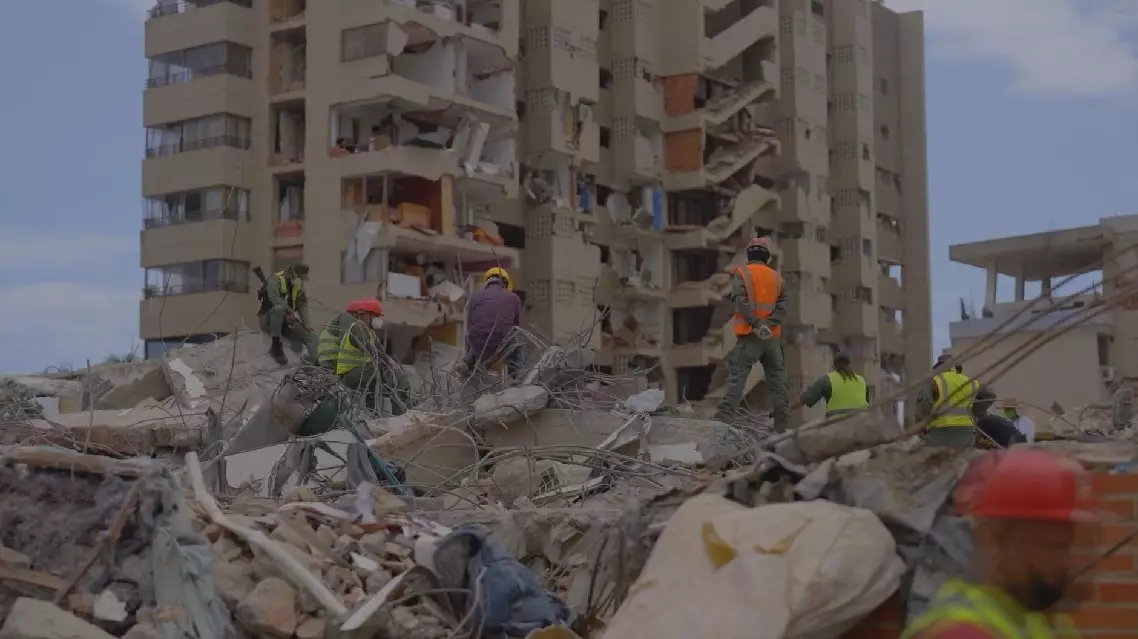
Venezuela has transitioned to long-term recovery efforts two weeks after the devastating twin earthquakes on June 24, as international rescue teams are leaving, and locals face the daunting task of rebuilding their lives.
In the coastal city of La Guaira, one of the hardest-hit areas, authorities report that more than 17,000 people have been left without housing. Thousands are currently staying in shelters in Caracas and La Guaira, unable to return home and unsure if their buildings are safe.
Structural damage remains a critical concern in the affected neighborhoods. While many houses are still standing, compromised foundations pose a severe risk to residents. For those displaced, the immediate emergency is far from over, with survivors urgently requesting shelter, food, water, and clarity on their next steps.
Amid the devastation, some survivors continue to cling to hope, urging authorities not to abandon search efforts.
"I want to ask everyone not to lose heart, and to do everything possible to keep sending those rescue workers, because there are still many people under the rubble," said Orlenys Oropesa, an earthquake survivor.
Disaster response priorities have gradually shifted toward securing longer-term housing and medical care for affected populations, even as public anxiety grows over the habitability of damaged but standing properties. For many residents, the lack of timely official safety assessments has left them in limbo, unsure whether they can return to their homes or will need permanent relocation.
"If they guarantee this is safe, we will stay. Because with so many people who lost their homes, where will they house them? We aren’t going to be able to build fast enough," said Adela Gonzalez, another earthquake survivor.
The damage extends well beyond residential buildings, as the disaster has upended La Guaira's tourism and service-driven local economy. Coastal hotels, restaurants and beachfront businesses, which support thousands of local jobs, face prolonged disruption, with no clear timeline for a return to normal visitor traffic. The collapse of the sector has deepened economic uncertainty for families already grappling with displacement and loss.
The quakes have also left a devastating human toll, with communities processing grief over the dead and missing as they come to terms with the scale of destruction. Amid the rubble, acts of local solidarity have become widespread, with neighbors stepping up to support one another and assist remaining response personnel.
One local resident named Maria has spent days providing coffee and supplies to rescue teams working on her block; she survived the disaster while staying in a home purchased by her children, having left her former 10-story apartment building that was completely destroyed in the quake.
While the formal search and rescue phase is drawing to a close, the broader emergency for Venezuelan earthquake survivors is far from over. In the months and years ahead, affected communities will need to navigate overlapping challenges of housing security, public health, economic recovery and long-term urban rebuilding.
Venezuela braces for long-term recovery two weeks after earthquakes