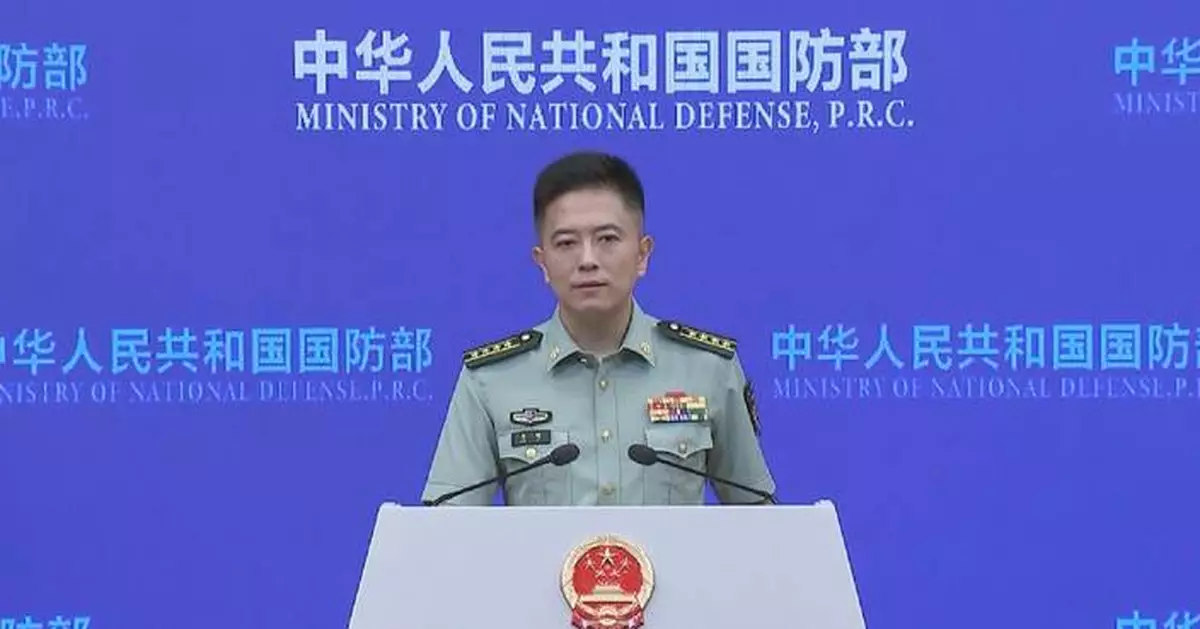
China's air force has entered a critical stage of strategic transformation with its capability comprehensively enhanced, said Chen Xi, spokesman for the Ministry of National Defense, at a press conference in Beijing on Thursday.
Chen made the remarks in response to the latest promotional video of Y-20, China's domestically developed large transport aircraft, which made the transformation and upgrading of the Chinese Air Force's strategic airlift capabilities a hot topic.
"In recent years, China's air force has entered a critical stage of strategic transformation featuring space-air-ground integration and balanced offense and defense. From the J-20, J-16, J-10 fighter families and other new fighter jets that strive for combat readiness, to the Y-20 series aircraft that expand flight track, and further to bombers and early warning aircraft that provide systemic support, the air force has continuously improved its strategic air and space strike capabilities, strategic early warning capabilities, air and space defense capabilities, and strategic airlift capabilities. The Chinese Air Force remains true to its founding mission, carries forward its revolutionary traditions and heritage, builds a forward-looking force system, accelerates its modernization, always acts as the 'Great Wall in the Blue Sky' to safeguard national sovereignty, security, and development interests, and bravely serves as a steadfast guardian of China's airspace security and regional peace and stability," said Chen.
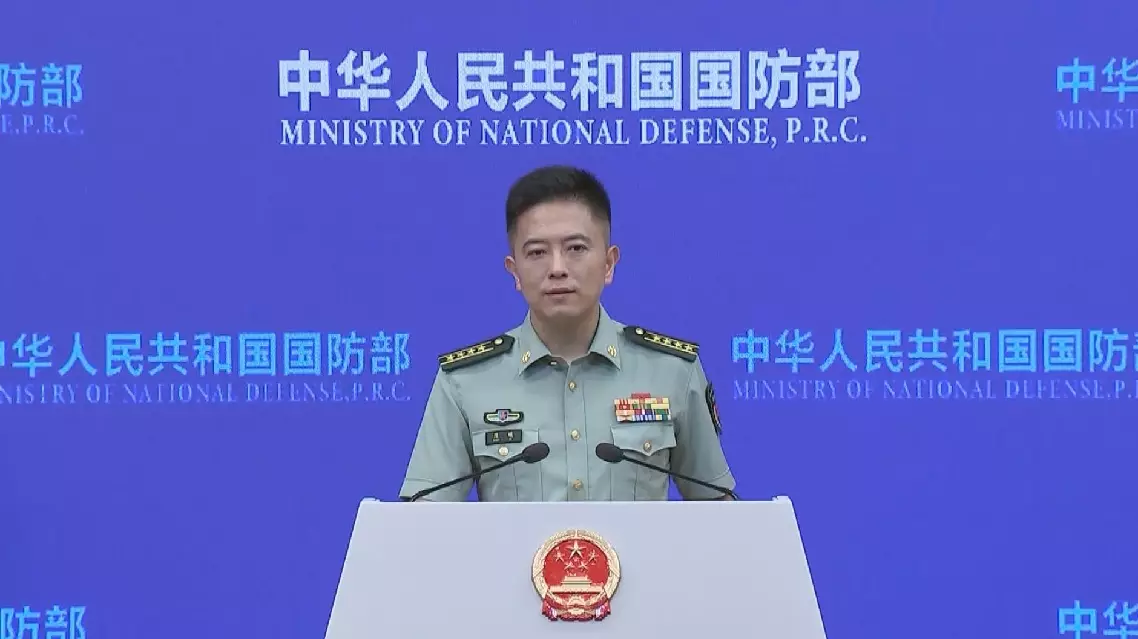
DM spokesman on air force's strategic transformation
Rescuers are deploying high-tech tools such as drones to aid relief efforts in Yunbiao Town, one of the areas hardest hit by flooding in south China's Guangxi Zhuang Autonomous Region.
On Wednesday morning, vehicles were coming and going, and rescuers were busy loading supplies onto inflatable boats destined for submerged villages.
In villages cut off by flooding where inflatable boats cannot reach, authorities and volunteer groups have deployed large numbers of drones to deliver food, drinking water and medical supplies. "Each drone can carry 80 kilograms of supplies, fly for about 20 minutes on a full load, and drop goods to areas up to five kilometers away," said Tu Junjie, a drone technician of Ramunion Rescue, a Chinese non-governmental and humanitarian relief organization.
"Within five kilometers, a drone flight takes just three to four minutes. With continuous operation, the efficiency is extremely high. Given conditions on the ground, cargo drones would be ideal, and we need skilled pilots to run them," said Xiao Qin, a staff member of Guangxi Beigu Smart Agriculture Company.
China Mobile, a major Chinese telecom company, is using a drone to provide mobile communication signal coverage within a two-kilometer radius above the town, helping residents who lost network access to call for help.
"The drone is equipped with a satellite base station. It flies over areas where power, phone networks are all down. Once it's overhead, it beams down mobile signals so people on the ground can make calls and get help," said Liu Tie, a technician of China Mobile.
By Wednesday afternoon, things in Yunbiao started to turn for the better.
"Floodwaters have receded in the village, but my supermarket remains flooded inside. It hasn't drained out yet. I'm so grateful, thanks to our country. Everyone has shown such kindness," said Lin Qingqing, a local resident.
"The floodwater has receded. All we see is mud now," said Wang Yufeng, another local.
The forecast calls for continued rain across Guangxi over the next couple of days, though it is expected to gradually ease.
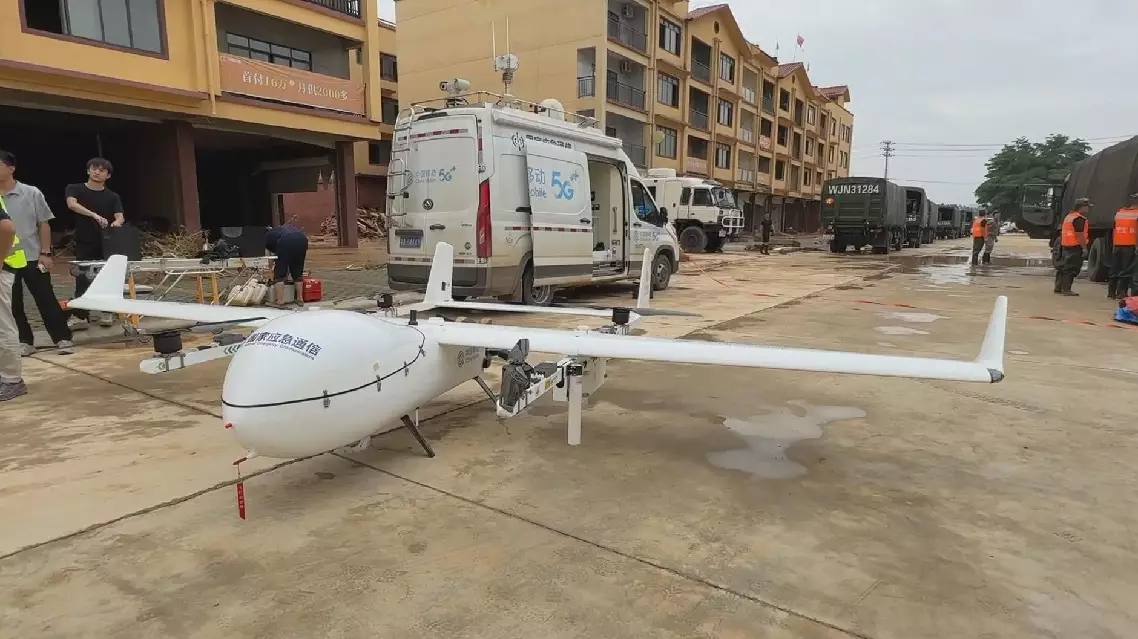
Drones aid flood rescue operations in south China's Guangxi