Powered pontoon bridges helped evacuate thousands of stranded students and teachers in flood-hit Guigang City, south China's Guangxi Zhuang Autonomous Region, where torrential rains have left 39 people dead and nine others reportedly missing.
Late Tuesday, record-breaking rainfall triggered sudden flooding in Guigang, trapping thousands of students and teachers at a local education park.
Rescue teams from China Anneng Construction Group rushed to the scene on Wednesday with powered pontoon bridges, also known as waterborne rescue aircraft carriers, to assist relief efforts.
Each 60-meter-long platform can carry over 300 people at a time. Assembly takes just over ten minutes.
However, deploying such massive equipment on a flooded campus was like threading a needle. Rescuers had to navigate submerged obstacles and narrow corridors between school buildings. "We deployed three sets of these vessels. We did this because the terrain inside is complex and some areas are very narrow. Alternating the three sets allows us to stay agile, safe, and highly efficient," said Bian Fang, head of the emergency rescue department of China Anneng Group First Engineering Bureau.
Leveraging the massive payload of the powered pontoon bridges, rescue teams pulled off a logistical miracle, evacuating over 6,000 students and staffers to safety in less than 20 hours of active operations.
"We were trapped for three days and two nights, surviving only on dry rations. Every night, we'd wake up either sweating or starving -- no hot food at all. At first, we had some contact with the outside, but then our phones died. When we finally saw the rescuers arrive, it felt like a beacon home. Everyone started cheering and shouting," said Qin Zhiyong, a student of Guangxi Logistics Vocational and Technical College.
"The rescue started again at 6 a.m. as soon as it got light. Doing this in the dark is too dangerous. We are so grateful to them. They worked so hard. We will definitely overcome this challenge," said Lin Feng, dean of student affairs at Guangxi Logistics Vocational and Technical College.
Exhausted but safe, the students disembarked in orderly lines, filled with gratitude for their rescuers.

Powered pontoon bridges help evacuate thousands of stranded students, teachers in flood-hit Guangxi
China's Producer Price Index (PPI) rose 1.5 percent year‑on‑year in the first half of the year, influenced by improved supply‑demand dynamics in domestic industries and fluctuations in international commodity prices, the National Bureau of Statistics (NBS) said Friday.
The growth rate widened compared with the same period last year, pointing to a gradual recovery in industrial production prices, the NBS said.
Data showed that in June alone, the PPI increased by 4.1 percent, with the growth rate widening by 0.2 percentage points compared to the previous month.
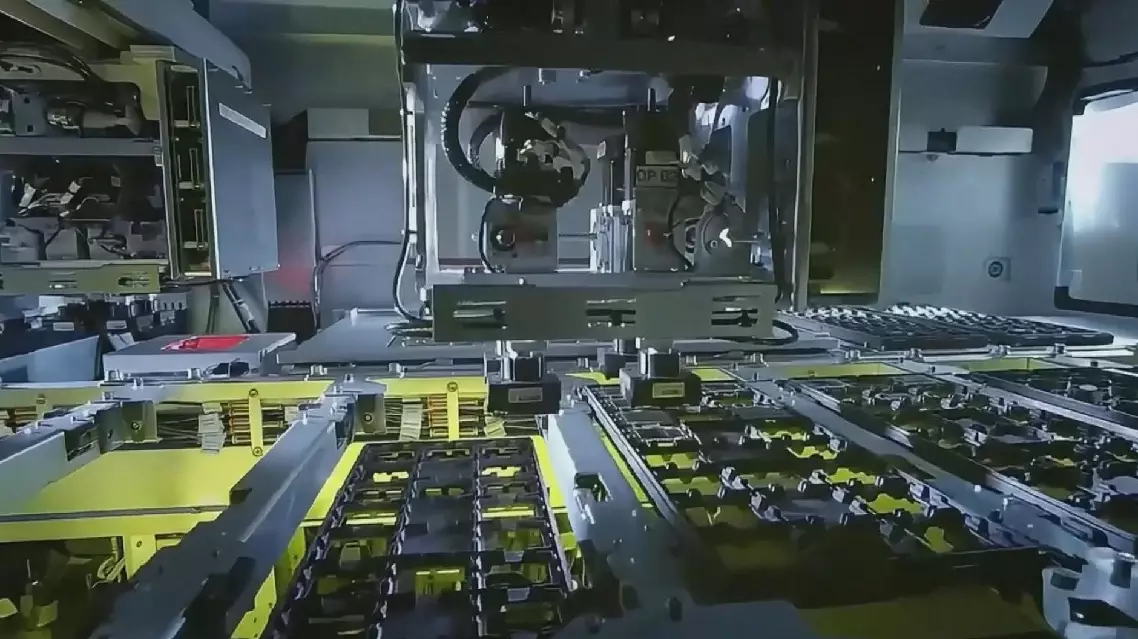
"In terms of production, the industrial sector has become increasingly intelligent, green, and integrated, while the new economy and new growth drivers played an ever-greater role in supporting and leading the sector, resulting in rising prices in related industries," said Dong Lijuan, chief statistician of the NBS' Department of Urban Surveys.
Due to international factors, prices in the petroleum-related industries have shifted from a downward trend to an upward one. In the first half of the year, prices in petroleum and natural gas extraction, as well as petroleum, coal, and other fuel processing industries, all turned from decline in the first quarter to growth, according to the NBS.
Additionally, certain downstream manufacturing sectors saw sustained price improvement thanks to optimized market competition order. The year-on-year growth rates of ex-factory prices in the electrical machinery and equipment manufacturing sector, as well as the computer communication, and other electronic equipment manufacturing sector, both expanded compared to last year.
In the non-ferrous metals industry, driven by demand from new energy and artificial intelligence development, prices continued their strong upward trend. Specifically, in the first half of the year, ex-factory prices in non-ferrous metal mining and dressing, as well as non-ferrous metal smelting and rolling processing, rose by 31.7 and 21.9 percent year-on-year, respectively.
In the petrochemical industry, influenced by the U.S.-Israel-Iran conflict, prices rose to varying degrees. In the first half of the year, ex-factory prices in petroleum and natural gas extraction, petroleum, coal, and other fuel processing, and chemical raw materials and chemical products manufacturing increased by 8.6 percent, 3.1 percent, and 3.9 percent year-on-year respectively.
In the ferrous metals industry, supported by front-loaded infrastructure investment and strengthened capacity and output regulation, prices stabilized. The year-on-year price change in ferrous metal smelting and rolling processing turned from negative to positive starting in May, with the decline in the first half of the year narrowing compared to the same period last year.
"Certain downstream manufacturing sectors have seen sustained price improvement under the influence of optimized market competition order, computing infrastructure construction, and industrial technology upgrades. In the first half of the year, the year-on-year growth rates of ex-factory prices in the electrical machinery and equipment manufacturing sector, as well as the computer, communication, and other electronic equipment manufacturing sector, both expanded compared to the same period last year," said Liu Nancun, an economist with the National Development and Reform Commission.
China's PPI rises 1.5 pct in first half of 2026