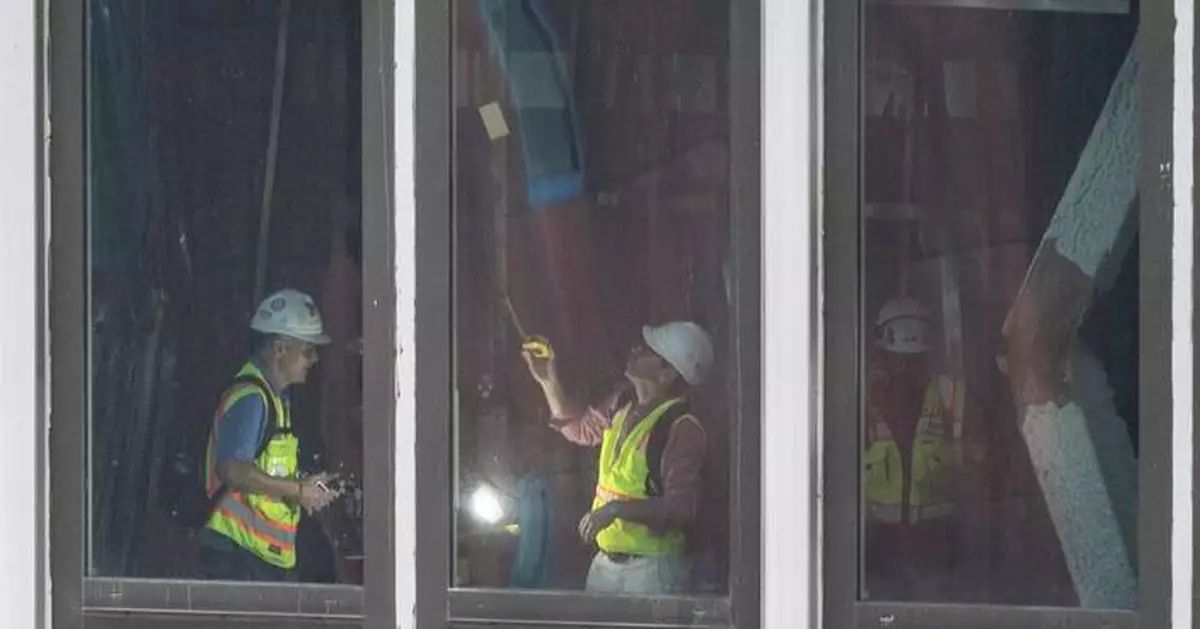
NEW YORK (AP) — When two steel columns buckled this week inside the former Pfizer headquarters in midtown Manhattan, the scare prompted evacuations and halted work on one of the nation’s largest office-to-apartment conversions.
It also highlighted the complex engineering behind adaptive reuse projects, which have become increasingly popular as officials try to tackle a nationwide housing shortage by transforming offices that have sat underused since the COVID-19 pandemic.
Click to Gallery
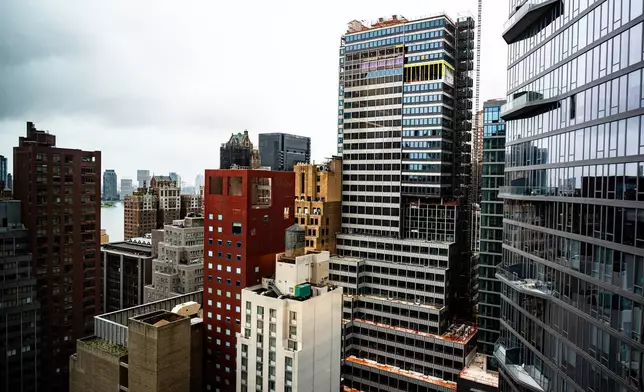
The unstable building at 235 East 42nd Street is seen Tuesday, July 7, 2026, in New York. (AP Photo/Angelina Katsanis)
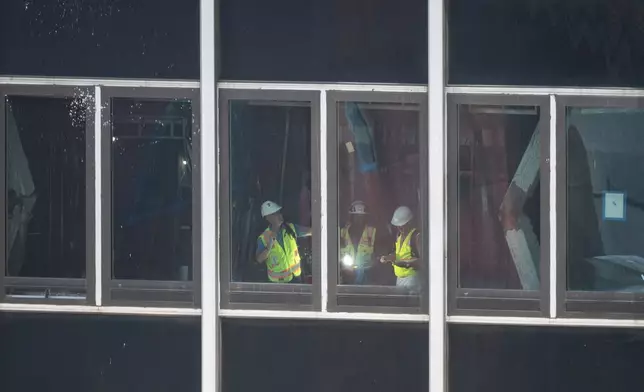
People inspect a buckled support beam inside 235 East 42nd Street, Wednesday, July 8, 2026, in New York. (AP Photo/Yuki Iwamura)
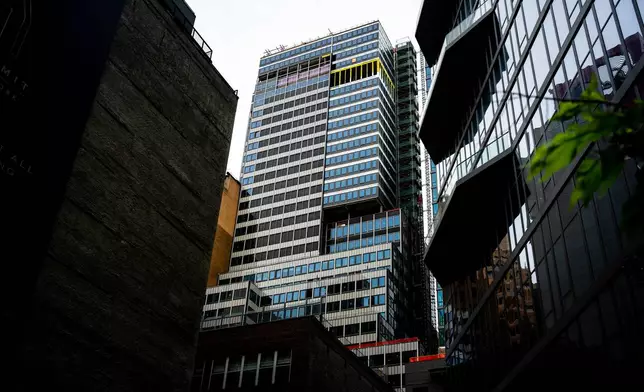
The building at 235 East 42nd Street is seen Tuesday, July 7, 2026, in New York. (AP Photo/Angelina Katsanis)

A general view shows 235 East 42nd Street, Wednesday, July 8, 2026, in New York. (AP Photo/Yuki Iwamura)
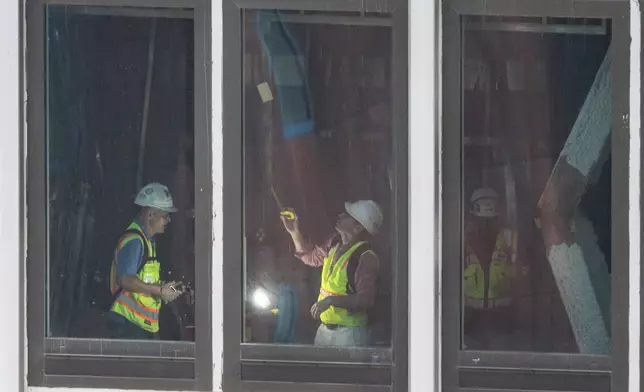
People inspect a buckled support beam inside 235 East 42nd Street, Wednesday, July 8, 2026, in New York. (AP Photo/Yuki Iwamura)
The plans call for turning two office buildings — one built in 1909, the other in the 1960s — into about 1,600 apartments by adding more than a dozen stories atop the older structure and redesigning and expanding the other. The buckling occurred on the 21st floor of the newer structure, and crews have installed temporary supports as officials investigate.
Engineering experts said the conversion project is complex and poses many challenges, which include making sure older buildings can safely support new loads and carving up office floors to accommodate residential living.
But none said the high-profile setback should make people doubt the ability of engineers to complete such projects.
“I don’t think it really brings into question our understanding of how to do something like this,” said Ben Schafer, a structural engineering professor at Johns Hopkins University.
On its website highlighting the midtown project, adaptive reuse firm Collaborative Construction Management says the nine-story building from 1909 will be “threaded through” with a new addition of about 30 stories of poured concrete.
Schafer, who is not involved with the undertaking, said the likely approach is to have the century-old building continue to carry its own weight while building a new structural system to support additions.
“My interpretation would be that they’re going to leave that building carrying its own load, and they’re just going to poke holes in it so that they can take the load from the building that they’ve put above it and bring it all the way down to the foundation,” Schafer said.
Schafer said construction on the other tower presents a different challenge: punching holes in the existing floor plate to bring light into apartments, while also ensuring that the steel frame can support the newly added loads.
City officials have not determined what caused the columns to buckle. But both Schafer and Emily Guglielmo, a San Francisco-based structural engineer, believe the failure likely resulted from the added load.
Spokespersons for MetroLoft, the project developer, didn’t respond to requests for comment Thursday. But Nathan Berman, the firm’s founder, acknowledged in an interview with The Wall Street Journal that the added weight from widening the top 15 or so floors of the building likely caused the damage.
Guglielmo thinks that either the original design assumptions were misunderstood, something went wrong during the design or construction process, or construction crews overloaded or weakened the structure.
Adding stories to existing buildings is common in dense urban areas where land is scarce, she said, but it requires reviewing original construction documents and inspecting the building before determining how additional floors will affect the structure.
“In cities and towns that don’t have that available geography, you’re going to see a lot more of this type of a design where there’s an adaptive reuse to an existing building,” Guglielmo said.
To many structural engineers, demolition should occur only as a last resort.
“Tearing buildings down is a terrible waste,” Schafer said, pointing out that buildings and the construction sector are responsible for about 40% of the world’s energy-related carbon emissions. “From a sustainability standpoint, that’s a disaster.”
Beyond the environmental costs, demolishing and hauling away the remnants of huge buildings is especially expensive in dense cities such as New York.
If an existing structure can safely be reused, engineers generally prefer that.
James LaFave, a structural engineering professor at the University of Illinois, said a steel-framed building from the 1960s, like the former Pfizer structure, would typically be a “very good” starting point for a conversion.
In recent years, officials across the country have embraced office-to-housing conversions as a potential lifeline for downtown business districts that have struggled since the pandemic.
New York, especially, has embraced this push, as officials have made zoning changes and enacted tax incentives to spur housing production. A report from the New York City comptroller's office last year noted there are 44 adaptive reuse projects in the city that, as of early 2025, had either been completed, were underway or could move forward.
Pfizer moved out of the building in 2023 after opening a new office near Penn Station, leaving the property vacant. Construction on the property began in 2024.
Joshua Harris, director of Fordham University’s Real Estate Institute, said office-to-residential conversions are a key part of solving the housing shortages in New York and other cities, even if they come with risk.
“In a certain sense, it’s not terribly surprising that this happened, and we should have a little bit of grace,” he said. “These are very, very complicated surgical procedures being done to very old buildings.”
“This is part of the reality of fixing the housing crisis,” Harris continued. “Things like this can happen. It doesn’t look as complex as putting a rocket into space, but, in a real estate sense, construction in an environment like Manhattan on 42nd Street and Second Avenue is very complex.”
Guglielmo, the California engineer, said a combination of building codes, inspections and experienced construction crews makes failures like this rare.
“We’re very fortunate here in the United States that we are not seeing these types of failures on a day-to-day basis,” she said. “We’re privileged to have really robust building codes that explain to us as engineers how to do our designs in a way that’s safe.”
Still, Harris said it is likely a gut check for the industry, as office conversions transform once sleepy business districts across the city into 24/7 neighborhoods, like parts of Wall Street in recent years.
“If this building has a problem, all the other projects that have been sort of greenlit, they’re going to want to review to make sure that it’s not something similar,” Harris said.
Rico reported from Atlanta and Hill reported from Las Vegas.

The unstable building at 235 East 42nd Street is seen Tuesday, July 7, 2026, in New York. (AP Photo/Angelina Katsanis)
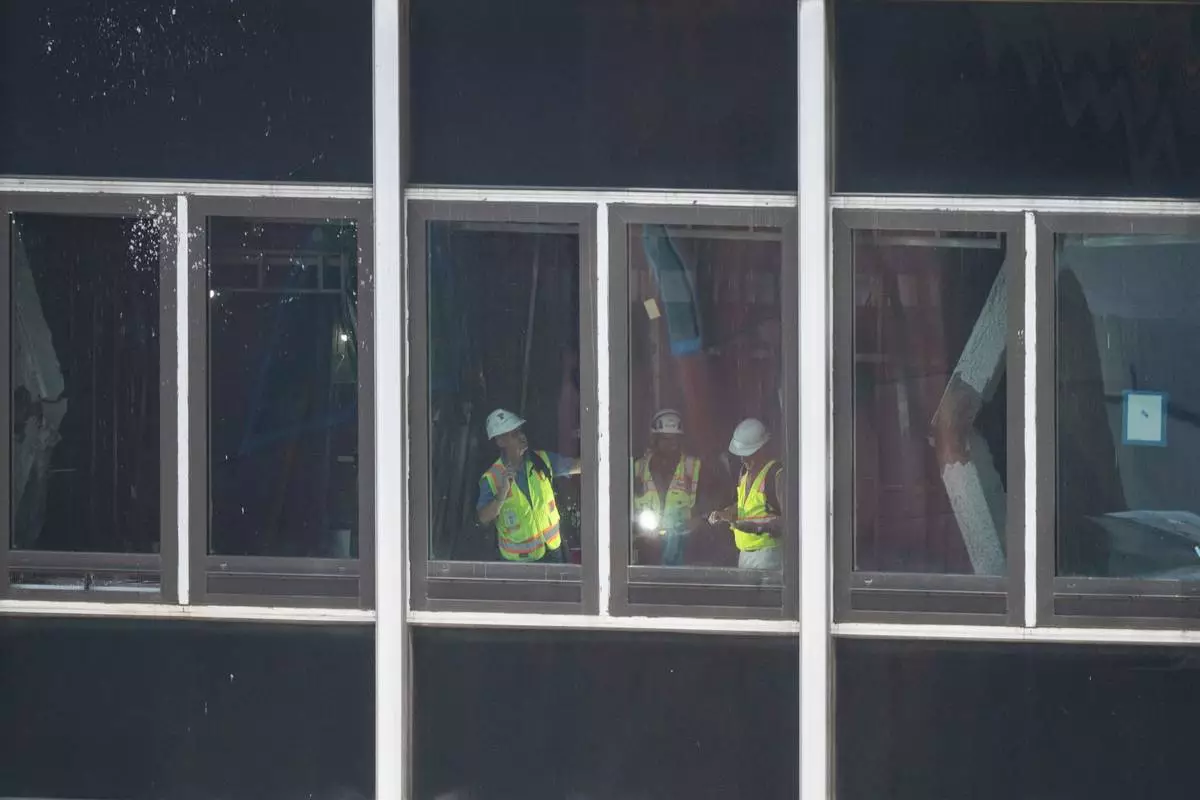
People inspect a buckled support beam inside 235 East 42nd Street, Wednesday, July 8, 2026, in New York. (AP Photo/Yuki Iwamura)
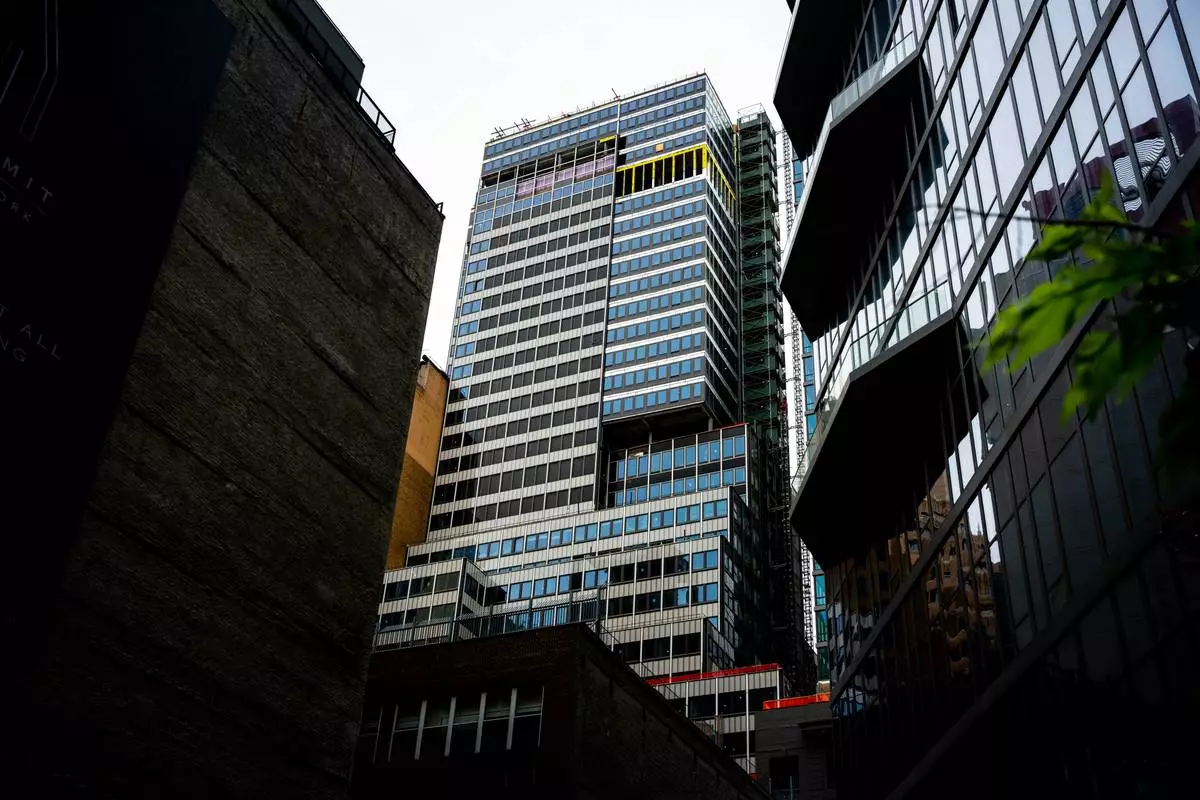
The building at 235 East 42nd Street is seen Tuesday, July 7, 2026, in New York. (AP Photo/Angelina Katsanis)
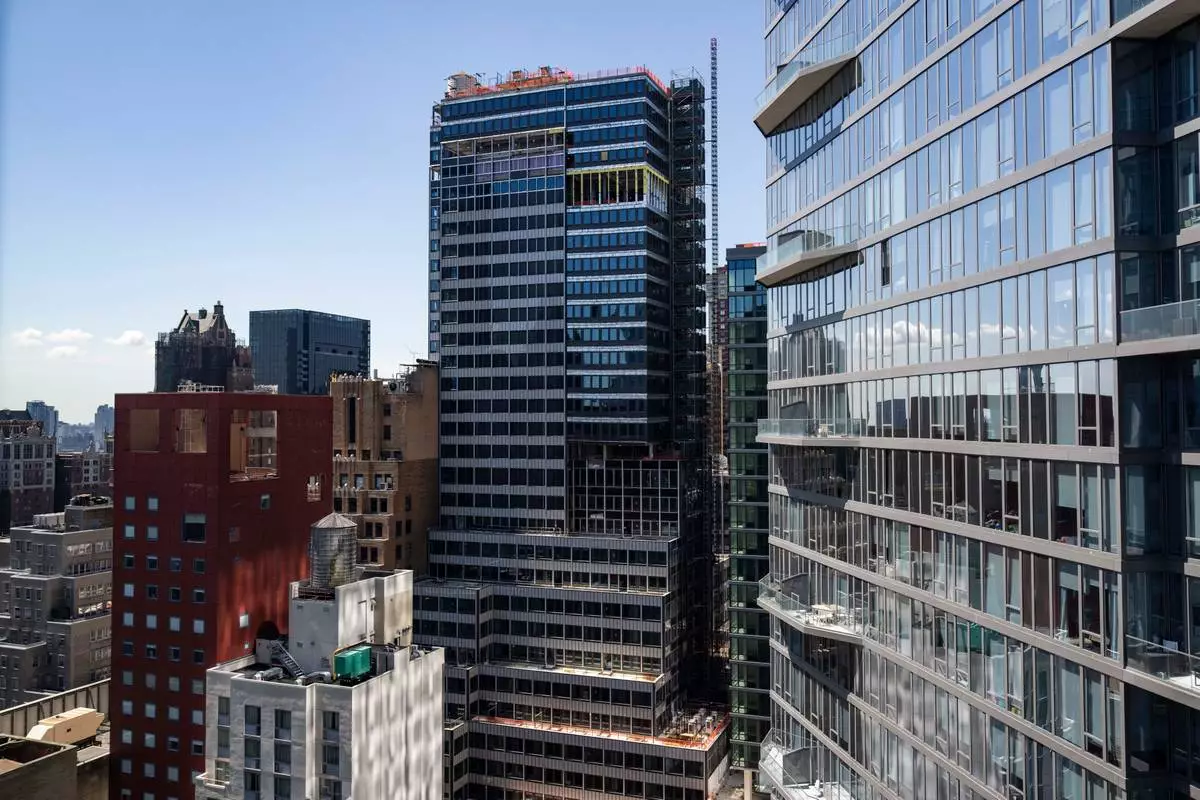
A general view shows 235 East 42nd Street, Wednesday, July 8, 2026, in New York. (AP Photo/Yuki Iwamura)
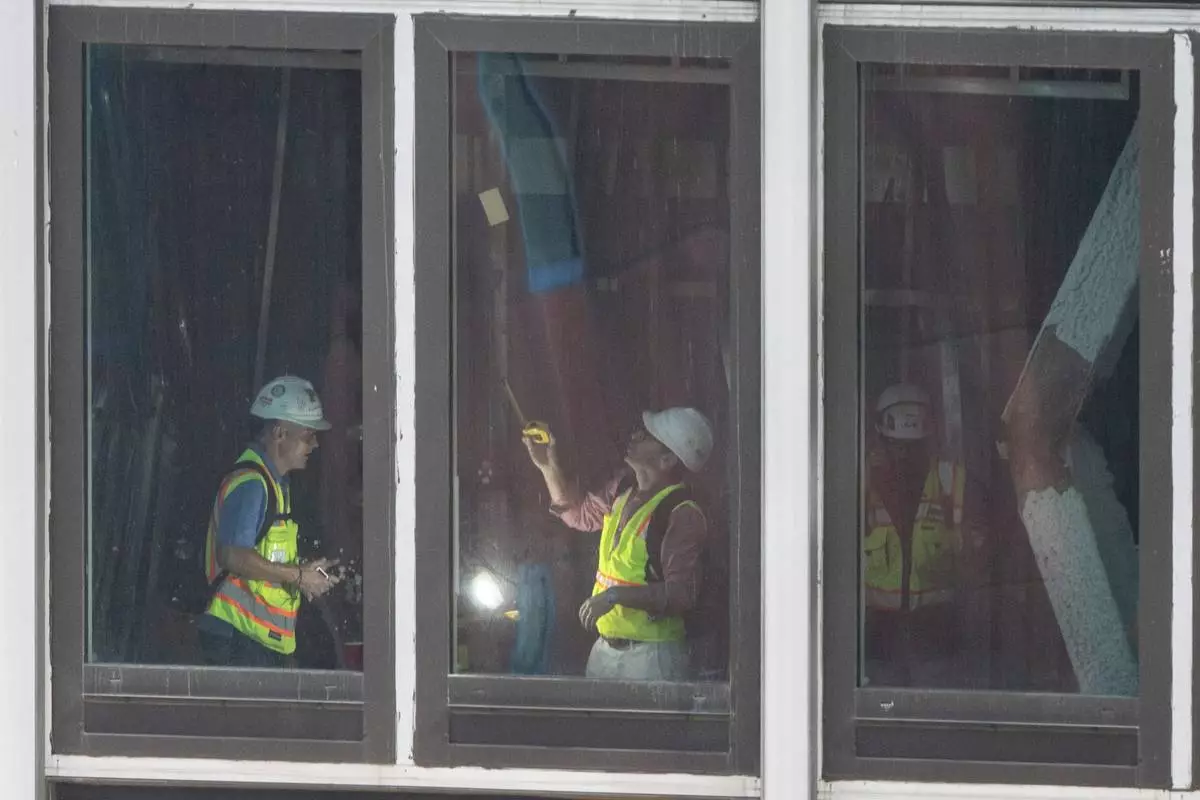
People inspect a buckled support beam inside 235 East 42nd Street, Wednesday, July 8, 2026, in New York. (AP Photo/Yuki Iwamura)