Skip to Content Facebook Feature Image

NATO leaders came to Turkey to discuss security. Erdogan gave them each an engraved revolver

News

NATO leaders came to Turkey to discuss security. Erdogan gave them each an engraved revolver
News

News

NATO leaders came to Turkey to discuss security. Erdogan gave them each an engraved revolver

2026-07-10 21:42 Last Updated At:21:50

ANKARA, Turkey (AP) — Western leaders came to Turkey to discuss security in an increasingly perilous world. They each left with a revolver and six rounds.

The unconventional gift from the host of this week's NATO summit, Turkish President Recep Tayyip Erdogan, was meant to showcase his country's growing defense industry.

But it left officials across the alliance scratching their heads. Some were forced to leave their gifts behind due to gun laws in their countries, while others donated theirs to museums.

“It struck me that ⁠my gift of maple syrup kind of undermatched,” Canadian Prime Minister Mark Carney told reporters, adding that the firearm was now in police possession. “I would like to reassure Canadians, they keep guns away from me.”

“An unusual gift from President @RTErdogan at the NATO Summit: a Magnum revolver with ammunition, engraved with my name,” Hungary’s new Prime Minister Péter Magyar said on X, posting a photograph of a display box containing the revolver and six cartridges.

It was not immediately clear what he did with the gift.

Ursula von der Leyen, the European Union commission president, thanked Erdogan for the gift, which will be decommissioned and donated to a military museum, her spokesperson said.

British Prime Minister Keir Starmer told reporters that the gift bag included a note waiving export controls. Still, he left his behind to be decommissioned, because it would be illegal to import it into Britain.

Belgian Prime Minister Bart De Wever handed his revolver to airport police upon arrival. The revolvers gifted to German Chancellor Friedrich Merz and Dutch Prime Minister Rob Jetten were left at their countries’ embassies in Ankara and would also be taken out of service, officials said.

In Italy, the gun was logged as a gift at Palazzo Chigi — the official seat of Prime Minister Giorgia Meloni, an official said. In Greece, officials said the firearm would be donated to the War Museum.

Croatian President Zoran Milanović said he only found out after his return from the summit that Erdogan had given him a gun. His office said it would probably be handed over to a police museum.

“I didn’t take it. I shoot from different weapons,” Milanovic said, referring to his political style.

The White House did not immediately respond to questions about Erdogan's gift to the leaders.

On a visit to New Zealand last year, FBI Director Kash Patel gave the country’s police and spy bosses gifts of inoperable pistols that were illegal to possess under local gun laws and had to be destroyed.

Erdogan's office has not commented on the gift. Turkish media reports identified the revolvers as the Gumusay .357 Magnum, a vintage six‑shot revolver produced by the Turkish state arms manufacturer, MKE.

Reports said the gun aimed to highlight Turkey's defense industry, which in recent decades has transformed from a major importer into an increasingly self‑reliant producer of advanced military systems, including drones and warships. It is in the process of developing its own next‑generation fighter jet.

Gun culture is deeply rooted in Turkey, and the gift hardly triggered any reaction in the country. Umut Vakfi, a foundation campaigning for gun control, says incidents of armed violence have reached alarming levels, reporting more than 2,700 last year in the country of 86 million people.

Turkey’s state-run Anadolu Agency said participants at the summit were also given a more conventional gift: a copy of Erdogan's biography, titled: “The politics of courage: Erdogan and the rise of Türkiye.”

Associated Press writers Jill Lawless in London, Jovana Gec in Belgrade, Stefania Dazio in Berlin, Colleen Barry in Rome and Elena Becatoros in Athens contributed.
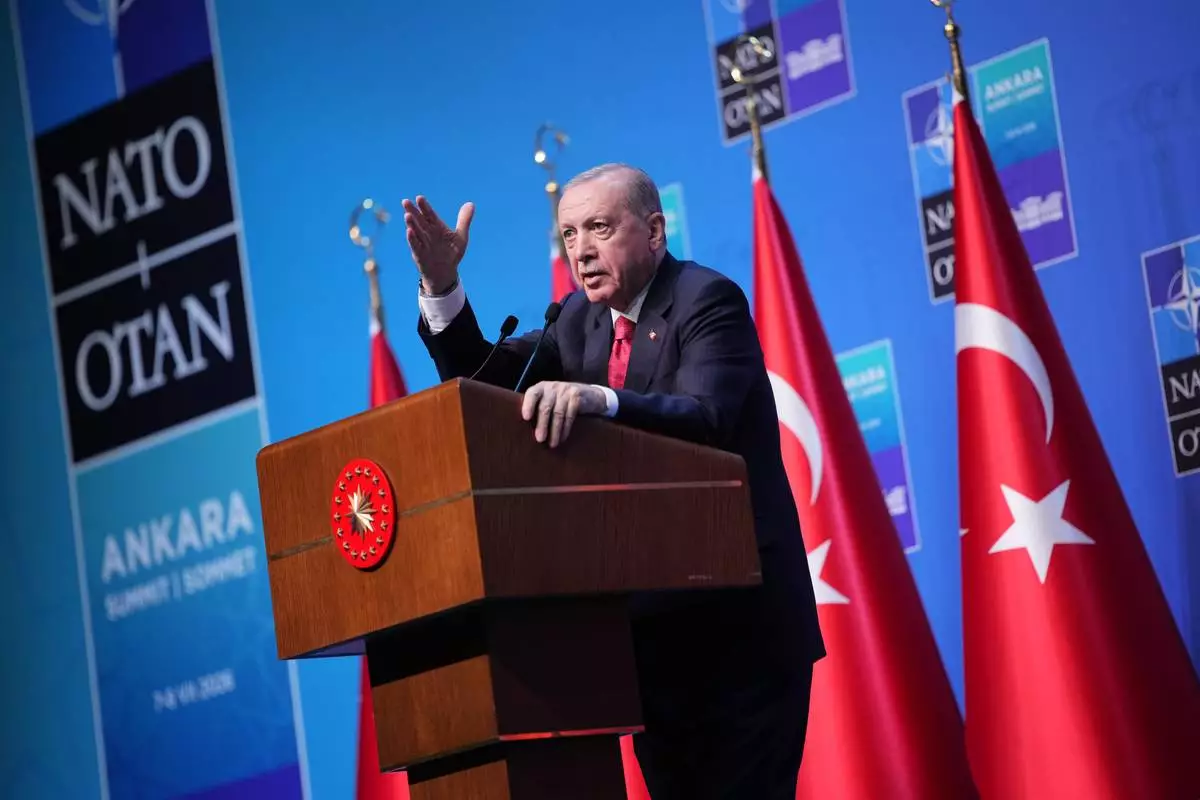
Turkish President Recep Tayyip Erdogan speaks during a media conference at the NATO summit in Ankara, Turkey, Wednesday, July 8, 2026. (AP Photo/Emrah Gurel)
Turkish President Recep Tayyip Erdogan speaks during a media conference at the NATO summit in Ankara, Turkey, Wednesday, July 8, 2026. (AP Photo/Emrah Gurel)

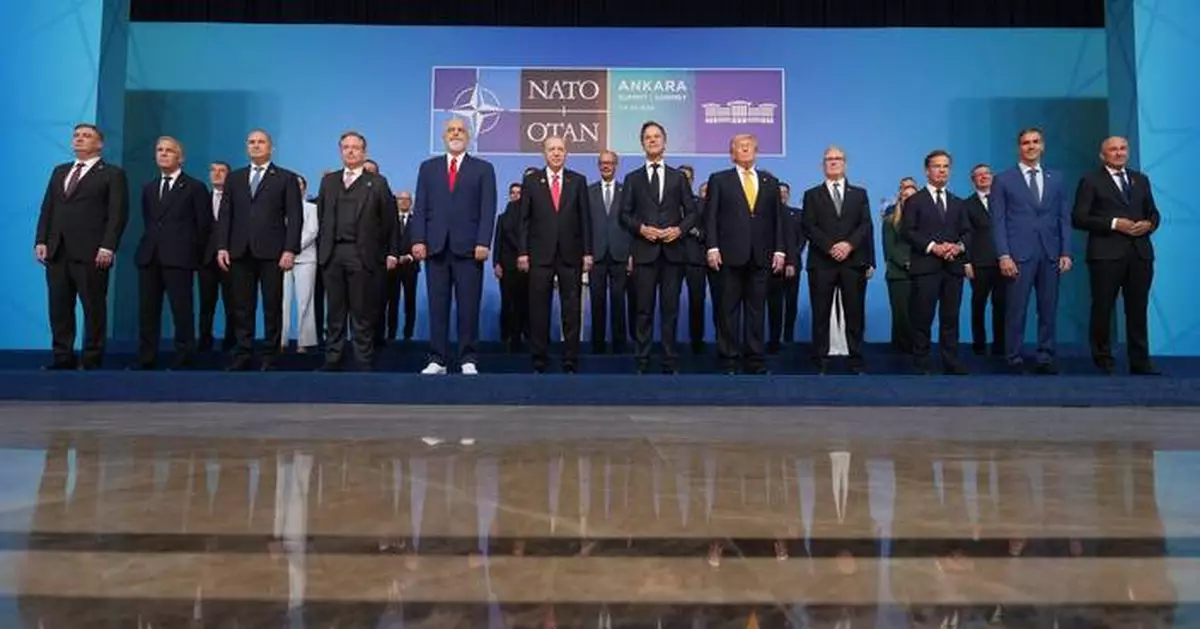
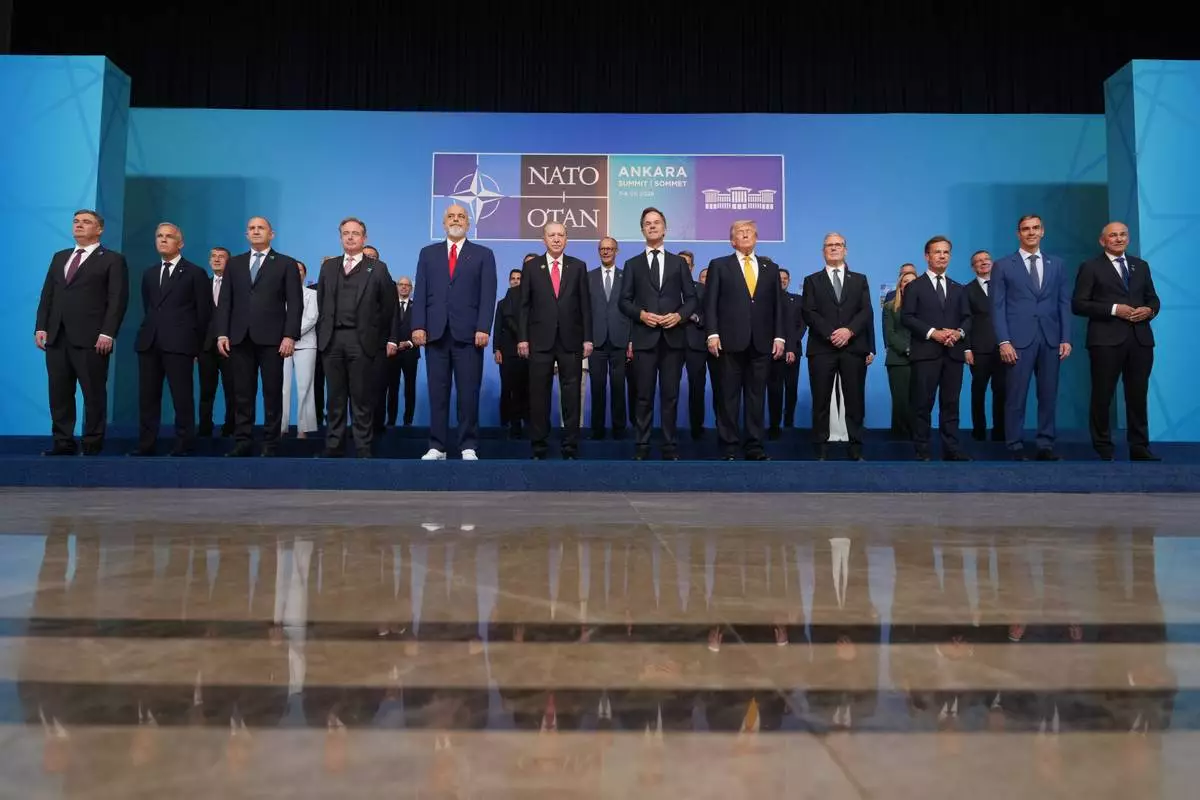
Leaders including NATO Secretary General Mark Rutte, President Donald Trump, and Turkish President Recep Tayyip Erdogan pose for a photo during the NATO summit in Ankara, Turkey, Wednesday, July 8, 2026. (AP Photo/Alex Brandon)

Leaders including NATO Secretary General Mark Rutte, President Donald Trump, and Turkish President Recep Tayyip Erdogan pose for a photo during the NATO summit in Ankara, Turkey, Wednesday, July 8, 2026. (AP Photo/Alex Brandon)
HONG KONG (AP) — Asian stocks advanced Friday, helped by buying of technology-related shares, while oil prices slipped as traders watched for developments in the Iran war.

U.S. futures edged lower.

Tensions between Iran and the U.S. escalated this week after President Donald Trump said the Iran war ceasefire agreement was “over,” as the United States and Iran exchanged attacks.

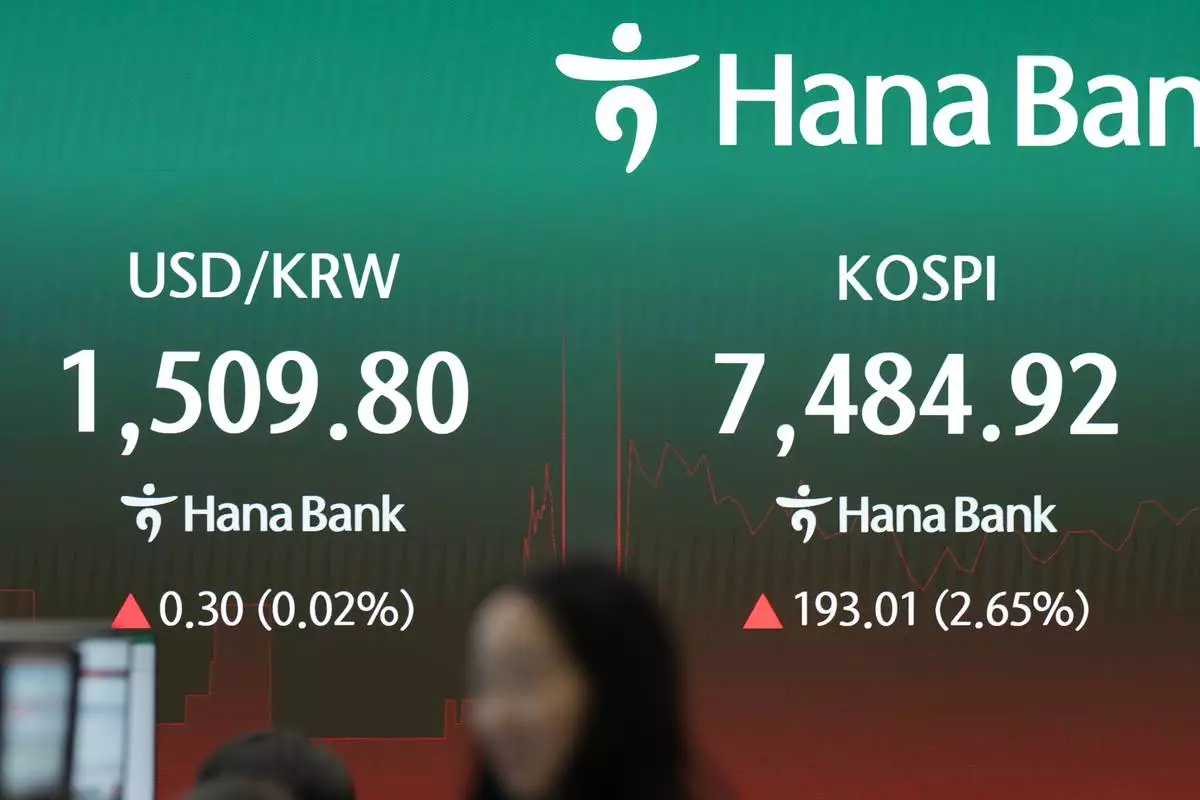
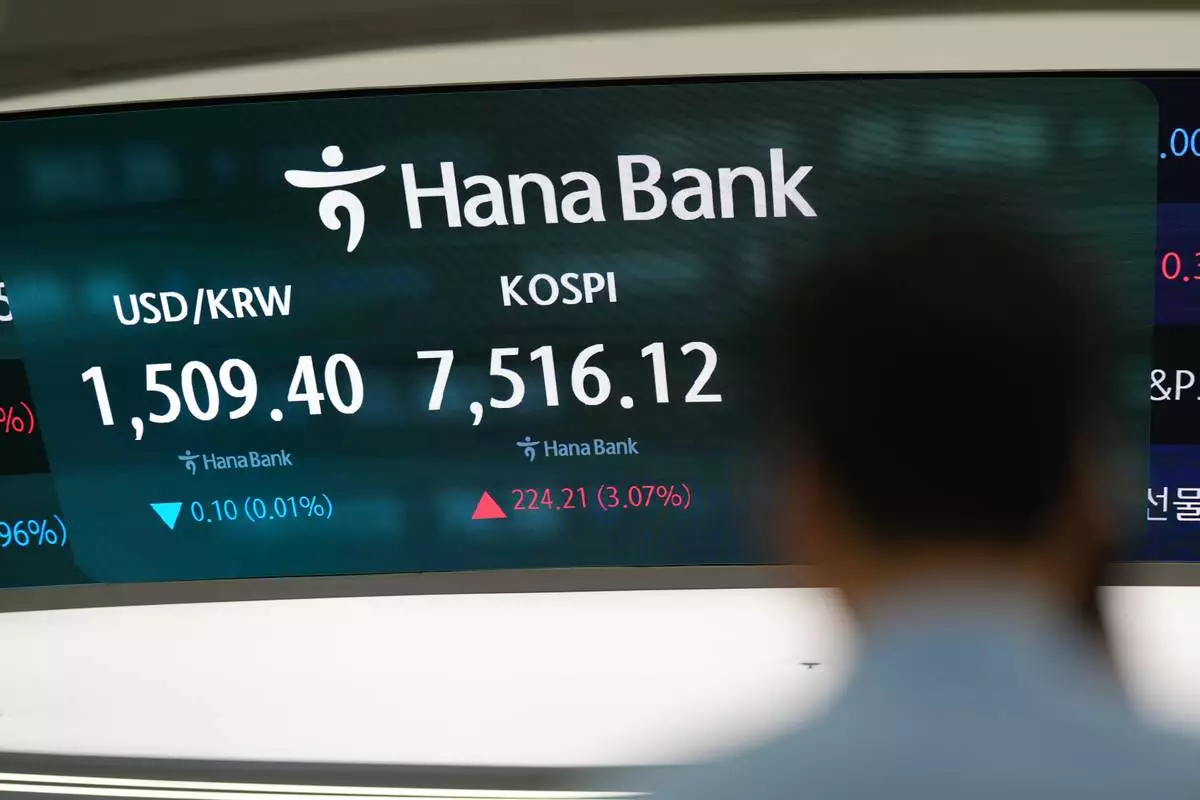
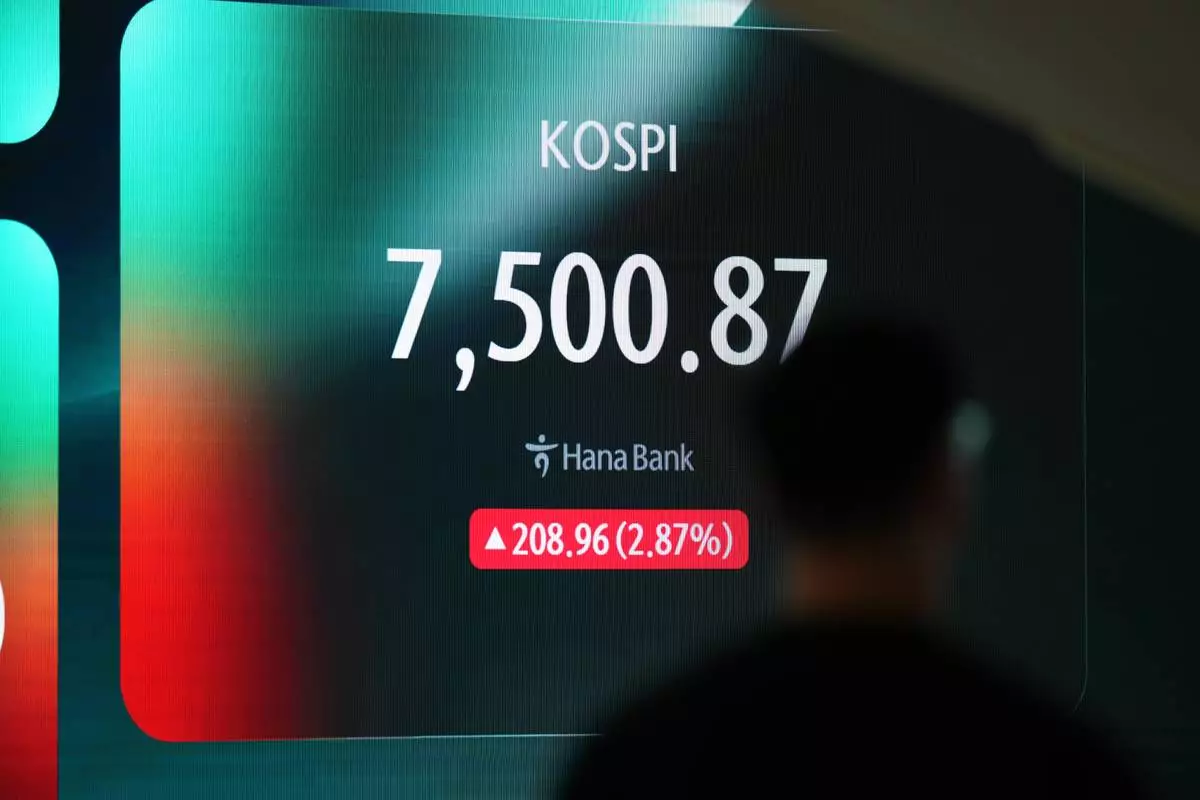
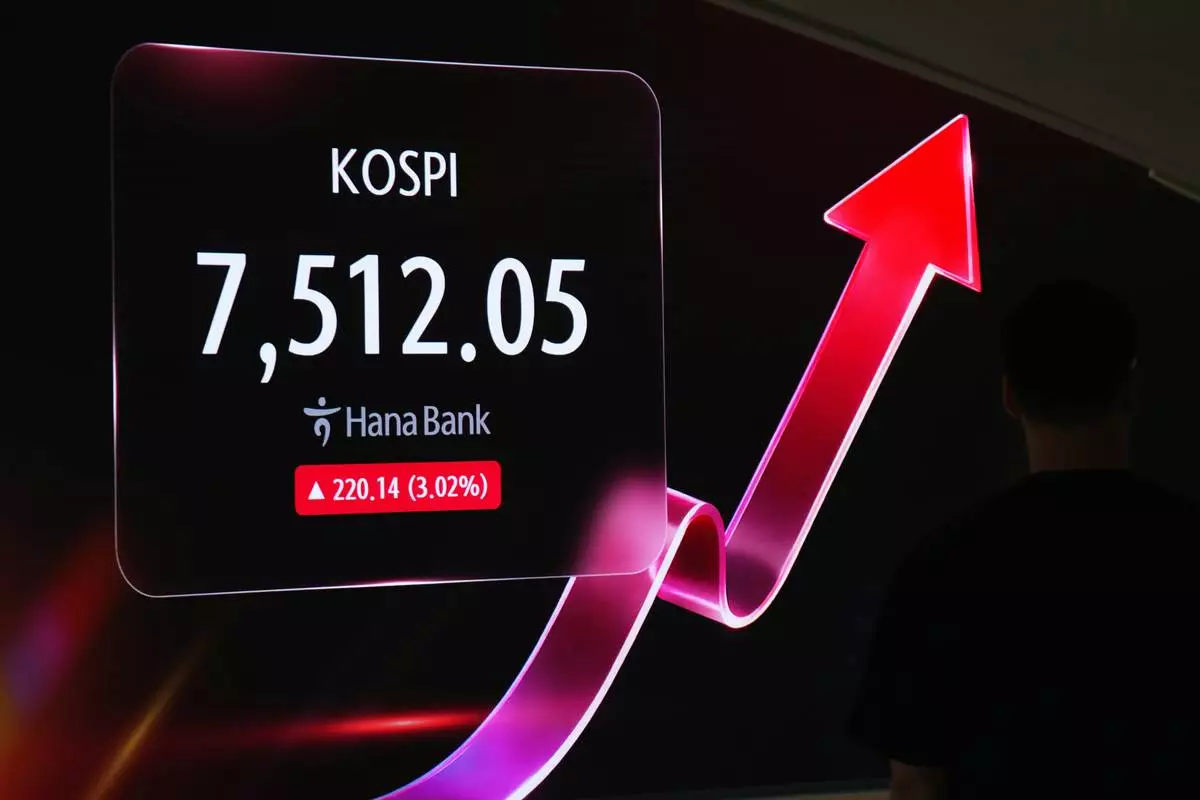
South Korea’s Kospi gained 2.5% to 7,475.94, recovering some of its losses from earlier in the week. Shares in memory chipmaker SK Hynix, whose debut on the Nasdaq in New York is set for Friday, climbed 2.2% in Seoul.

Tokyo’s Nikkei 225 rose 1.9% to 69,030.35. SoftBank Group, a key investor in OpenAI, jumped 10.5%, while chip equipment maker Tokyo Electron added 4%.

Hong Kong’s Hang Seng traded 1.8% higher at 24,455.01 and the Shanghai Composite index erased earlier losses to fall 0.5% to 4,017.50.

Australia’s S&P/ASX 200 gained 0.5% to 8,806.00.

India’s Sensex added 0.9%.

Oil prices yo-yoed again on Friday as global oil supplies remained under pressure due to a limited numbers of vessels able to cross the Strait of Hormuz, a crucial waterway for energy transport.

Brent crude, the international standard, fell 0.3% to $76.07 per barrel. It was trading near $72 a barrel before the war began in late February.

Benchmark U.S. crude shed 0.3% to $71.89 a barrel.

On Thursday, Wall Street’s benchmark S&P 500 index rose 0.8% to 7,543.64. The Dow Jones Industrial Average gained 0.3% to 52,487.41, while the technology-heavy Nasdaq composite climbed 1.3% to 26,206.89.

Semiconductors stocks led gains. Micron Technology jumped 4.5% after the memory chipmaker said it would increase its U.S. investments, citing “surging demand for memory in the AI era.”

Shares of AMD, or Advanced Micro Devices, surged 5.7%. Marvell Technology rose 5%, while ON Semiconductor added 4.4%.

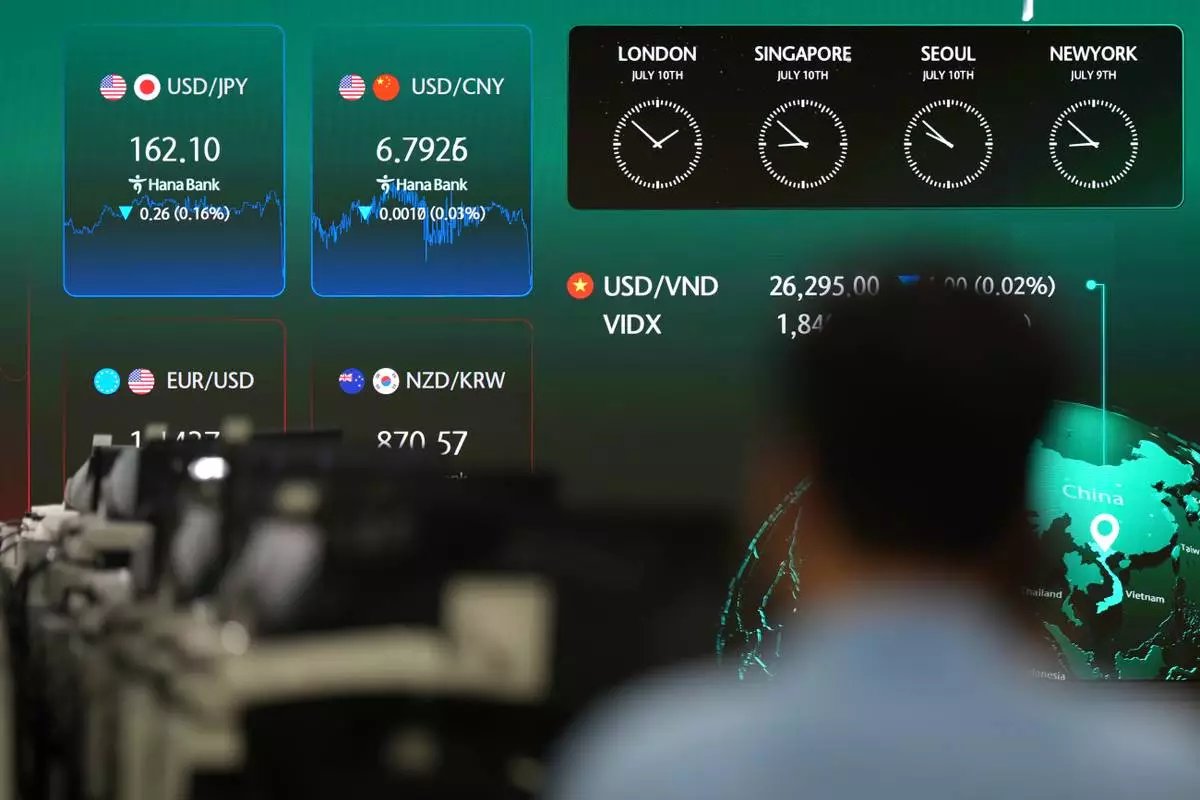
In other dealings early Friday, the U.S. dollar fell to 161.56 Japanese yen from 162.37 yen. The euro was trading at $1.1444, up from $1.1430.

The yen gained against the dollar after Finance Minister Satsuki Katayama told a parliamentary committee that the government plans to encourage big pension funds to invest more in domestic, yen-denominated assets.

AP Business Writers Stan Choe and Matt Ott contributed to this report.

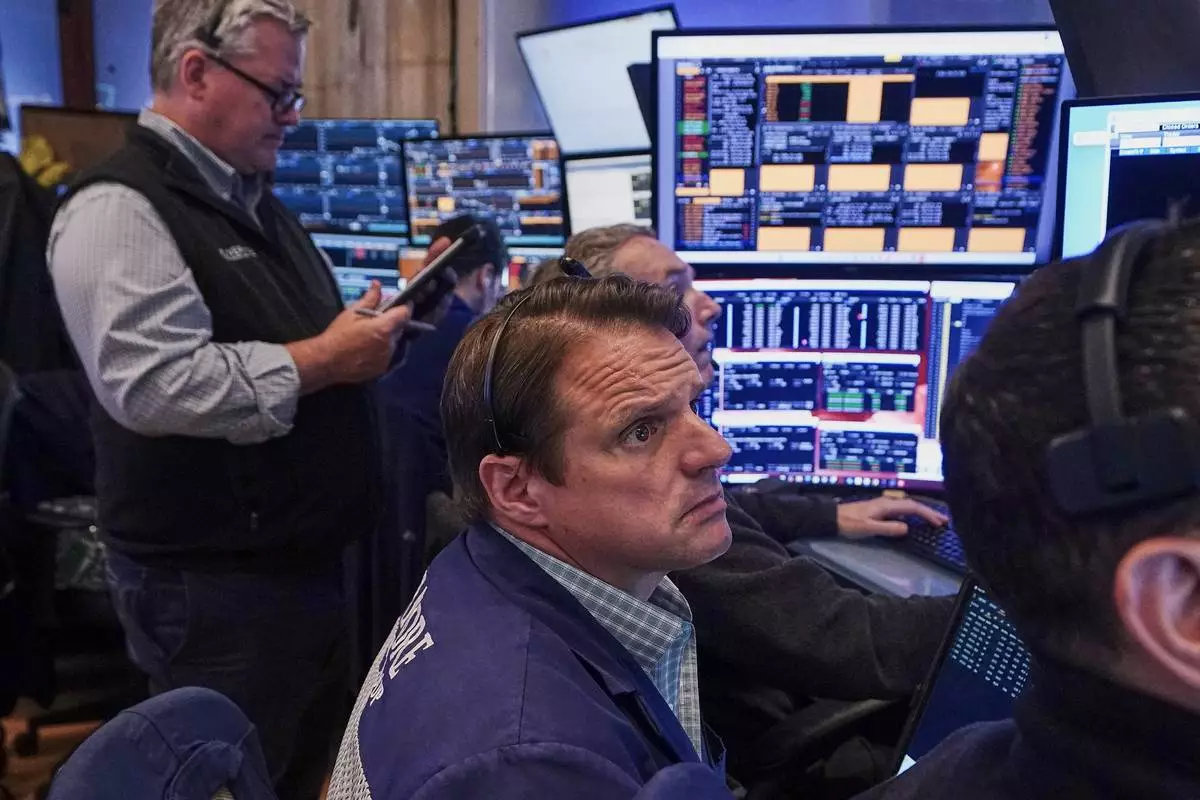
Trader Michael Milano, center, works on the floor of the New York Stock Exchange, Friday, June 26, 2026. (AP Photo/Richard Drew)

Trader Michael Milano, center, works on the floor of the New York Stock Exchange, Friday, June 26, 2026. (AP Photo/Richard Drew)

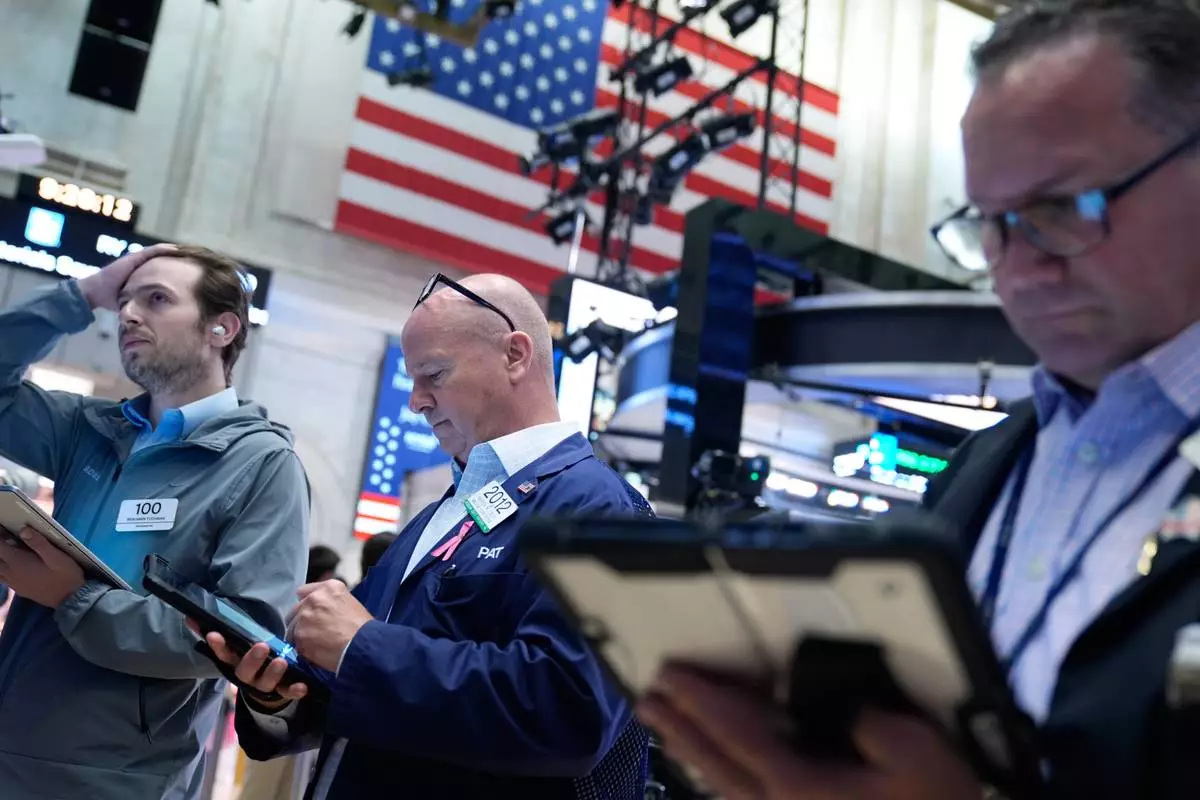
Traders work on the floor at the New York Stock Exchange in New York, Monday, July 6, 2026. (AP Photo/Seth Wenig)

Traders work on the floor at the New York Stock Exchange in New York, Monday, July 6, 2026. (AP Photo/Seth Wenig)

A dealer walks past near the screens showing the Korea Composite Stock Price Index (KOSPI) and the foreign exchange rate between U.S. dollar and South Korean won at a dealing room of Hana Bank in Seoul, South Korea, Friday, July 10, 2026. (AP Photo/Lee Jin-man)

A dealer walks past near the screens showing the Korea Composite Stock Price Index (KOSPI) and the foreign exchange rate between U.S. dollar and South Korean won at a dealing room of Hana Bank in Seoul, South Korea, Friday, July 10, 2026. (AP Photo/Lee Jin-man)

A dealer walks past near the screens showing the Korea Composite Stock Price Index (KOSPI) and the foreign exchange rate between U.S. dollar and South Korean won at a dealing room of Hana Bank in Seoul, South Korea, Friday, July 10, 2026. (AP Photo/Lee Jin-man)

A dealer walks past near the screens showing the Korea Composite Stock Price Index (KOSPI) and the foreign exchange rate between U.S. dollar and South Korean won at a dealing room of Hana Bank in Seoul, South Korea, Friday, July 10, 2026. (AP Photo/Lee Jin-man)

A member of media stands near the screen showing the Korea Composite Stock Price Index (KOSPI) at a dealing room of Hana Bank in Seoul, South Korea, Friday, July 10, 2026. (AP Photo/Lee Jin-man)

A member of media stands near the screen showing the Korea Composite Stock Price Index (KOSPI) at a dealing room of Hana Bank in Seoul, South Korea, Friday, July 10, 2026. (AP Photo/Lee Jin-man)

A dealer walks past near the screens showing the foreign exchange rates at a dealing room of Hana Bank in Seoul, South Korea, Friday, July 10, 2026. (AP Photo/Lee Jin-man)

A dealer walks past near the screens showing the foreign exchange rates at a dealing room of Hana Bank in Seoul, South Korea, Friday, July 10, 2026. (AP Photo/Lee Jin-man)

A member of media stands near the screen showing the Korea Composite Stock Price Index (KOSPI) at a dealing room of Hana Bank in Seoul, South Korea, Friday, July 10, 2026. (AP Photo/Lee Jin-man)

A member of media stands near the screen showing the Korea Composite Stock Price Index (KOSPI) at a dealing room of Hana Bank in Seoul, South Korea, Friday, July 10, 2026. (AP Photo/Lee Jin-man)

Recommended Articles