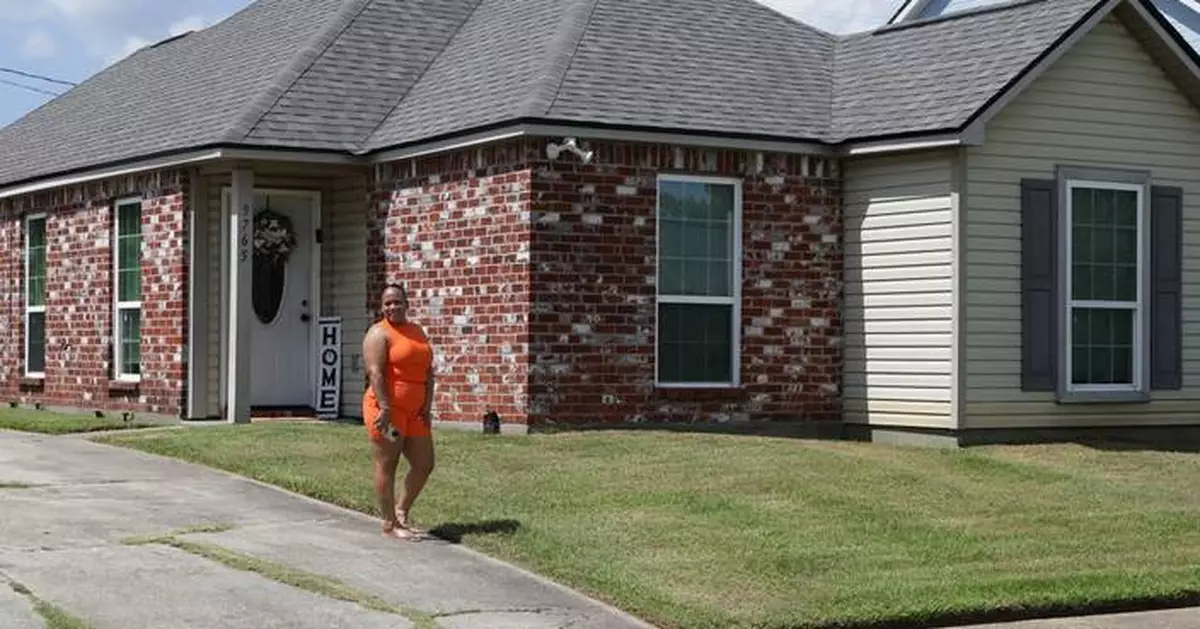
BATON ROUGE, La.--(BUSINESS WIRE)--Jul 10, 2026--
For years, Kiffany Gordon of Baton Rouge, Louisiana, wanted to transition from renting to owning a home of her own. With rising rental costs, she knew homeownership would offer more stability. With the support of a $20,000 Homebuyer Equity Leverage Partnership (HELP) grant from the Federal Home Loan Bank of Dallas (FHLB Dallas) through Gulf Coast Bank & Trust (Gulf Bank), she achieved her goal this year.
This press release features multimedia. View the full release here: https://www.businesswire.com/news/home/20260710130104/en/
Ms. Gordon learned of the grant through Gulf Bank. HELP provides up to $20,000 for down payment and closing cost assistance for income‑qualified homebuyers in Louisiana, Arkansas and Mississippi and up to $25,000 for homebuyers in New Mexico and Texas. The grant is available through participating FHLB Dallas members.
“When they told me it could help me stay within my budget, I thought, ‘Oh my God, I’m about to do this.’ I cried,” she said.
The process required patience. After paying off debts to repair her credit, Ms. Gordon viewed roughly 60 homes and placed offers on three. She was outbid on the first and the second went to an all-cash buyer, but the third home was the charm. It met nearly all her wants: an open floor plan, stainless steel appliances, a carport, a manageable yard and a newer roof.
“Helping buyers like Ms. Gordon is why we participate in the HELP program,” Gulf Bank Community Development Officer Rosalind Jones said. “She worked hard, stayed focused and just needed the last bit of support to make homeownership possible.”
At age 45, Ms. Gordon said she’s proud to build something lasting for her family, which includes three grown children and three grandchildren. One daughter, inspired by her mother’s success, has started the homebuying process herself. “She told me, ‘If my momma can do it, I can do it,’” Ms. Gordon said.
She said she doesn’t know what she would have done without the grant.
“I was praying for a miracle, and it came,” she said. “Without it, it probably would have been a deal breaker.”
HELP grants can open doors, said Greg Hettrick, senior vice president and director of Community Investment at FHLB Dallas.
“Housing is expensive, but it’s worth it for the many benefits, including creating generational wealth and stability,” he said. “Ms. Gordon’s story shows how perseverance and the right support can change a life.”
About Gulf Coast Bank & Trust
Gulf Coast Bank & Trust Company was founded in 1883, offering several personal and business banking services to the communities in Baton Rouge, New Orleans, the surrounding Southeast Louisiana areas and Florida. Banking services include checking and savings accounts with online and mobile banking options as well as personal loans, home loans, business loans and trust and brokerage services. Its mission is to strengthen its relationship with customers by combining the values of old-fashioned community banking that focus on individualized customer service with innovative, competitive banking products and trust and brokerage services.
About the Federal Home Loan Bank of Dallas
The Federal Home Loan Bank of Dallas is one of 11 district banks in the FHLBank System created by Congress in 1932. FHLB Dallas, with total assets of $97.1 billion as of March 31, 2026, is a member‑owned cooperative that supports housing and community development by providing competitively priced loans and other credit products to approximately 780 members and associated institutions in Arkansas, Louisiana, Mississippi, New Mexico and Texas. For more information, visit fhlb.com.
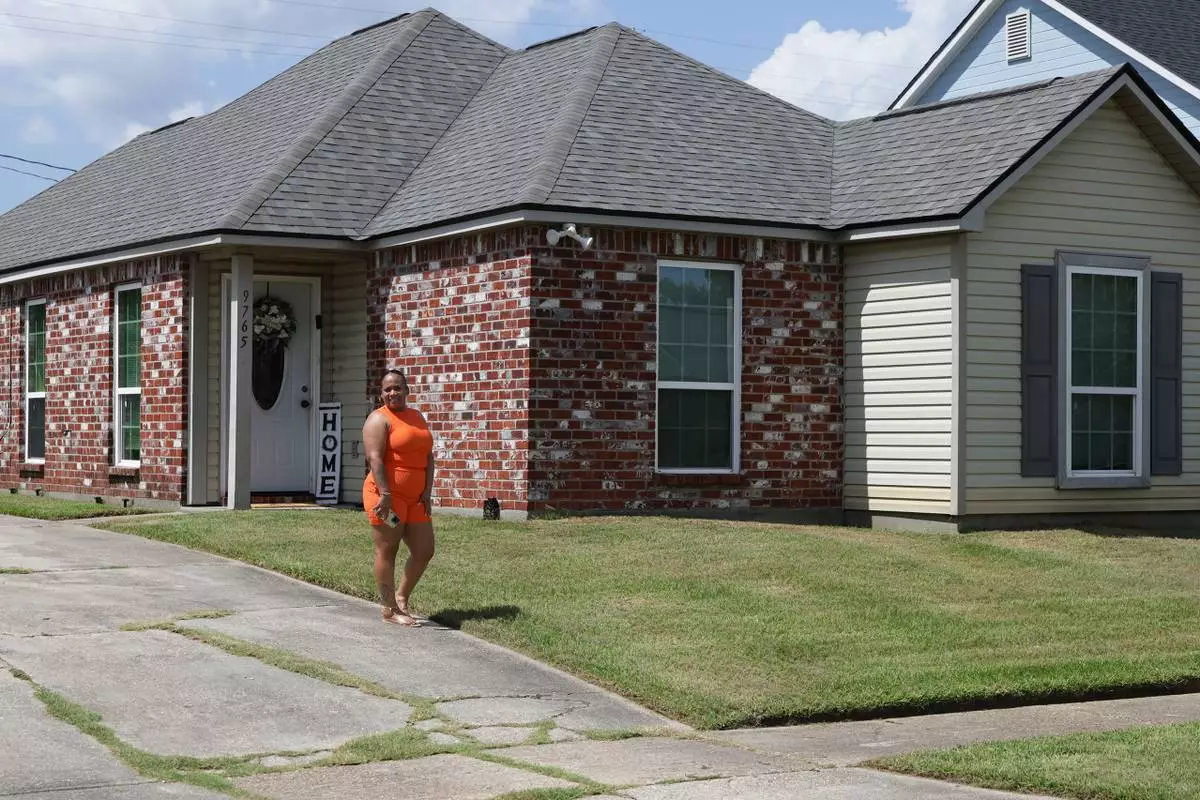
Kiffany Gordon of Baton Rouge, Louisiana, received down payment assistance from FHLB Dallas through Gulf Bank to become a first-time homeowner.
HAVANA (AP) — Cuba’s iconic vintage cars have all but disappeared and in their place, small electric tricycles — most of them made in China — have become the primary means of transportation for hundreds of thousands of Cubans grappling with a prolonged fuel crisis.
These are no ordinary electric tricycles — many Cubans have outfitted them with solar panels, allowing the vehicles to recharge without relying on the island nation's strained power grid.
The three-wheelers are a far cry from the old-timers that only a year ago cruised the streets spewing clouds of black smoke.
“This is how people get around now,” said 40-year-old Liecer de la Cruz, who owns one of these vehicles.
The tricycles, with a cost between $2,000 and $4,000, are used to transport goods and serve fixed routes once covered by buses.
While their price is out of reach for most Cubans, many have sold their older gasoline-powered cars to buy the tricycles. Others got them from relatives abroad, where they are generally cheaper, and some small-business owners even used their profits to invest in them, expecting to recoup the cost.
In January, U.S. President Donald Trump threatened to impose tariffs on countries that sell oil to Cuba, which produces only about 40% of the fuel it needs. Since then, just a single oil tanker has arrived on the island, in late March — down from about eight a month previously.
The impact on daily life in Cuba has been significant.
Rolling blackouts have worsened, exacerbating hardships in a country whose economy has been in crisis for five years. Shortages of food and medicine have deepened, and public transportation has been sharply reduced.
Amid the crisis, electric tricycles have become indispensable. They transport goods, serve fixed routes once covered by buses and, in some Havana neighborhoods, they are used to collect garbage.
People with heavy shopping bags can catch rides on the tricycles — a slow, hot and uncomfortable ride. But it's better than walking.
“If you can pay for it, you just take it; otherwise you can’t go anywhere,” said Berta Ferrer, a 52-year-old clerk at a store in central Havana where she works four days a week.
She pays about 500 Cuban pesos — less than $1 — for the ride, a significant expense in a country where monthly salaries average about $10 for state workers and roughly $40 for private-sector employees.
Electric tricycles from Chinese brands such as Zonsen and Jinpeng have become a common sight on Cuba’s streets. Many are bought in countries such as Panama and shipped to the island by relatives or importers for resale, and they run on gel or lithium batteries. Under an agreement with China, the Vedca brand is assembled in Cuba.
Some owners have installed solar panels on the awnings over seats of the tricycle, allowing them to recharge on the go and keep operating despite the island’s energy crisis.
“There are so many tricycles in Havana that you can’t spend 10 minutes on a street without seeing countless numbers of them pass by,” said 29-year-old engineer Carlos Álvarez, who owns a workshop specializing in electric vehicles.
He spoke as he was installing a mounting bracket for a solar panel on one of the tricycles and acknowledged the investment can be costly — about $500 — but said it pays off quickly as it helps owners cope with fuel shortages and blackouts.
Ricardo Quintero, an engineer who owns one of the tricycles, said he uses it to transport produce to the vegetable stand he runs with his family.
“I think this is here to stay,” he said, looking at his three-wheeler.
Follow AP’s coverage of Latin America and the Caribbean at https://apnews.com/hub/latin-america
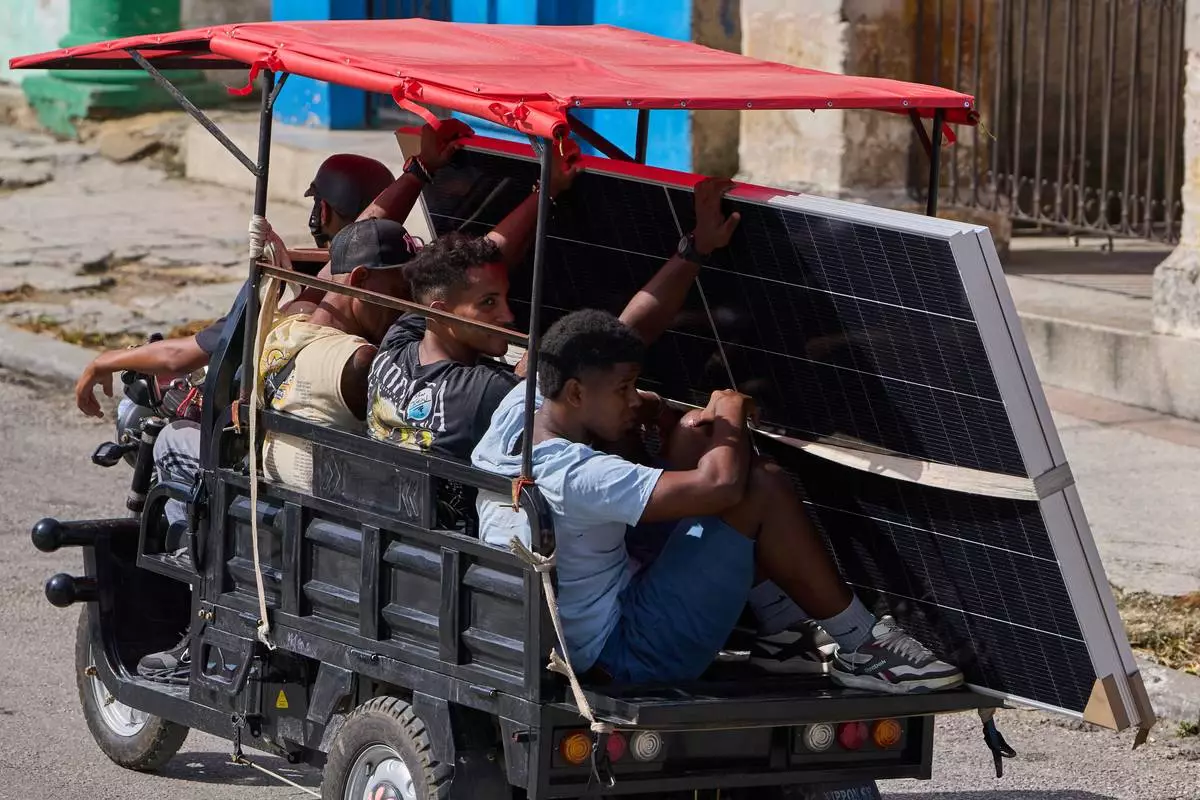
People transport solar panels on an electric tricycle in Havana, Cuba, Friday, July 10, 2026. (AP Photo/Ramon Espinosa)
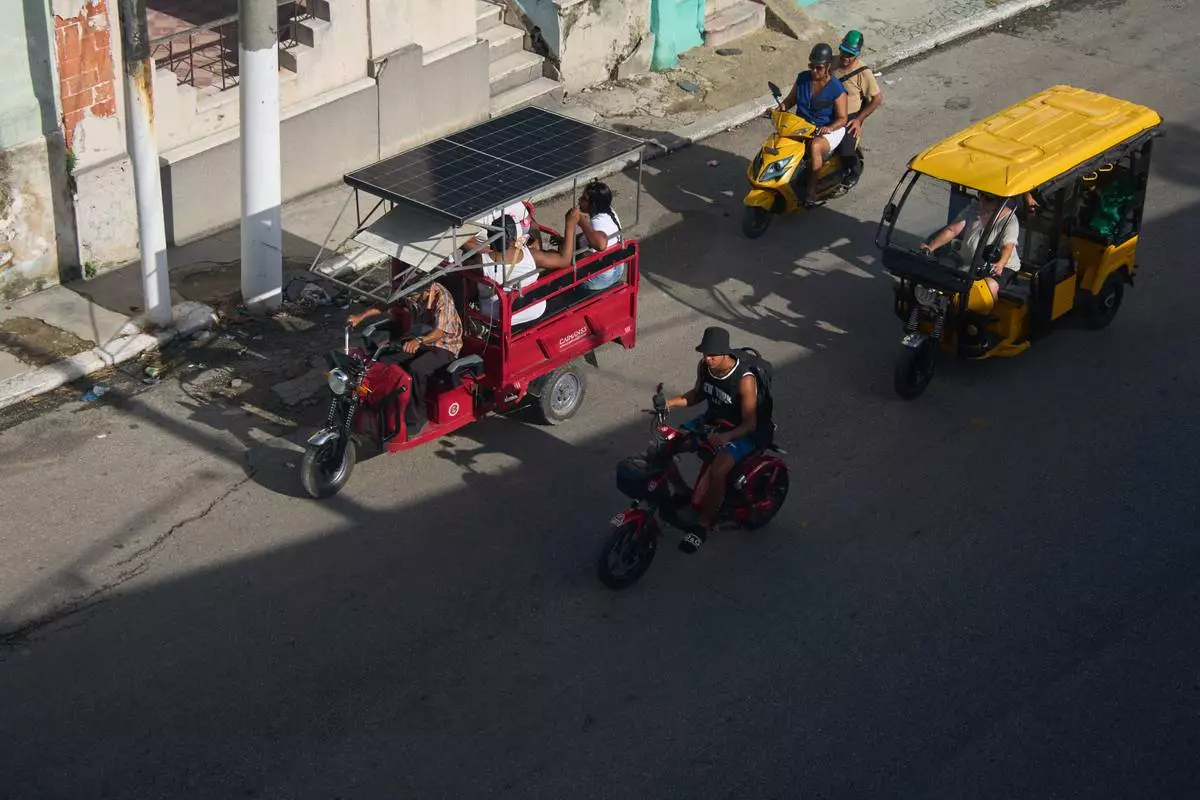
People ride in electric tricycles in Havana, Cuba, Friday, July 10, 2026. (AP Photo/Ramon Espinosa)
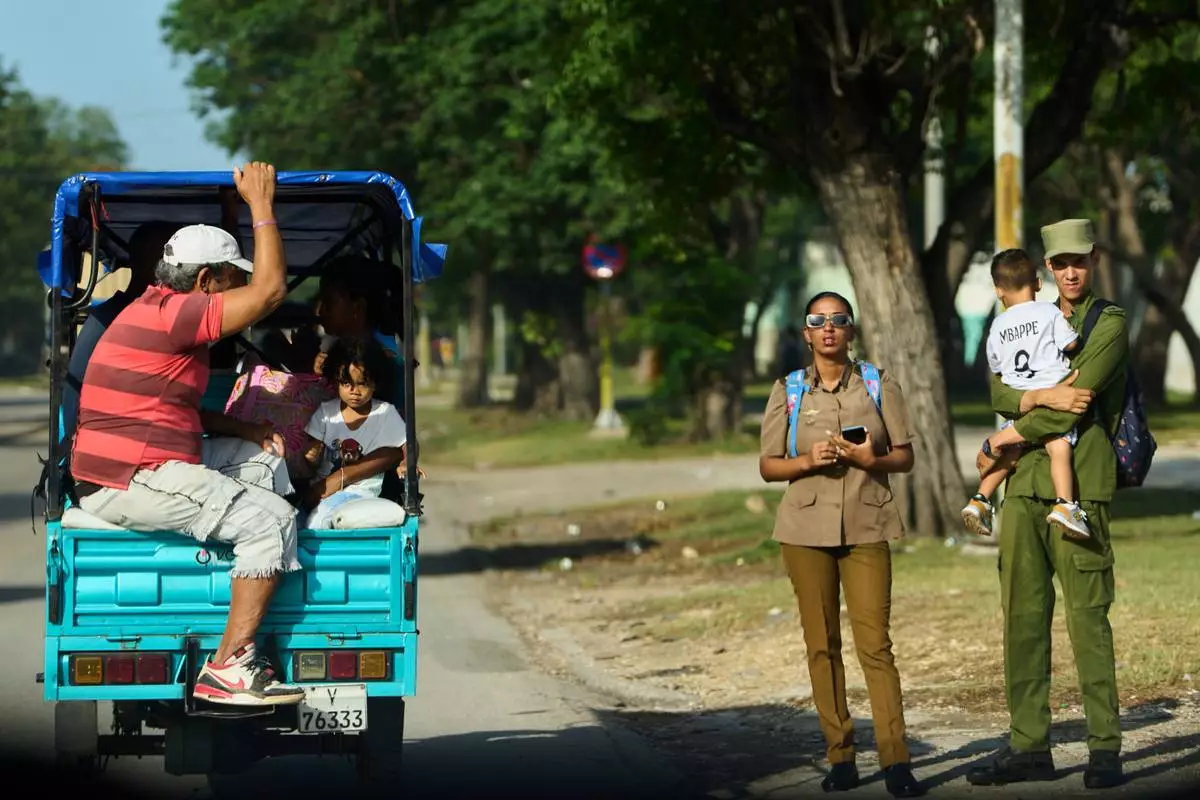
People ride in an electric tricycle in Havana, Cuba, Friday, July 10, 2026. (AP Photo/Ramon Espinosa)

People ride in an electric tricycle in Havana, Cuba, Friday, July 10, 2026. (AP Photo/Ramon Espinosa)
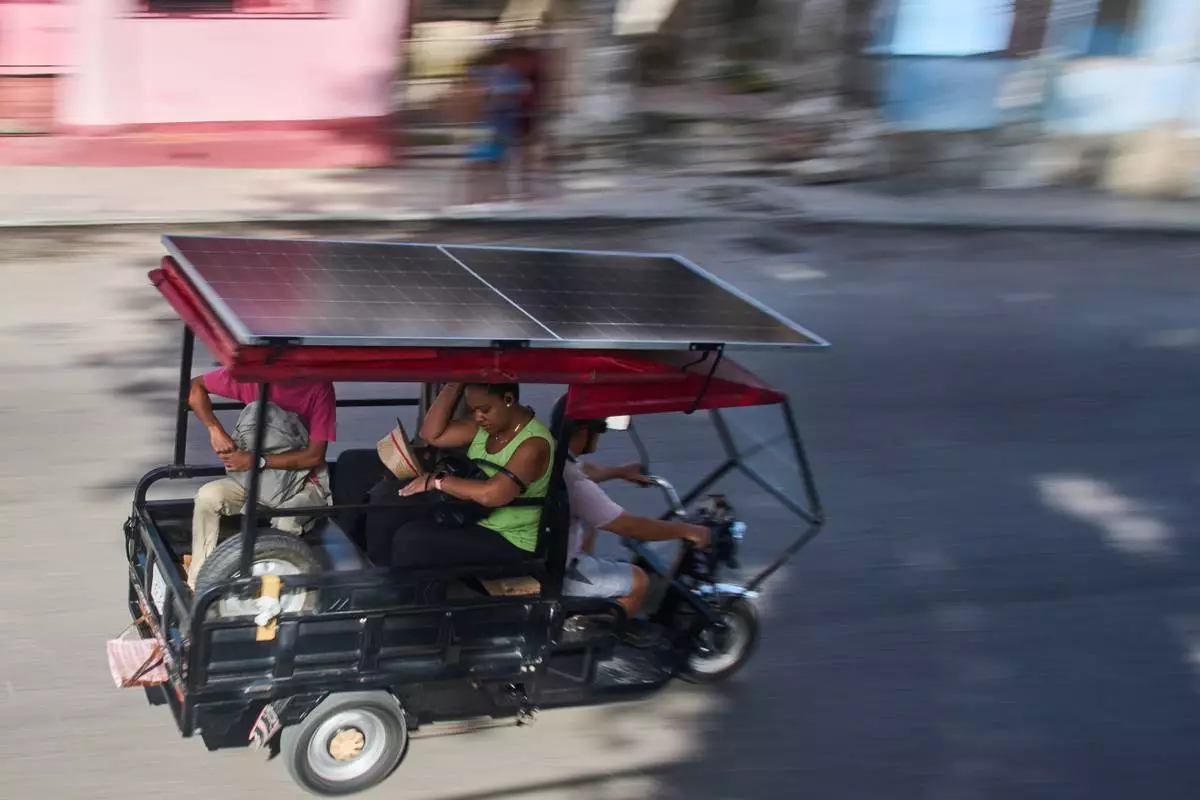
People ride in an electric tricycle equipped with a solar panel in Havana, Cuba, Friday, July 10, 2026. (AP Photo/Ramon Espinosa)