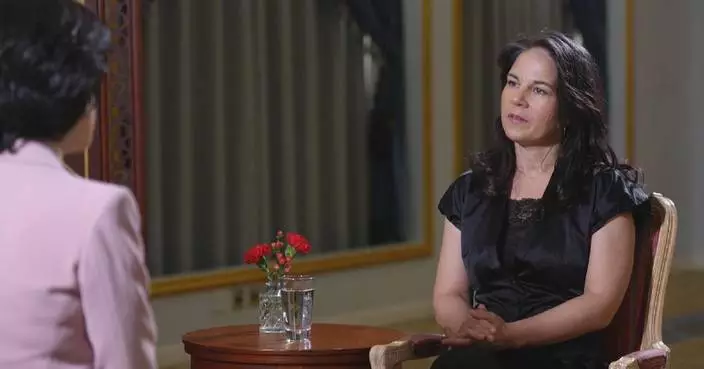
President of the 80th session of the United Nations General Assembly (UNGA) Annalena Baerbock has called for a global AI governance framework, warning of the potential for "deep harm" without regulation.
The UN remains the only platform capable of bringing together stakeholders across the artificial intelligence spectrum, Baerbock said in an interview with China Media Group during her recent visit to Beijing.
"I believe it's the only place where you can bring together the different countries, but also the different companies and actors in the AI spectrum to find a common governance structure," she said.
Baerbock pointed to both the promise and peril of the rapidly advancing technology.
"We have seen that AI can bring wonderful support for humans. I learned it also here in China, but I've seen it also in other parts around the world. However, we have also seen that it can be a deep harm for society. So, if we do not regulate it (so) that this new technology serves the people and prevent that it harms people, it's not in our common interest," said Baerbock.
To that end, different UN bodies are working together to formulate a consensus on AI governance regulation and bridge the digital divide, she said.
"Therefore, the UN set up the scientific panel. Different UN bodies are working on different proposals for governance regulation. Because we see already currently that we have a digital divide. Not everybody has access, in not every country do you have the big companies dominating the market. So, also with regard of closing the digital divides, we need this international cooperation," said Baerbock.
Established in August 2025, the Independent International Scientific Panel on AI aims to provide rigorous, evidence-based scientific assessments of AI's risks, opportunities, and societal impacts. Composed of 40 multidisciplinary experts, it operates as a global early-warning engine.
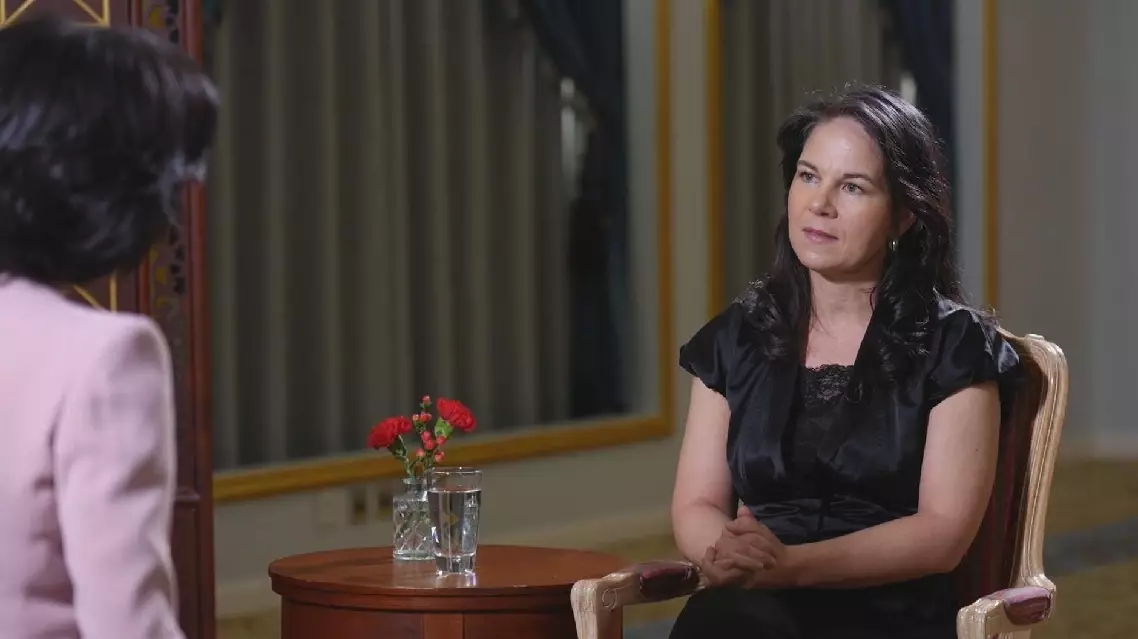
UNGA president calls for global AI governance framework
According to the Guangxi Emergency Management Department, a rescue helicopter evacuated one patient and family members from Dieshi Village of disaster-hit Hengzhou City to the urban area for treatment on Saturday morning.
As of noon Saturday, the helicopter had completed 15 sorties totaling 18 hours and 6 minutes of flight time. The crew conducted aerial surveys over reservoirs and townships in Hengzhou, as well as districts in Guigang.
A total of 2,764 items of emergency supplies and medicine were airdropped to township governments and villages.
So far, two patients and their family members have been evacuated.
In Guigang City, five counties and districts have been affected by persistent heavy rainfall and flooding starting from early July, triggered by Typhoon Maysak, the 10th typhoon of the year.
All temporary shelters are now operating in an orderly manner, providing food, medical services and supplies.
At the No. 3 Junior High School of Qintang Street, the shelter has received a total of 640 visits from displaced residents and emergency rescue personnel since it opened on July 6.
Currently, about 190 residents and 280 rescue personnel remain at the shelter.
In addition to basic necessities, the shelter has set up a basic medical service point and a psychological counseling room to meet the diverse needs of those taking shelter.
"They provided toothbrushes, toothpaste, toiletries, quilts and pillows, as well as donated supplies including clothes," said Huang Xueqi, a resident sheltered at the school.
"We have a place to stay, food and clothing. Everything is well arranged. This flood has been devastating, but we must stay strong. We are deeply grateful for their help," said Qiu Lijian, another resident.
"The shelter has medical teams to give residents physical checkups and psychological counseling. We also set up a temporary classroom for charging devices to help people stay connected. Our supply storage room has received donations from caring enterprises across the country, so we have enough supplies. We have also prepared special items for vulnerable groups, such as baby formula and diapers. We can fully meet the living needs of those staying here," said Bi Haojun, a faculty member at the school.
Local authorities said shelters in Guigang will continue to provide resettlement services, daily necessities and supplies, with relief efforts dynamically adjusted based on residents' return and recovery progress, to ensure that the basic needs of flood-affected residents are met and they get through the flood season safely.
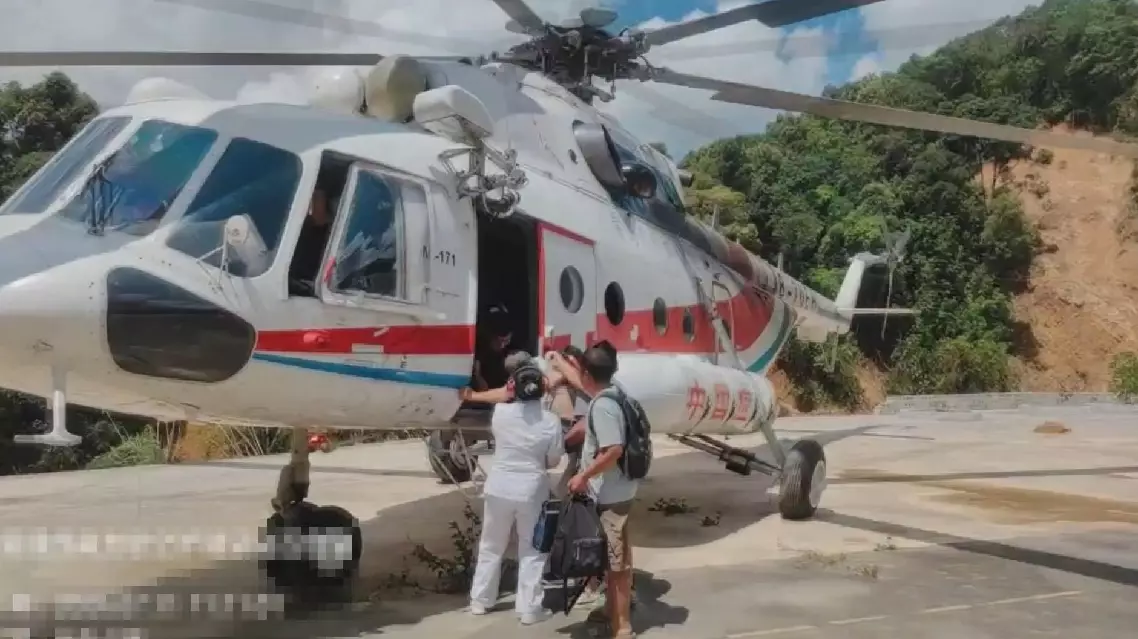
Helicopters airdrop supplies, evacuate sick people as Guangxi weathers rainstorm, floods