Annalena Baerbock, president of the 80th Session of the United Nations General Assembly (UNGA), called for more action to implement the 2030 Agenda and its Sustainable Development Goals (SDGs) in an interview with China Media Group (CMG), which aired on Friday.
With 17 SDGs at its core, the 2030 Agenda was adopted by the United Nations in 2015 as a universal call to action to end poverty, protect the planet, and ensure that by 2030 all people enjoy peace and prosperity.
"We need less talking and more action and implementation. This is really in the hands of the member states. The United Nations is the platform where it brings the states together and where member states commit to deliver on guaranteeing, for example, school access for every child in their country, but then it's in the hands of the member states to implement it. This is why currently the UN is helping in many countries where, for example, the right to education cannot be fulfilled for different reasons in member states, but we have to increase our action on the ground, and there are no excuses because member states agreed in consensus on these Agenda 2030 goals," said Baerbock.
Baerbock also emphasized the importance of addressing the climate crisis to achieve the goals.
"To be frank and open, we have seen also some backlash because of the external crisis going on. For example, if a climate disaster hits a country, destroying literally schools, hospitals, and infrastructure, obviously, this country is being pulled back, and this is why especially our cooperation on fighting the climate crisis, the effects of the climate crisis, is so important for delivery on the SDGs," she said.

UNGA president urges 'less talking, more action' to achieve 2030 Agenda goals
According to the Guangxi Emergency Management Department, a rescue helicopter evacuated one patient and family members from Dieshi Village of disaster-hit Hengzhou City to the urban area for treatment on Saturday morning.
As of noon Saturday, the helicopter had completed 15 sorties totaling 18 hours and 6 minutes of flight time. The crew conducted aerial surveys over reservoirs and townships in Hengzhou, as well as districts in Guigang.
A total of 2,764 items of emergency supplies and medicine were airdropped to township governments and villages.
So far, two patients and their family members have been evacuated.
In Guigang City, five counties and districts have been affected by persistent heavy rainfall and flooding starting from early July, triggered by Typhoon Maysak, the 10th typhoon of the year.
All temporary shelters are now operating in an orderly manner, providing food, medical services and supplies.
At the No. 3 Junior High School of Qintang Street, the shelter has received a total of 640 visits from displaced residents and emergency rescue personnel since it opened on July 6.
Currently, about 190 residents and 280 rescue personnel remain at the shelter.
In addition to basic necessities, the shelter has set up a basic medical service point and a psychological counseling room to meet the diverse needs of those taking shelter.
"They provided toothbrushes, toothpaste, toiletries, quilts and pillows, as well as donated supplies including clothes," said Huang Xueqi, a resident sheltered at the school.
"We have a place to stay, food and clothing. Everything is well arranged. This flood has been devastating, but we must stay strong. We are deeply grateful for their help," said Qiu Lijian, another resident.
"The shelter has medical teams to give residents physical checkups and psychological counseling. We also set up a temporary classroom for charging devices to help people stay connected. Our supply storage room has received donations from caring enterprises across the country, so we have enough supplies. We have also prepared special items for vulnerable groups, such as baby formula and diapers. We can fully meet the living needs of those staying here," said Bi Haojun, a faculty member at the school.
Local authorities said shelters in Guigang will continue to provide resettlement services, daily necessities and supplies, with relief efforts dynamically adjusted based on residents' return and recovery progress, to ensure that the basic needs of flood-affected residents are met and they get through the flood season safely.
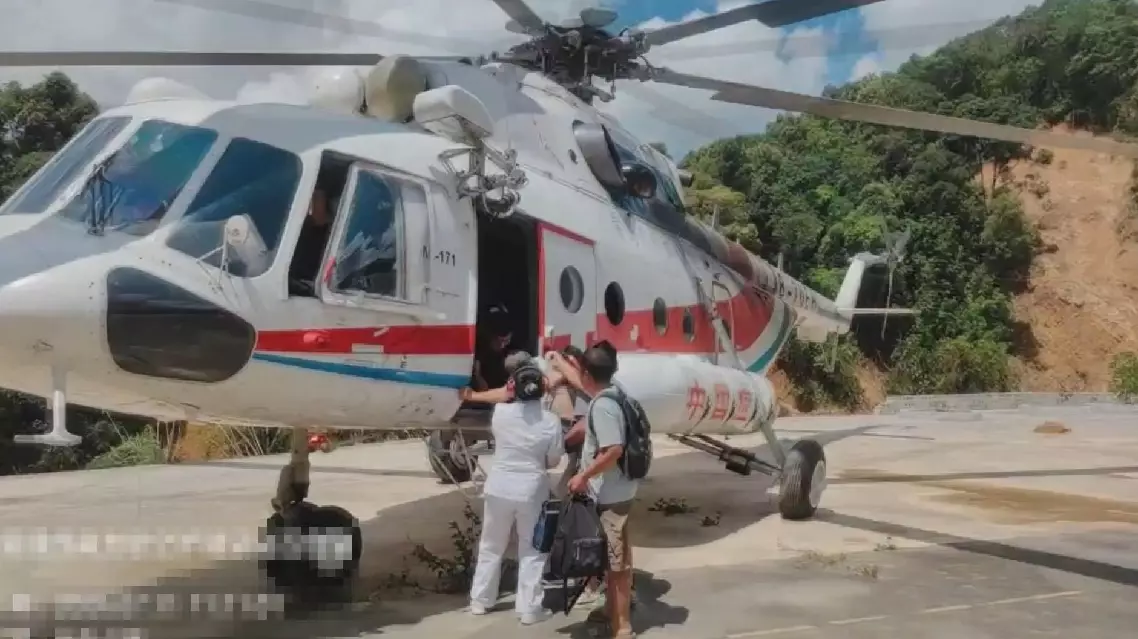
Helicopters airdrop supplies, evacuate sick people as Guangxi weathers rainstorm, floods