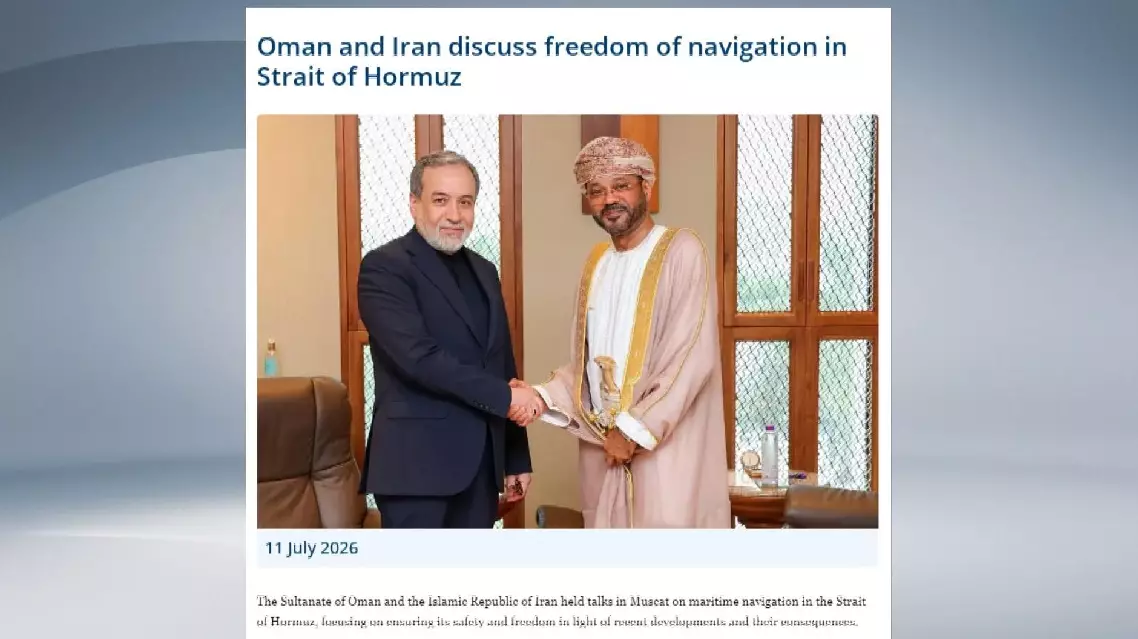
Iranian Foreign Minister Seyed Abbas Araghchi held talks with his Omani counterpart Sayyid Badr Albusaidi in the Omani capital city of Muscat on maritime navigation in the Strait of Hormuz on Saturday to ensure its safety and freedom in light of recent developments.
They agreed to continue discussions at both the technical and political levels aimed at reaching necessary understandings in accordance with international law, said the Foreign Ministry of Oman.
The talks came amid heightened tensions following a recent exchange of attacks between the United States and Iran, triggered by alleged Iranian strikes on commercial vessels transiting the Strait of Hormuz.
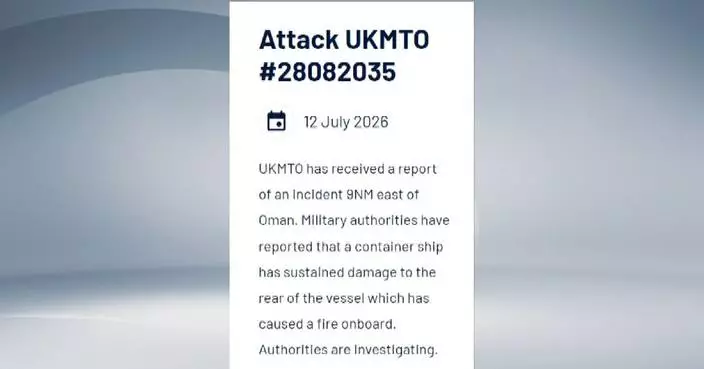
The United Kingdom Maritime Trade Operations (UKMTO) said in an advisory issued on Sunday a container ship caught fire after sustaining damage in an incident off the coast of Oman late Saturday.
According to the report, the vessel sustained damage to its rear and experienced a fire onboard.
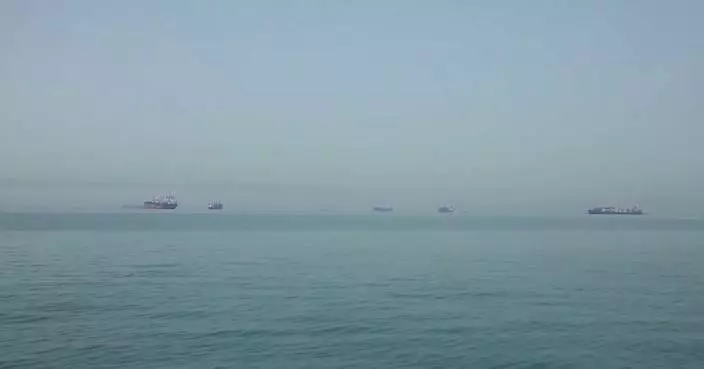
Iran's Islamic Revolutionary Guard Corps (IRGC) Navy announced in the same day that the Strait of Hormuz had been closed until further notice, after striking a vessel that attempted to transit the strategic waterway through an unapproved route.
Following U.S.-Israeli strikes on Iran in late February, Tehran tightened its control over the Strait of Hormuz, a strategic waterway through which about one-fifth of the world's seaborne oil trade passes, barring safe passage of Israeli- and U.S.-linked vessels.
Iran and Oman agreed in June to continue discussions through a joint working group between their foreign ministries to reach an understanding on the future management of navigation and related maritime services in the strait.
According to sources speaking to the CNN, Oman has drafted a plan for managing traffic in the Strait of Hormuz that would divide the strategic waterway into two separate shipping lanes, one for the north and one for the south.
The plan indicates that the southern lane, traversing Omani territorial waters, will maintain pre-war free navigation conditions while the northern lane, passing through Iranian territorial waters, will require prior Iranian approval but will not be subject to tolls. This plan has not yet been finalized.
Separately, Axios reported, citing sources with knowledge of the matter, that Qatari officials also participated in the latest consultations. All parties are discussing the possibility of issuing a joint statement that would call for the full opening of a central waterway through the strait's international waters, guaranteeing unrestricted freedom of passage for all vessels.
As of now, neither Iranian, Omani, nor Qatari authorities have confirmed these reports.
Meanwhile, ABC News quoted a U.S. official as saying that American negotiators did not travel to Oman to take part in the current round of discussions. A U.S. technical team was not physically present at the talks, but Washington remains in touch with Omani and Qatari counterparts and will continue to monitor developments as they unfold.
Oman, Iran agree to continue talks on Strait of Hormuz navigation