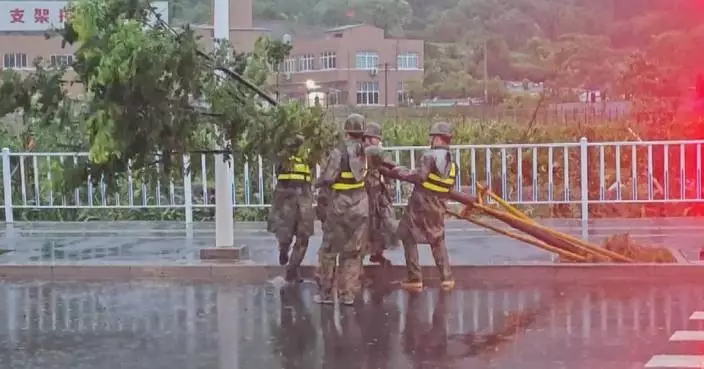
East China's Anhui Province has rolled out emergency response measures, including mass evacuations and reservoir water releases, as heavy rainfall brought by Typhoon Bavi continues to lash large parts of the province.
Typhoon Bavi, the ninth typhoon of the year, made successive landfalls along the coast of east China's Zhejiang Province late Saturday before moving inland. After the landfall, the typhoon is expected to continue to move northwestward while weakening. The center of Typhoon Bavi moved to Anhui on Sunday noon.
Triggered by Typhoon Bavi, heavy to torrential rain is expected to hit central and southern parts of Anhui from Sunday to Monday, according to local meteorological department.
In Chizhou City, one of the hardest-hit areas, more than 10,000 residents have been evacuated to safety. Local authorities have established 174 shelters to provide evacuees with drinking water, internet access, and other daily necessities.
Ahead of the typhoon's arrival, construction sites, ferry crossings, docks, and industrial and mining enterprises across Chizhou were ordered to shut down. In addition, six potentially hazardous rooftop signs and high-altitude billboards were removed to eliminate safety risks.
Meanwhile, in Ningguo City,the local Gangkouwan Reservoir began increasing its discharge Saturday to enhance storage capacity as heavy rainfall brings more water to rivers. Reservoir staff are now on 24-hour duty, closely monitoring water levels and standing ready to take further measures as conditions evolve.
In addition, local authorities have relocated a total of 201 people from three elderly care facilities situated in flood-prone areas to prevent causalities caused by possible flash floods and geological disasters triggered by the downpours.
Public transportation has also been affected by typhoon. Local ferries and bus services have suspended operations. All educational and training institutions have halted activities, construction projects have been fully suspended, and mining and other open-pit operations have also come to a stop. Notably, the power supply service center remains on 24-hour emergency standby to ensure residents' electricity needs are met.
In Anhui's Huangshan City, all national A-level tourist attractions have closed to visitors to ensure their safety.
At a port of Shexian County in northeastern Huangshan City, shipping services have been suspended since Saturday. Vessels are moored at ferry terminals, with personnel maintaining round-the-clock watch to respond to high winds and heavy rainfall in precaution of any accidents.
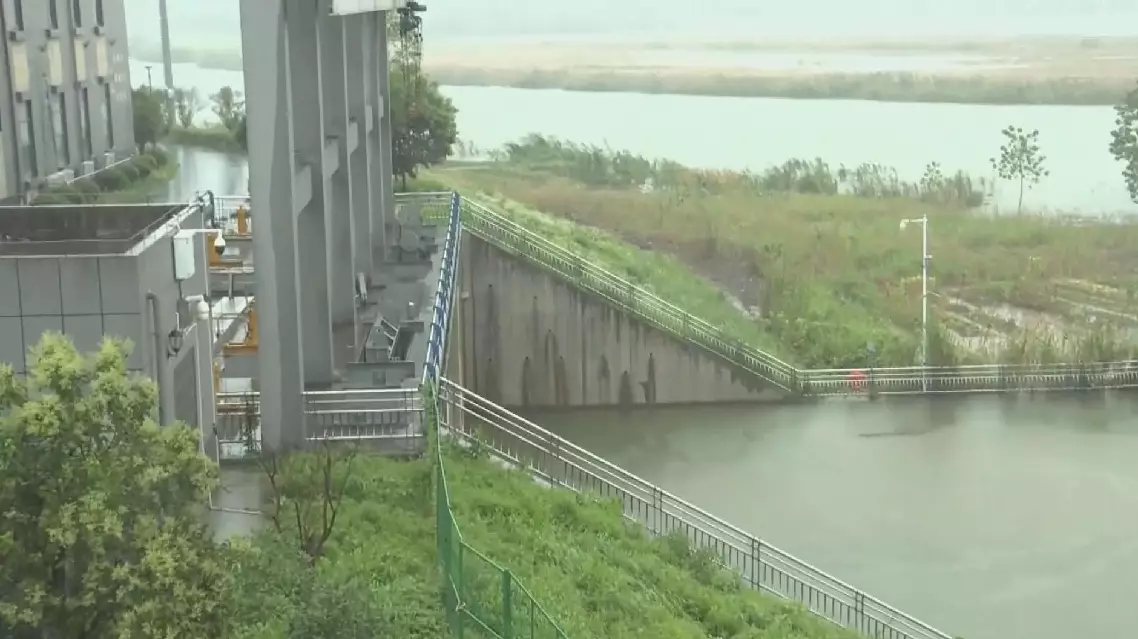
Emergency responses taken in Auhui to cope with impacts of Typhoon Bavi
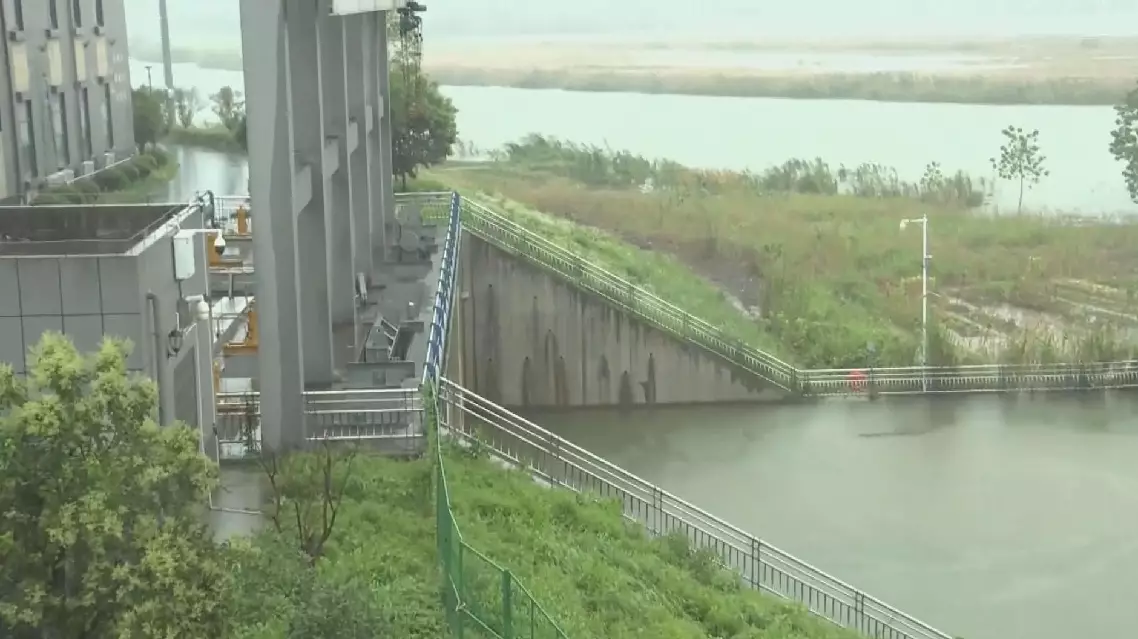
Emergency responses taken in Auhui to cope with impacts of Typhoon Bavi
China strongly deplores and firmly opposes the statement made by Japan's Foreign Minister Toshimitsu Motegi 10 years after the so-called "2016 Arbitral Award on the South China Sea", a Chinese Foreign Ministry spokesperson said in Beijing on Sunday.
The statement blatantly endorses the illegal "award", attacks China's lawful claims and mischaracterizes Japan as a "legitimate stakeholder who uses the South China Sea", said the spokesperson.
Japan is not a party in the South China Sea and is in no position to pass judgment on China's territorial sovereignty and maritime rights and interests in the South China Sea. During World War II, Japan committed innumerable crimes that caused untold suffering on China and its people, including the illegal occupation of islands and reefs in the South China Sea, said the spokesperson.
Now decades later, Japan, in the name of a "stakeholder", is again attempting to meddle in the South China Sea. This reminds people of Japan's history of aggression and expansion, and heightens their vigilance against Japan's neo-militarism agenda, said the spokesperson.
China's sovereignty over the South China Sea islands and relevant rights and interests in the South China Sea were established in the long course of history, and are solidly grounded in the law. China's activities in the South China Sea are fully legitimate, lawful and beyond reproach. China's rights in the South China Sea can by no means be denied by the makeshift "arbitral tribunal", said the spokesperson.
In rendering the "award", the "arbitral tribunal" exceeded its authority and abused its jurisdiction. The "award" is naturally illegal, null and void, and has no binding force. It has gravely undermined the sanctity and authority of the United Nations Convention on the Law of the Sea, and dealt a serious blow to the international rule of law, said the spokesperson.
China neither accepts nor recognizes the "award", and opposes and will never accept any claim or action arising from it, the spokesperson added.
By turning a blind eye to the glaring flaws in the "award" while openly endorsing it, Japan has laid bare its double standards and hypocrisy, said the spokesperson.
What Japan really cares about is not the international rule of law, but meddling in and destabilizing the South China Sea. For some time, Japan has been stepping up collaboration with the Philippines and expanding its export of weapons and equipment to the country. Japan has also deployed military forces overseas on many occasions and launched offensive missiles. These actions go far beyond the scope of self-defense, break free from Japan's Constitution and norms in the international law, and challenge the post-war international order, said the spokesperson.
China urges Japan to stop smearing China, stop sowing disinformation in the South China Sea, and stop undermining peace and stability in the region, said the spokesperson, adding that China will continue firmly defending its territorial sovereignty and maritime rights and interests in the South China Sea.
Any attempts to challenge China's lawful rights and interests and undermine peace and stability in the South China Sea are doomed to fail, the spokesperson said.
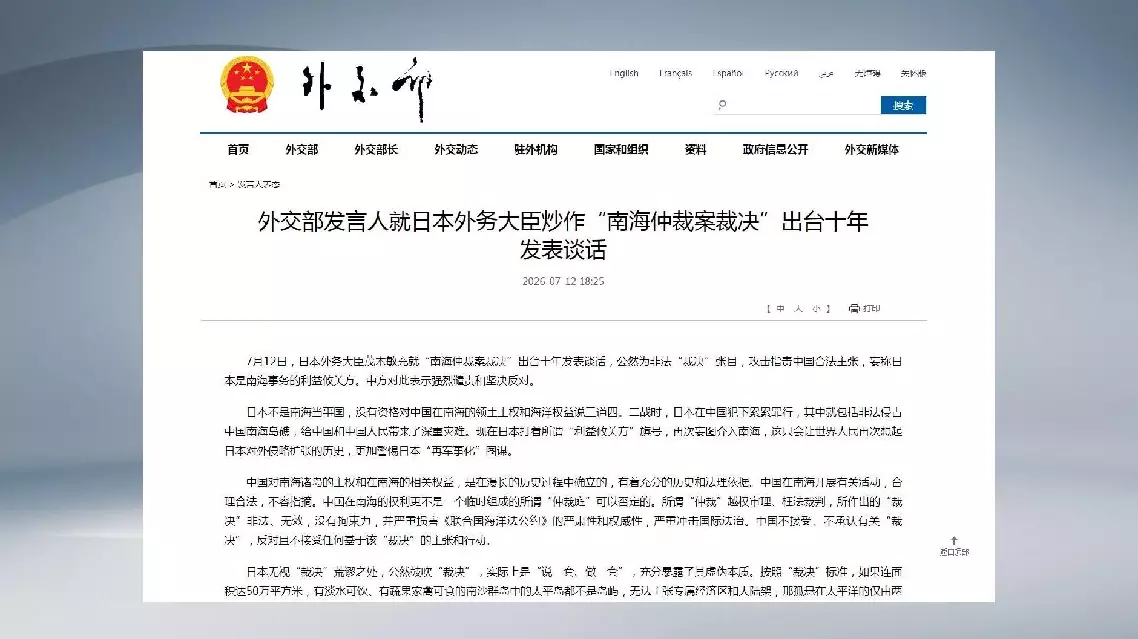
China strongly deplores Japanese FM's statement on South China Sea: spokesperson