SEOUL, South Korea (AP) — A South Korean court on Monday sentenced ousted President Yoon Suk Yeol to two years in prison for illegally receiving manipulated opinion polls for free from a political broker, potentially helping him secure his party's 2022 presidential bid, in return for political favors.
The case is one of seven trials facing the former conservative president, who was impeached last year following a brief imposition of martial law in December 2024 that triggered South Korea’s biggest political crisis in decades.
Last week, the country's Supreme Court upheld a seven-year prison sentence against Yoon, his first case to reach the country’s highest court since the ouster.
Yoon has appealed some convictions, including a February life sentence for the most serious rebellion charge stemming from his botched power grab. His lawyers said they would also appeal Monday’s ruling, calling it based on insufficient evidence.
The Seoul Central District Court said Monday Yoon violated the country’s political funding law. The political broker Myung Tae-kyun was handed 1 1/2 years in prison for the same charge.
Myung was accused of conducting 14 free opinion polls for Yoon between June and October 2021 using manipulated data, potentially helping Yoon win his party’s presidential nomination before his election win in March 2022.
The political broker wanted former lawmaker Kim Young-sun to be the conservative People Power Party candidate in the 2022 legislative by-election. The court said Yoon had exerted undue influence on his party to fulfill Myung’s request in exchange for the manipulated polls.
Yoon’s surprise late-night martial law declaration on Dec. 3, 2024, which lasted only a few hours, threw the country into turmoil. Lawmakers broke through a blockade of heavily armed soldiers and police at Seoul’s National Assembly and voted to repeal the measure, forcing Yoon’s Cabinet to lift it.
Yoon was impeached by the liberal-led legislature later that month, before his formal removal by the Constitutional Court. After being released from custody earlier in 2025, he was re-arrested in July last year and has since stood trial in multiple criminal cases while in detention.
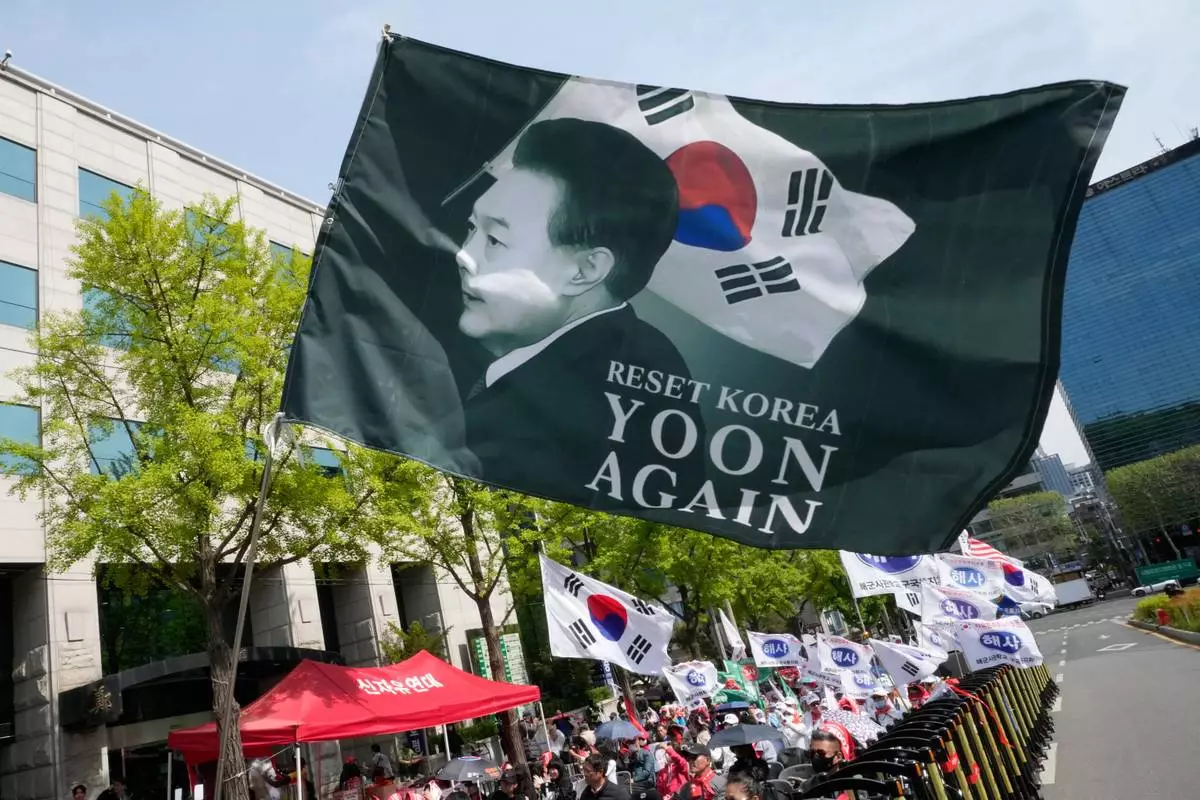
FILE - Supporters of former South Korean President Yoon Suk Yeol stage a rally outside the Seoul High Court in Seoul, South Korea, April 29, 2026. (AP Photo/Ahn Young-joon, File)
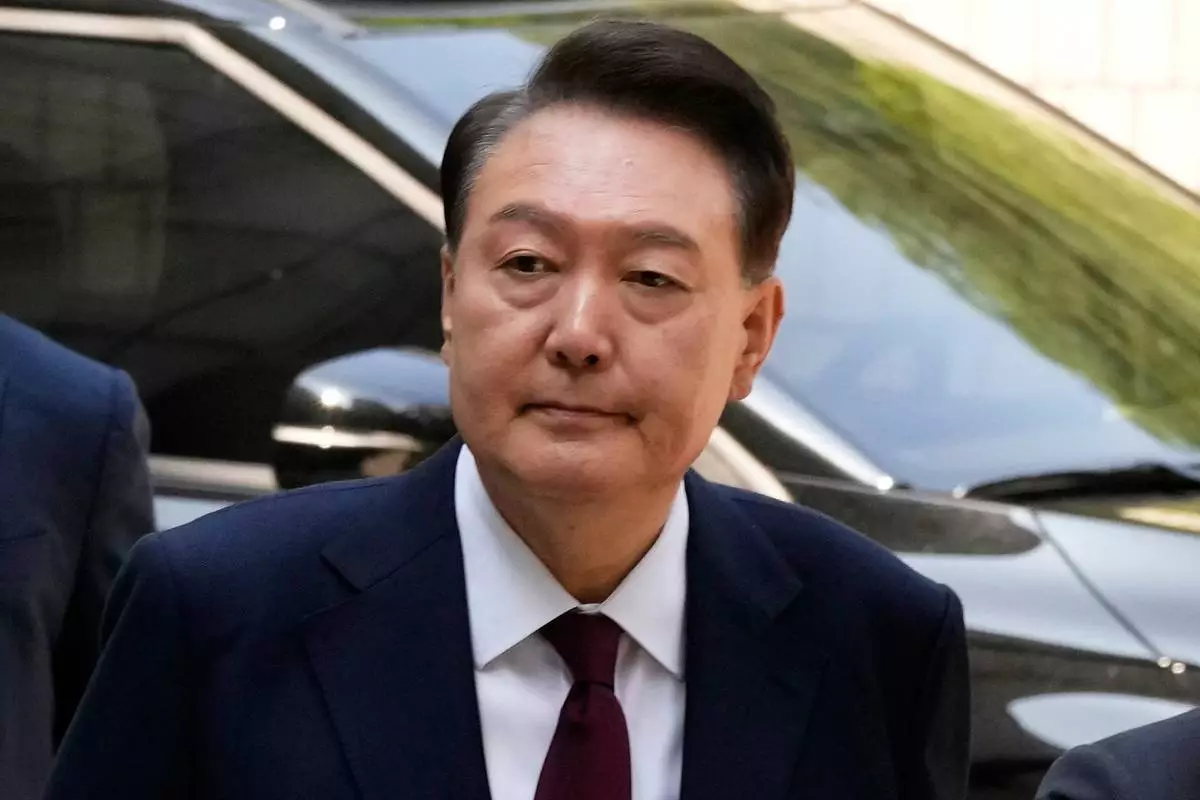
FILE - South Korea's ousted former President Yoon Suk Yeol arrives to attend his trial at the Seoul Central District Court in Seoul, South Korea, May 12, 2025. (AP Photo/Ahn Young-joon, Pool, File)
DUBAI, United Arab Emirates (AP) — The United States and Iran each asserted Monday they controlled the Strait of Hormuz after a weekend of attacks stretching across the wider Middle East, further threatening any diplomacy to end the war.
The latest exchange was sparked by an Iranian attack on a container ship on Sunday in the Strait of Hormuz, a critical waterway for international oil and gas over which Iran has asserted control since the United States and Israel started the war on Feb. 28.
Iran says it has the right to manage traffic through the strait and potentially charge fees in accordance with an interim peace deal reached last month. The U.S. disputes that, citing international law on freedom of navigation, and has tried to establish an alternative route outside of Iranian control.
Iran and the U.S. are nearly halfway through the 60-day period in which they were supposed to negotiate a permanent end to the war and an agreement on Iran’s disputed nuclear program. Instead, a series of attacks over the strait have raised fears of a return to all-out war and further disruption to the global economy.
“A return to full-scale hostilities would have catastrophic consequences,” United Nations Secretary-General António Guterres said in a statement.
Oil prices jumped nearly 5% on Monday before falling back. U.S. benchmark crude, which had risen to nearly $120 a barrel at the height of the war, was trading at around $72.92. Markets were mixed.
The U.S. military’s Central Command described its forces as hitting dozens of sites in the strikes Monday, including air defense systems, radar sites, missile and drone equipment, and small boats.
“The Strait of Hormuz is a vital maritime corridor for global trade,” Central Command said. “Iran does not control it.”
The European Union’s top diplomat, Kaja Kallas, also called for the strait to be open, as it was before the war. “Freedom of navigation has to be respected,” she said.
Iran's paramilitary Revolutionary Guard, a key power center in the country's theocracy that controls its ballistic missile arsenal, sharply rejected America's statement.
“The Strait of Hormuz is our territory, and we will not allow a rogue and child-killing army from the other side of the world to continue its illegal interference in it,” the Guard said.
Missile alert sirens sounded three times Monday in Bahrain, home to the U.S. Navy’s 5th Fleet, and Kuwait said it was intercepting hostile fire. There was no immediate word on damage in either country.
In Jordan, the kingdom's military said it shot down four Iranian missiles in an incident that “resulted in zero casualties or material damage.” Jordan also hosts U.S. military forces and aircraft.
In Iran, authorities reported attacks in Hormozgan, Khuzestan and Markazi provinces and at least two people were killed, according to state-run IRNA news agency. Semiofficial Iranian media also reported strikes in the eastern Sistan and Baluchestan province, on a coast of the Gulf of Oman.
The attacks continued hours after the U.S. ended its strikes — again raising the possibility of Gulf Arab states retaliating against Iran. There were unclaimed attacks on Iran on Thursday as well.
Meanwhile, a base belonging to the armed wing of an Iranian Kurdish opposition group based in Iraq’s semiautonomous northern Kurdistan region came under drone attack on Monday. Rebaz Sharifi, a local commander, said the strikes targeted a base, without giving details on casualties or damage.
No group immediately claimed responsibility. Iran supports a number of powerful militias in Iraq.
Early on Sunday, the U.S. military said it hit some 140 targets, including missile and drone launch sites, ammunition dumps and communication equipment — a far-heavier set of attacks than in two previous rounds of strikes in the last week.
“We bombed the hell out of them last night,” U.S. President Donald Trump told NBC’s “Meet the Press.”
Iran retaliated by attacking nations in the region hosting U.S. military forces, while insisting it alone must control the strait and potentially charge vessels for traveling through it.
Sunday's attacks stretched to Bahrain, Kuwait, Qatar, Jordan and even Oman — which shares the strait with Iran. Oman, which long has been an interlocutor between Tehran and the West, summoned an Iranian diplomat to criticize the attack.
Iran described the strait as closed, while the U.S. military and Trump asserted it remained open.
Iran’s chokehold on the strait has loosened as the U.S. military supports vessels moving along a southern route hugging the coastline of Oman. That new route has angered Iran, which has launched repeated attacks on ships using it.
Traffic through the Oman route dropped over the weekend “to minimal levels, indicating that operators continue to prioritize perceived security over more direct transit options,” the ship-tracking website MarineTraffic.com said.
Iran’s Foreign Ministry spokesperson Esmail Baghaei blamed Washington for the chaos gripping the Middle East.
“Considering the memorandum of understanding’s fourteen clauses, the Americans have, in this brief period, in one way or another, slaughtered its various components,” Baghaei told journalists Monday.
Baghaei also said Iran wouldn't agree to visits by the International Atomic Energy Agency to Iranian nuclear sites bombed in 2025 by the U.S., where Tehran's stockpile of highly enriched uranium is believed still to be.
Trump suggested last week that the interim deal in the war was “over.” But mediators, including Pakistan, Qatar and Egypt, have continued efforts to reach a final agreement to end the war.
A regional official involved in mediation, speaking on condition of anonymity to discuss the sensitive talks, said efforts to shore up the ceasefire continued Sunday. Pakistan said its foreign minister spoke by phone with Iran’s top diplomat and urged “de-escalation” on both sides.
Iran’s new supreme leader, Ayatollah Mojtaba Khamenei, has not been seen in public since the war began. On Saturday, he vowed to avenge the killing of his father and predecessor, Ayatollah Ali Khamenei, in the U.S. and Israeli strikes that sparked the war.
Associated Press writers Munir Ahmed in Islamabad and Stella Martany in Irbil, Iraq, contributed to this report.
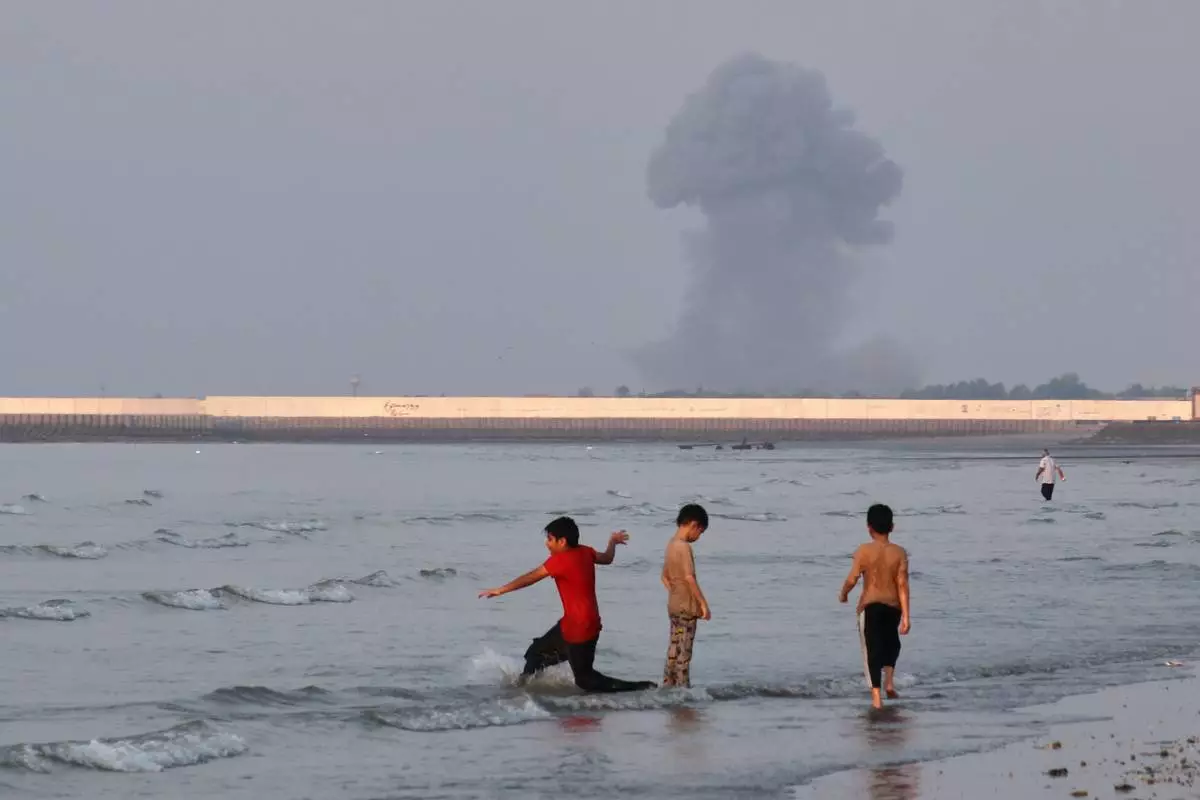
Three boys play in the shallow waters of the Strait of Hormuz, as a plume of smoke rises from an explosion in the background, off Bandar Abbas, Iran, Monday, July 13, 2026. (Razieh Poudat/ISNA via AP)
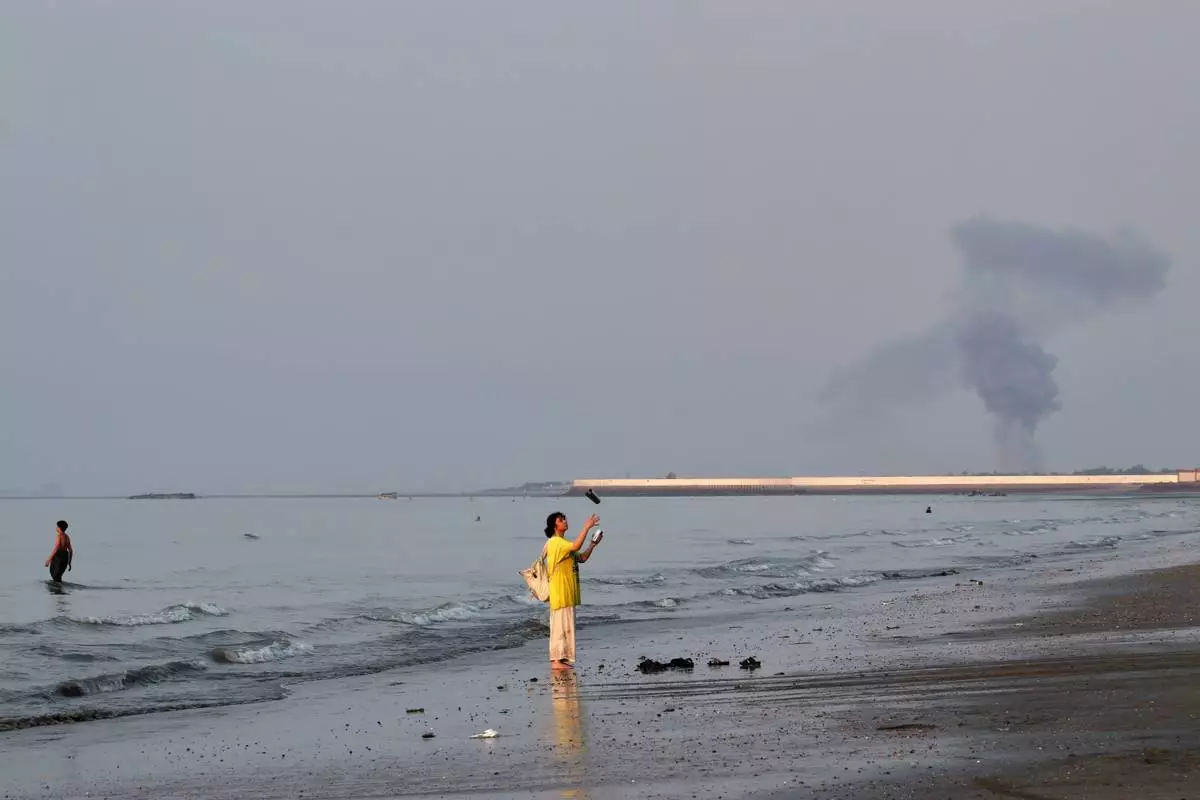
A woman stands at the water's edge along the Strait of Hormuz as a plume of smoke rises in the background following an explosion, off Bandar Abbas, Iran, Monday, July 13, 2026. (Razieh Poudat/ISNA via AP)
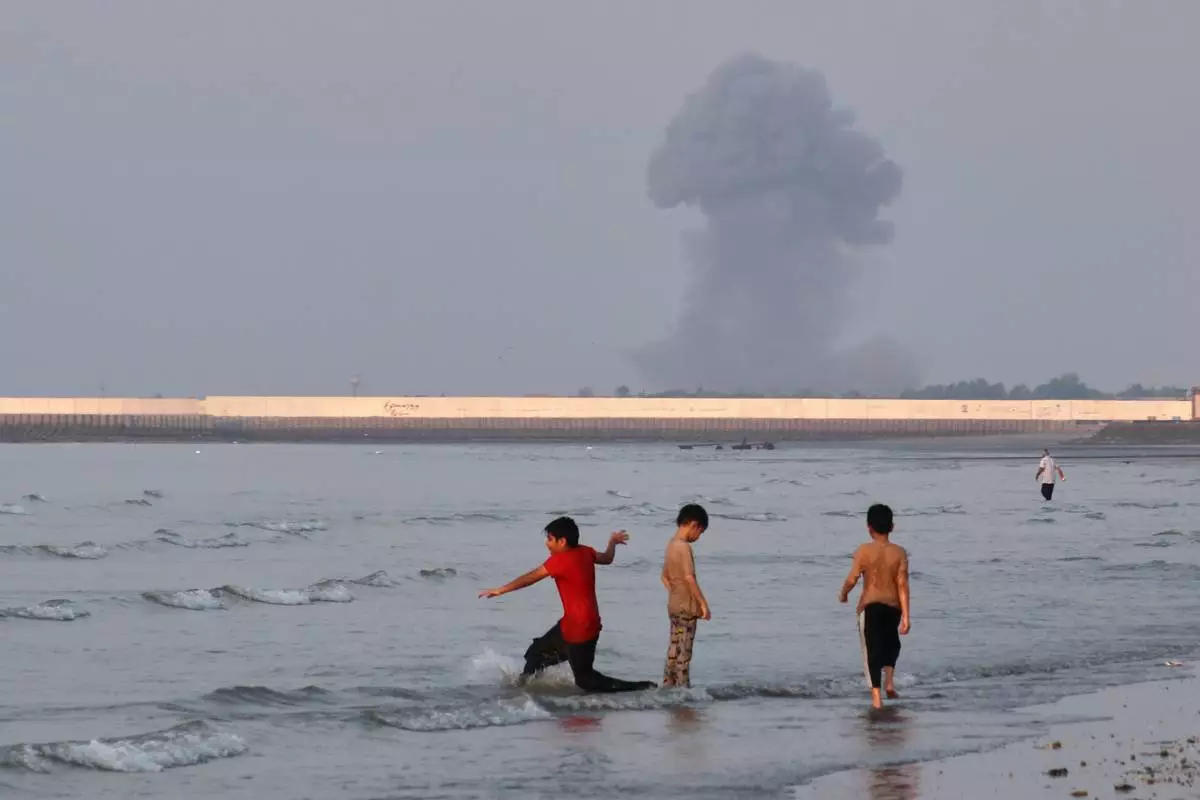
Three boys play in the shallow waters of the Strait of Hormuz, as a plume of smoke rises from an explosion in the background, off Bandar Abbas, Iran, Monday, July 13, 2026. (Razieh Poudat/ISNA via AP)
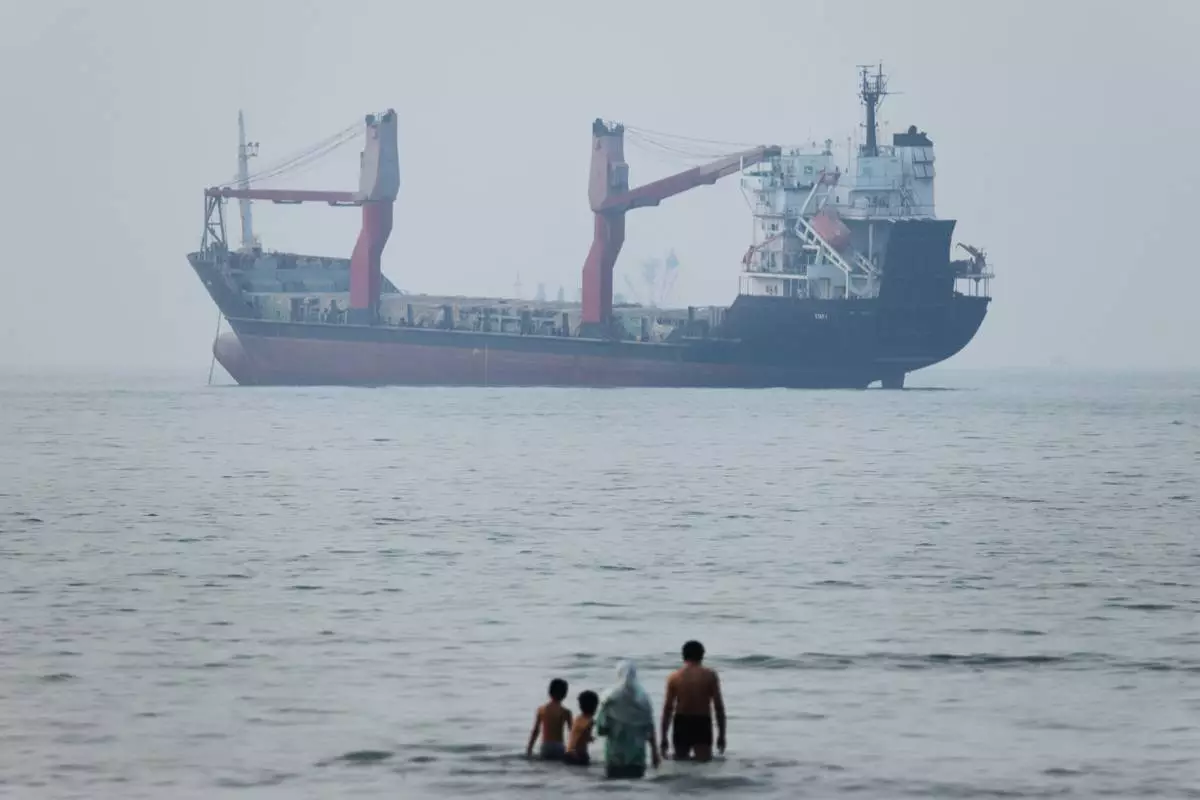
A group of people stands in shallow water as a cargo ship appears anchored in the Strait of Hormuz off Bandar Abbas, Iran, Tuesday, June 30, 2026. (Amirhosein Khorgooi/ISNA via AP)
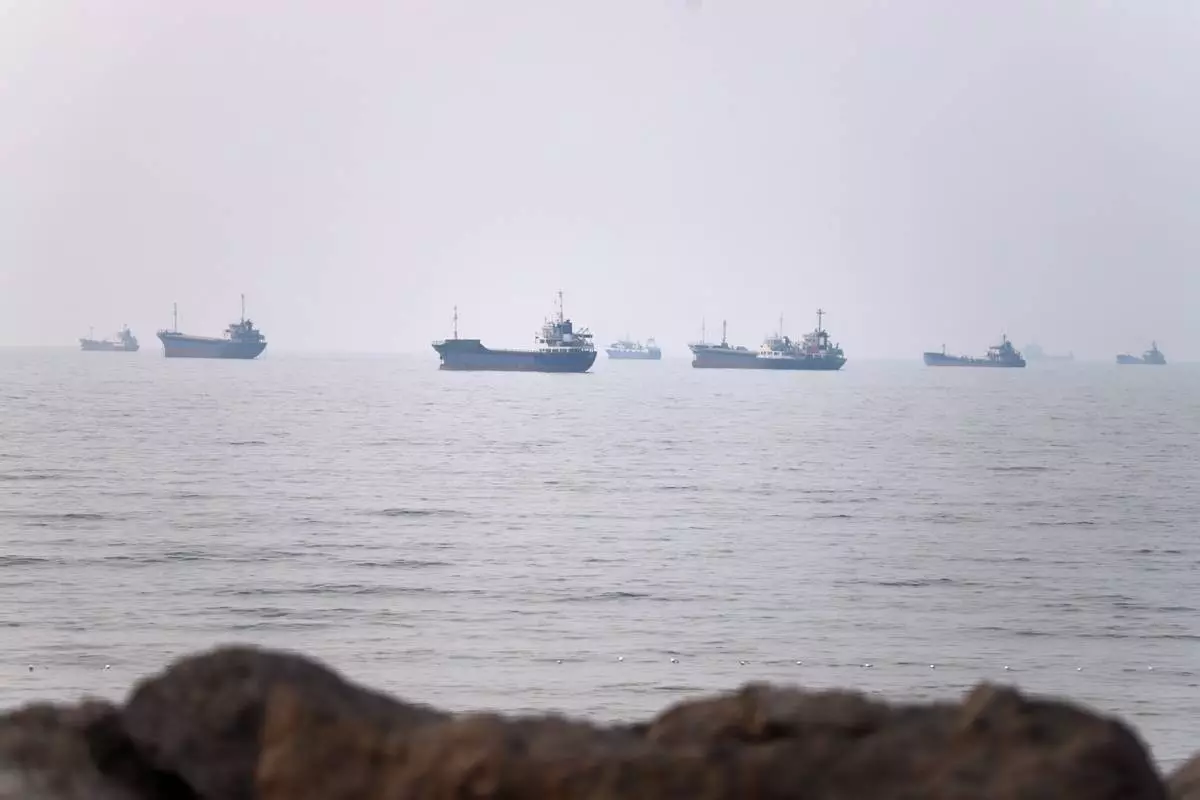
Commercial vessels are seen in the Strait of Hormuz off Bandar Abbas, Iran, Tuesday, June 30, 2026. (Amirhosein Khorgooi/ISNA via AP)