SAN ANTONIO--(BUSINESS WIRE)--Jul 13, 2026--
SWBC is proud to announce that Joan Cleveland, President and CEO of SWBC Life Insurance Company and Executive Vice President of SWBC Property and Casualty Insurance Company, has been reappointed to the Texas Association of Life & Health Insurers (TALHI) Board of Directors. TALHI represents life and health insurers across Texas and advocates for economic, legislative, and regulatory policies that support access to insurance and financial products for Texas consumers.
This press release features multimedia. View the full release here: https://www.businesswire.com/news/home/20260713768157/en/
TALHI reports that life insurers support more than 295,000 jobs across Texas and have invested more than $710 billion in Texas businesses, infrastructure, housing, agriculture, and local communities, highlighting the industry's significant role in the state's economy and financial well-being.
“It is an honor to continue serving on the TALHI Board of Directors and supporting the important work the association does on behalf of Texas policyholders,” said Joan Cleveland, President and CEO of SWBC Life Insurance Company and Executive Vice President of SWBC Property and Casualty Insurance Company. “I look forward to collaborating with my fellow board members to address the issues facing our industry and to support Texas families and communities.”
With more than 35 years of experience in the life and health insurance industry and over 10 years of prior service on the TALHI Board, Cleveland brings deep industry knowledge and leadership to her reappointment. At SWBC, she oversees the company's payment protection insurance operations and strategic direction, helping drive continued growth and success.
In addition to serving on the TALHI Board and the association’s Finance Committee, Cleveland was recently appointed to the Texas Life and Health Insurance Guaranty Association (TLHIGA) Board of Directors, where she will continue to serve through September 30, 2031.
About SWBC
As a diversified financial services company, SWBC provides financial institutions, businesses, and individuals with a wide range of insurance, mortgages, wealth management, employee benefits, and more. Headquartered in San Antonio, Texas, SWBC has partners and divisions across all 50 states and Mexico and manages businesses worldwide. No matter how wide its reach, SWBC always listens to our customers’ needs, analyzes their current situations, and recommends customized solutions. For more information about our innovative approach to personalized service, visit SWBC’s website.
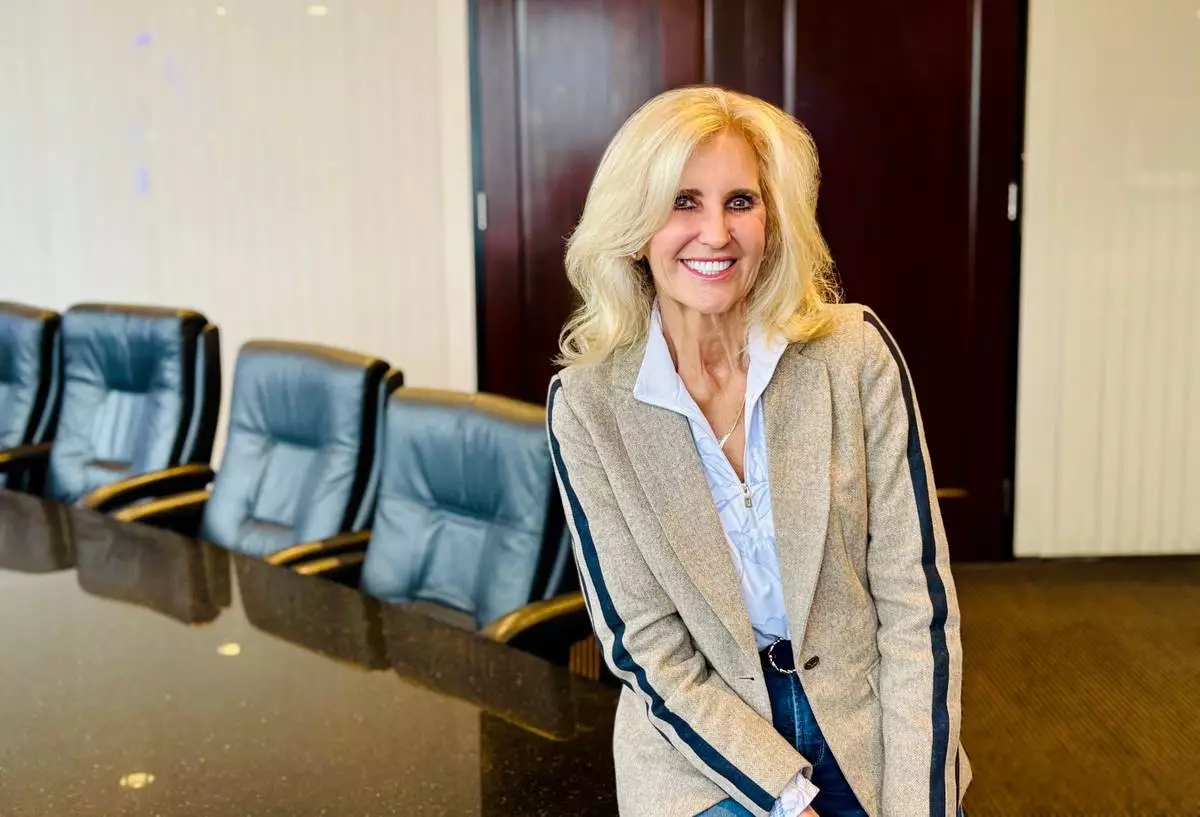
Joan Cleveland, President and CEO of SWBC Life Insurance Company and Executive Vice President of SWBC Property and Casualty Insurance Company
President Donald Trump on Monday reduced the size of two national monuments in Utah, undoing protections established by former presidents on public lands that are sacred among many Native Americans.
Bears Ears and Grand Staircase-Escalante national monuments in southern Utah have ancient cliff dwellings, petroglyphs and scenic canyons, as well as coal and uranium deposits that state officials want made available for development.
Trump, a Republican, issued proclamations under the Antiquities Act to reduce their size. He took similar actions during his first term, but those were reversed by President Joe Biden, a Democrat.
The latest move comes as Trump and other Republicans have drastically reshaped the management of vast taxpayer-owned lands concentrated in Western states. Trump administration officials and congressional Republicans have sought to expand drilling, mining and logging on public lands, while removing protections for imperiled species and rolling back rules for conservation.
President Bill Clinton, a Democrat, established Grand Staircase-Escalante National Monument in 1996, and President Barack Obama, also a Democrat, created Bears Ears National Monument in 2016 under the Antiquities Act. The 1906 law gives presidents the powers to protect sites considered historic, archaeologically significant or culturally important.
Utah officials have long fought against the monument designation and have argued that the state should be in charge of controlling its own lands. Trump in his first term reduced their size, calling their creation a “massive land grab.” Combined they span more than 3.2 million acres (13 million hectares), an area nearly the size of Connecticut.
Bears Ears was the first national monument protected at the request of tribal nations that consider the land sacred. The landscape contains ancestral villages, ceremonial and burial sites and features in some tribes’ creation and migration stories. Its designation honored five tribes in the region — Navajo, Hopi, Zuni, Ute Mountain Ute and Uintah-Ouray Ute.
Home to hundreds of thousands of objects of cultural and scientific significance, Bears Ears is jointly managed by an agreement between tribal nations and federal agencies.
Grand Staircase-Escalante consists of cliffs, canyons, natural arches and archaeological sites, including rock paintings. It holds large coal reserves, while the Bears Ears area has uranium.
The national monument designation provides sweeping protections not just for significant geological features or artifacts but also for the surrounding landscape, banning drilling, mining and new construction nearby. Proponents of Trump’s plan to downsize say the protective boundaries stretch too far and hinder mining for critical minerals.
Biden designated or expanded more than a dozen monuments and had a goal to conserve at least 30% of U.S. lands and waters by 2030.
Trump’s policies are largely the opposite: He wants to tap into the natural resource wealth of federal lands that total more than 100,000 square miles (260,000 square kilometers) and offshore areas under federal control, such as in the Gulf of Mexico and off Alaska.
That’s drawn a sharp backlash from Democrats and conservationists, who warn of the wholesale disposal of treasured landscapes for commercial gain.
Trump Interior Secretary Doug Burgum had said last year that federal officials would review and consider redrawing the boundaries of national monuments as part of a push to expand U.S. energy production.
Trump’s in his current term has used proclamations to lift commercial fishing prohibitions within expansive marine monuments in areas of the Pacific Ocean and in the Atlantic Ocean off the New England coast. Those monuments were created by Democratic and Republican administrations. The effort to boost the fishing industry, which has been challenged in court, marks a dramatic shift in federal policy by prioritizing commercial interests over efforts to allow the fish supply to increase.
The Supreme Court has affirmed the president’s authority to create national monuments, and both Democrats and Republicans have used the Antiquities Act. But there’s been debate about whether Trump has the authority to change the boundaries of existing monuments.
Some Republicans have tried to sell or transfer federal lands to states or other entities. Those efforts have largely fallen flat: A push by some GOP lawmakers in the House to sell public lands ran into bipartisan opposition, while another proposal by Sen. Mike Lee of Utah to sell more than 3,200 square miles (8,300 square kilometers) of federal lands was removed from Republicans' big tax and spending bill.
The U.S. Supreme Court last year turned back a lawsuit from Utah officials who sought to wrest control of vast areas of public land within the state from the federal government.
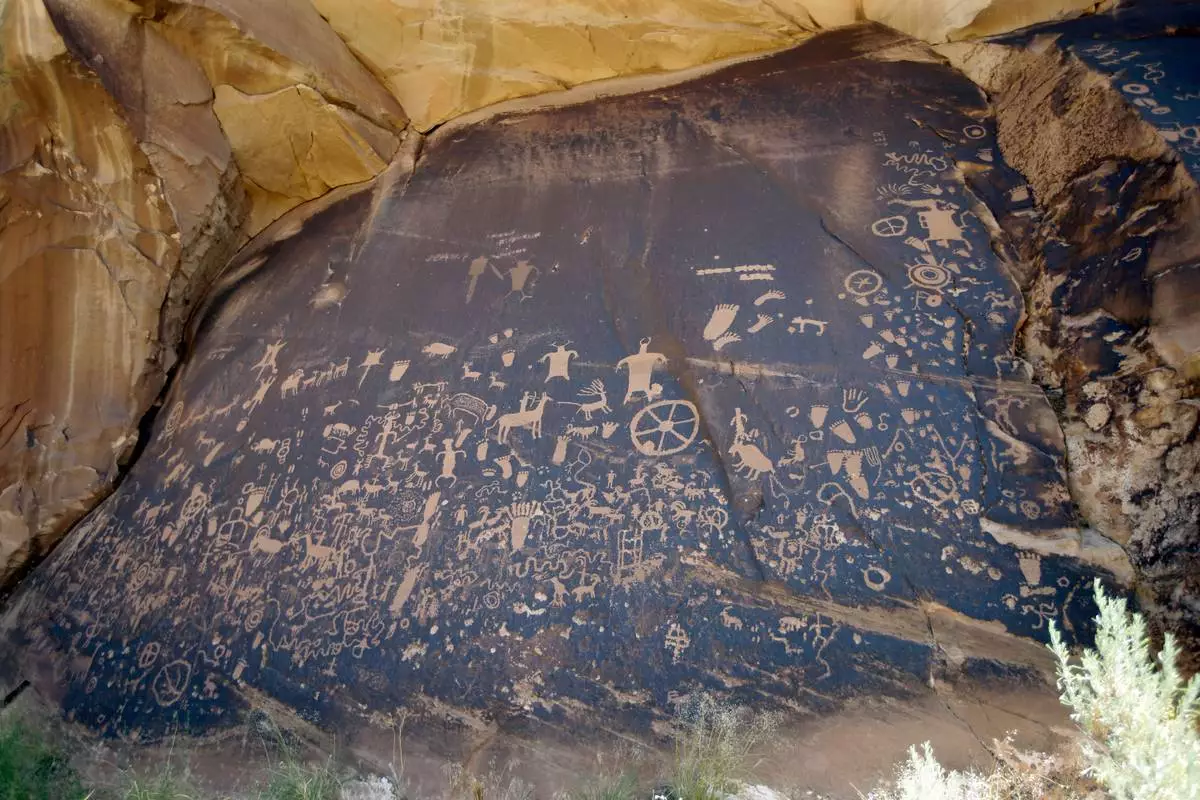
FILE - Newspaper Rock, featuring a rock panel of petroglyphs in the Indian Creek Area, is seen near Monticello, Utah, on July 14, 2016. (AP Photo/Rick Bowmer, File)
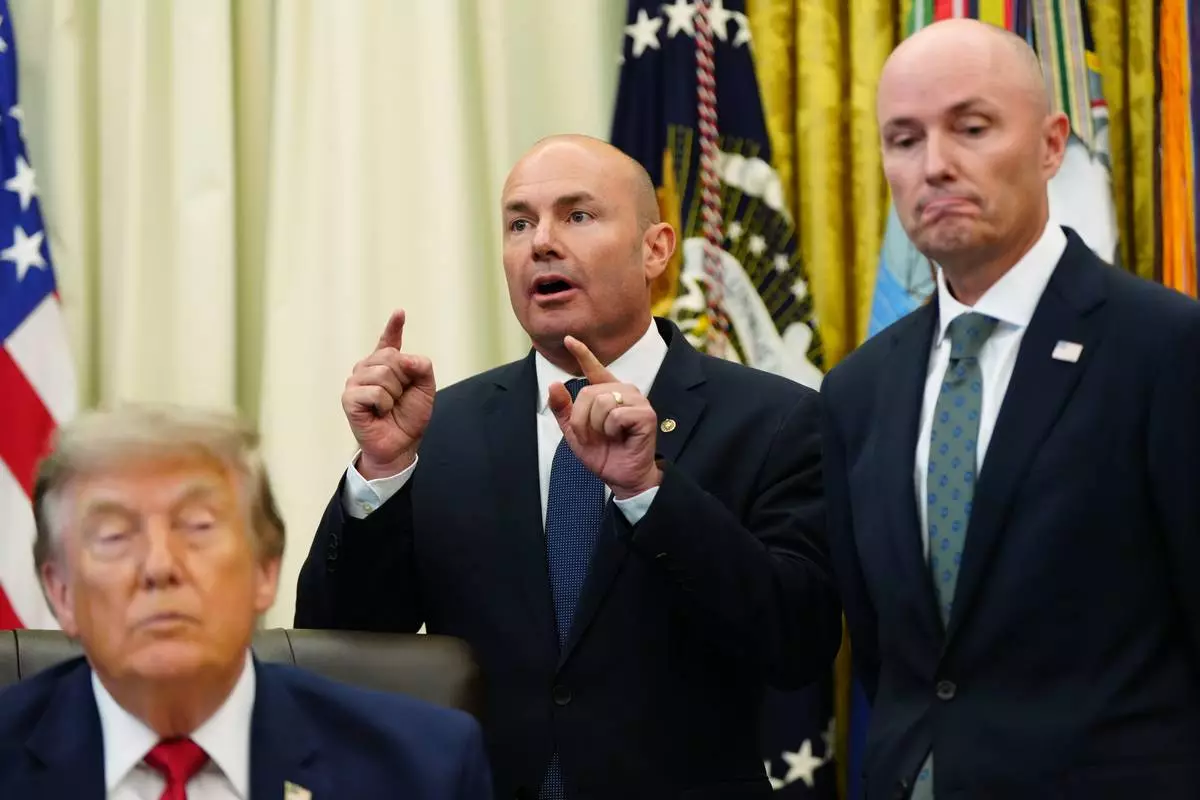
President Donald Trump and Utah Gov. Spencer Cox listen as Sen. Mike Lee, R-Utah, speaks in the Oval Office of the White House, Monday, July 13, 2026, in Washington. (AP Photo/Julia Demaree Nikhinson)
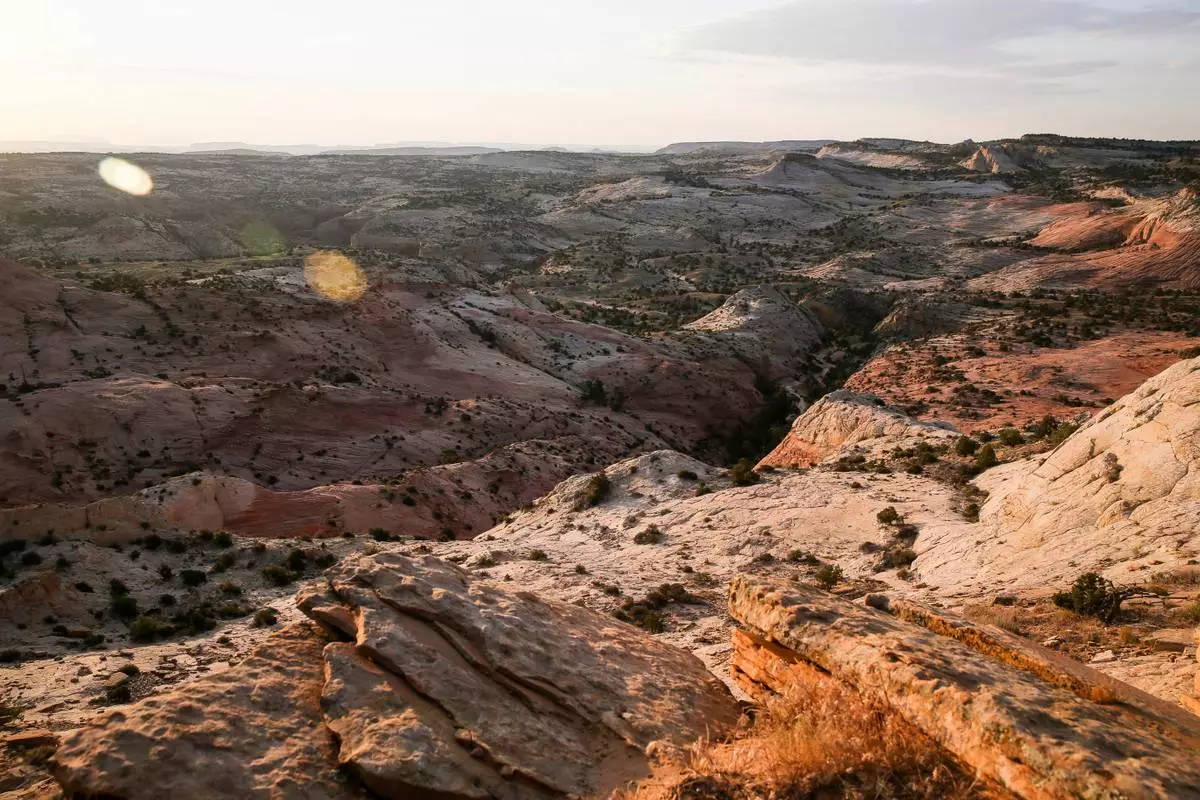
FILE - The Grand Staircase-Escalante National Monument in Utah is seen on July 9, 2017. (Spenser Heaps/The Deseret News via AP, File)