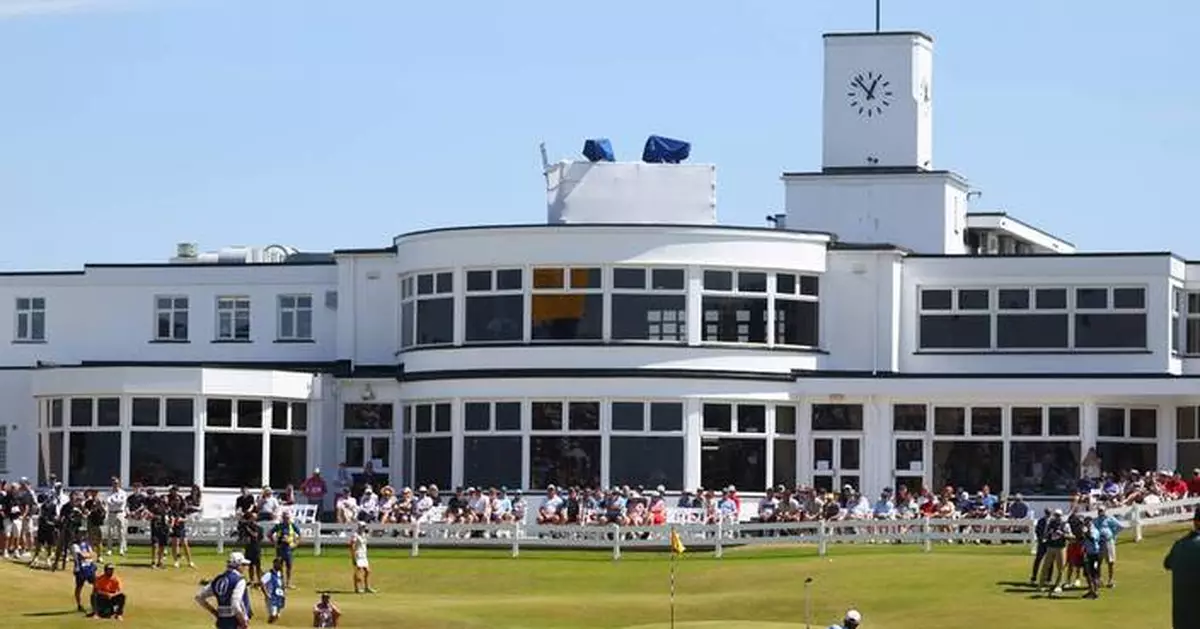
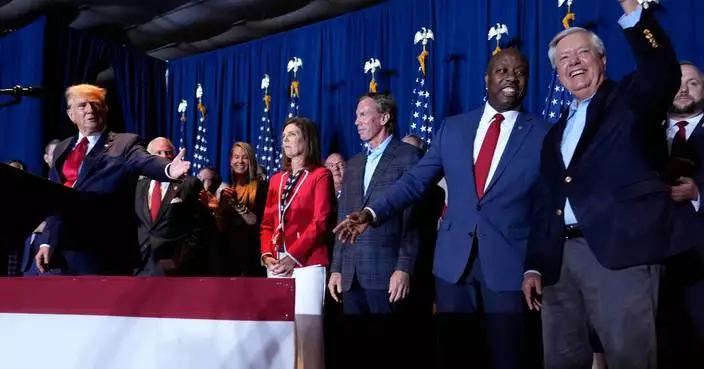
SOUTHPORT, England (AP) — How’s this for a dreamy scenario for English sports fans on Sunday.
An Englishman becomes “the champion golfer of the year” by winning the British Open at Royal Birkdale.
Then, a few hours later, England’s soccer team wins the World Cup.
“It would be mega,” said Matt Wallace, one of 21 English golfers in the field for the final major of 2026 taking place on the northwest coast of England from Thursday.
So, is this joyous sporting double a possibility? Sure.
A probability? That would be pushing it.
It might be the most well-known fact in all of sports in these parts that England — where soccer is king — hasn’t won the World Cup since 1966. This year, the men's team is into the semifinals and will face Lionel Messi and Argentina on Wednesday.
Less known is that no Englishman has won the Open Championship in England since Tony Jacklin in 1969.
Soccer fans call it six decades of hurt, and the wait is getting excruciating for the golfers, too. Indeed, since Jacklin, only one Englishman has won the Open and that was Nick Faldo — three times (1987, ’90 and ’92) and all of them in Scotland.
Tommy Fleetwood might be England’s best bet this year and, boy, how the locals would celebrate a win.
As a kid, Fleetwood lived just round the corner from Royal Birkdale, which he’d sneak on when accompanying his father, Peter, on evening dog walks.
He’s the poster boy for this championship but is aware he’s sharing the limelight with the country’s more globally recognized soccer players this week.
“For those guys, they definitely carry a nation on their shoulders a lot more than we do,” the No. 9-ranked Fleetwood said. “They’ve been doing a great job.”
And yes, the soccer will be intruding on the golf.
On Monday, Matt Fitzpatrick — the highest-ranked English golfer at No. 3 — pleaded to be given a later tee time for the first round on Thursday. The England-Argentina game kicks off at 8 p.m. local time on Wednesday night and wouldn’t finish until close to 11 p.m. if it goes to extra time and penalties.
“If anyone’s listening, ... it would be nice if all the English lads were late/early,” Fitzpatrick said of the Thursday/Friday tee times. “That would be great.”
They weren't so lucky. Each of the first eight groups to go out in the first round on Thursday will contain an Englishman.
Matthew Baldwin, who was born a stone’s throw away in Southport, is a member at Royal Birkdale and came through qualifying to take his place in his home major. He will have the honor of hitting the first shot of the championship at 6:35 a.m. on Thursday.
That might mean him having to wake up at 4 a.m. Will he watch the soccer?
The World Cup effect is certainly evident around Royal Birkdale, which is a short drive from the soccer hotbed of Liverpool. Watching players on the practice putting green on Sunday was a young girl wearing an England jersey with “Bellingham” and “10” on the back — a nod to England star Jude Bellingham — and with a tattoo of the England flag on each cheek.
R&A chief executive Mark Darbon has said the final round of the Open could be brought forward to avoid a clash with the World Cup final, which begins at 8 p.m. local time. The last round might not finish until around 6:30 p.m. — and that’s if there’s no need for a playoff.
Just imagine if it’s Fleetwood making that late-evening walk down the 18th ahead of collecting the claret jug and watching England in the soccer final.
“It would be outrageous,” said Roger Shutt, a 70-year-old Englishman who was one of the thousands of fans to attend Monday’s practice round. “If they coincide, it’ll be a holiday for everyone.”
AP golf: https://apnews.com/hub/golf
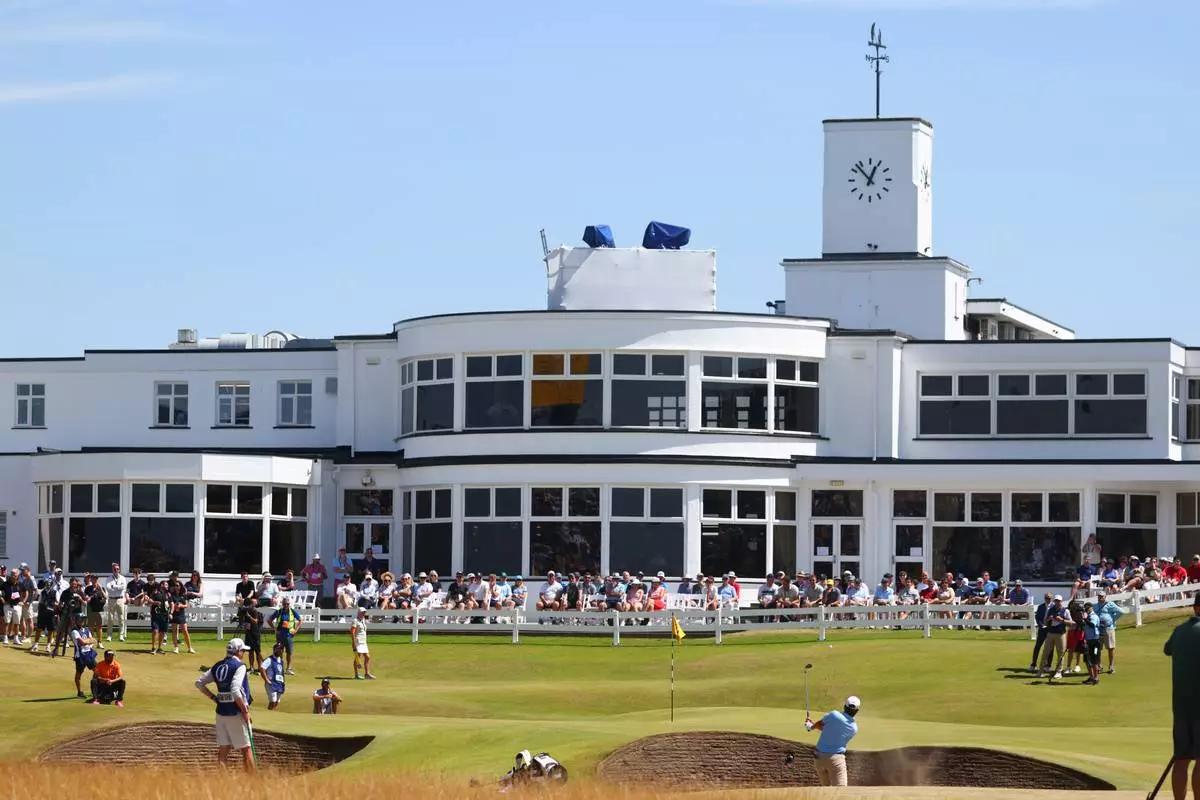
Spain's Angel Hidalgo on the 18th green during a practice round at the British Open Golf Championship at Royal Birkdale, Southport, England, Monday, July 13, 2026. (AP Photo/Peter Morrison)
DUBAI, United Arab Emirates (AP) — The U.S. announced a new round of strikes on Iran on Monday, hours after President Donald Trump said Washington is “reinstating” a blockade on Iran in the Strait of Hormuz and, in a seeming policy reversal, will charge other ships for safe passage.
All of that comes as Iran has insisted it actually controls the critical waterway, and as the new exchange of fire threatened a return to all-out war.
U.S. Central Command announced on social media that the U.S. military had begun another round of strikes against Iran.
“These strikes will continue imposing a heavy cost on Iranian forces and degrade their ability to attack innocent civilians and commercial shipping in the Strait of Hormuz,” the U.S. military said.
The new round of attacks followed Trump telling conservative radio host Hugh Hewitt, “We’re going to hit them very hard tonight and we’re going to hit them hard tomorrow — and there’s not a damn thing they can do about it.”
“They have nothing,” Trump added. “They have nothing going, other than they have big mouths.”
They followed the U.S. changing a policy that, until now, said the strait should remain open to all without tolls — as it was before the U.S. and Israel attacked Iran on Feb. 28. Any attempt by the U.S. or Iran to charge fees would violate global norms on freedom of navigation and raise tensions, likely causing further economic disruption far beyond the region.
The price for a barrel of Brent crude oil, the international standard, rose 7.8% to $81.92 a barrel on Monday, still well below the nearly $120 reached at the height of the war.
Trump also told Hewitt that the agreement reached last month was “built to test” Iran, adding that “when you’re dealing with sleazebags don’t mean much.”
Trump said he questioned why the U.S. was entering into a deal to create a ceasefire with Iran rather than moving toward a full deal first. Trump last week declared the ceasefire was “over.”
“They didn’t honor the test,” the president said.
Exchanges of fire in recent days, sparked by Iranian attacks on ships, had already cast further doubt on the interim peace deal. Washington had lifted a blockade it imposed in mid-April as part of that deal, which also called for the strait to be fully reopened.
“We are reinstating the THE IRANIAN BLOCKADE,” Trump said on social media. “All other countries will have fair and open use of the Strait.”
The president said the U.S. would be “reimbursed” by 20% of the value of cargo to help cover “any and all costs necessary to do the job of providing safety and security.”
The U.S. military said it will resume its blockade of Iranian ports Tuesday at 4 p.m. EDT.
Iran asserts it has the right to manage traffic through the strait and potentially charge fees in accordance with the interim peace deal. The U.S. has disputed that.
Iran on Monday vowed to fight back against any U.S. interference in the strait. Iran's Foreign Minister Abbas Araghchi mocked Trump on social media and used his support for tolls to legitimize Iran's position.
“POTUS is absolutely right. Whoever provides secure and safe passage of commercial vessels through the Strait of Hormuz should be compensated for this service,” Araghchi wrote on X. “Iran has always been the GUARDIAN of the Strait and will remain so FOREVER. 20% is of course too much. We will be fair.”
The International Maritime Organization, the United Nations agency overseeing international shipping, said it was waiting to find out more about Trump’s proposal but remained opposed to tolls for passage through international waterways.
“There is no legal basis through which to introduce mandatory tolls simply to transit through a strait,” it said in a statement.
Meeting with Gulf leaders late last month, Secretary of State Marco Rubio had spoken forcefully against Iran charging fees for transit through the strait.
“That’s international waterway. There isn’t a nation on Earth that supports having to pay money to go through the straits,” Rubio told reporters in Bahrain on June 25.
Rubio also said there was “zero support among the Gulf countries for any sort of toll or fees or anything that charges for the use of international waters. The president’s made it clear that’s not going to happen.”
A fifth of the world’s oil and gas passed through the strait before Iran effectively shut it down at the start of the war, driving up global prices of energy, fertilizer and other goods. Traffic had picked up after last month's agreement but remained well below prewar levels.
The American military has tried to establish a route through the strait along the coast of Oman that would be outside of Iranian control. Iran has attacked ships using that route, saying the U.S. is violating the interim peace deal. The U.S. has attacked Iran in response, drawing Iranian attacks on U.S.-allied Arab states.
The U.S. military said it struck dozens of sites Monday, including air defense systems, radar sites, missile and drone equipment, and small boats in response to an Iranian attack on a container ship the day before. The U.S. said it used drone ships for the first time to hit an Iranian ship maintenance facility and submarine on Sunday.
Missile alert sirens sounded three times Monday in Bahrain, home to the U.S. Navy’s 5th Fleet. There was no immediate word on damage.
Separately, Kuwait's Foreign Ministry said its consulate in Iraq had been attacked. It did not immediately blame anyone for the attack or disclose damages or casualties.
The oil-rich kingdom — home to several U.S. military bases — also condemned Iran and “its factions and militias loyal to it in Iraq” for attacking what it described as “several border points” and a maritime oil drilling platform that belonged to the Kuwait Petroleum Corporation.
In Jordan, the kingdom's military said it shot down four Iranian missiles in an incident that “resulted in zero casualties or material damage.” Jordan also hosts U.S. military forces and aircraft.
In Iran, authorities reported attacks in Hormozgan, Khuzestan and Markazi provinces and said at least two people were killed, according to state-run IRNA news agency. Semiofficial Iranian media also reported strikes in the eastern Sistan and Baluchestan province, which is on a coast of the Gulf of Oman.
Those attacks on Iran raised the possibility that Gulf Arab states were retaliating. There were unclaimed attacks on Iran on Thursday.
Iran’s Foreign Ministry spokesperson Esmail Baghaei blamed Washington for the chaos gripping the region. He said Iran wouldn't agree to visits by the International Atomic Energy Agency to nuclear sites the U.S. bombed in 2025. That's where Tehran's stockpile of highly enriched uranium is believed to be entombed.
Trump suggested last week that the interim deal in the war was “over” and the U.S. ended waivers allowing Iran to sell crude oil on the open market in U.S. dollars. But mediators, including Pakistan, Qatar and Egypt, have continued efforts to reach a final agreement to end the war.
Iran and the U.S. are nearly halfway through the 60-day period in which they were supposed to negotiate such an agreement, which was also supposed to address Iran's disputed nuclear program.
Boak reported from Washington. Associated Press writers Mae Anderson in New York, Will Weissert and Konstantin Toropin in Washington, Kareem Chehayeb in Beirut, Munir Ahmed in Islamabad and Stella Martany in Irbil, Iraq, contributed to this report.
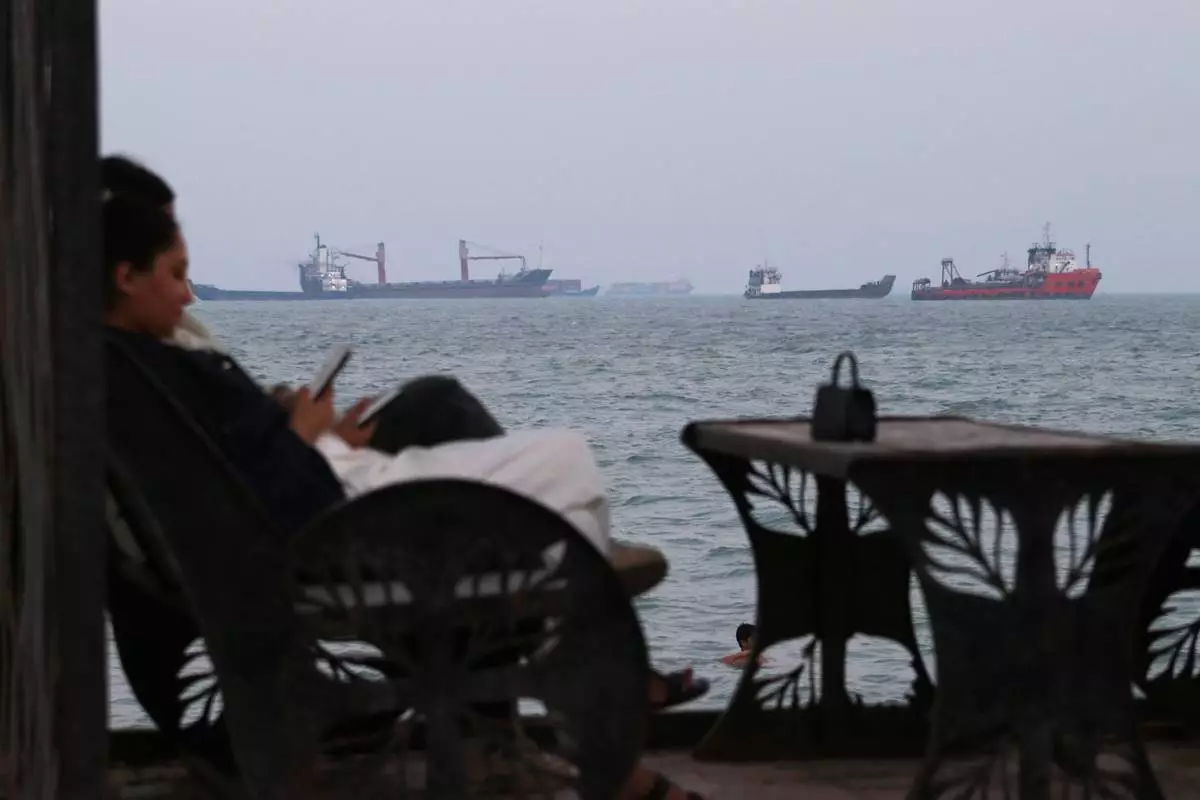
Residents check their cellphones as they sit at a cafe overlooking commercial vessels anchored in the Strait of Hormuz, off Bandar Abbas, Iran, Sunday, July 12, 2026. (Razieh Poudat/ISNA via AP)
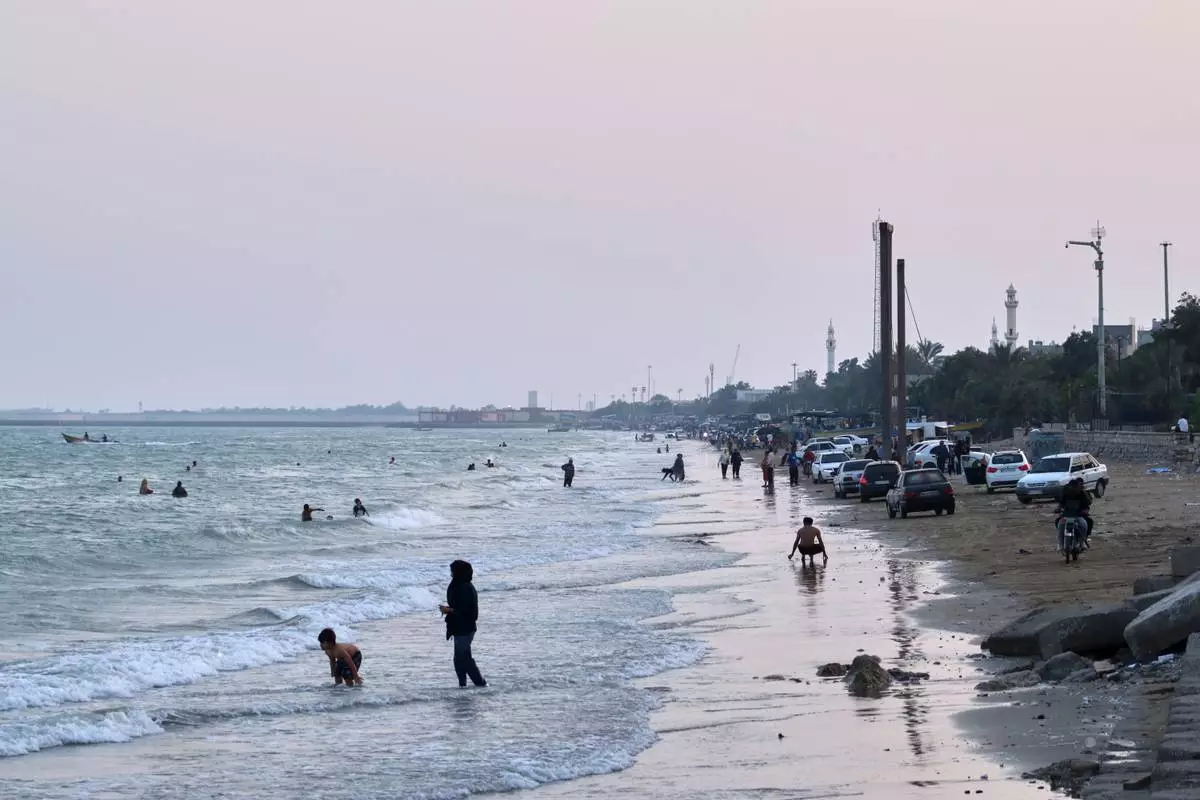
People swim and spend time along the shore of the Strait of Hormuz, off Bandar Abbas, Iran, Sunday, July 12, 2026. (Razieh Poudat/ISNA via AP)
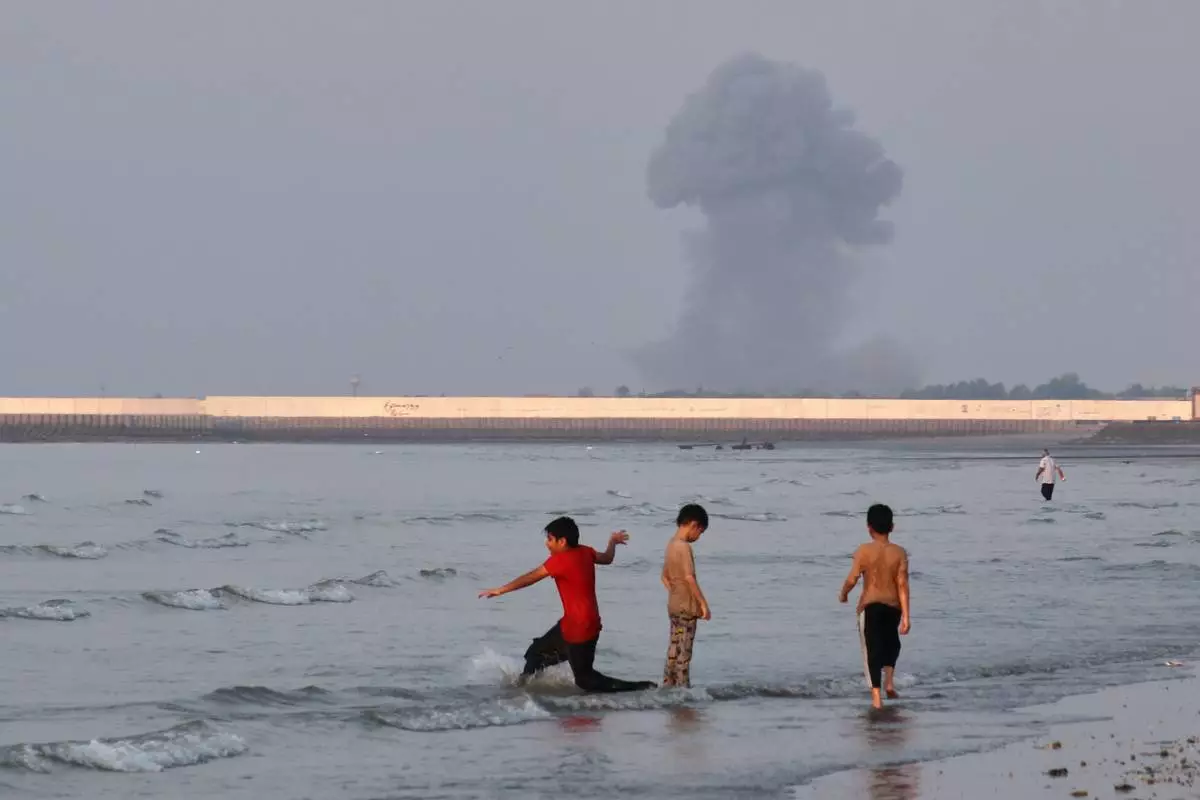
Three boys play in the shallow waters of the Strait of Hormuz, as a plume of smoke rises from an explosion in the background, off Bandar Abbas, Iran, Monday, July 13, 2026. (Razieh Poudat/ISNA via AP)
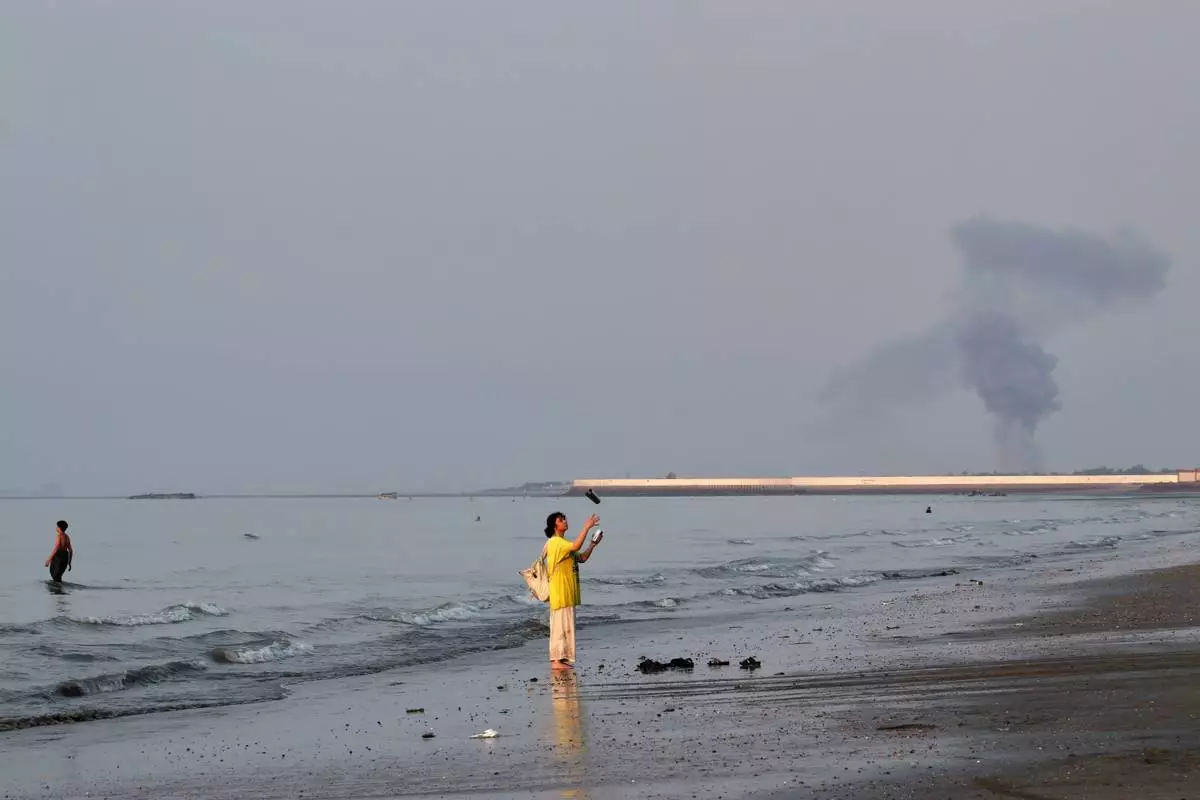
A woman stands at the water's edge along the Strait of Hormuz as a plume of smoke rises in the background following an explosion, off Bandar Abbas, Iran, Monday, July 13, 2026. (Razieh Poudat/ISNA via AP)
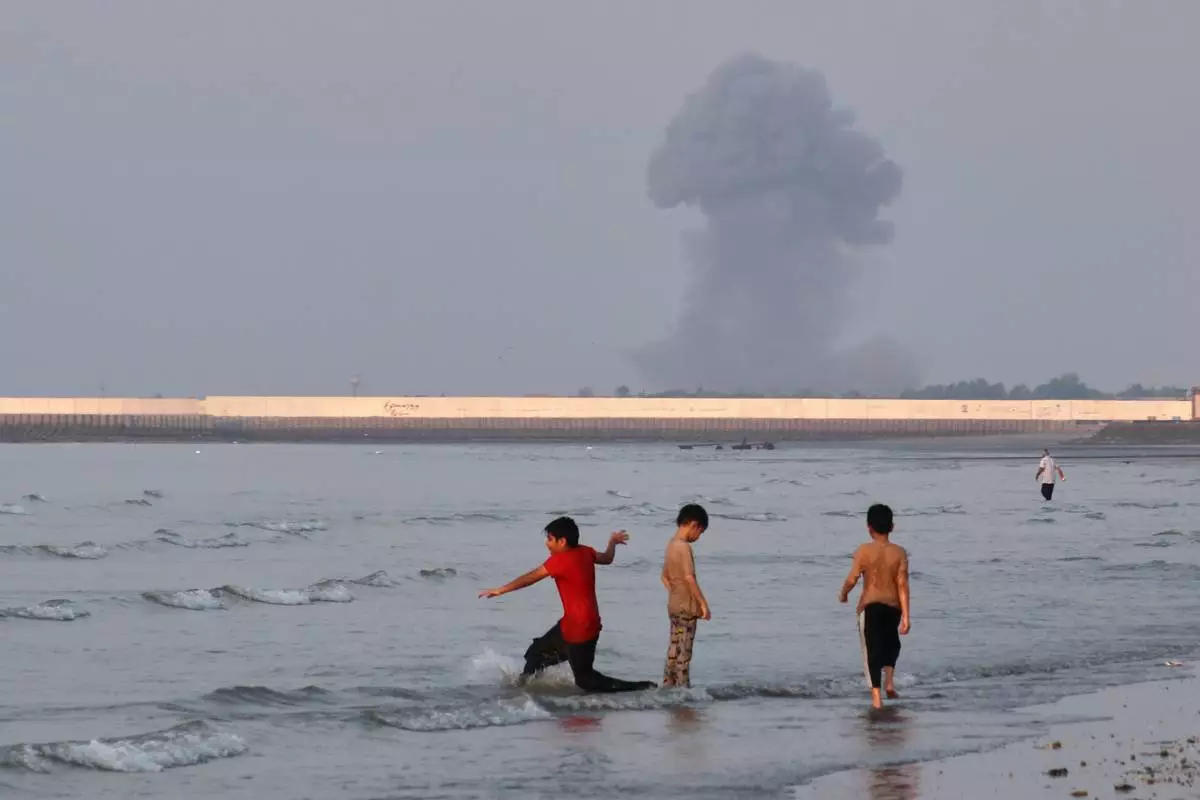
Three boys play in the shallow waters of the Strait of Hormuz, as a plume of smoke rises from an explosion in the background, off Bandar Abbas, Iran, Monday, July 13, 2026. (Razieh Poudat/ISNA via AP)
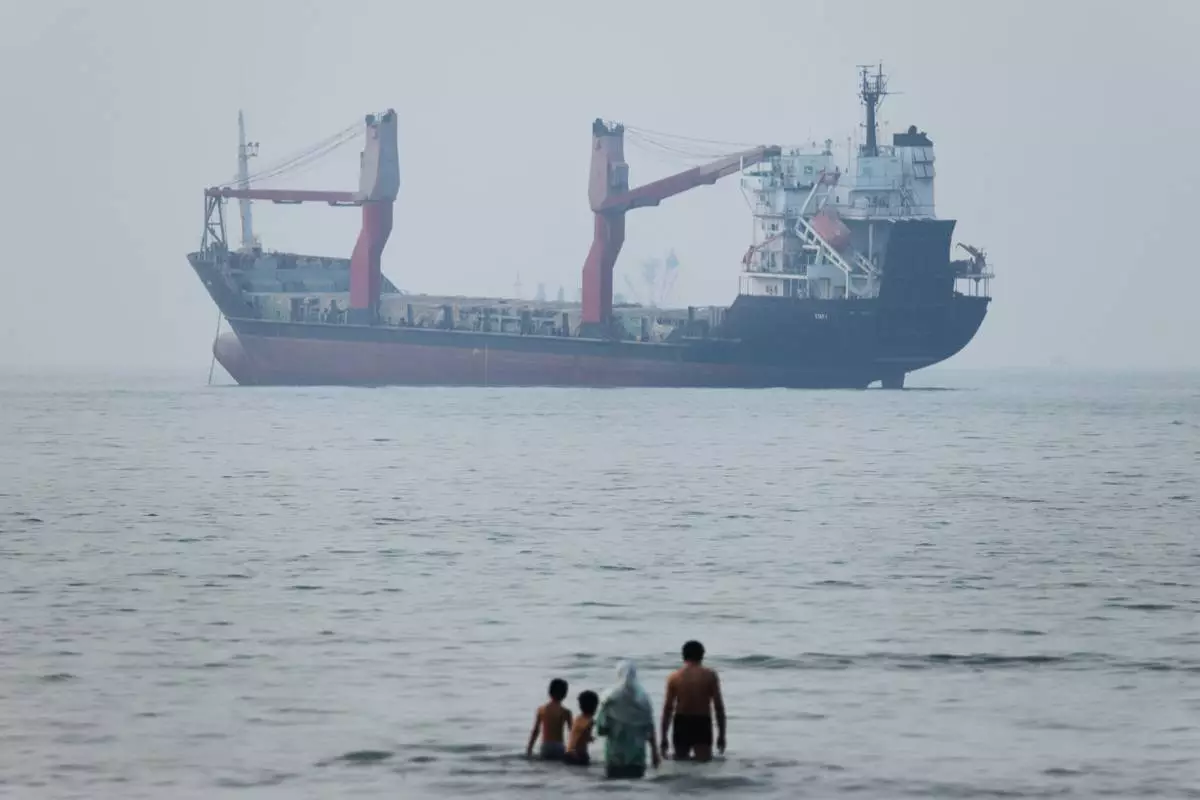
A group of people stands in shallow water as a cargo ship appears anchored in the Strait of Hormuz off Bandar Abbas, Iran, Tuesday, June 30, 2026. (Amirhosein Khorgooi/ISNA via AP)
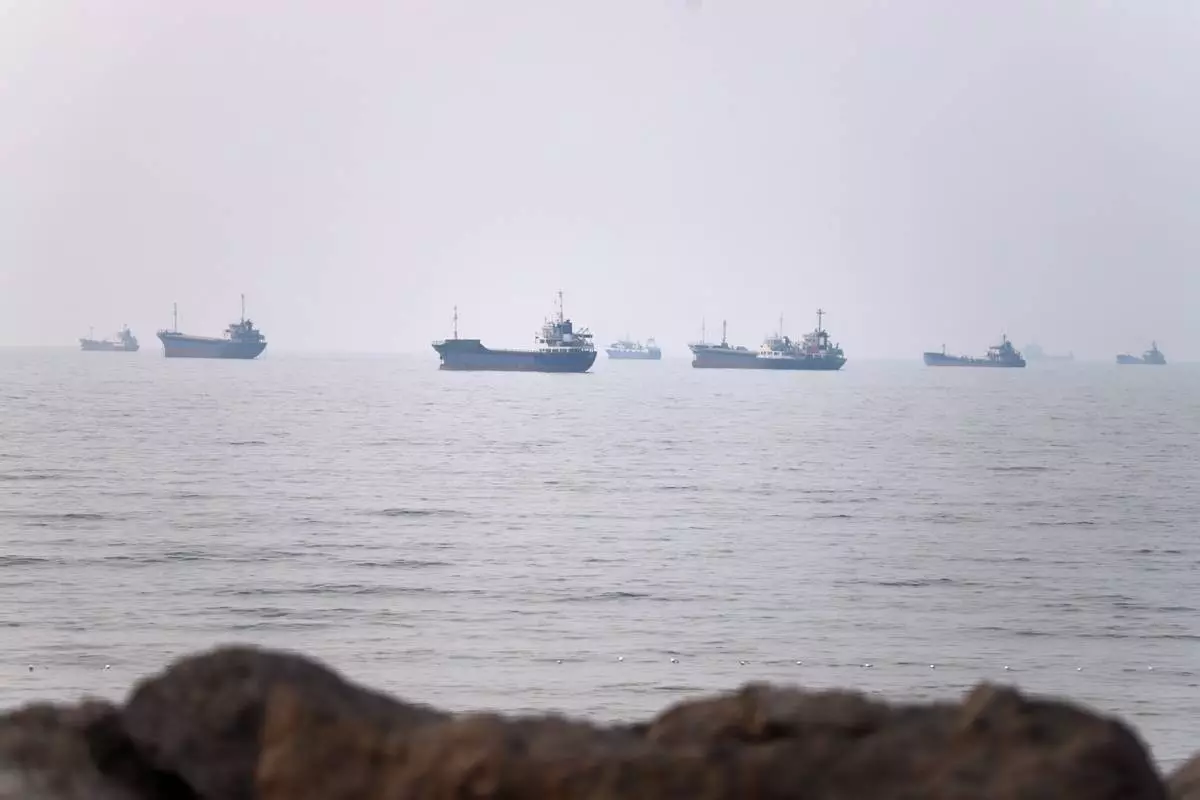
Commercial vessels are seen in the Strait of Hormuz off Bandar Abbas, Iran, Tuesday, June 30, 2026. (Amirhosein Khorgooi/ISNA via AP)