Typhoon Bavi marched northward Tuesday, unleashing torrential rain and strong winds on Qingdao in eastern China's Shandong Province, where authorities activated emergency measures to protect residents and infrastructure.
At 06:00 on Tuesday, the Shandong provincial meteorological authorities continued to issue a yellow alert for typhoon, the third-highest level in China's four-tier color-coded tyhoon warning system. The storm's center was located over Jimo District in Qingdao, a major shipping hub in the country, packing maximum winds of more than 60 km per hour.
Qingdao experienced widespread heavy rainfall from Monday night into Tuesday morning, with some areas hit by downpours and severe rainstorms.
Local authorities on Monday released water in advance from 11 medium and large reservoirs to increase flood storage capacity. Officials also conducted safety inspections on 474 small reservoirs to ensure clear flood discharge channels.
Offshore conditions worsened Monday afternoon through the evening, with waves reaching 2.5 to 3.2 meters along Qingdao coast. Seawater flooded sections of low-lying roads as storm surges pushed water ashore, prompting emergency response teams to quickly conduct drainage and flood control operations.
In downtown Qingdao, municipal workers were dispatched to key waterlogged areas Monday evening, while traffic police patrolled major roads and flood-prone intersections.
Typhoon Bavi, the ninth of the year, made landfall twice along the coast of east China's Zhejiang Province at 23:20 Saturday and again around midnight, then moved inland. It is the second typhoon this month following Typhoon Maysak, which brought heavy floods and wreaked havoc in southern China.
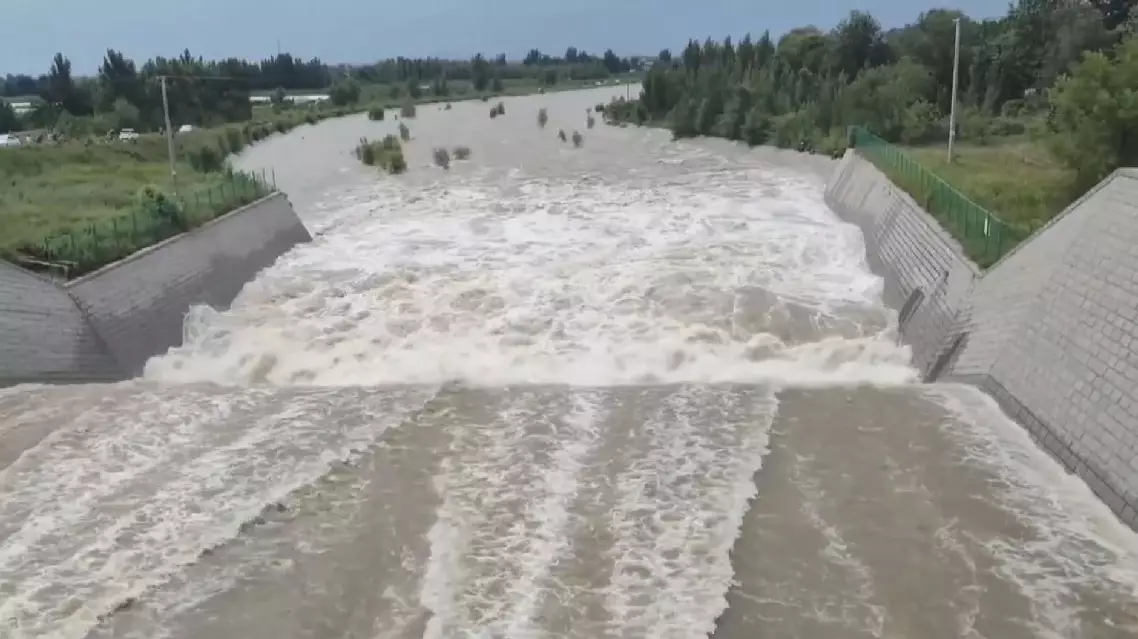
Typhoon Bavi moves northward, lashes Qingdao with heavy rain
Typhoon Bavi moves northward, lashes Qingdao with heavy rain