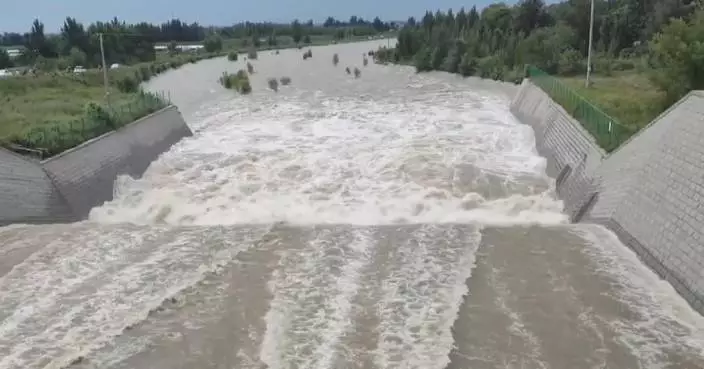
Shangzhi County in northeast China's Heilongjiang Province has stepped up emergency responses as Typhoon Bavi, the ninth typhoon of the year, brings continuous rainfall, pushing local rivers above warning levels.
Mayi River in the county, a tributary of the Songhua River, experienced its first flooding this year at 2:36 on Monday, and the flood peak passed through the county about seven hours later.
Other rivers in the county have also recorded varying degrees of water level rise. In response, local authorities have reinforced at-risk sections by placing sandbags to build temporary dikes and reduce the risk of overflow.
"If there is no heavy rain or widespread precipitation, this area is almost dry. We have stocked more than 36,000 sandbags at least half a month in advance under our contingency plan," said Wang Yuancheng, a local official.
As of 8:00 Tuesday, the water level at the Shangzhi Hydrological Station on the Mayi River had fallen to 183.67 meters, down 1.43 meters from the peak flood level of 185.10 meters, returning to below the warning level.
Typhoon Bavi landed on the coast of east China's Zhejiang Province at around 23:20 Saturday, according to the Zhejiang provincial meteorological observatory.
The typhoon, with the maximum wind force at its center reaching 40 meters per second when landing, first churned ashore at Yuhuan City, a county-level city administered by the city of Taizhou, before making a second landfall in Yueqing City under the city of Wenzhou at around midnight.
After landfall, the typhoon is expected to continue moving northwestward while weakening.
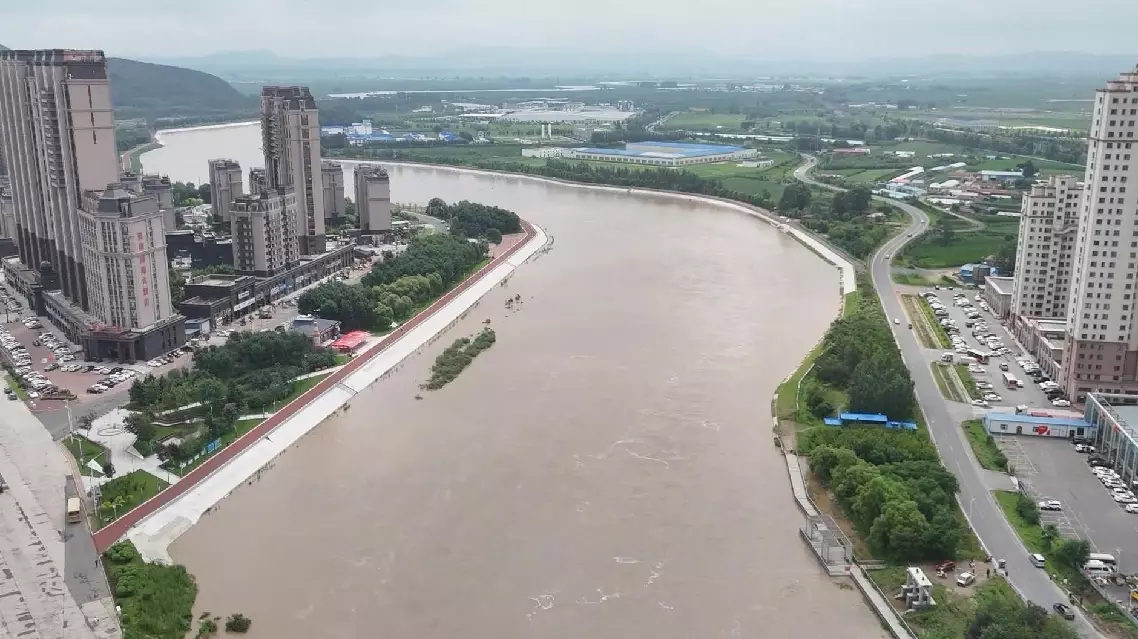
Northeast China county braces for Typhoon Bavi, flood
Heavy rains triggered by Typhoon Bavi have been lashing northeast China's Liaoning Province since Sunday, with the provincial capital Shenyang recording an average precipitation of 188.7 millimeters as of Tuesday.
As Bavi started to move northward Sunday, many parts of Liaoning experienced heavy rains, particularly in central Liaoning.
According to the latest weather forecast, the heavy rain will continue throughout Tuesday.
In some areas of Shenyang, cumulative precipitation at multiple monitoring stations has already exceeded 420 millimeters over the past 30-plus hours. Shenyang's average annual rainfall is approximately 615 millimeters, meaning some areas received more than 70 percent of their typical yearly total in just over 30 hours.
Due to the heavy rainfall, several rivers in Liaoning Province are now experiencing significant rises in water levels. Nine rivers, including the Liaohe River, the Hunhe River and the Taizi River, have already exceeded their warning levels, and 43 reservoirs across the province have surpassed their flood control limits.
The provincial river and reservoir management service center has issued its first flood alert of the year.
In response to the heavy rain, local authorities have evacuated more than 360,000 people across the province.
On Tuesday, Shenyang continues to maintain the Level I urban flood emergency response declared on Monday.
Enterprises and public institutions are operating remotely. Schools and kindergartens are closed, while tourist attractions are shut down. Passenger transport services are suspended, with some subway lines and station exits remaining closed.
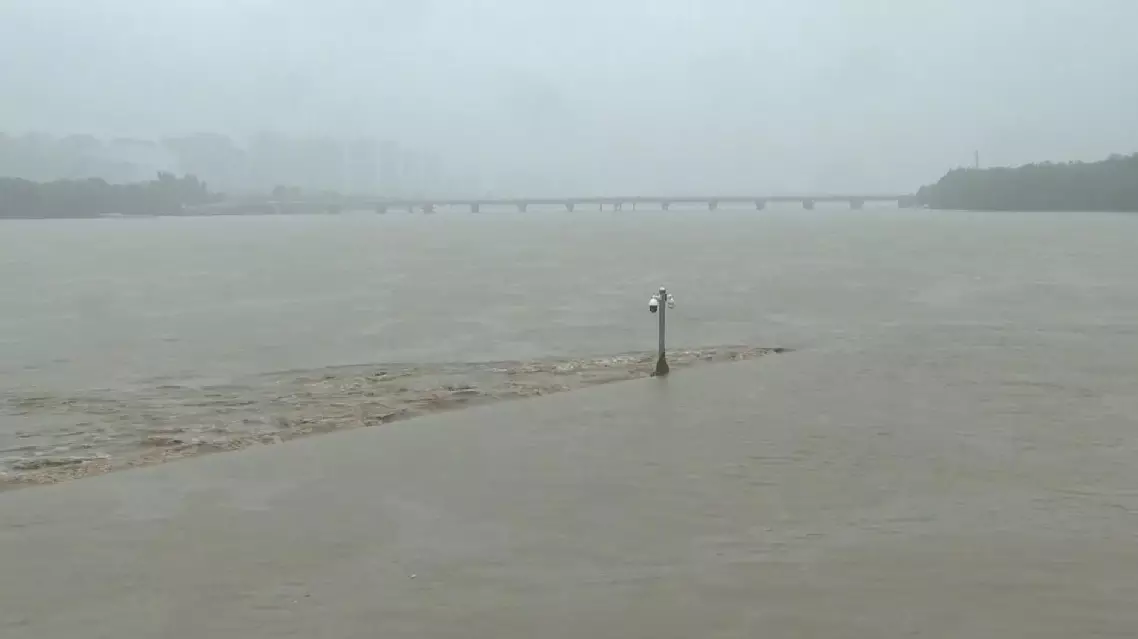
Typhoon Bavi triggers heavy rainfall, flood alert in northeast China's Liaoning Province