Skip to Content Facebook Feature Image

Chinese peacekeepers hold joint medical rescue drill with Ghanaian medical workers in Abyei

China

China

China

Chinese peacekeepers hold joint medical rescue drill with Ghanaian medical workers in Abyei

2026-07-14 16:59 Last Updated At:07-15 00:27

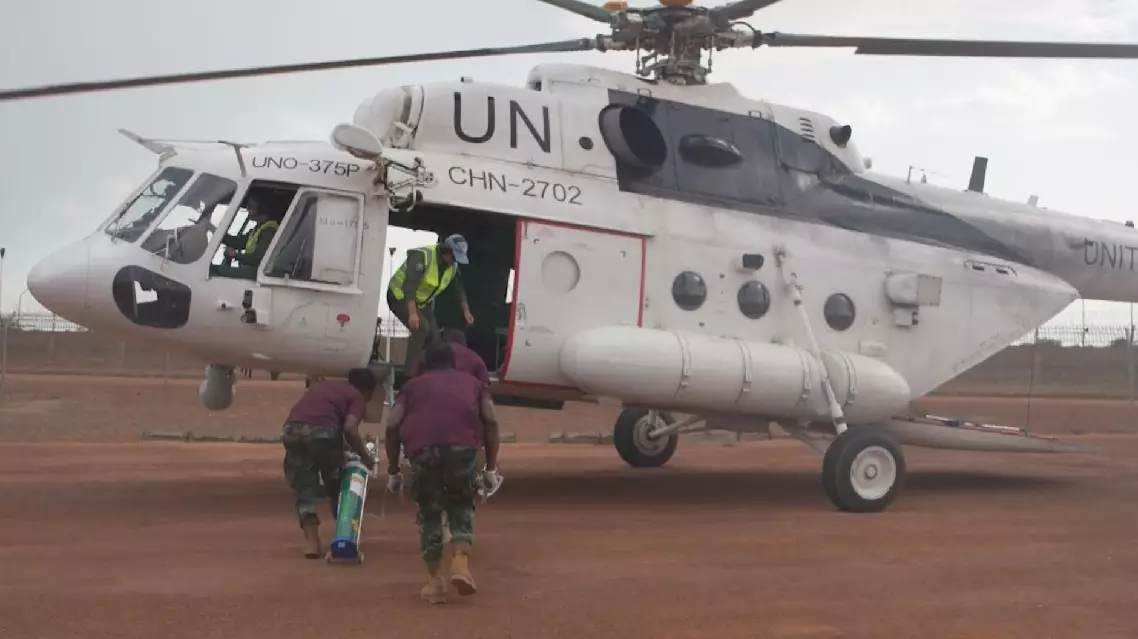
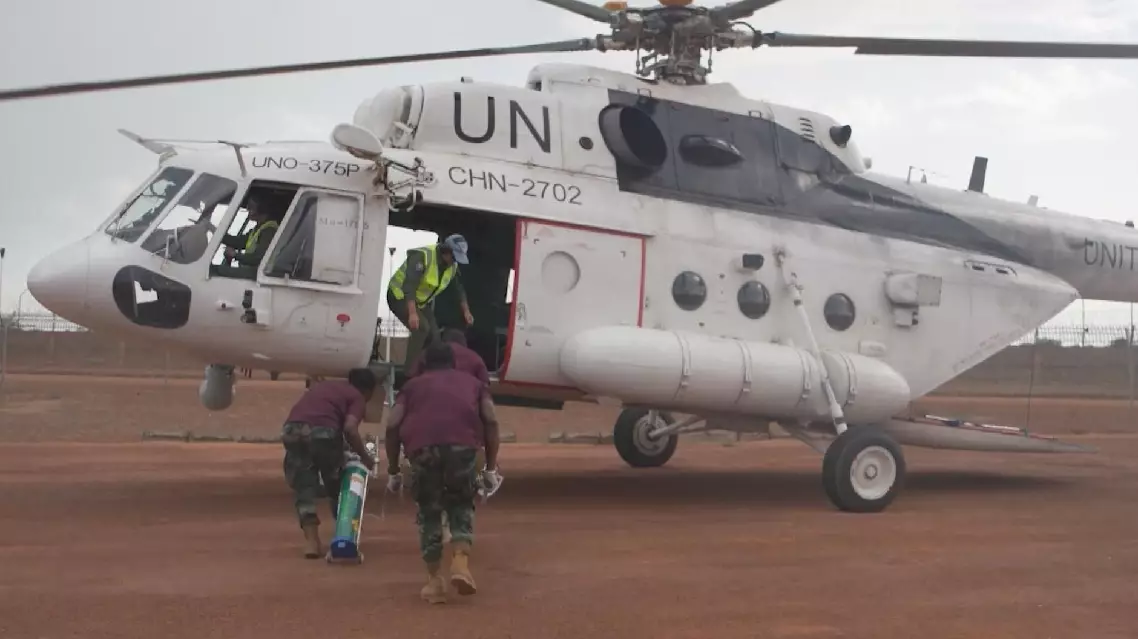
Chinese peacekeepers in Abyei, a disputed region on the border between Sudan and South Sudan, conducted a joint emergency medical rescue exercise with a Ghanaian hospital on Monday, testing the full chain of aerial casualty evacuation to improve emergency response capabilities in the mission area.

Organized by the United Nations Interim Security Force for Abyei (UNISFA), the drill combined the Chinese helicopter unit's air mobility with the ground medical expertise of a Ghanaian district-level hospital. It included aerial search and rescue, on-site emergency treatment and helicopter evacuation of critically injured personnel.

The exercise came as Abyei, a contested and oil-rich area, enters its rainy season, when damaged and muddy roads make ground transportation difficult, making air medical evacuation critical to saving lives.

The exercise simulated an attack on a remote patrol team, with multiple personnel injured and some missing. A Chinese helicopter carried out a low-altitude search to locate the casualties before Chinese and Ghanaian medical teams jointly treated and evacuated the wounded.

The drill enhanced coordination between air and ground rescue teams and strengthened multinational cooperation in responding to emergencies.

The United Nations Interim Security Force for Abyei was established by the UN Security Council in 2011 to monitor the disputed region along the border between Sudan and South Sudan. The mission is authorized to deploy up to 5,326 troops.
Chinese peacekeepers hold joint medical rescue drill with Ghanaian medical workers in Abyei
Chinese peacekeepers hold joint medical rescue drill with Ghanaian medical workers in Abyei
Chinese peacekeepers hold joint medical rescue drill with Ghanaian medical workers in Abyei
Chinese peacekeepers hold joint medical rescue drill with Ghanaian medical workers in Abyei
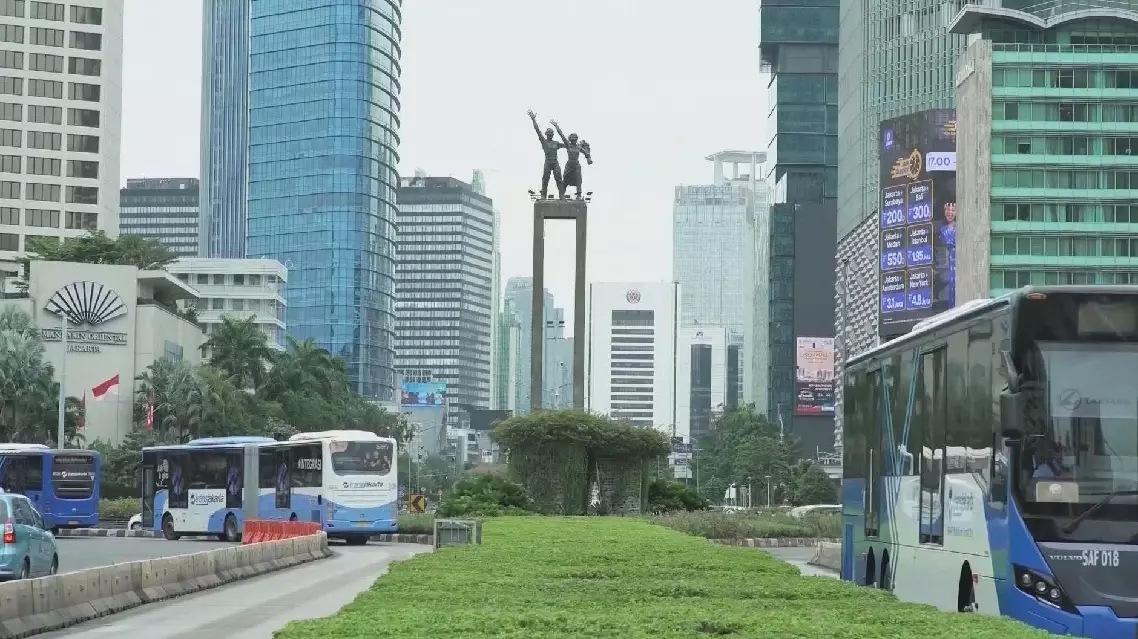
The ploy by the U.S. to cite "forced labor" in expanding tariffs is nothing more than a pretext to restrict market access and reshape the global economic order, said Mohammad Faisal, Executive Director of Indonesia's Center of Reform on Economics (CORE).

The U.S. recently broadened its tariff measures under a law banning imports made with forced labor, defined as work performed under coercion or threat without workers' consent.

While Washington presents the move as a human‑rights safeguard, critics have slammed it as a protectionist tool that risks squeezing investment and stalling industrialization in developing nations.

"This is I think is just the cover. So basically it is a way of the U.S. to control which countries that actually can get access to the market. Which means also indirectly actually to make a regulation and rules for the economic order," he said.

Faisal stressed that the United States' escalating trade restrictions are also creating new uncertainties for Indonesia's own development strategy. If external policies continue to tighten, Indonesia's space for attracting investment and developing its manufacturing sector will be squeezed.

"In my view, apart from textiles, many other sectors including the high tech, including the critical minerals, the downstreaming policy, which is the Indonesian priority policy, right now is in danger because of this," he said.

Faisal further noted that the United States' reinforced trade barriers are accelerating bloc‑based fragmentation in global trade and investment, posing fresh challenges to the stability of global industrial and supply chains.

Indonesia economist slams US "forced labor" tariff ploy as protectionist

Indonesia economist slams US "forced labor" tariff ploy as protectionist

Recommended Articles