FORT WORTH, Texas--(BUSINESS WIRE)--Jul 14, 2026--
MetaMask, the world's leading self-custodial crypto wallet, developed by Consensys, today marks its tenth anniversary. Founded in 2016 by Kumavis and Dan Finlay, MetaMask began as one of the first self-custodial Ethereum browser wallets and later expanded to support Bitcoin, Solana, and hundreds of blockchain networks.
This press release features multimedia. View the full release here: https://www.businesswire.com/news/home/20260713623779/en/
In the decade since, it has grown into one of the world's largest consumer platforms for onchain finance, with more than 100 million downloads and trillions of dollars in cumulative transaction volume. Global by default, it is available in approximately 190 countries. That scale and reach now form the foundation for its next phase of growth, expanding beyond the wallet to bring more of users' financial lives onchain.
MetaMask's evolution from wallet to financial platform reflects a broader shift underway across global finance. Stablecoins, the connective tissue for how everyday value moves across public blockchains, have more than doubled in supply over the past three years, surpassing $300 billion in 2026. Money itself now lives onchain. MetaMask calls this next phase Open Money: its vision for a financial system that works the way the internet does, money that people hold and control directly, that moves across borders as easily as information, and that earns for its owners. The company is building the single consumer platform where that happens, bringing payments, savings, investing and digital assets together in one seamless experience.
Gal Eldar to Lead MetaMask’s Product Vision
As it enters its next chapter, MetaMask announced that Gal Eldar has been appointed Chief Product Officer. Eldar will lead MetaMask's product strategy as it expands beyond the wallet into a broader platform for everyday finance. In his previous leadership roles at MetaMask, he led the teams responsible for expanding what users can do with their assets, delivering fiat on-ramps, MetaMask Swaps, Bridges, SmartTransactions, Stablecoin Earn, and the MetaMask Card, among other products. Most recently, the teams he led launched Perps, PredictionMarkets, and Money Account.
Joe Lubin, Co-Founder of Ethereum and Founder and CEO of Consensys said:
“MetaMask spent its first decade redefining what it means to control your own money, helping millions of people access the onchain economy directly and permissionlessly. The next chapter is Open Money, how money works on the internet. Today's financial system carries an invisible tax, with intermediaries at every step adding cost without adding value. We're building the alternative: one platform where anyone, anywhere can manage their money entirely on their own terms. We built the rails. Now we're rebuilding finance on top of them.”
Gal Eldar, Chief Product Officer at MetaMask, said:
"People don't think about wallets or blockchains–they think about what they want to do with their money. And where you're born shouldn't decide what you can do with the money you earn. That's the idea MetaMask was built on, and it's what the next ten years are about: making the technology invisible so that whether someone wants to save, spend, invest, or access digital assets, it just works. Success won't be measured by how many people use blockchain. It will be measured by how many people benefit from it without ever having to think about the technology underneath."
Ten Years of Trust and What Comes Next
In 2025 alone, MetaMask's protections blocked more than 6.5 million malicious website visits and prevented nearly 150,000 malicious transactions, helping users avoid over $500 million in losses. As blockchain technology has evolved from early experimentation toward mainstream financial services, MetaMask has continuously strengthened the protections embedded in the platform. Today, built-in security alerts, frontrun protection, real-time threat monitoring and regular independent security audits help protect users at every stage of their onchain journey, and that security is why millions of users have trusted MetaMask to navigate the decentralized economy for the past ten years. MetaMask is also building for the next frontier with its new Agent Wallet, which gives AI agents full DeFi access with default security on every transaction.
Celebrating a Decade Onchain
As part of its anniversary celebration, MetaMask released a new feature in its app that lets users look back at their onchain history. The experience builds a story around their journey and ends with an Onchain Persona Card, assigning each user a custom class and level.
###
About Consensys
Consensys is the leading Ethereum software company and the developer of MetaMask, the world's most widely used self-custodial wallet and the primary consumer gateway to the onchain economy. MetaMask gives people direct control over their money, their assets, and their financial future. www.consensys.io

MetaMask Marks 10 Years as the Wallet That Made Self-Custody Mainstream, Now Building the Open Money Platform
Weeks after the end of a historic term, Supreme Court Justices Elena Kagan and Amy Coney Barrett will make a rare appearance before Congress on Tuesday at 10 a.m. ET. The justices could face wide-ranging questions as the high court seeks millions of dollars to beef up security amid a rise in threats to the judiciary.
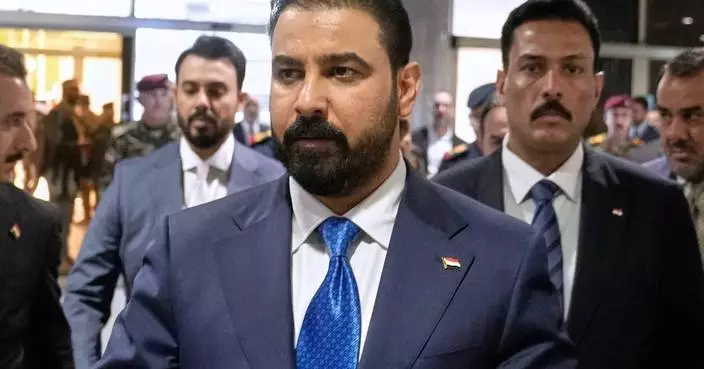
Down the street, U.S. President Donald Trump will welcome new Iraqi Prime Minister Ali al-Zaidi to the White House after strongly backing the political novice’s bid for office. Iraq has been under pressure to disarm Iran-backed militias that attacked U.S. bases and diplomatic facilities after the U.S. and Israel instigated the Iran war.
The U.S. launched more strikes on Iran early Tuesday, hours after Trump vowed to reinstate an American blockade of Iranian ports and charge ships 20% of their cargo for safe passage through the Strait of Hormuz. Iran responded with more attacks on Middle East allies, leaving the ceasefire deal in tatters and under the threat of all-out war. The U.S. military said it will resume its naval blockade on Tuesday at 4 p.m. ET.
The Latest:
Senate Majority Leader John Thune said Lindsey Graham’s sister, Darline Graham, will be sworn in Tuesday afternoon as his temporary replacement after his unexpected death over the weekend, and will serve out the rest of his term ending in January.
Graham earned a masters degree in rehabilitation counseling and has worked as an optician and at various state agencies. She’ll be the first woman to represent South Carolina in the Senate.
“It is such an honor,” she said, as dozens of Graham staffers and campaign advisers stood behind her during a statehouse news conference. “Lindsey has always been there for me. And now, I will be there for him.”
▶ Read more
Al-Zaidi has been under pressure to disarm a network of Iran-backed militias operating in the country, some of which launched attacks on U.S. bases and diplomatic facilities after the U.S. and Israel launched their war against Iran.
Trump is scheduled to greet the Iraqi leader Zaidi at 11 a.m., followed by an Oval Office meeting.
Renad Mansour, director of the Iraq Initiative at the Chatham House think tank, expects that “the U.S. will put significant pressure on al-Zaidi” to move ahead with disarmament “and Zaidi will respond by saying, ‘But I need support — intelligence support, technical support, armed support.’”
“There is a scenario in which, if the Iraqi government starts going after these groups, they will also go after the government,” Mansour said. “And this is a scenario that I think that the Iraqi government is apprehensive about.”
Reaction has been swift and severe to the issue of subpoenas to five New York Times journalists who reported on security questions involving Trump’s new Qatari-gifted Air Force One.
“The subpoenas are an extraordinary escalation in President Trump’s efforts to threaten and intimidate independent news organizations and have a chilling effect on the work of journalists across the country,” said Jodie Ginsberg, CEO of the Committee to Protect Journalists.
The White House Correspondents Association holds its rescheduled dinner celebrating the First Amendment in less than two weeks, with Trump planning to attend. The first was scuttled when a shooter opened fire in what prosecutors say was an attempt to kill the president.
“The WHCA condemns any act of intimidation against journalists, including attempts to pressure them into revealing sources,” said a statement from the group’s president, Weijia Jiang.
▶ Read more
Security is central to the court’s budget request of $228 million — roughly 10% more than the last fiscal year.
Nearly $15 million of that would go to expanding personal protection for justices, with six more agents for each.
Another $2 million would fund more Supreme Court police officers and an off-site residential security post to speed emergency responses.
The U.S. Marshals Service reported 564 threats to the hundreds of federal judges around the country during the last fiscal year, and justices have not been immune: Barrett’s security detail had to defuse a fake 911 call at her house, and her sister was the victim of a bomb threat. A would-be assassin was arrested near the home of Justice Brett Kavanaugh.
Chief Justice John Roberts has condemned the threats, saying it’s “dangerous, and it’s got to stop.”
The White House will have reasons to rejoice in the June release of the consumer price index, as prices fell 0.4% on a monthly basis in large part because of tumbling oil prices tied to the now deteriorated ceasefire with Iran.
But prices still rose 3.5% over the past 12 months, well above the Federal Reserve’s inflation target of 2%.
And the monthly decline could be short-lived, with oil prices jumping again as fighting intensifies in the Middle East.
Prices for the global benchmark of Brent crude oil have risen nearly 8% in the past five days of trading to about $81 a barrel on Tuesday, a sign that inflation could soon pick up again as the American public begins to focus on the November midterm elections.
The U.S. military’s Central Command said it struck several areas in Iran, targeting “coastal defense systems, missile and drone sites and maritime capabilities.” Iran acknowledged the strikes, but provided no immediate casualty or damage assessments.
“These strikes will continue imposing a heavy cost on Iranian forces and degrade their ability to attack innocent civilians and commercial shipping in the Strait of Hormuz,” the U.S. military said.
Moments after the military announced the new strikes, Trump called it “another major attack” and said the U.S. was “putting the blockade back.”
Iran responded with attacks targeting Bahrain, Jordan and three tankers that traveled through the strait.
U.S. Central Command said on social media that it “will enforce the blockade against vessels transiting to or from Iranian ports and coastal areas” beginning Tuesday at 4 p.m. EDT, and will “support traffic flow through regional waters for all vessels not violating the blockade.”
A notice to mariners released Monday by the U.S. military warned of using force if ships don’t comply. It also said the military will let through humanitarian shipments.
The statement follows Trump declaring that the U.S. would be reinstating the naval blockade and charging a 20% toll on eligible cargo.
“We’re protecting a very rich portion of the world,” Trump said. “We’re spending money. And so, what we’ve done is, we are going to be reimbursed for protection.”
Capt. Tim Hawkins, a spokesman for U.S. Central Command, would not say whether the military would be collecting tolls, and referred questions to the White House.
The president posted on social media that he would be “making a Speech to the Nation” at 9 p.m. EDT on Thursday.
Trump appeared to refer to himself in the third person in the post.
He did not disclose the details of his planned speech, but the announcement comes after Trump said he would block Iran-related ships from traveling through the Strait of Hormuz and that the U.S. would charge a 20% fee on all cargo going through the waterway.
Asked in an interview with Hugh Hewitt what his Thursday address will be about, Trump made it sound like nothing out of the ordinary.
“It’s just going to be a speech like a lot of my speeches,” he said, without offering any more detail.
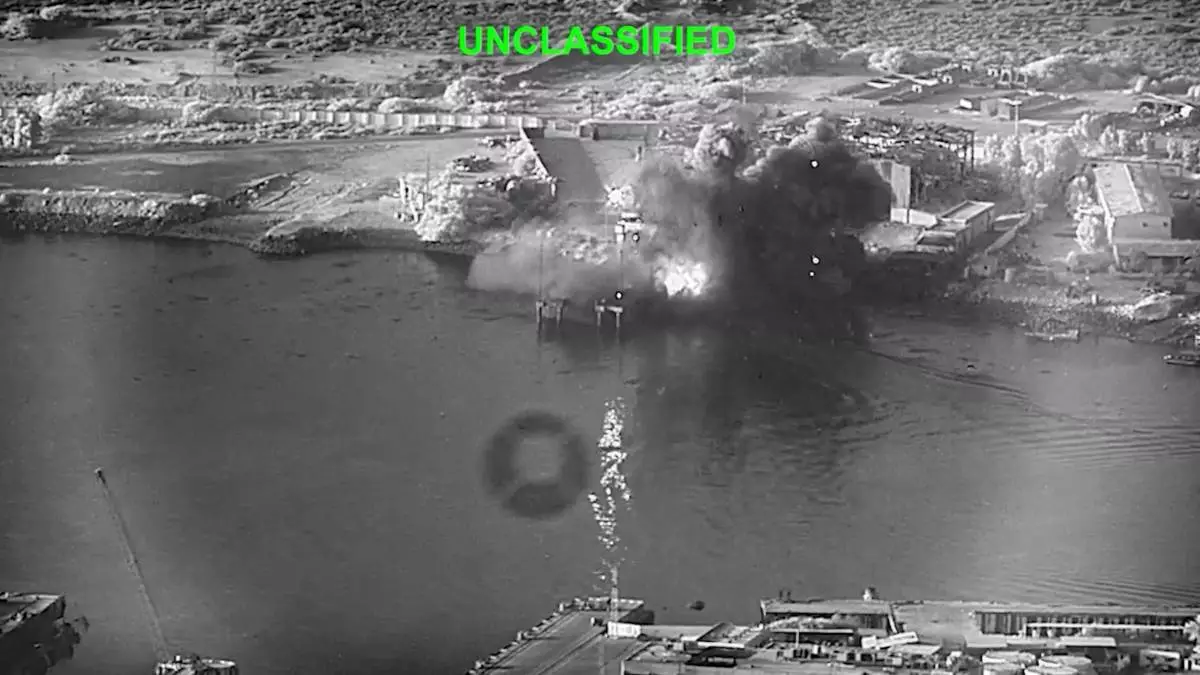
This image from video released by U.S. Central Command, shows an explosion at Bandar Abbas Naval Base, Iran, as three Corsair unmanned surface vessels, also called one-way attack surface drones, fired by the U.S. military, hit the port July 12, 2026. (U.S. Central Command via AP)
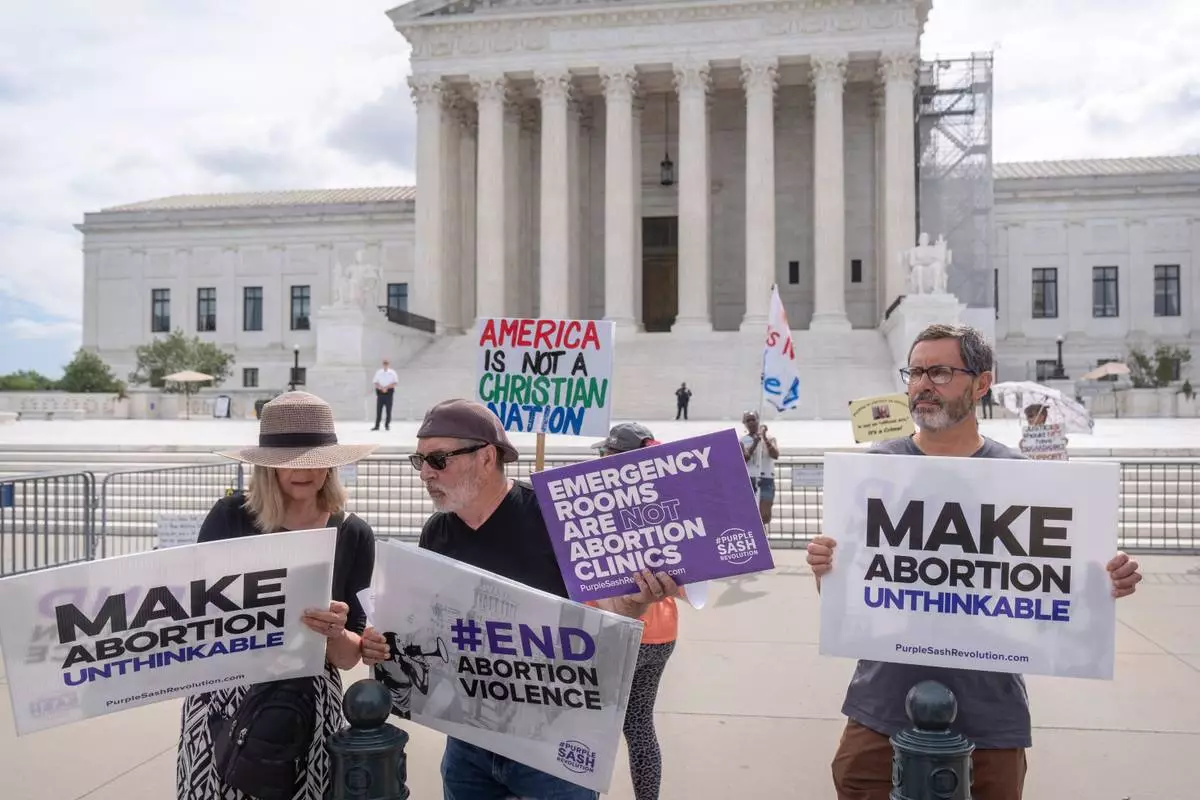
FILE - Katie Mahoney, left, and Rev. Patrick Mahoney, chief strategy officer for Stanton Healthcare, an Idaho-based pregnancy center that does not provide abortions, read the text of a Supreme Court decision outside the Supreme Court, June 27, 2024, in Washington. (AP Photo/Mark Schiefelbein, File)
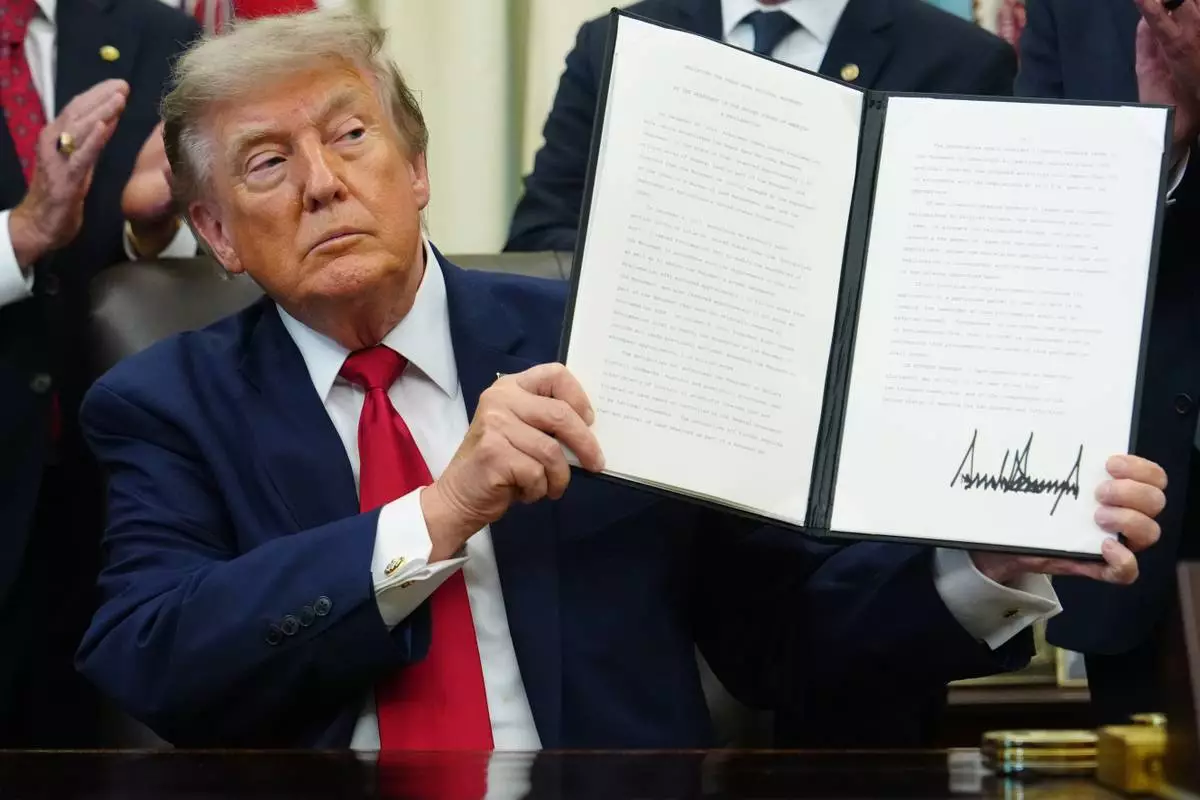
President Donald Trump holds a signed executive order modifying the Bears Ears National Monument in the Oval Office of the White House, Monday, July 13, 2026, in Washington. (AP Photo/Julia Demaree Nikhinson)