Skip to Content Facebook Feature Image

'I'm Joe Lombardo': Nevada governor not ticketed after being pulled over in a traffic stop

News

'I'm Joe Lombardo': Nevada governor not ticketed after being pulled over in a traffic stop
News

News

'I'm Joe Lombardo': Nevada governor not ticketed after being pulled over in a traffic stop

2026-07-15 02:54 Last Updated At:03:00

LAS VEGAS (AP) — Nevada's governor was pulled over by a Las Vegas police officer in May for allegedly failing to stop at a red light before making a right turn in his pickup truck. He wasn’t ticketed after identifying himself.

“I’m Joe Lombardo,” he said as the officer arrived at the passenger-side window, police body camera video obtained by The Associated Press shows.

Gov. Lombardo was pulled over May 15 by an officer from the Las Vegas Metropolitan Police Department, the agency Lombardo led as sheriff for eight years. The officer walks up to the passenger side of a light-gray Ford pickup truck and says, “Hello, how are you doing, sir?” according to the video.

Lombardo is in the driver's seat, with his wife Donna Lombardo in the passenger seat.

The officer begins to explain the reason for the stop, and Lombardo interrupts to say, “I’m Joe Lombardo.” The officer says, “I’m aware,” and continues to explain the stop was initiated because he did not see Lombardo stop at a red light before making a right turn.

“Come on, man,” Lombardo says.

The officer replies, “You’re good to go, sir. Appreciate ya. Have a good day,” and then walks away.

The whole interaction lasts about 15 seconds of the 1 minute and 10 second video.

The police department said the governor did not receive a citation but did not say why, however law enforcement officers say it is common to not give a citation over a minor violation.

Lombardo's campaign said the governor and his wife were headed to the airport when they were pulled over.

“Governor Lombardo spoke with the officer, fully complied with all instructions, and was promptly on his way,” the campaign said in a statement Tuesday. “He remains grateful for the professionalism of the officer involved and for the service of law enforcement officers across Nevada.”

The video, which was obtained via public records request, comes to light months before the November election, when Lombardo, a Republican seeking reelection, will face Democratic Attorney General Aaron Ford.

Steve Grammas, the president of the Las Vegas Police Protective Association, said the interaction wasn't uncommon. Officers stop drivers, explain why drivers are stopped and then let them go on their way.

“It really is a big nothing in my opinion,” he said.

Grammas, whose union endorsed the Republican governor, denied Lombardo received any special treatment. Typically officers ask for the driver’s license in order to identify them, but the officer already knew who the governor was, he said.

“Being that it is the governor, the former sheriff, odds are he doesn’t have warrants, does not have a suspended driver’s license, and so there’s no need to run that person,” Grammas said.

Grammas added that the governor didn’t identify himself as the governor, and simply said his name.

Edward Obayashi, a deputy sheriff and policy adviser who teaches an ethics and policing class in California, said there is nothing unethical about what the governor or the officer did.

“We let motorists off with a warning all the time,” Obayashi said.

Obayashi said that it was obvious the officer already knew who he was stopping because he ran the license plate, and the governor identifying himself is a common courtesy.
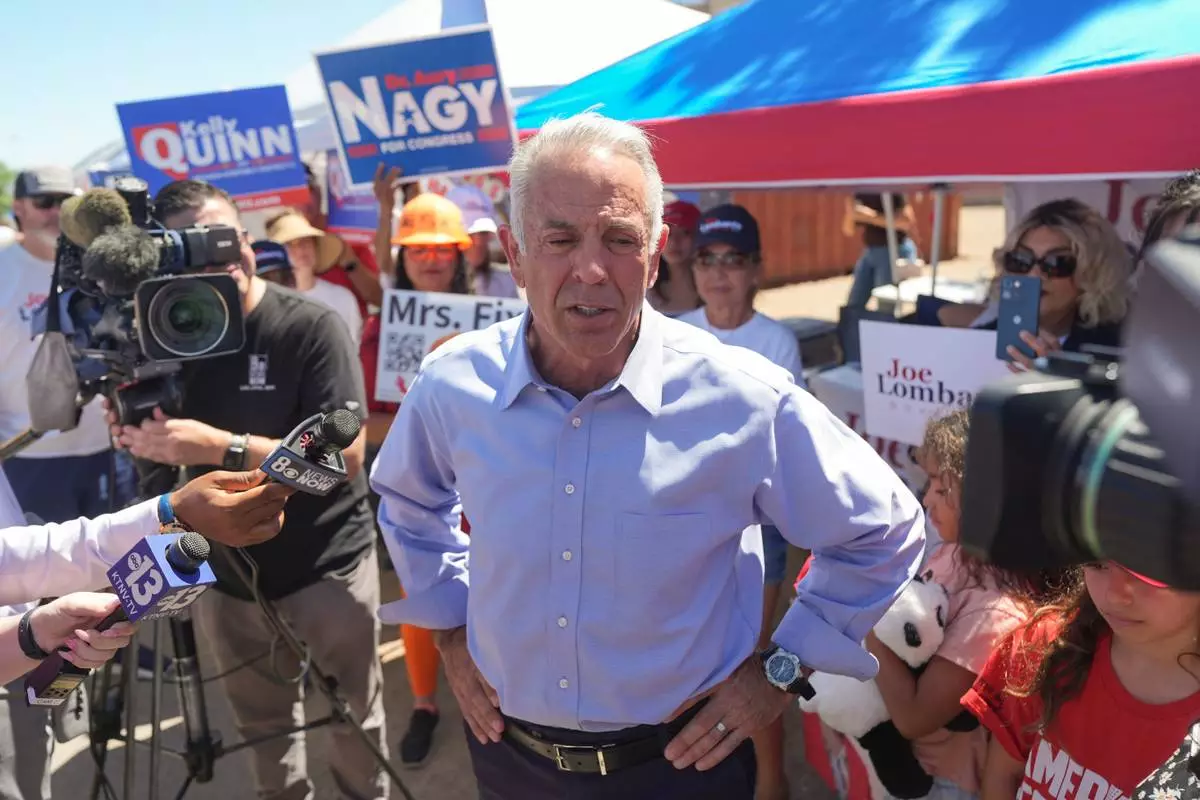
FILE - Nevada Gov. Joe Lombardo talks to reporters outside a vote center June 9, 2026, in Las Vegas. (AP Photo/Jae C. Hong, File)

FILE - Nevada Gov. Joe Lombardo talks to reporters outside a vote center June 9, 2026, in Las Vegas. (AP Photo/Jae C. Hong, File)
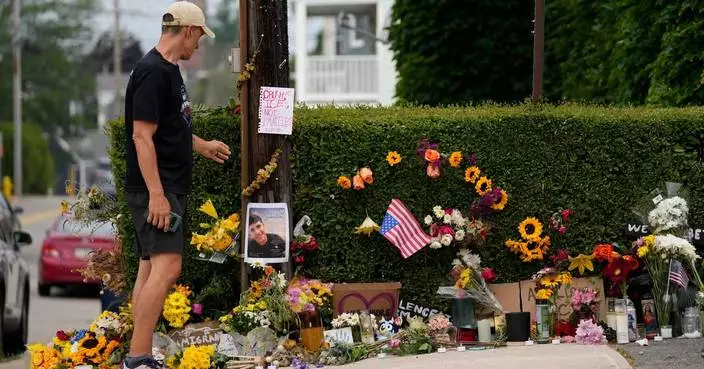
The term weaponized vehicle has become commonplace at news conferences and in statements released by federal officials during the Trump administration's immigration crackdown.

Federal authorities initially used that language Monday when talking to state officials about the actions of a Maine driver who was fatally shot by immigration officers. In public statements, Department of Homeland Security officials shifted their description to say officers fired into the vehicle “fearing for public safety.”

It was the second time in a week that federal immigration authorities shot and killed someone behind the wheel of a car, initially accusing the driver of attempting to ram into immigration officers.

But while the weaponization of a car is often used to justify the use of deadly force against a driver, the legal definition is a lot less clear cut.

In numerous state and federal courts, judges have agreed that vehicles can be considered weapons when they are used to inflict harm. But many of those cases have been considerations of whether enhanced charges such as aggravated assault with a deadly weapon can be levied against a person after an injury or death was already caused by a vehicle.

Many state laws that address assault with a vehicle are designed to enhance manslaughter or other charges against people violating traffic laws or driving requirements. Judicial opinions have largely focused on crimes of negligence, road rage or driving while intoxicated, and in rare instances, cases where someone purposefully drove their car into a crowd of people.

They rarely deal with the question faced by police or federal law enforcement officials of when a moving vehicle should be considered a dangerous weapon, and when that allows for the use of deadly force.

Many law enforcement departments and agencies weigh the potential for unintended harm heavily when instructing officers or agents on when it's acceptable to fire a weapon at a moving vehicle.

Many department policies tell officers to move out of the way of a vehicle rather than shoot because of the potential harm to bystanders who could be struck by unintended gunfire or by a careening vehicle if the driver is incapacitated.

Policies often say a suspect fleeing is not enough justification for using deadly force. Some require another weapon such as a firearm being used as a threat from the person in the vehicle to establish a clear threat to public or officer safety.

Exceptions exist in many use-of-force policies for what became a familiar scene abroad and at times in the U.S. — a person driving a vehicle into crowded public streets to inflict as much damage as possible.

But, experts say those exceptions have been used as a defense in situations where a person was not posing the same level of threat.

They say officers and juries should consider factors such as the speed of the vehicle, whether there are large gatherings of people on the sidewalks or nearby, and the reason for the initial police interaction. For example, a person fleeing an armed robbery at a bank might pose a higher danger than someone fleeing a traffic stop.

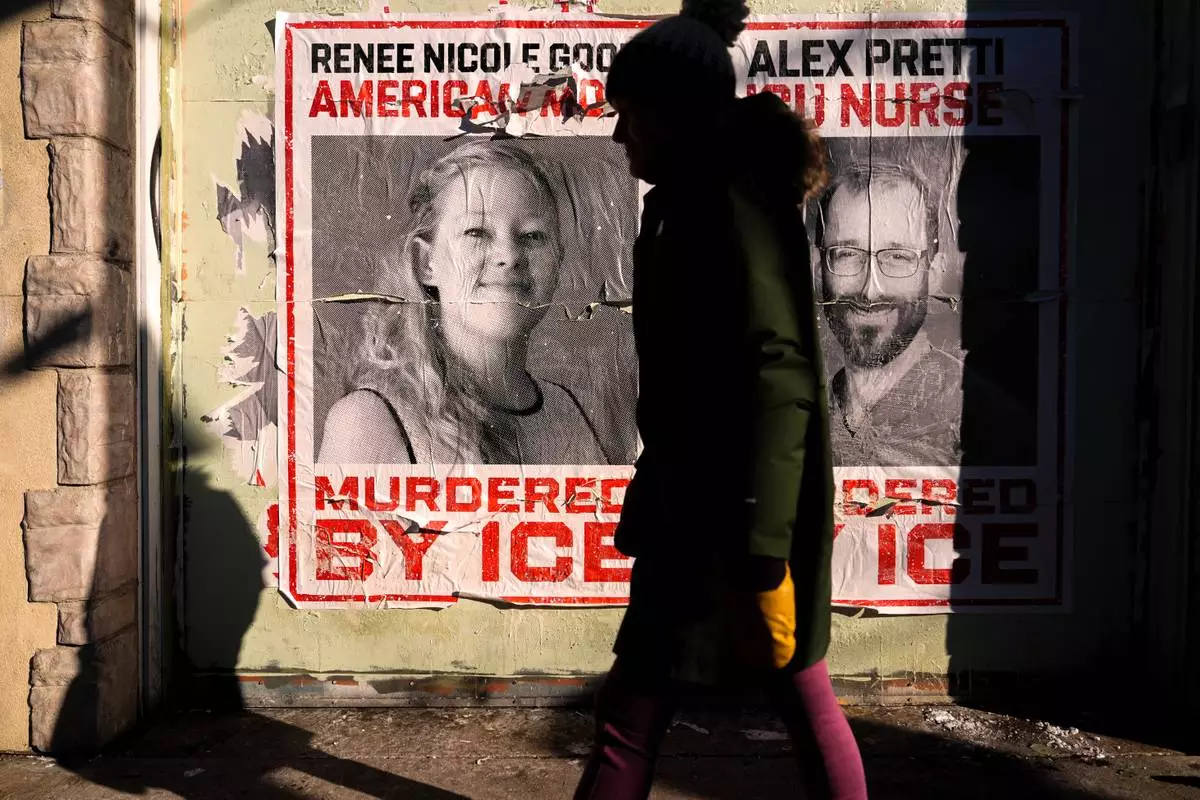
FILE - A woman walks by posters of Renee Good and Alex Pretti during a solidarity bike ride for Pretti, Jan. 31, 2026, in Minneapolis. (AP Photo/Julia Demaree Nikhinson, File)

FILE - A woman walks by posters of Renee Good and Alex Pretti during a solidarity bike ride for Pretti, Jan. 31, 2026, in Minneapolis. (AP Photo/Julia Demaree Nikhinson, File)

Recommended Articles