SAN JUAN, Puerto Rico (AP) — A group of Caribbean leaders met with senior clergy from the Church of England on Tuesday as the push for slavery reparations intensifies, with activists also calling for the independence of British, French, Dutch and U.S. territories in the region.
The reparations commission from Caricom, a Caribbean trade bloc, was scheduled to also meet with British parliamentarians as part of a four-day official trip to the United Kingdom to seek reparations, the second such trip since November.
The group said the commission is creating a framework to launch negotiations because the time for making the case for reparatory justice is overdue.
“We in the Caribbean remain the most colonized part of the world, and this has to stop,” said Hilary Beckles, chairman of Caricom’s reparations commission and vice chancellor of the University of the West Indies.
The meetings in London come after Caribbean leaders bristled at the recent suggestion by a U.K. lawmaker that Britain’s former colonies should repay it for its historic investment in them.
The commission noted that the Caribbean has at least 20 territories with ties to Britain, France, the Netherlands and the United States.
“I am quite sure the people of the Caribbean … will be looking to see whether their king … is going to advance this conversation about sovereignty, decolonization and reparatory justice for these crimes that have been committed,” Beckles said.
David Comissiong, Barbados’ ambassador to Caricom, echoed those comments, stressing that the first step of reparations must be the recovery of national sovereignty and self-determination.
He said the commission had a “productive meeting” with three senior clerics from the Church of England, calling it a “possible ally.”
He also praised King Charles III for expressing in recent years “personal sorrow at the suffering of so many” as he noted “slavery’s enduring impact.”
However, Comissiong and others criticized the United Kingdom for abstaining from a U.N. resolution passed in March that called for reparations and declared the trafficking of enslaved Africans “the gravest crime against humanity.” All 27 members of the European Union also abstained, while Argentina, Israel and the United States voted against the resolution.
Comissiong noted that some European governments have offered apologies, memorials, museums and the preservation of slavery infrastructure on Africa’s west coast.
“These are some preliminary gestures that we appreciate,” he said. “But those gestures are not negotiations. … The damage that was done and that still exists today was so consequential, so deeply rooted, that it goes way beyond, way beyond gestures of memorialization.”
An estimated 12 million Africans were forcefully taken by European nations from the 16th to the 19th century, and those who survived the trip across the Atlantic Ocean were enslaved on plantations in the Caribbean and elsewhere under brutal conditions.
Commission members spoke during a press conference in London, ahead of the meeting with parliamentarians.
Among the questions was whether the commission would publish rules as to who should receive reparations.
The answer for the Caribbean remains unclear, although Ron Daniels, head of the National African-American Reparations Commission, said talks in the United States have centered on land, economic development and the restoration or building of communications and healthcare infrastructure.
“Reparations is proceeding quite effectively in the United States as a blueprint,” Daniels said.
Caricom leaders are seeking a formal apology; education and public health improvements; development programs for Indigenous people; repatriation and resettlement for those seeking to live in their homeland; debt cancellations; and monetary compensations, among other things.
In early September, Jamaica's government is expected to file a formal petition asking King Charles III to refer legal questions on slavery reparations to the Privy Council, the island's final court of appeal.
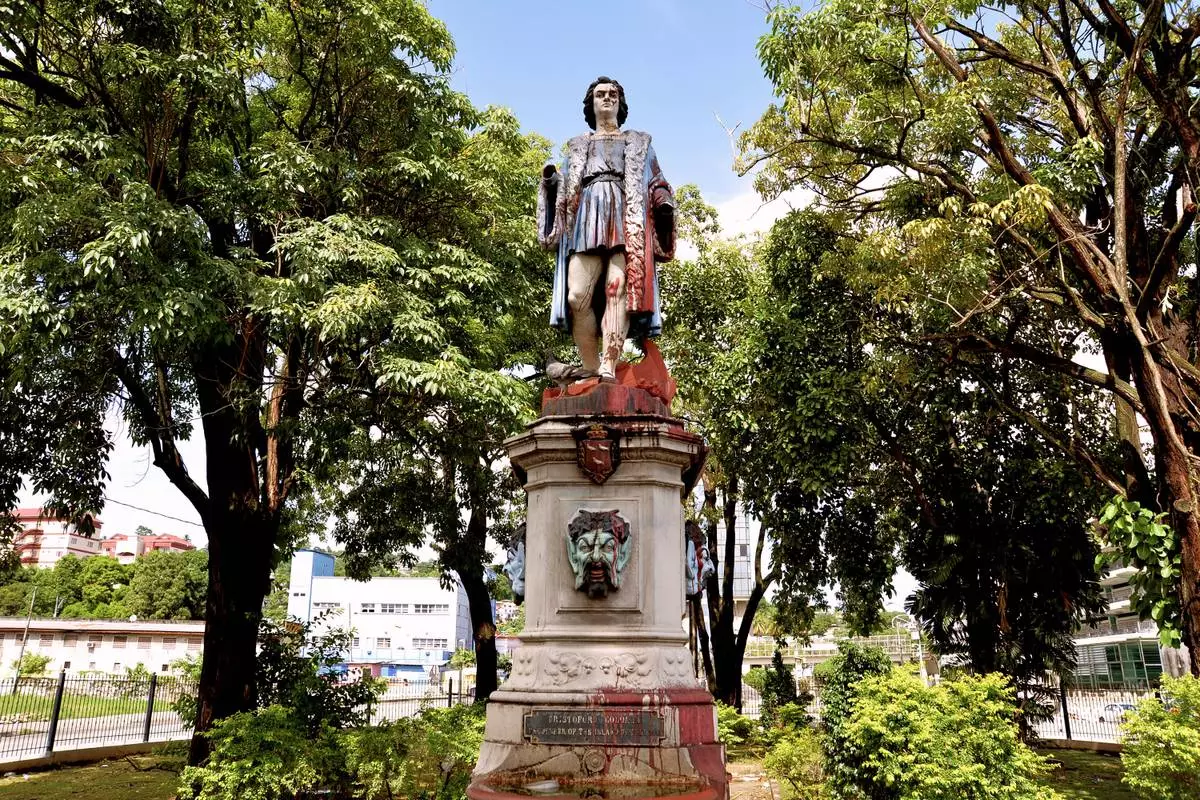
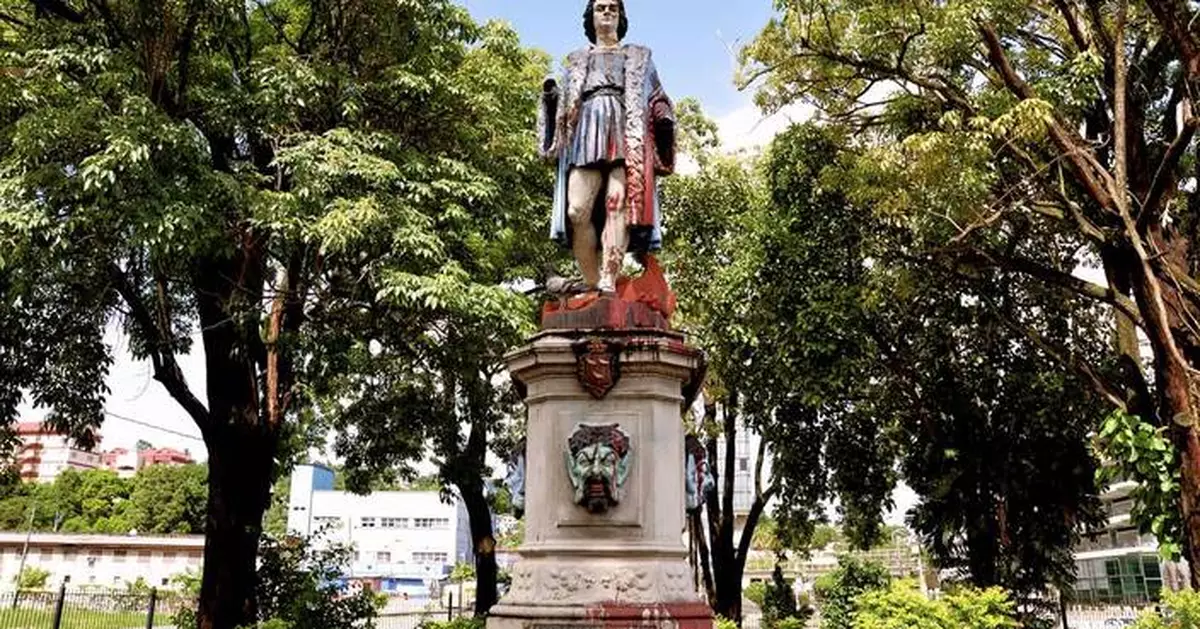
FILE - A vandalized statue of Christopher Columbus towers over Columbus Square in Port of Spain, Trinidad and Tobago, on Aug. 28, 2024. (AP Photo/Robert Taylor, File)