Skip to Content Facebook Feature Image

Face-to-face with ancient Rome: Exhibition in Hungary brings forgotten faces to life

ENT

Face-to-face with ancient Rome: Exhibition in Hungary brings forgotten faces to life
ENT

ENT

Face-to-face with ancient Rome: Exhibition in Hungary brings forgotten faces to life

2026-07-15 15:04 Last Updated At:15:11

BUDAPEST, Hungary (AP) — A blacksmith, a stable boy, a soldier, a slave: The faces and stories of these and other residents of an ancient Roman city in modern Hungary have been brought to life in remarkable fidelity for a new exhibition in Budapest.

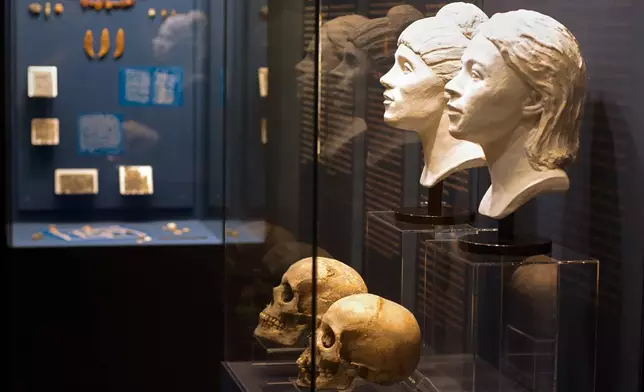
The display, which runs until Oct. 31, showcases highly detailed facial reconstructions from over a dozen skulls found in the ancient city of Aquincum, once a bustling Roman settlement on the empire's Danube frontier.

More Images
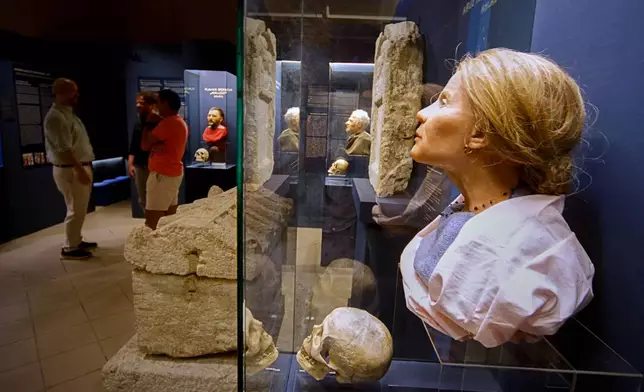
Roman-era skulls and their facial reconstructions are on display at the Aquincum Museum's exhibition titled "Once we were like you" which showcases characters and the fictional life stories of those who once lived in the bustling Roman settlement of Aquincum, in Budapest, Hungary, Tuesday, July 7, 2026. (AP Photo/Bela Szandelszky)
Roman-era skulls and their facial reconstructions are on display at the Aquincum Museum's exhibition titled "Once we were like you" which showcases characters and the fictional life stories of those who once lived in the bustling Roman settlement of Aquincum, in Budapest, Hungary, Tuesday, July 7, 2026. (AP Photo/Bela Szandelszky)
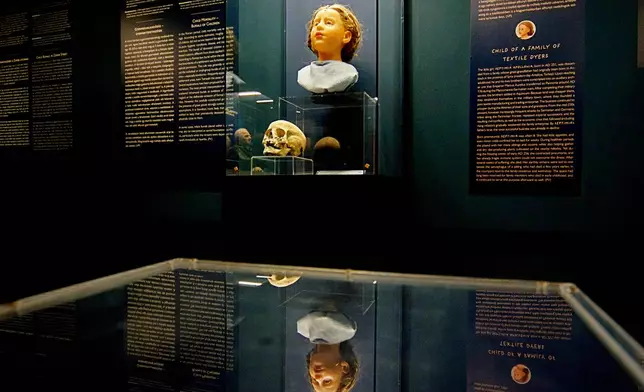
Roman-era skulls and their facial reconstructions are on display at the Aquincum Museum's exhibition titled "Once we were like you" which showcases characters and the fictional life stories of those who once lived in the bustling Roman settlement of Aquincum, in Budapest, Hungary, Tuesday, July 7, 2026. (AP Photo/Bela Szandelszky)
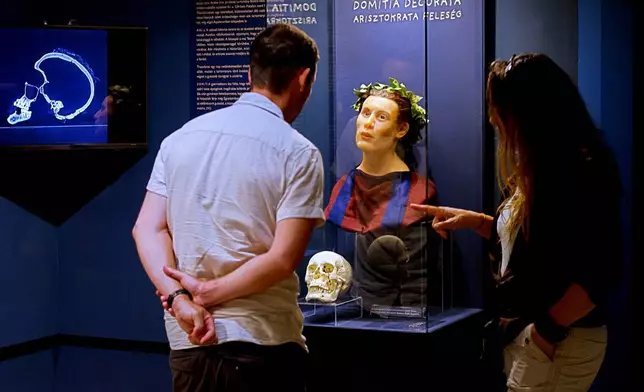
Roman-era skulls and their facial reconstructions are on display at the Aquincum Museum's exhibition titled "Once we were like you" which showcases characters and the fictional life stories of those who once lived in the bustling Roman settlement of Aquincum, in Budapest, Hungary, Tuesday, July 7, 2026. (AP Photo/Bela Szandelszky)
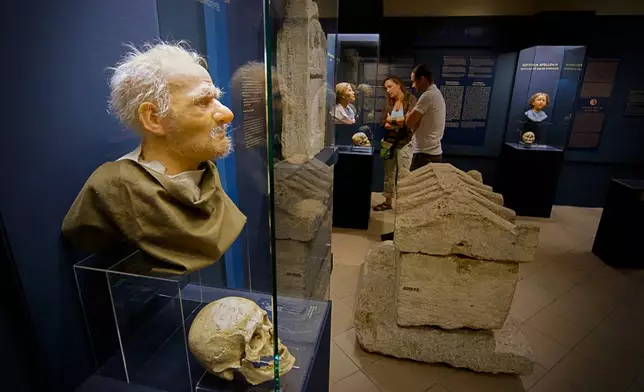
A Roman-era skulls and its facial reconstructions is on display at the Aquincum Museum's exhibition titled "Once we were like you" which showcases characters and the fictional life stories of those who once lived in the bustling Roman settlement of Aquincum, in Budapest, Hungary, Tuesday, July 7, 2026. (AP Photo/Bela Szandelszky)

A Roman-era skulls and its facial reconstructions is on display at the Aquincum Museum's exhibition titled "Once we were like you" which showcases characters and the fictional life stories of those who once lived in the bustling Roman settlement of Aquincum, in Budapest, Hungary, Tuesday, July 7, 2026. (AP Photo/Bela Szandelszky)

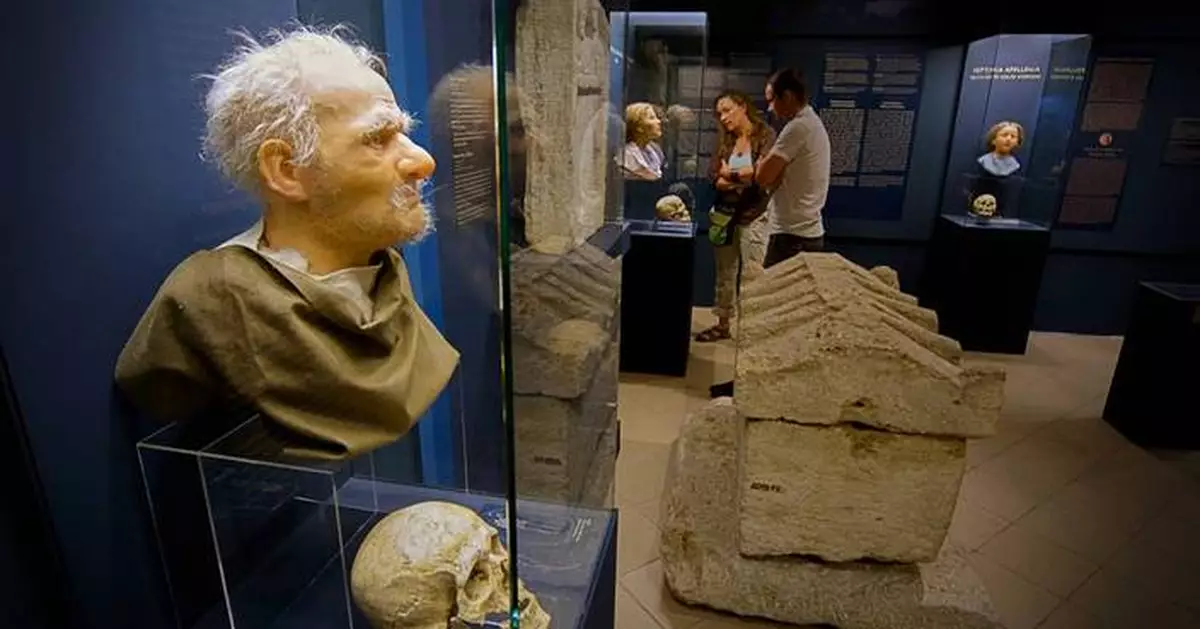
Visitors look at Roman-era skulls and their facial reconstructions in the Aquincum Museum's exhibition titled "Once we were like you" which showcases characters and the fictional life stories of those who once lived in the bustling Roman settlement of Aquincum, in Budapest, Hungary, Tuesday, July 7, 2026. (AP Photo/Bela Szandelszky)

Visitors look at Roman-era skulls and their facial reconstructions in the Aquincum Museum's exhibition titled "Once we were like you" which showcases characters and the fictional life stories of those who once lived in the bustling Roman settlement of Aquincum, in Budapest, Hungary, Tuesday, July 7, 2026. (AP Photo/Bela Szandelszky)

Visitors look at Roman-era skulls and their facial reconstructions in the Aquincum Museum's exhibition titled "Once we were like you" which showcases characters and the fictional life stories of those who once lived in the bustling Roman settlement of Aquincum, in Budapest, Hungary, Tuesday, July 7, 2026. (AP Photo/Bela Szandelszky)

Visitors look at Roman-era skulls and their facial reconstructions in the Aquincum Museum's exhibition titled "Once we were like you" which showcases characters and the fictional life stories of those who once lived in the bustling Roman settlement of Aquincum, in Budapest, Hungary, Tuesday, July 7, 2026. (AP Photo/Bela Szandelszky)

Visitors to the Aquincum Museum come face-to-face with hyperrealistic models of Roman-era individuals, each crafted using DNA analysis and other techniques from fields such as archaeology and anthropology to determine how the people may have looked in life nearly 2,000 years ago.

“Our main goal was to bring a few of these individuals closer to the people of today,” said Loránt Vass, an archaeologist and the exhibition's co-curator.

The title of the exhibition, “Once we were like you,” attempts to answer questions about ordinary people in ancient societies: What did they look like? What were their names? What was their fate?

Experts with the Aquincum Museum used DNA analysis of unearthed bones to reveal skin, hair and eye color and whether the person may have had freckles.

The shape, density and other characteristics of the skull revealed details of the structure of the face as well as the person's age and whether they had sustained any injuries or suffered from disease.

Based on the findings, curators came up with names, trades and biographical stories to each of the reconstructed faces, giving them new life.

Péter Vámos, another of the exhibit’s co-curators, said the invented details were “based on authentic historical foundations” as well as information gathered from analysis of the skulls, which are displayed under the reconstructions.

“We don’t even know their names, unfortunately, but we tried to incorporate everything that anthropology and genetic studies could tell us about their life history,” he said.

One character, a construction worker they named Respectus, is described as having made his living in Aquincum plastering walls and splitting stone blocks. The exhibit says the work took its toll on his bones, and in a wine-fueled skirmish in a local tavern, his nose was broken and one of his teeth knocked out.

The story and social status of Respectus is typical of many Aquincum residents depicted. Vass said their studies showed that the bones of almost all individuals show a “fairly high degree” of inflammation.

“They were subjected to regular physical labor, and in many cases they were exposed to starvation for a certain period of time,” he said. “Based on this, it can be concluded that most of them belonged to the lower middle class, which is the least remembered segment of Roman society.”

Of the 16 reconstructions, six are silicon moldings that have been painted and meticulously adorned with true-to-life hair, clothing and jewelry.

Emese Gábor, who handcrafted the silicon reconstructions, said that while artificial intelligence also can be used to model ancient faces, “they just appear on a screen.”

“The advantage of this kind of reconstruction is that it can be displayed in a museum, it can be viewed from all angles and is totally life-size,” she said. “I stick to scientific methods and combine classical and modern scientific methods in this work.”

Another valuable piece of information that DNA can reveal is the ethnic origin of the person — quite illuminating in Aquincum's diverse settlement.

Analyses showed the presence of not only Roman citizens with origins in the heart of the empire in modern-day Italy, but also people from as far away as today's Scotland and Syria, as well as members of the nomadic Sarmatian tribes of the Eurasian steppes.

Also among Aquincum’s residents were Celts, who inhabited the region in the Iron Age before Roman settlement.

Vass said that during typical excavations of Roman-era skeletons, artifacts are examined, documented and stored, meaning “the bodies have no weight, no life, no soul.”

But by confronting visitors with their ancient predecessors, the museum hopes to forge a connection.

The exhibition's title “suggests that they were like we are today. They had the same occupations, the same problems,” Vass said.

“They may have had different life conditions, different social status, but people are people,” he said. “I don’t think that has changed much across history.”
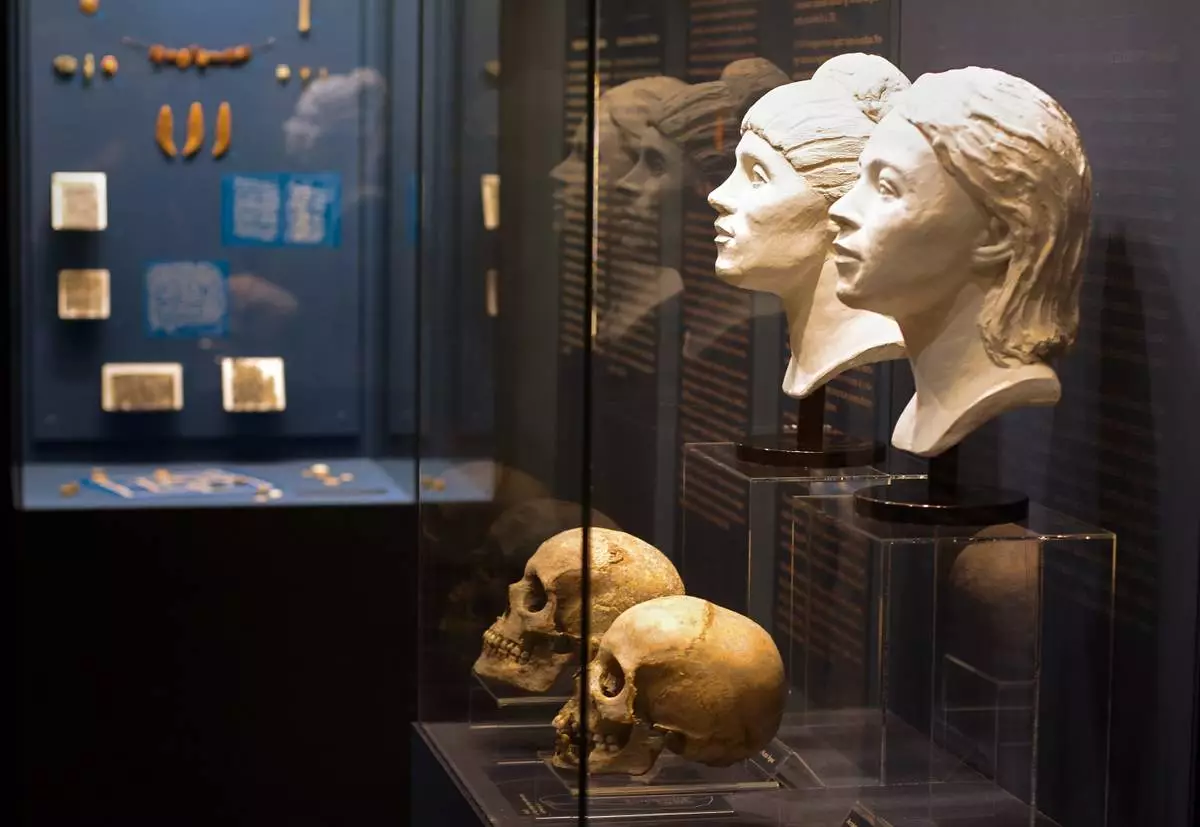
Roman-era skulls and their facial reconstructions are on display at the Aquincum Museum's exhibition titled "Once we were like you" which showcases characters and the fictional life stories of those who once lived in the bustling Roman settlement of Aquincum, in Budapest, Hungary, Tuesday, July 7, 2026. (AP Photo/Bela Szandelszky)
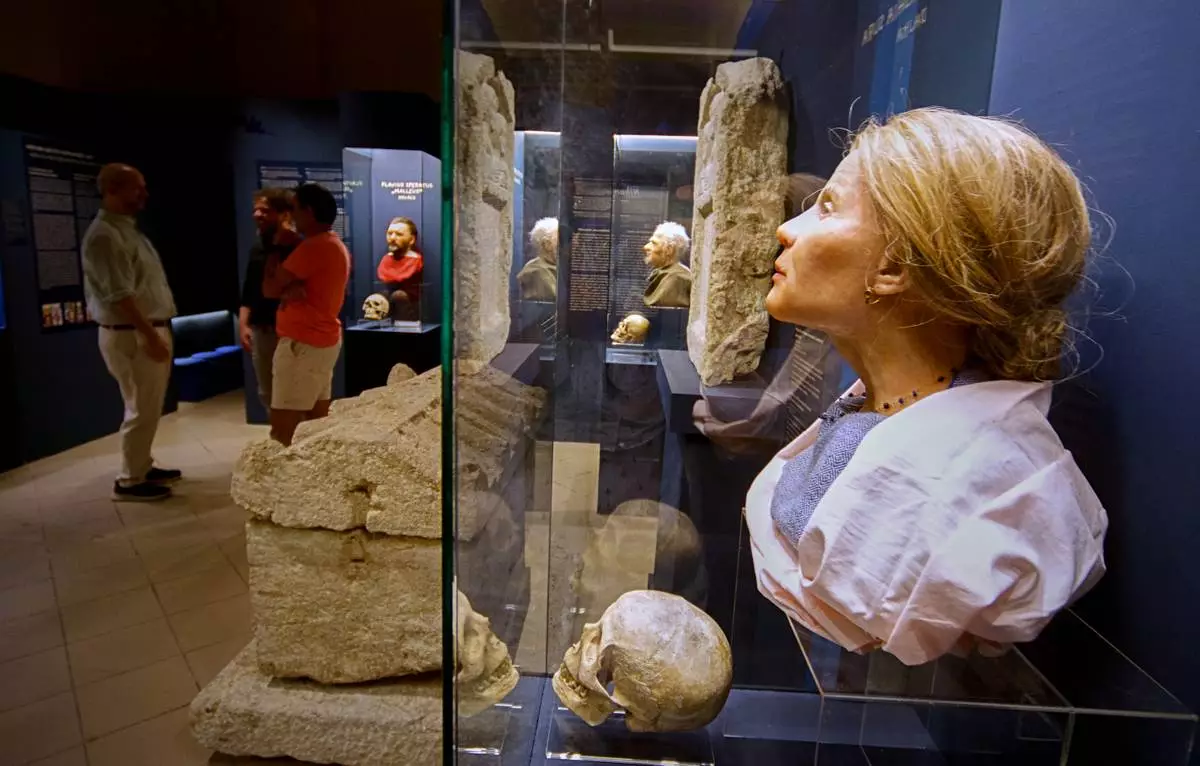
Roman-era skulls and their facial reconstructions are on display at the Aquincum Museum's exhibition titled "Once we were like you" which showcases characters and the fictional life stories of those who once lived in the bustling Roman settlement of Aquincum, in Budapest, Hungary, Tuesday, July 7, 2026. (AP Photo/Bela Szandelszky)
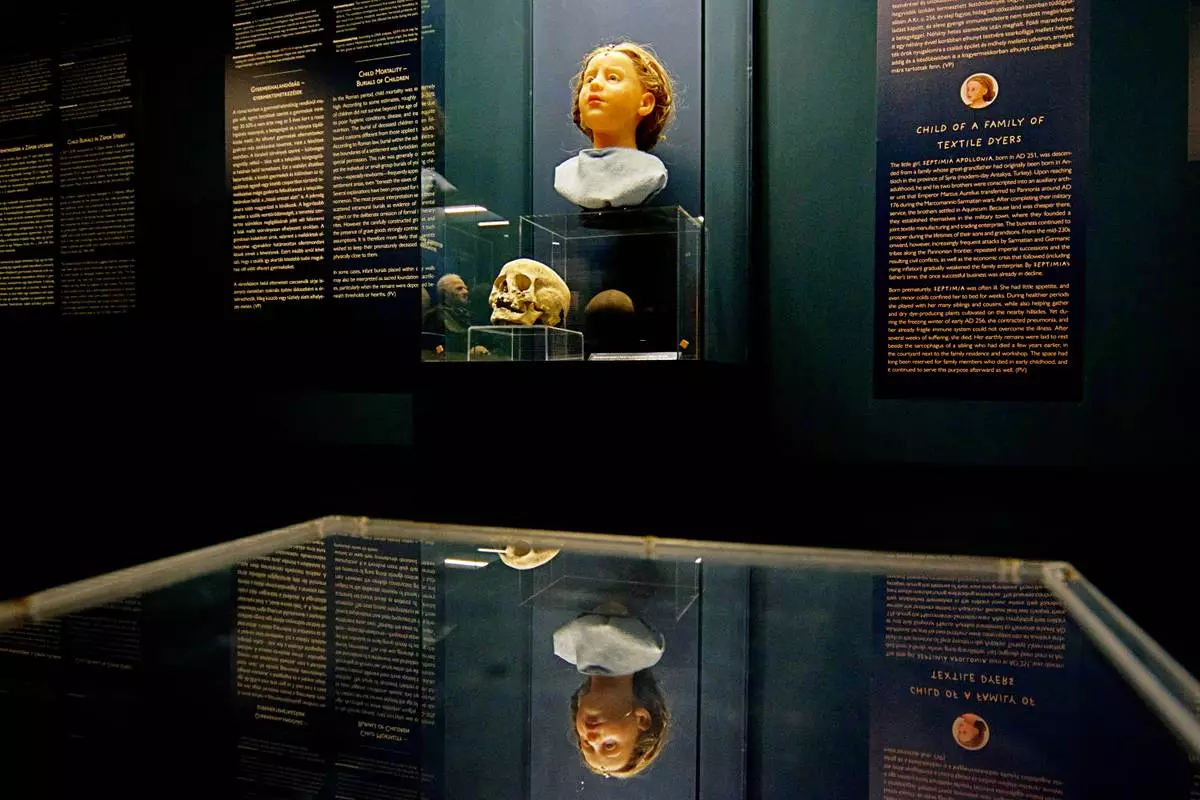
Roman-era skulls and their facial reconstructions are on display at the Aquincum Museum's exhibition titled "Once we were like you" which showcases characters and the fictional life stories of those who once lived in the bustling Roman settlement of Aquincum, in Budapest, Hungary, Tuesday, July 7, 2026. (AP Photo/Bela Szandelszky)
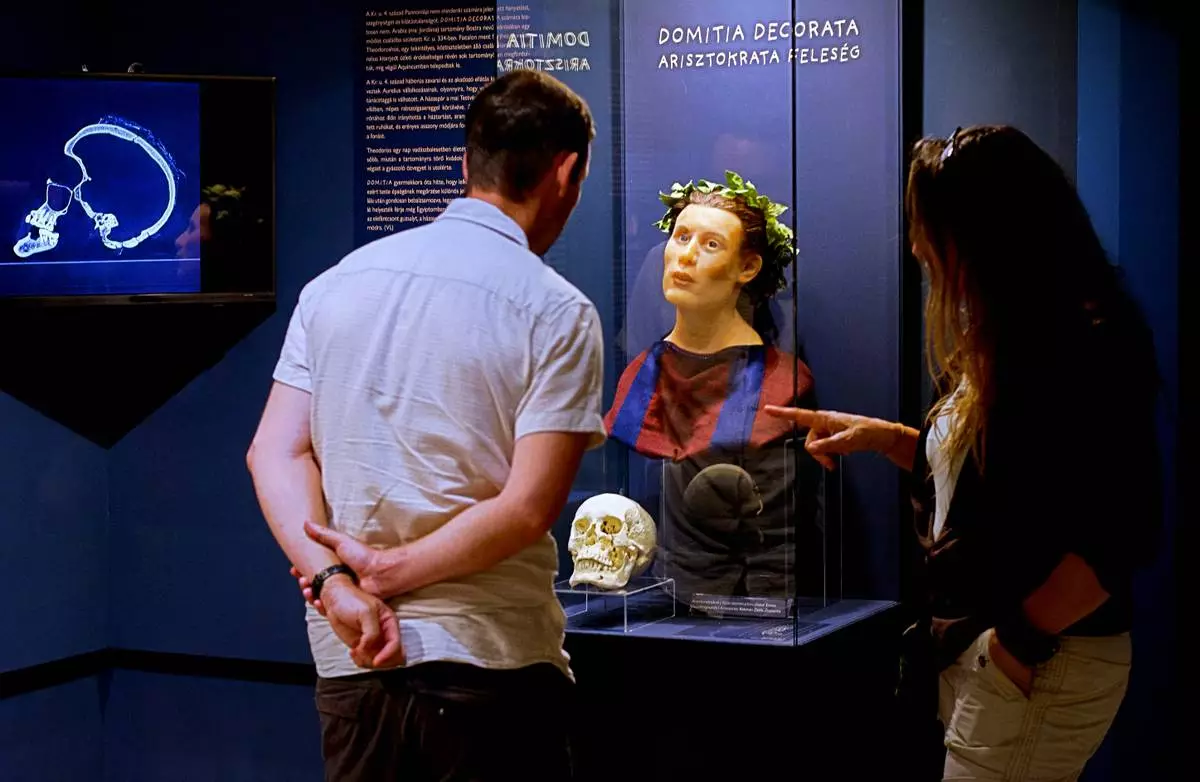
Roman-era skulls and their facial reconstructions are on display at the Aquincum Museum's exhibition titled "Once we were like you" which showcases characters and the fictional life stories of those who once lived in the bustling Roman settlement of Aquincum, in Budapest, Hungary, Tuesday, July 7, 2026. (AP Photo/Bela Szandelszky)
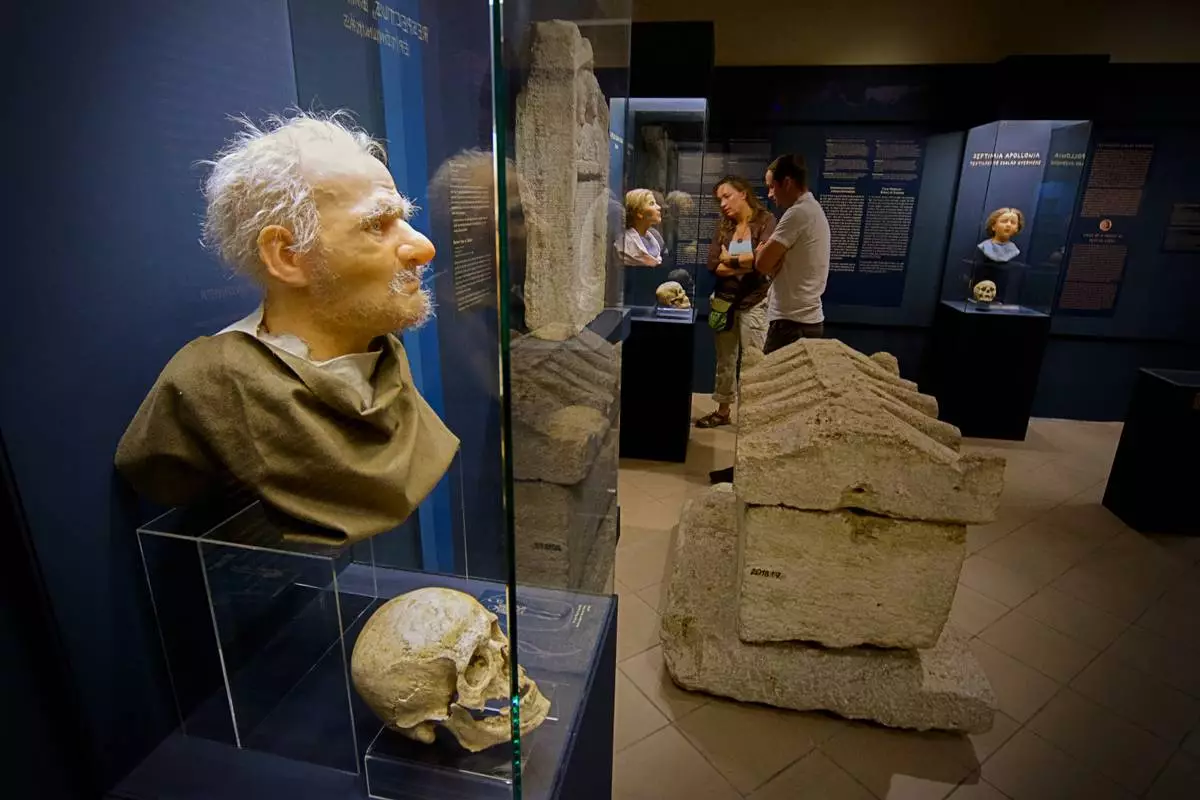
A Roman-era skulls and its facial reconstructions is on display at the Aquincum Museum's exhibition titled "Once we were like you" which showcases characters and the fictional life stories of those who once lived in the bustling Roman settlement of Aquincum, in Budapest, Hungary, Tuesday, July 7, 2026. (AP Photo/Bela Szandelszky)

A Roman-era skulls and its facial reconstructions is on display at the Aquincum Museum's exhibition titled "Once we were like you" which showcases characters and the fictional life stories of those who once lived in the bustling Roman settlement of Aquincum, in Budapest, Hungary, Tuesday, July 7, 2026. (AP Photo/Bela Szandelszky)
Visitors look at Roman-era skulls and their facial reconstructions in the Aquincum Museum's exhibition titled "Once we were like you" which showcases characters and the fictional life stories of those who once lived in the bustling Roman settlement of Aquincum, in Budapest, Hungary, Tuesday, July 7, 2026. (AP Photo/Bela Szandelszky)
Visitors look at Roman-era skulls and their facial reconstructions in the Aquincum Museum's exhibition titled "Once we were like you" which showcases characters and the fictional life stories of those who once lived in the bustling Roman settlement of Aquincum, in Budapest, Hungary, Tuesday, July 7, 2026. (AP Photo/Bela Szandelszky)

Visitors look at Roman-era skulls and their facial reconstructions in the Aquincum Museum's exhibition titled "Once we were like you" which showcases characters and the fictional life stories of those who once lived in the bustling Roman settlement of Aquincum, in Budapest, Hungary, Tuesday, July 7, 2026. (AP Photo/Bela Szandelszky)
Visitors look at Roman-era skulls and their facial reconstructions in the Aquincum Museum's exhibition titled "Once we were like you" which showcases characters and the fictional life stories of those who once lived in the bustling Roman settlement of Aquincum, in Budapest, Hungary, Tuesday, July 7, 2026. (AP Photo/Bela Szandelszky)
DUBAI, United Arab Emirates (AP) — The U.S. military early Wednesday reimposed a blockade on Iranian ports over Tehran’s attacks on ships trying to pass through the Strait of Hormuz, sparking new strikes on nations hosting American forces as an interim deal to end the war further unraveled.

Days of retaliatory strikes across the Middle East by Iran — and both nations’ attempts to assert control of the waterway through which a fifth of the world’s oil and natural gas trade passes during peacetime — threaten to push the region back to all-out war.

In Iran, more than 260 people were wounded in the latest round of overnight strikes alone, according to the Health Ministry, suggesting an intensification in the bombing. More than 30 people have been killed over “recent days,” Iranian government spokesperson Fatemeh Mohajerani said, without elaborating.

The U.S. first imposed the blockade in mid-April and then lifted it in mid-June, a day after signing the interim deal that set a 60-day period for negotiations over issues like Iran’s nuclear program, but talks have stalled as fighting over the strait has intensified.

Iran’s paramilitary Revolutionary Guard threatened Wednesday to halt all energy exports from the Middle East over the blockade.

“The export of oil and gas from the region will be either for everyone or for no one,” it said.

When U.S. President Donald Trump announced the return of the blockade Monday, he also said he would impose a 20% fee on ships passing through the strait. But he dropped the plan to collect fees hours before resuming the blockade, citing requests from allies in the Persian Gulf.

The U.S. carried out another wave of strikes as it reimposed the blockade, striking dozens of targets over seven hours, the U.S. military’s Central Command said Wednesday.

Hossein Kermanpour, a spokesperson for the Health Ministry, gave Wednesday's casualty figure, without specifying how many people had been killed. Kermanpour's figures reported far more people injured than in any other round of recent violence between Iran and the U.S.

Authorities offered no immediate explanation, though initial local reports suggested a significant strike hit Iran's southeastern Sistan and Baluchestan province on the Gulf of Oman.

Missile alert warnings went out in Bahrain and Kuwait early Wednesday morning as they faced incoming Iranian fire, something that’s been a daily occurrence, further straining a ceasefire in the war. Jordan also said it shot down three incoming Iranian missiles. Iran claimed attacks on the three nations.

U.S. Navy Adm. Brad Cooper, who leads Central Command, said in a statement that Iran had launched dozens of missiles and drones at neighboring Gulf Arab countries.

“U.S. forces are holding Iran accountable for unwarranted aggression that continues to endanger innocent lives,” Cooper said.

There are at least 19 U.S. warships in the Arabian Sea, including two aircraft carriers and an amphibious assault ship with more than 1,000 Marines aboard. Central Command also said in a social media post that there are “hundreds of military aircraft operating across the Middle East.”

When the U.S. and Israel launched the war on Iran on Feb. 28, Tehran effectively shut the passage by attacking and threatening ships. That sent the price of oil, fertilizer and other goods soaring.

Iran has more recently attacked ships moving through the strait on a route near Oman overseen by the U.S. military that is outside Tehran’s control, setting off the recent violence. The U.S. has threatened to reopen the strait by force — but experts say that would require a much bigger armada if not tens of thousands of ground troops.

Iran’s ambassador to the United Nations, Amir Saeid Iravani, criticized America’s ongoing attacks targeting his country.

“The U.S. is the aggressor, not the victim,” he wrote to the world body’s leader, according to the state-run IRNA news agency.

Trump said Tuesday that he was called by the region’s “kings and emirs,” who suggested an alternate arrangement to charging ships fees to pass through the strait like the president proposed a day earlier.

“They said we’d love to do it a different way. We’d love to invest in the United States with billions and billions of dollars,” Trump told reporters Tuesday in the Oval Office.

Trump said he preferred that arrangement to charging tolls “because I don’t think anybody should be able to charge a fee for the strait.”

It was unclear if the investment deals would be new commitments relative to what Trump announced after a visit last year to the Middle East.

Trump’s plan to charge fees would have been a change to longstanding American policy and a departure from U.S. promises that the strait would remain open to all without tolls.

Trump told Fox News Channel on Tuesday night that more U.S. strikes against Iran were coming over the next two days and that bridges and power plants could be targets by next week unless negotiations resume. Already, the U.S. has struck at least one bridge.

“You better make a deal, or you’re not going to have anything left,” Trump warned.

U.S. Central Command said it struck several areas in Iran earlier Tuesday; Tehran acknowledged the strikes but provided no overall casualty or damage assessments.

Hours after the U.S. said it ended its strikes, the Iranian city of Bushehr on the Persian Gulf was hit in at least four locations, the IRNA news agency reported. Explosions in the southwestern city of Ahvaz and the southern port city of Bandar Abbas also were reported by Iranian state media Tuesday night.

The attacks again raised the possibility that Gulf Arab states were retaliating against Iran without discussing it in public.

Kuwait separately said an Iranian attack wounded four members of its navy Tuesday and set a building on fire.

Under the interim deal, Iran agreed that passage through the strait would remain free of charge for 60 days — but the agreement left open what would happen after. Iran asserts it has the right to manage traffic and potentially charge fees. The U.S. has disputed that.

The price for a barrel of Brent crude oil, the international standard, briefly topped $87 early Tuesday, still well below the nearly $120 reached at the height of the war. The price dipped to $78 in the aftermath of Trump’s announcement that he had changed course.

Regional mediators meanwhile are still trying to get the United States and Iran back to the negotiating table.

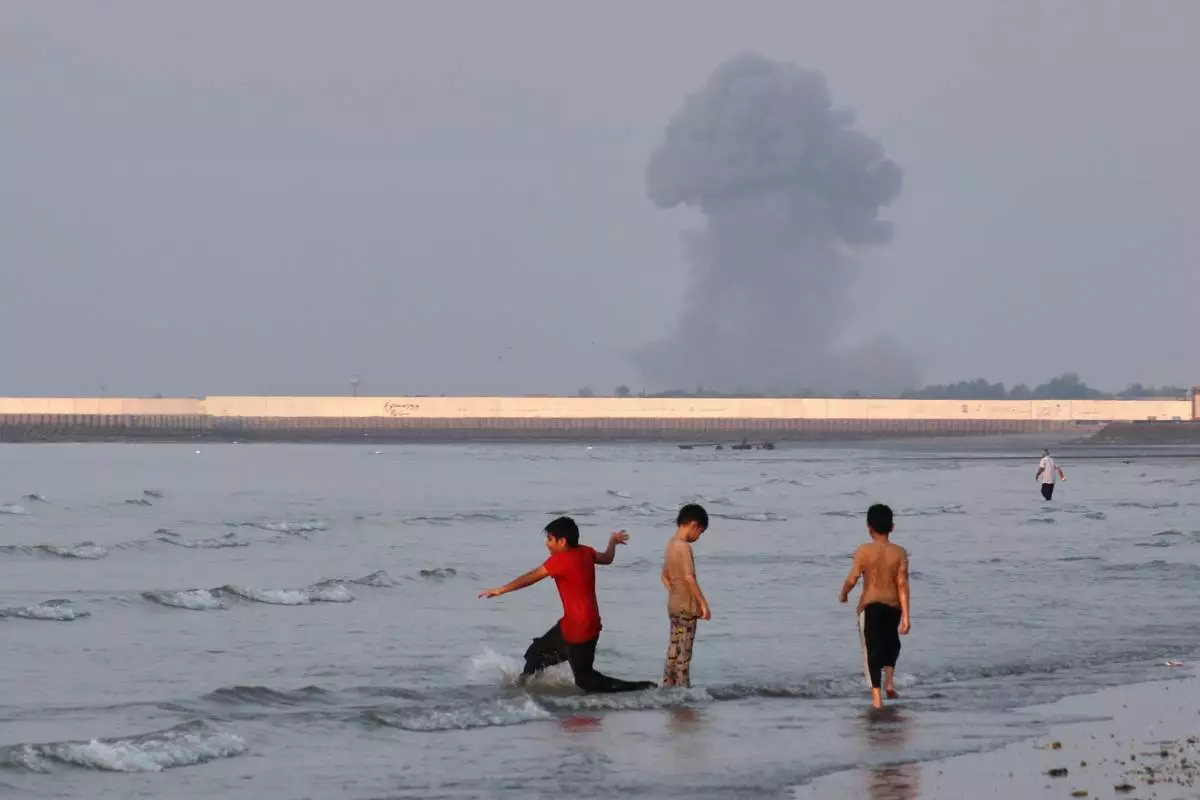
Three boys play in the shallow waters of the Strait of Hormuz, as a plume of smoke rises from an explosion in the background, off Bandar Abbas, Iran, Monday, July 13, 2026. (Razieh Poudat/ISNA via AP)

Three boys play in the shallow waters of the Strait of Hormuz, as a plume of smoke rises from an explosion in the background, off Bandar Abbas, Iran, Monday, July 13, 2026. (Razieh Poudat/ISNA via AP)

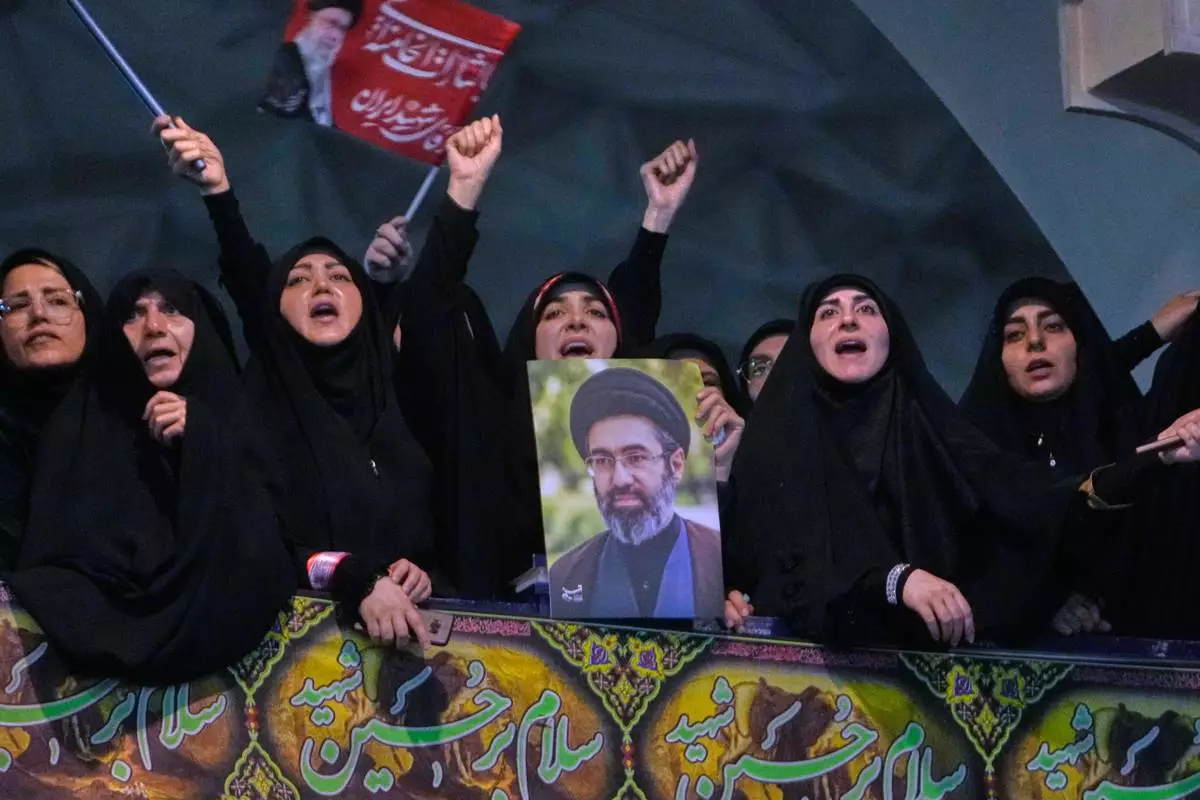
Mourners chant slogan as one of them holds a poster of the Supreme Leader Ayatollah Mojtaba Khamenei in a ceremony commemorating the late Supreme Leader Ayatollah Ali Khamenei at the Imam Khomeini Mosalla Grand Mosque in Tehran, Tuesday, July 14, 2026. (AP Photo/Vahid Salemi)

Mourners chant slogan as one of them holds a poster of the Supreme Leader Ayatollah Mojtaba Khamenei in a ceremony commemorating the late Supreme Leader Ayatollah Ali Khamenei at the Imam Khomeini Mosalla Grand Mosque in Tehran, Tuesday, July 14, 2026. (AP Photo/Vahid Salemi)

Recommended Articles