Chinese animation studios are turning to history and folklore for this summer's releases, betting that reimagined cultural icons, from a young Cao Cao to the Eight Immortals, can win over contemporary audiences.
Two new films illustrate the trend.
"Three Kingdoms: The Beginning," now rated 8.1 out of 10 on Douban, China's leading social review platform, revisits the political turmoil that preceded the Three Kingdoms period (220-280 AD).
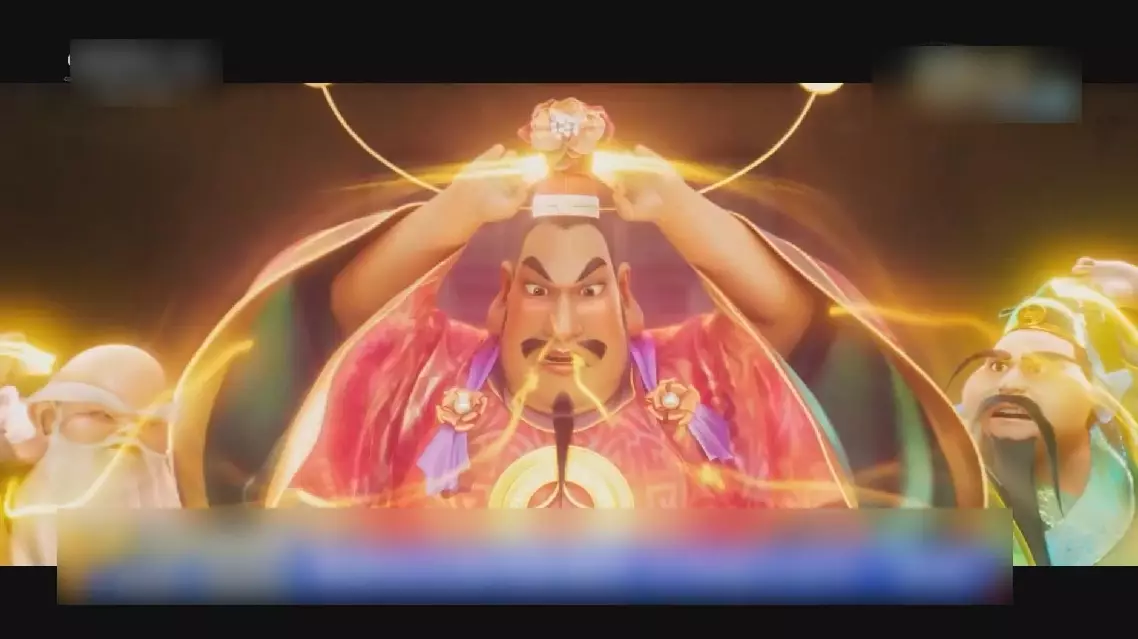
"All Wishes Come True!" a family comedy inspired by the Eight Immortals, has moved up its release date to Saturday.
The films take sharply different approaches. One returns to the final years of the Eastern Han Dynasty (25-220 AD), before Cao Cao became a defining figure of the age. The other reimagines the Eight Immortals as ordinary workers, giving them office jobs, performance targets and mortals' wishes to handle.
The first film, directed by Xie Junwei, comes from the team behind "Chang'an," the animated historical hit released in 2023.
"After 'Chang'an' was released and received so warmly by audiences, it gave us the confidence to keep working on historical subjects. Growing up, the Three Kingdoms stories I knew were all the famous episodes -- Liu Bei, Guan Yu and Zhang Fei taking on the warrior Lyu Bu; Guan Yu slaying Hua Xiong before the cup of wine set aside for him had cooled; the fire attack at Red Cliffs, and so on. I loved them. But I did not know how the world of the Three Kingdoms began. We wanted to start from the beginning. The Three Kingdoms is part of our shared cultural memory, and we wanted to give it new appeal," Xie said.
The film follows the rivalries that brought warlords to Luoyang in today's central Henan Province, before their struggles gave rise to the Three Kingdoms period. It also uses poetry associated with Cao Cao to suggest the inner life of a figure more often remembered for military strategy and political ambition.
To make that early world feel lived-in, the filmmakers drew on Han-era architecture, clothing and social customs. A large battle sequence, involving Cao Cao and thousands of new recruits, was animated by hand, with the team aiming for frames that carried the texture of paintings.
"All Wishes Come True!" takes the opposite approach: rather than treating mythological figures as distant objects of reverence, it imagines the Eight Immortals before they become immortals.
Its eight would-be deities pose as gods in an effort to make money, turning an old mythological world into a comedy about work, ambition and wish fulfillment.
"The setting of Penglai -- a place where humans and immortals coexist -- runs through the whole film. The immortals are a lot like office workers today: they clock in, they have KPIs, and they have to fulfill mortals' wishes. Mortals make wishes and turn to immortals to grant them," said Cao Linlin, the film's producer.
The joke is not simply that the immortals have jobs. The filmmakers see the workplace humor as a way to bring old characters closer to contemporary viewers without stripping away the traditional world that made them enduring in the first place.
"We felt that this idea is rooted in traditional culture, but it also brings it closer to today's office workers. It is a clever way of connecting the two," said Mu Zhengyang, the film's director and screenwriter.
The film's visual world draws on old mythological texts, traditional color theory and embroidery patterns, using cranes, flames and imaginary beasts to build character costumes and settings.
For A Lang, a film critic, the recent appeal of such films reflects a growing appetite among younger audiences for guofeng, a contemporary style rooted in Chinese traditional aesthetics.
"Chinese audiences, especially young people, are increasingly drawn to guofeng, or Chinese-style aesthetics. That is a clear expression of cultural confidence. China's traditional culture is an inexhaustible source of creative material. Works in this style have great potential," A Lang said.
Chinese animated films draw on history, myth for summer season