ISLAMABAD (AP) — The International Cricket Council has changed the competition formats of two major men’s tournaments, adding a preliminary round before the group stage of the 2027 World Cup and revamping the playoffs for the Twenty20 World Cup in 2028.
“The changes were introduced to create more meaningful contests, elevate competitive standards, strengthen the competitive structure of both events, and enhance the tournament experience for athletes and fans,” cricket 's international governing body said in the wake of weekend board meetings.
The traditional World Cup — which features one-day international games — is usually staged once every four years. Australia is the defending champion after beating India in the final at Ahmedabad in a 10-team tournament in 2023.
Next year's edition will involve 14 teams and be co-hosted by South Africa, Zimbabwe and Namibia.
The T20 World Cup is usually staged once every two years, and India is the defending champion after winning on home soil in March.
Round 1: The teams in the 12th, 13th and 14th qualifying places will contest a so-called “Super Series” round, with the winner advancing to join 11 other teams in the group stage.
Round 2: Twelve teams will be divided into two groups of six. The top three teams from each group in the league stage will advance — along with the best fourth-place team — to the Super 7 stage.
Round 3: The Super 7 round includes a round-robin format with each team playing six other rivals and the top four advancing to the knockout stage. The semifinals will feature No. 1 vs. No. 4 and No. 2 vs. No. 3.
“The structure has been designed to strengthen the competitive narrative across every stage of the event,” the ICC said.
The tournament in Australia and New Zealand will feature 20 teams and will have 30 matches in the initial group stage.
Group stage: The participating teams will be divided into five groups of four. In the previous T20 World Cup, there was four groups of five teams. The top two teams from each group will advance.
Super 10: This round will have two groups of five, playing a round-robin format. The winners of each will qualify directly for the semifinals. The remaining two semifinal spots will be decided through a new eliminators round, with the second-place teams from each Super 10 group facing the third-place teams from the opposite group. The winners of those eliminators will complete the semifinal lineup.
Twelve teams — Afghanistan, Australia, Bangladesh, England, India, Ireland, New Zealand, Pakistan, South Africa, Sri Lanka, West Indies and Zimbabwe — have already made it to the 2028 event, based on performances in the 2026 T20 World Cup and team rankings.
The remaining eight spots at the 2028 edition will be filled through a 16-team global qualifier competition.
The U.S., Canada, Italy, Namibia, Nepal, Netherlands, Oman and United Arab Emirates got automatic places at the global qualifier. Scotland has direct entry into Europe regional final.
AP cricket: https://apnews.com/hub/cricket
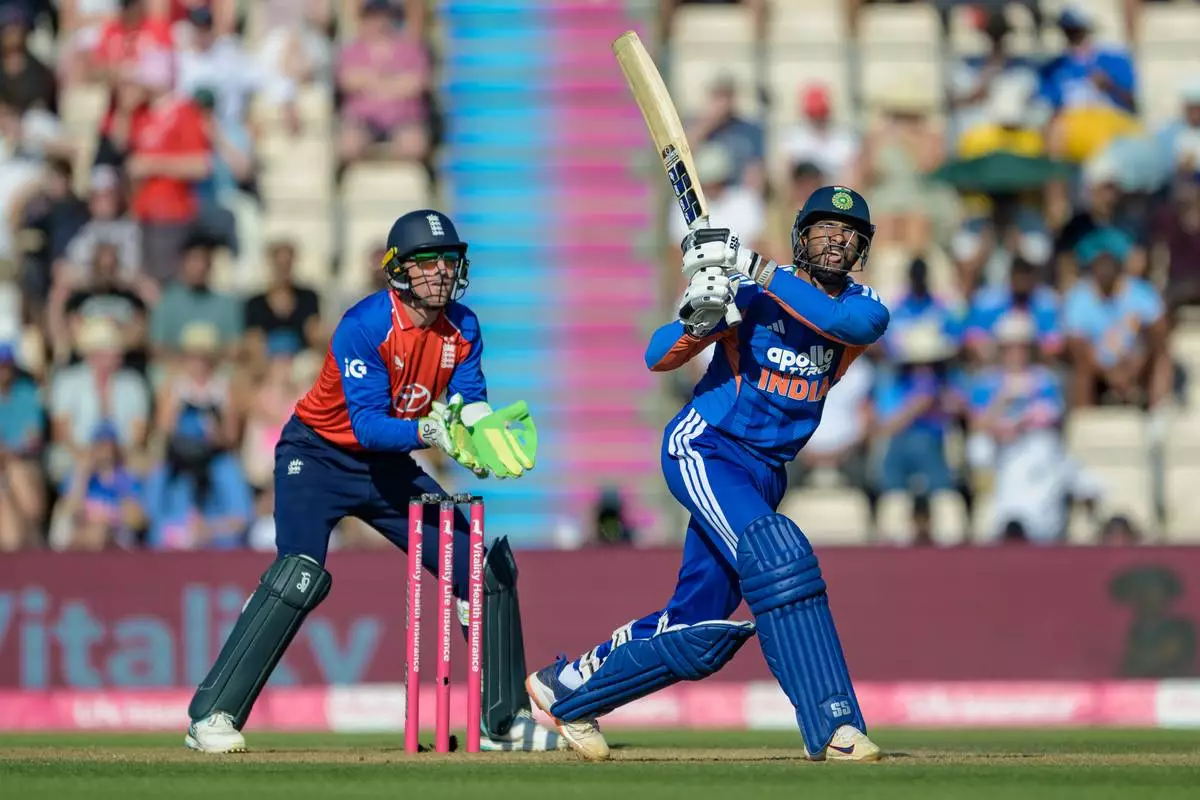
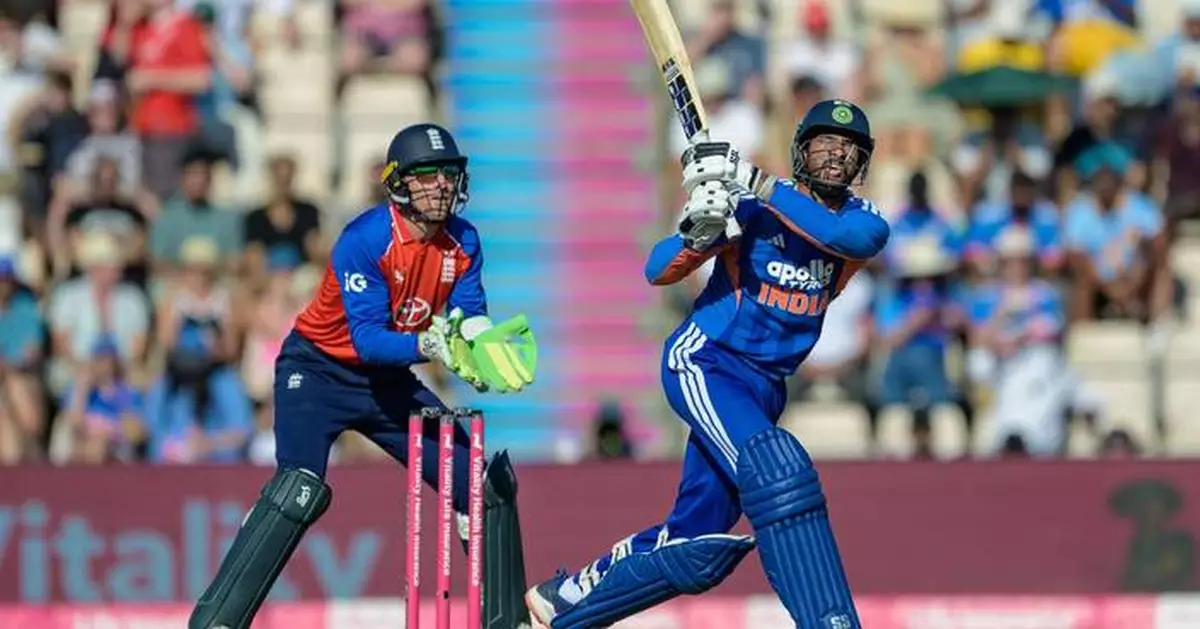
Wicket Keeper Jos Buttler of England and Tilak Varma of India during the international T20 Cricket match between England and India in Southampton, England, Saturday, July 11, 2026. (AP Photo/Anthony Upton)
DUBAI, United Arab Emirates (AP) — The United States intensified its strikes targeting Iran early Thursday, hitting targets further north as American forces also fired into a ship it accused of trying to break its naval blockade on the Islamic Republic. Iran retaliated with missile and drone fire targeting Bahrain, Jordan and Kuwait before dawn and warned its attacks may escalate.
Days of back-and-forth strikes by the U.S. and Iran across the Middle East — and renewed threats to the Strait of Hormuz — have shredded the interim deal to end the Iran war and could tip the region back into all-out war. Already, Iranian officials say U.S. strikes have killed more than 35 people and wounded over 300 others.
Strikes also reached into areas around Iran’s capital, Tehran, for the first time in this latest round of violence, showing a widening set of targets for the Americans.
When the U.S. and Israel launched the war on Iran on Feb. 28, Tehran effectively closed the strait to shipping traffic, a move that sent the price of oil, fertilizer and many other goods soaring far beyond the region and gave Iran major leverage in negotiations.
Col. Ebrahim Zolfaghari, a spokesperson for the Iranian military’s Khatam al-Anbiya Central Headquarters, escalated Iran's threats by referencing U.S. President Donald Trump's repeated warning America could hit Iranian bridges and power plants.
“All the infrastructure in the region will be crushed under the steel blows of the powerful armed forces of the Islamic Republic of Iran” should Trump’s threat be carried out, Zolfaghari said.
“Under no circumstances and in no way will we allow America, as a foreign and extra-regional country, to interfere in the Strait of Hormuz,” he added. “This is Iran’s invincible red line.”
Those rising prices pose a particular challenge to Trump and his Republican Party, which hopes to retain control of Congress in elections in November. But Washington has struggled to successfully reopen the waterway, leading to Trump reimposing the naval blockade Wednesday. Mediators have sought to calm the tensions, but so far have been unsuccessful.
Trump again insisted Iran was ready to strike a peace deal, but he did not elaborate.
“They don’t like what we’re doing, and they do want to settle. We’ll find out whether or not we settle with them, or we just finish it off,” he said Wednesday at the U.S. Army War College in Pennsylvania.
Trump separately said on social media that Tehran made a goodwill gesture by releasing an American citizen wrongly detained in Iran since 2024. He didn’t release further details. Human rights lawyer Jared Genser released a statement identifying the detainee as his client Dena Karari, a U.S.-Iranian citizen who runs a nonprofit and was charged with espionage.
Iran did not immediately acknowledge the release and her case was not publicly known, as is sometimes the case with detentions in the Islamic Republic.
The U.S. strikes early Thursday hit around Tehran, state media reported. It also reported that American attacks targeted Semnan province, home to Iran’s ballistic missile production and space program.
Iranian media also reported strikes Thursday morning around the provinces of Hamedan, Hormozgan, Khuzestan, Lorestan, Markazi, and Sistan and Baluchistan.
On Wednesday, the U.S. resumed striking Iran during daylight, further showing the increasing tempo of the attacks. An attack on Greater Tunb Island, a strategic point in the Strait of Hormuz, targeted Iranian defense and missile sites, Central Command said.
Meanwhile, the U.S. military said it opened fire on the Curacao-flagged oil tanker Belma sailing toward Kharg Island, Iran’s main oil export terminal in the Persian Gulf. After the ship “ignored multiple warnings,” a U.S. aircraft disabled the merchant vessel by firing a missile into the ship’s smokestack.
Another American strike Wednesday targeted a barracks for Iran’s 388th Mechanized Infantry Brigade, which operates tanks and armored vehicles, in Sistan and Baluchestan province, Iranian state television reported. The report said Americans fired at least 13 missiles in the attack and the seven dead included conscripts and career soldiers. A number of troops were wounded.
Iran retaliated Thursday with missile and drone attacks on Bahrain, Jordan and Kuwait, authorities in those countries home to U.S. forces said. There was no immediate acknowledgment of damage or casualties from the attacks.
Meanwhile, Iraqi Prime Minister Ali al-Zaidi condemned an overnight drone attack on the city of Irbil in Iraq’s semiautonomous northern Kurdish region. The drone, which authorities said had been intercepted, came during his trip to the U.S. in which he said Iraq would work to disarm non-state armed groups, including those backed by Iran.
The latest round of fighting is focused on the Strait of Hormuz. How to reopen the strait has bedeviled the U.S. since Iran choked it off in the early days of the war.
During the interim deal, some ships began moving through the passage using a route near Oman overseen by the U.S. military that is outside Tehran’s control.
In recent days, Iran attacked ships using that route and back-and-forth attacks ensued. The U.S. has threatened to reopen the strait by force, but experts say that would require a much bigger armada if not tens of thousands of ground troops. Imposing the blockade is another way to put pressure on Iran.
But in the meantime, oil prices are rising. The price for Brent crude oil, the international standard, traded above $85 a barrel on Thursday, more than 15% higher than the price before the war, but still well below the nearly $120 reached at the height of the conflict.
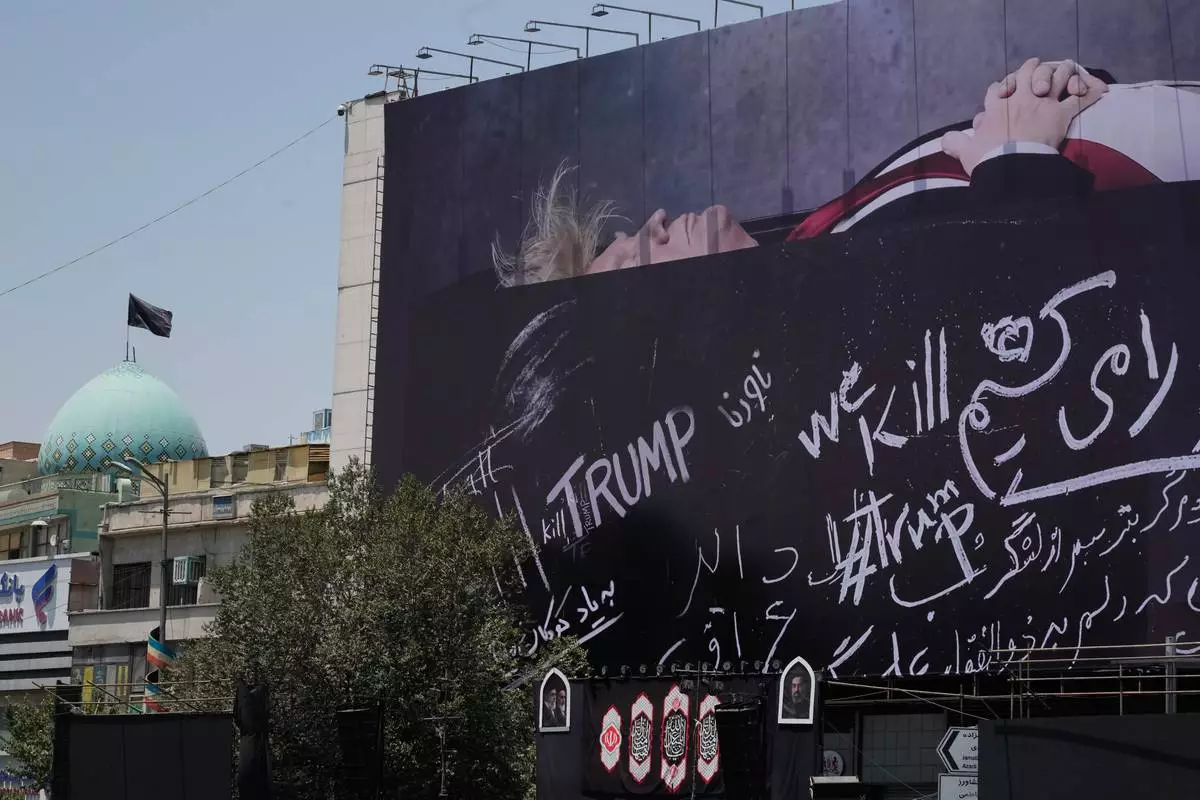
A billboard depicting U.S. President Donald Trump lying on what appears to be a coffin and bearing anti-Trump messages, including the phrase "We Kill Trump," is seen at Islamic Revolution Square in downtown Tehran, Iran, Wednesday, July 15, 2026. (AP Photo/Vahid Salemi)
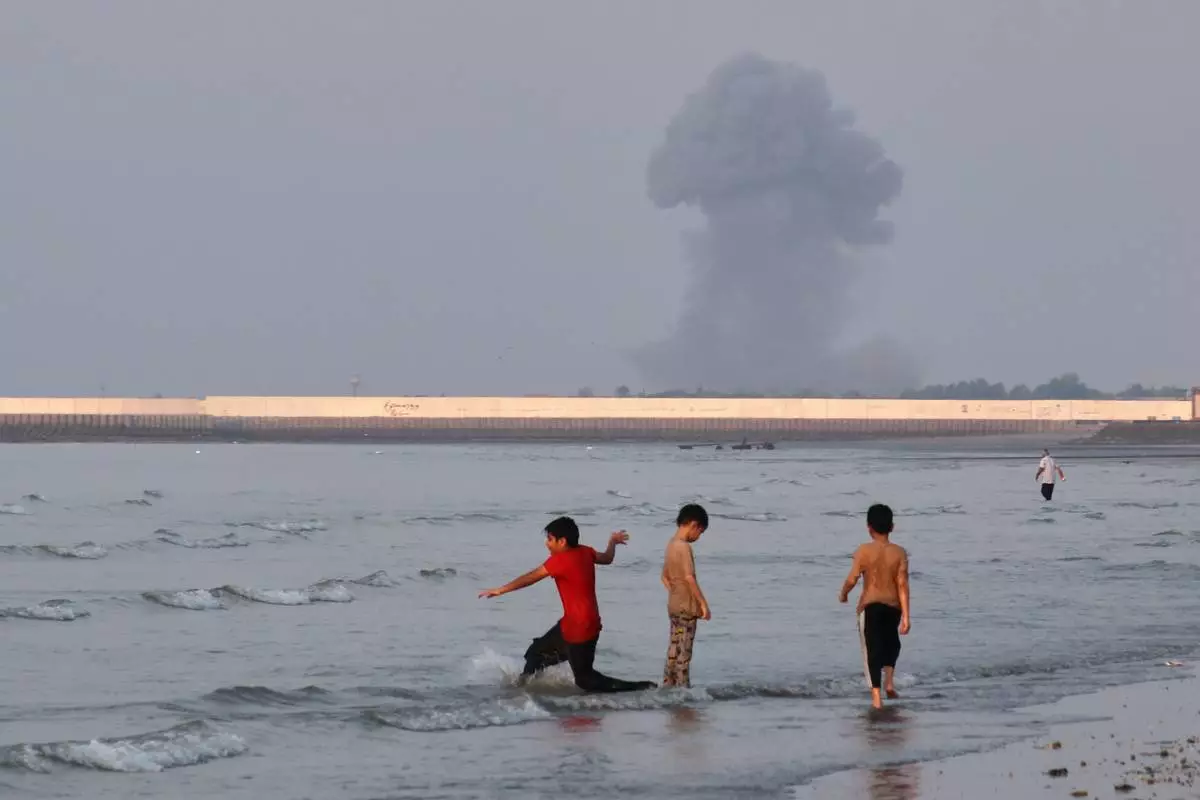
Three boys play in the shallow waters of the Strait of Hormuz, as a plume of smoke rises from an explosion in the background, off Bandar Abbas, Iran, Monday, July 13, 2026. (Razieh Poudat/ISNA via AP)