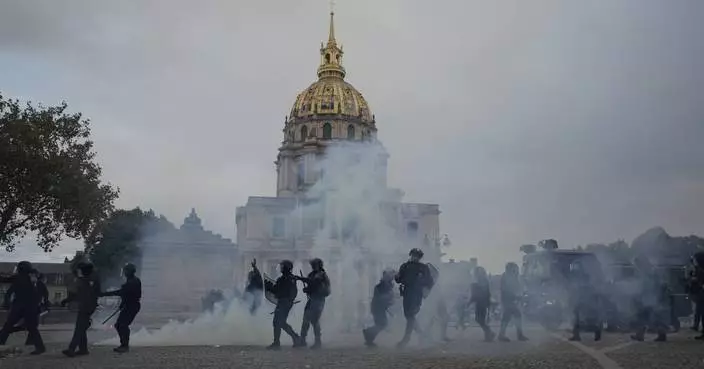
DUBAI, United Arab Emirates (AP) — The expanding U.S. military campaign against Iran has put three small islands that sit at the confluence of the Persian Gulf and the Strait of Hormuz in the crosshairs once again.
The islands of Abu Musa and Greater and Lesser Tunb — which were seized in 1971 by Iran from what would become the United Arab Emirates — have become a garrison for Iran, helping it exert significant control over the strait, through which a fifth of all oil and natural gas passes in peacetime.
U.S. strikes on two of the islands in recent days have renewed speculation about the fate of these small, rocky isles, whose ownership remains disputed.
The land mass of all three islands totals just about 10 square miles (25 square kilometers). But they carry oversized strategic importance given they sit along the deep-water route taken by ships passing between the strait and the Gulf.
The largest, Abu Musa, has a village on it but primarily serves as a base for Iran's paramilitary Revolutionary Guard, which has stationed fast boats and missiles — both of which have been used to harass ships in the strait — on the island. It also hosts air defense systems. The same goes for Greater Tunb Island, while the much-smaller Lesser Tunb only has a military presence.
Because of their strategic importance, regional powers have long fought for control of the islands.
Iran, then under Shah Mohammad Reza Pahlavi, took the islands by force on Nov. 30, 1971, two days before the formation of the United Arab Emirates. The shah, as America's top security ally in the region, received little pushback at the time.
After the 1979 Islamic Revolution, Iran used the islands as a base to target shipping during the “Tanker war” of the 1980s, when the U.S. Navy escorted oil tankers through the region under Iranian fire. Iran used the islands to both monitor the strait and launch vessels to lay mines or openly attack vessels in that conflict.
U.S. estimates suggest Iran attacked over 160 ships in that confrontation. So far in the current war, there have been over 50 attacks targeting vessels and oil rigs, according to the Joint Maritime Information Center, a coalition overseen by the U.S. Navy. That includes some incidents of the U.S. firing on ships it accuses of trying to break its blockade on Iran.
In recent days as part of the escalation in fighting, the U.S. military launched strikes on both Abu Musa and Greater Tunb islands. Some analysts have speculated that American forces might invade.
“Together they act as a layered denial system to the most critical energy chokepoint in the world,” Isabel Oakeshott, a columnist for The Telegraph who now lives in Dubai, United Arab Emirates, wrote in the newspaper. She equated Abu Musa to “a fixed aircraft carrier” for Iran.
Taking the islands likely would be possible for the U.S., which has both paratroopers and Marines in the region. However, they likely would be exposed to Iranian attack while there.
“Without prepared, hardened fortifications to provide cover — even with air support from nearby naval assets — force protection would be an enormous challenge,” warned Brandon Carr, an analyst with the Washington-based Quincy Institute for Responsible Statecraft, which calls for restraint in American military operations abroad.
“The Marines would come under fire from Iranian ballistic missiles and drones, severely limiting their ability to project power into the strait.”
In recent years, the United Arab Emirates successfully lobbied both China and Russia to include language in joint statements about resolving the ownership of the islands through either negotiations or an international court decision.
That infuriated Tehran — but the world largely ignored the dispute.
“What the world called a bilateral territorial dispute was, from the beginning, a strategic claim on a global chokepoint,” wrote Noora Mohamed Al Murry, an Emirati legal scholar, in April.
“Managed ambiguity, in a waterway this consequential, is not a neutral position. It is a choice with a price, and the world is now holding the invoice.”
Oakeshott, the columnist, predicted that the UAE, which hosts U.S. forces and has repeatedly come under Iranian fire in the war, would likely push to get the islands once the conflict ends.
The U.S. campaign may force the issue to a head, some 55 years after the late shah warned the strait could become a “nuisance” for the world.
“It does not take a big boat to carry a bazooka and a few shells," the shah told The Guardian newspaper in 1971. "But the trouble that it could cause is tremendous.”
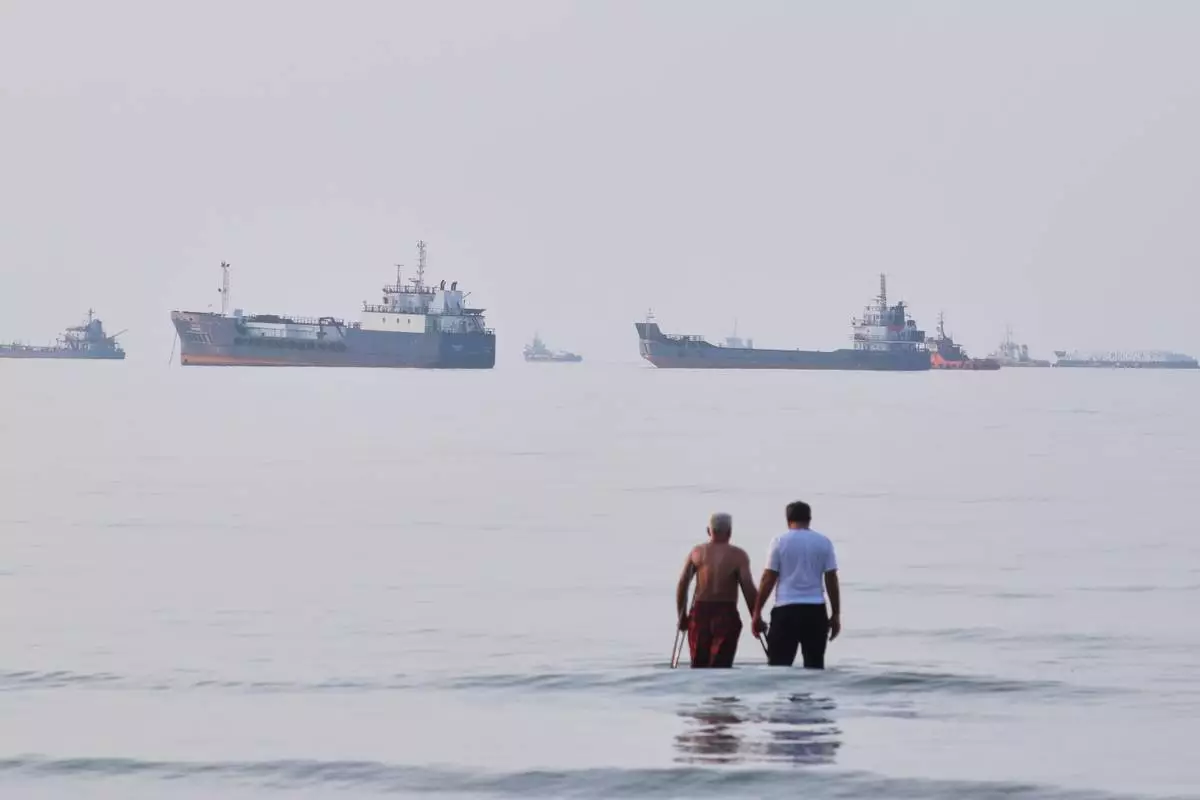
Two men wade in the waters of the Strait of Hormuz with vessels anchored in the background, off Bandar Abbas, Iran, Sunday, July 12, 2026. (Razieh Poudat/ISNA via AP)

Homeland Security Secretary Markwayne Mullin pledged to aggressively pursue voter fraud cases at the White House complex on Friday after President Donald Trump revived debunked election theories in his primetime speech Thursday night.
Trump used the primetime address to the nation to elevate his yearslong push to raise doubts about the legitimacy of U.S. elections and dispute his 2020 loss — this time, to justify his push to pass a strict voter ID bill. His allegations of interference and influence didn’t include key context. Nor did he produce evidence that votes had been manipulated or that the election outcome had been altered.
Here's the latest:
Trump is set to attend the World Cup final between Argentina and Spain, but he’s being diplomatic on which team he hopes wins.
At a FIFA reception at Trump Tower on Friday alongside FIFA President Gianni Infantino, Trump noted the final match would be between “two amazing teams.”
He did, however, single out Argentina star Lionel Messi for his play, calling out the pass he made for Argentina’s winning goal against England and a hat trick that Messi pulled off early in the tournament.
Trump called the 2026 World Cup “one of the all time greatest sporting events in history,” adding that the tournament galvanized more than just the sporting world.
“So good luck to Spain and Argentina on Sunday and may the best team win,” Trump said.
The United States and Iran escalated their attacks across the Middle East on Friday, trading strikes aimed at infrastructure and military targets as their battle over the Strait of Hormuz intensified.
The U.S. expanded its attacks against Iran by hitting more bridges and energy sites and collapsing a tower at a key Iranian port, following through on President Donald Trump’s threats to pressure Tehran to ease its chokehold on the waterway vital to world energy supplies.
In response, Iran launched missiles into U.S.-allied nations in the Mideast, including Qatar, a mediator in the war, and Kuwait, where one of the desert nation’s water desalination plants was damaged.
▶ Read more
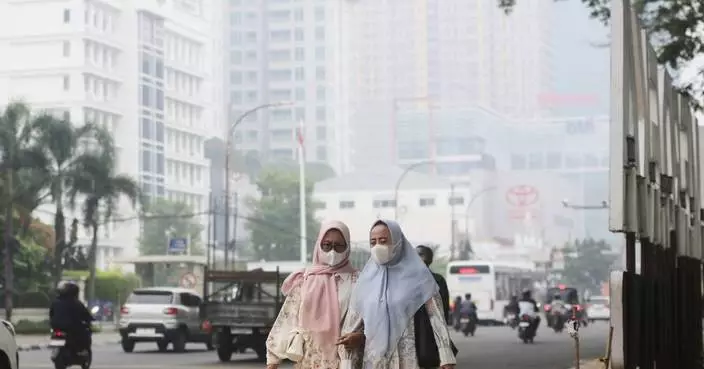
The president said he was “holding Canada responsible” for the U.S. “being unnecessarily invaded by filthy, polluted, and unhealthy air.”
In a post on his social media site, Trump called the situation “totally unacceptable” and said that summer smoke from fires in Canada is “becoming a yearly occurrence.”
He said he’d call Canadian Prime Minister Mark Carney on Friday, and added that the “cost of this pollution must of necessity be added to the TARIFFS Canada is currently paying.”
The Trump administration has imposed import tariffs on some Canadian products, though the Supreme Court declared many such levies unconstitutional.
Unmentioned was the World Cup final in New Jersey on Sunday, but the White House says administration officials are monitoring the wildfire situation.
President Donald Trump said Friday that Darline Graham, the sister of the late Lindsey Graham, has his support to run for a full term to replace her brother in the U.S. Senate.
He wrote on social media that she “has been a WINNER all of her life and, should she accept, has my Complete and Total Endorsement.”
“RUN, DARLINE, RUN!” Trump added.
▶ Read more
The number of service members injured in the Iran war has gone up by 13 troops since Monday, according to the Pentagon’s official casualty count.
According to data in the Defense Casualty Analysis System, the 13 injured troops include 10 Army soldiers and three Navy sailors. No additional information was available, including the date or location of their injuries.
The new injuries come during a week of renewed and intense fighting between Iran and the U.S., with both sides launching strikes for several consecutive days.
Capt. Tim Hawkins, spokesman for U.S. Central Command, declined to offer any details about the injuries or what U.S. bases and assets have been hit in the renewed wave of fighting.
The total U.S. casualty count for the conflict now stands at 14 dead and 427 wounded. Central Command has previously said the majority of the wounded suffered traumatic brain injuries.
Mullin said the department is ramping up enforcement and hitting records for the number of arrests.
“Our arrests are up. We’re hitting single day records every single day,” Mullin said.
Mullin also said the agency deported 442,637 people in 2025 and so far this year has deported 403,294.
“We’re trying to perfect our ability to work with local law enforcement, state law enforcement,” he said.
ICE and DHS do not release regular data related to deportations, arrests and detention, leading to criticism that there’s no way to verify their work.
Unlike his predecessor Kristi Noem, Mullin has attempted to keep a lower profile for immigration enforcement operations. But the recent shooting deaths of two people who were killed by ICE officers during operations has brought the department back into the spotlight.
The billionaire U.S. ambassador to Italy was met by protests when he arrived in Venice on Friday aboard his luxury yacht as part of a coastal diplomacy tour marking the 250th anniversary of American independence.
Hospitality mogul Tilman Fertitta’s arrival represents an unwelcome display of American wealth and influence for many Italians at a time when they see the Trump administration as upending the post-World War II international order.
The so-called Coastal Diplomacy 250 tour of 13 Italian coastal regions on a super yacht is intended to celebrate “our shared history, our economic partnership, and the cultural bonds that make the U.S.-Italy relationship so special,” Fertitta said in a social media post.
In Venice, many of the same groups that protested the wedding last year of Jeff Bezos to Lauren Sanchez are mobilizing against Fertitta’s arrival aboard the 117-meter (384-foot) luxury yacht, Boardwalk, which features two helipads, a pair of swimming pools and a fully equipped spa and gym.
▶ Read more
The Homeland Security secretary said during a news conference that he hadn’t heard about allegations of violent behavior against a deportation officer who shot and killed a Colombian man in Maine earlier this week.
Relatives of the officer told The Associated Press he struggled with serious mental health issues, had a history of violent behavior and never should have been given a badge and gun.
Mullin said the shooting was being investigated and he’d allow the investigation to go forward.
“We understand that it’s being investigated, and we’ll allow the investigation to go through. That’s all I’m going to say about that,” said Mullin.
He wouldn’t comment on whether the officer was on leave but said that was standard practice in the aftermath of any shooting.
Homeland Security Secretary Markwayne Mullin said if anyone votes illegally in the upcoming midterm elections, “we will hunt you down, we will find you and we will prosecute you.”
In a White House briefing doubling down on Trump’s primetime election claims, Mullin also threatened fines, penalties or prison time for state election officials who refuse to hand over sensitive voter data to DHS.
He said states that don’t elect to use DHS’s recently updated tool for identifying noncitizen voters, will become “a priority” for investigations.
The comments come as a federal judge has blocked the use of DHS’s updated system, citing voter privacy and the fact that it can result in the wrongful purging of eligible voters.
In his speech to the nation Thursday evening, President Trump said Americans deserve secure elections, and he claimed to be using federal authority to prevent them from being “stolen.”
In fact, one of the strongest security features of U.S. elections is the fact that they aren’t conducted at the federal level. America votes in more than 10,000 different election jurisdictions, each with different rules set by state and sometimes local governments.
That structure makes the nation’s elections extraordinarily complicated — and also safe from widespread fraud. And when misconduct does happen — rarely — security protocols frequently catch it.
▶ Read more
In January, Homeland Security said it had hired 12,000 new officers and agents since the hiring surge began and said thousands of those new officers were already out on the streets assisting with investigations. The number includes both deportation officers and agents for Homeland Security Investigations, a separate agency that falls under ICE.
ICE has said the majority of new hires are police and military veterans. But evidence has been mounting that applicants with questionable histories were either not fully vetted before they were brought on or were hired in spite of their past, an investigation by The Associated Press earlier this year found.
Immigration and Customs Enforcement has been rapidly expanding its workforce, hiring thousands of new officers as part of the Trump administration’s attempt to ramp up immigration arrests and deportations.
The supersizing of ICE — fueled by an infusion of billions of dollars granted by Congress — has raised concerns about the agency’s hiring practices and whether officers being brought on are receiving proper vetting. Those concerns have been rejected by the Department of Homeland Security.
Relatives of the ICE officer who shot a Colombian man in Maine this week told The Associated Press he struggled with serious mental health issues since early childhood and never should have been given a badge and gun to patrol American streets.
▶ Read more
Democratic members of Congress demanded answers about Homeland Security’s vetting and training of immigration enforcement agents after it was disclosed Thursday that the ICE officer involved in a deadly shooting this week in Maine had a history of mental health issues and violent behavior.
The Associated Press reported that David Brouillette, the Immigration and Customs Enforcement officer who shot a Colombian man in Maine, is an Army veteran who’s struggled with serious mental health issues since early childhood, according to several of his close relatives.
The AP reached out to congressional leaders and several key lawmakers of both parties for response.
The top Democrat on the House Homeland Security Committee, Rep. Bennie Thompson of Mississippi, said Brouillette’s history of violence and mental health issues, as well as the death in Maine, “directly call into question the supposed vetting and training ICE does of its recruits.”
▶ Read more
As President Trump threatened sanctions for those who didn’t cover his address live Thursday night, the nation’s broadcast and cable news operations wrestled with the thorniest of questions: To air or not to air?
Networks and their news operations, broadcast and cable alike, spent the hours leading up to Trump’s address debating how to cover it — and struggling to balance delivering the news with handing over their airwaves to potential falsehoods about the 2020 elections.
In the end, a patchwork quilt of coverage was largely united by one common strategy: real-time fact-checking as much as was possible even while the president was still speaking.
The dilemma took place against a backdrop of deep tension between the media and a president working to exert control over it by whatever means he can. Even in his speech itself, Trump excoriated networks that chose not to carry it live.
▶ Read more
Secretary of State Marco Rubio is heading to the Philippines next week to attend meetings with foreign ministers at a gathering of the Association of Southeast Asian Nations, or ASEAN.
The State Department says Rubio is going to meet with his counterparts and senior officials from governments in the region as he pushes for a free and open Indo-Pacific.
Rubio is scheduled to leave for Manila on Sunday and head back to the U.S. on Thursday.
China on Friday said it has never interfered in U.S. elections and has no interest in doing so, urging Washington to stop making what it described as “groundless accusations” after President Trump accused Beijing of meddling in the 2020 election.
In an address to the nation Thursday, Trump again raised doubts about the U.S. elections results in 2020 and accused China of interfering in them.
“The relevant allegations by the U.S. are entirely fabricated and aimed at vilifying China,” said China’s Foreign Ministry spokesperson Lin Jian. “We have no interest in interfering in US elections and have never done so.”
In a daily briefing in Beijing, Lin called on the U.S. to stop making groundless accusations against China.
▶ Read more
Sue Gordon, principal deputy director of national intelligence in Trump’s first term, called the president’s address “a dangerous speech about an incredibly important topic.” She said the intelligence community throughout Trump’s first term was alarmed about foreign interference in elections, but Trump scoffed at them, angered at the investigation of his campaign’s relationship with Russia.
“He had an entire term to deal with it and I don’t know how you can believe how the same community that told him about it, that was excoriated about it” wouldn’t warn him in 2020, Gordon said on CNN.
Conservative commentator John Solomon, who joined the White House staff last month and was seated in the East Room for Trump’s speech, later told MS NOW “the intelligence community has zero evidence that someone has flipped — that a foreign power flipped — a vote in 2020, ’22 or ’24.”
But, he added, “We’re not through all the documents.”
President Donald Trump began Thursday night with a stark warning about what he described as flaws in the voting system and said he was releasing previously classified documents related to the 2020 and 2018 elections, when he lost the presidential election and when his party suffered losses.
Trump’s speech presented allegations of interference and influence in ways that lacked key context and did not produce evidence that votes had been manipulated or that the election outcome had been altered.
Notably, he focused on China but glossed over Russia, a country intelligence officials have said favored Trump in 2016 and 2020 and engaged in wide-ranging influence campaigns aimed at boosting him over Democrat Joe Biden in the latter campaign.
A twice-elected president complained about his one personal defeat, alleged a cover-up by officials in his own first administration and surfaced claims about countries attempting to harm his own prospects while staying silent on steps taken by other nations to boost him.
Trump used the remarks to justify his push to pass a strict voter ID bill in Congress that hasn’t advanced because it lacks enough support from his fellow Republicans.
“America is back and doing really well, but we still have a major challenge that must be urgently addressed, because no country can be great without fair and honest elections,” he said.
President Donald Trump speaks in the East Room of the White House, Thursday, July 16, 2026, in Washington. (Saul Loeb/Pool via AP)