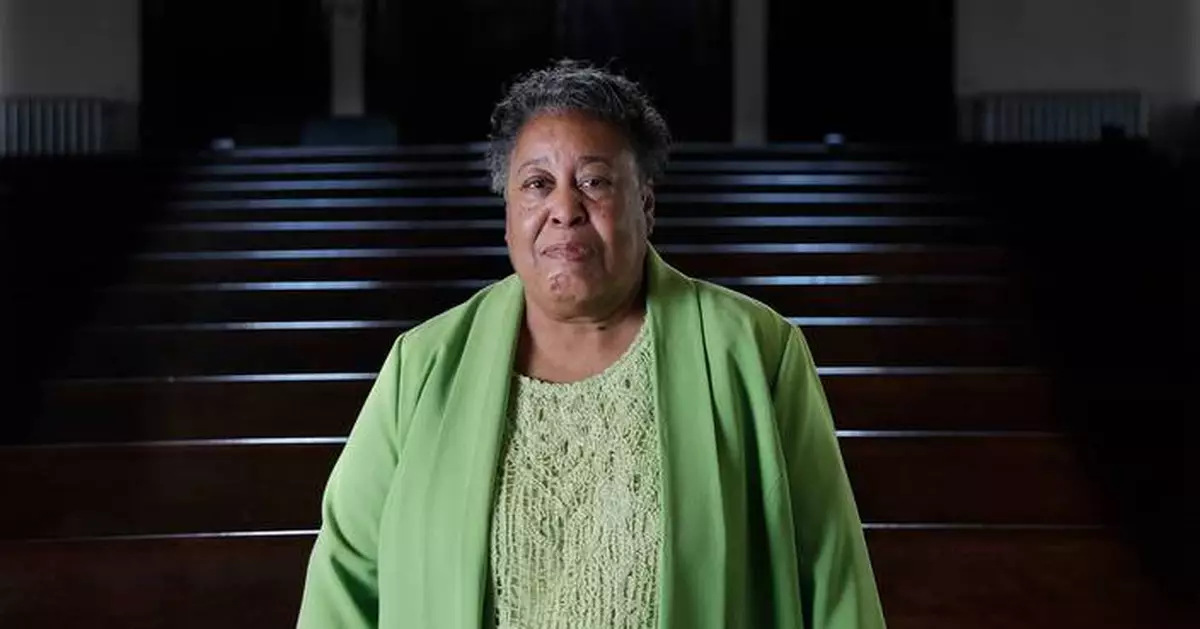
NASHVILLE, Tenn. (AP) — Clara Ester, an activist who as a 20-year-old college student rushed to the Rev. Martin Luther King Jr.'s side when he was shot, has died.
Ester, who died on July 9 at the age of 78, was among a few remaining witnesses to King’s assassination and its immediate aftermath in Memphis. With the passing of the Rev. Jesse Jackson Sr. in February and Ester this month, King aide and former U.N. ambassador Andrew Young is believed to be the last surviving eyewitness to the shooting.
Ester Grew up in Memphis attending Centenary United Methodist Church, where her pastor was civil rights leader the Rev. James Lawson.
“We used to joke about colored water being Kool-Aid and the white water just being water, and so that satisfied us as children,” Ester told The Associated Press in 2018, around the 50th anniversary of King’s death. “But until you see the racism, until you see what has been withheld from you because of your color — is what started to really truly anger me. And I knew if there was a movement that could help change any of that, I had to be in it.”
Civil rights issues were often discussed from the pulpit of her church, Ester said. Lawson was very involved in the sanitation workers’ strike, so it was natural for her to become involved too.
“I got to the point that I didn’t miss a mass meeting,” she said. “I picketed every day that the picket lines were up.”
Even 50 years later, she clearly remembered the impact of hearing King's speech at the Mason Temple the night before he was assassinated and how it seemed to foreshadow his death the next day.
“He had seen the mountaintop,” Ester said. “It was evident on the balcony — how calm."
Ester had gone to the Lorraine Motel for dinner on April 4, 1968, when she saw King chatting on the balcony with people below. Then she heard a shot.
“He was speaking calmly and pleasantly to a crowd,” she said. "And so he was happy at that moment. But to lay there with his eyes open, looking toward heaven. He had seen the promised land, and he may not get there with us, but he promised that we as a people will see the promised land.”
Ester said she ran to King and saw he was struggling for air. She tried to loosen his belt and asked someone to bring towels to try to staunch the bleeding. After King was taken away by ambulance, she had to stay at the hotel, where she was questioned by police.
When she was finally allowed to go home, her parents asked if she was OK.
“I said, ‘No, I’m not OK. There’s something wrong with this.’ And it was many months later that I guess at some point, I just broke down," Ester said.
She left Memphis to work elsewhere that summer, and as soon as she finished school, she left for good.
“It’s just too much to ... it hurt me that it happened, but it hurt me that it happened in my hometown, that that’s the legacy for this city,” she said.
Ester moved to Mobile, Alabama, where she found work as a neighborhood organizer at the Dumas Wesley Community Center, a Christian service program supporting children, seniors and people experiencing homelessness, according to her obituary. She later was named the executive director of the center, serving in that role until she retired in 2006.
In 1986, she was commissioned as a deaconess in the United Methodist Church, a type of lay minister . She remained active in the church throughout her life and held leadership roles that included serving as the national vice president of United Methodist Women.
Methodist Bishop David Graves met Ester when he was assigned to the Alabama-West Florida Conference in 2016. He wrote in a remembrance that Ester did not take to him at first, but gradually they came to love each other.
“Thank you, Clara Ester, for a life well lived and for loving me. It changed me,” he wrote. “Clara will be missed immensely, but what a day of rejoicing is going on in heaven. For love will always find a way for those who trust in Jesus and seek to love even in our differences.”
Former Associated Press reporter Adrian Sainz contributed from Memphis.
This story corrects the age of Ester when King was killed.
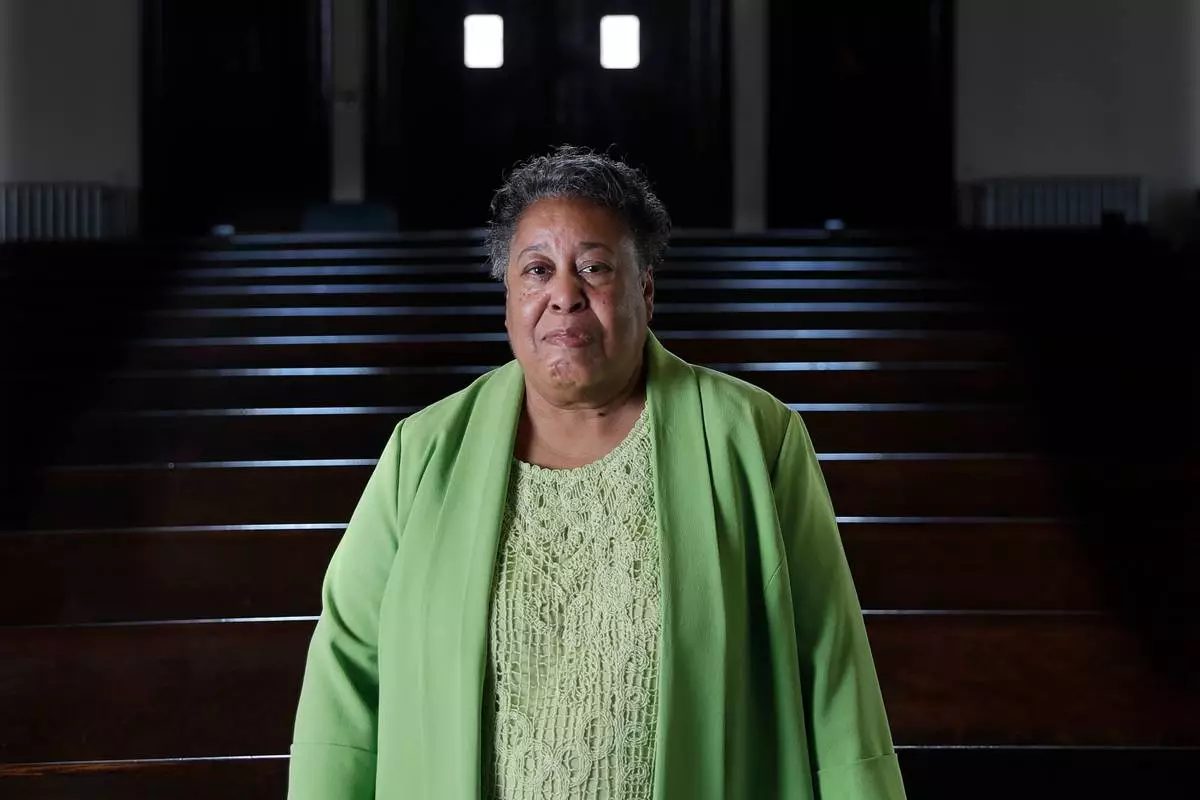
FILE - Clara Ester stands in the Centenary United Methodist Church in Memphis, Tenn., on March 17, 2018. (AP Photo/Mark Humphrey, File)
ATLANTA (AP) — Federal health officials have identified lettuce from Mexico served at Taco Bell locations across five U.S. states as a source of a widespread outbreak of diarrhea-causing parasite cyclospora.
The Centers for Disease Control and Prevention late Thursday warned consumers not to eat shredded iceberg lettuce from Taco Bell restaurants in Indiana, Kentucky, Michigan, Ohio and West Virginia. A record number of cyclospora cases have been reported in more than 30 states, and experts have said not every recent U.S. illness might be caused by a single source.
A Food and Drug Administration investigation so far has identified a single supplier of the lettuce. The federal warnings to consumers did not identify the company, but a federal official who was briefed on the investigation and not authorized to discuss it told The Associated Press it was Taylor Farms of Salinas, California.
Taylor Farms, which has been tied to foodborne outbreaks in the past, did not immediately respond to a request for comment.
“FDA is working with the supplier of iceberg lettuce to determine if potentially contaminated shredded iceberg lettuce remains on the market,” including in other states, the CDC said. “Taco Bell has committed to stop using any lettuce from the supplier identified by FDA’s traceback investigation.”
CDC, FDA and public health officials in several states have been investigating a multistate outbreak of cyclospora infections.
The illness is not usually life threatening and is typically treated with antibiotics.
On Thursday, ahead of the federal government's confirmation, Taco Bell issued a statement saying that it had taken “immediate action to voluntarily remove potentially impacted lettuce from a supplier in select states. The affected ingredient from our supplier is being indefinitely removed from our supply chain nationwide and will be replaced within 24 hours in select states.”
In a statement, federal health officials stressed that other “brands, restaurants, retailers, or distribution channels” could be tied to the outbreak as the investigation continues.
Michigan investigators are trying to figure out if the lettuce went to other restaurants or stores because many of the ill people said they didn’t eat at Taco Bell, state health officials said Friday.
There is no evidence the outbreak "is related to poor food handling or preparation at any single restaurant or fast-food chain,” Michigan health officials said in a statement.
For that reason, they continue to recommend that consumers purchase whole heads of lettuce instead of pre-washed, bagged lettuce or pre-mixed salad kits.
Cyclospora is a microscopic, spherical parasite that commonly causes watery diarrhea “with frequent and sometimes explosive bowel movements,” according to the CDC. Outbreaks tend to occur most often in the late spring and summer.
The heat-loving parasite infects the bowels and spreads through feces. In the past, people have been infected by consuming fruits or vegetables that were exposed to feces-contaminated irrigation water.
The illness, called cyclosporiasis, is less common than foodborne illnesses caused by other germs, including salmonella and E. coli. Many cases are never linked to a specific food or other source and, for years, few U.S. cyclospora outbreaks were reported. But the number started rising about a decade ago, with a particularly notable spike in 2018 and 2019.
Previously, 2019 saw the most reported U.S. cyclosporiasis cases, with about 4,700. The current surge has far surpassed that. Michigan — the apparent epicenter of the current outbreak — is reporting more than 5,000 cases, and more than 2,000 additional probable and suspected cases have been reported in other states.
No deaths have been reported. But Michigan officials say more than 100 people in that state have been hospitalized, and federal health officials say dozens more have been hospitalized in other states.
Experts attribute the increasing trend in cases to climate change and better detection. They also say it’s likely that cyclospora cases historically were underreported, for several reasons.
Some common tests used to check for food poisoning have not been geared to detect cyclospora. Technicians aren’t able to grow the parasite in labs, making it hard to draw evidence from contaminated produce. And it can be hard to figure out what food sick people had in common because sometimes it’s a single ingredient that might be common in multiple recipes — like basil or cilantro.
The FDA’s traceback investigation identified a single supplier of iceberg lettuce from Mexico used by the Taco Bell locations where people who got sick ate, federal officials said.
The Mexican food chain is among the restaurants linked to foodborne illness outbreaks in the past.
Taylor Farms also was tied to a 2013 cyclosporiasis outbreak linked to salad mix and a 2024 E. coli outbreak tied to onions served at McDonald's.
Stobbe reported from New York.
The Associated Press Health and Science Department receives support from the Howard Hughes Medical Institute’s Department of Science Education and the Robert Wood Johnson Foundation. The AP is solely responsible for all content.

This undated photo taken through a microscope provided by the CDC shows Cyclospora cayetanensis oocysts found in a fresh stool sample which had been prepared with a formalin solution and stained with safranin. (CDC via AP)
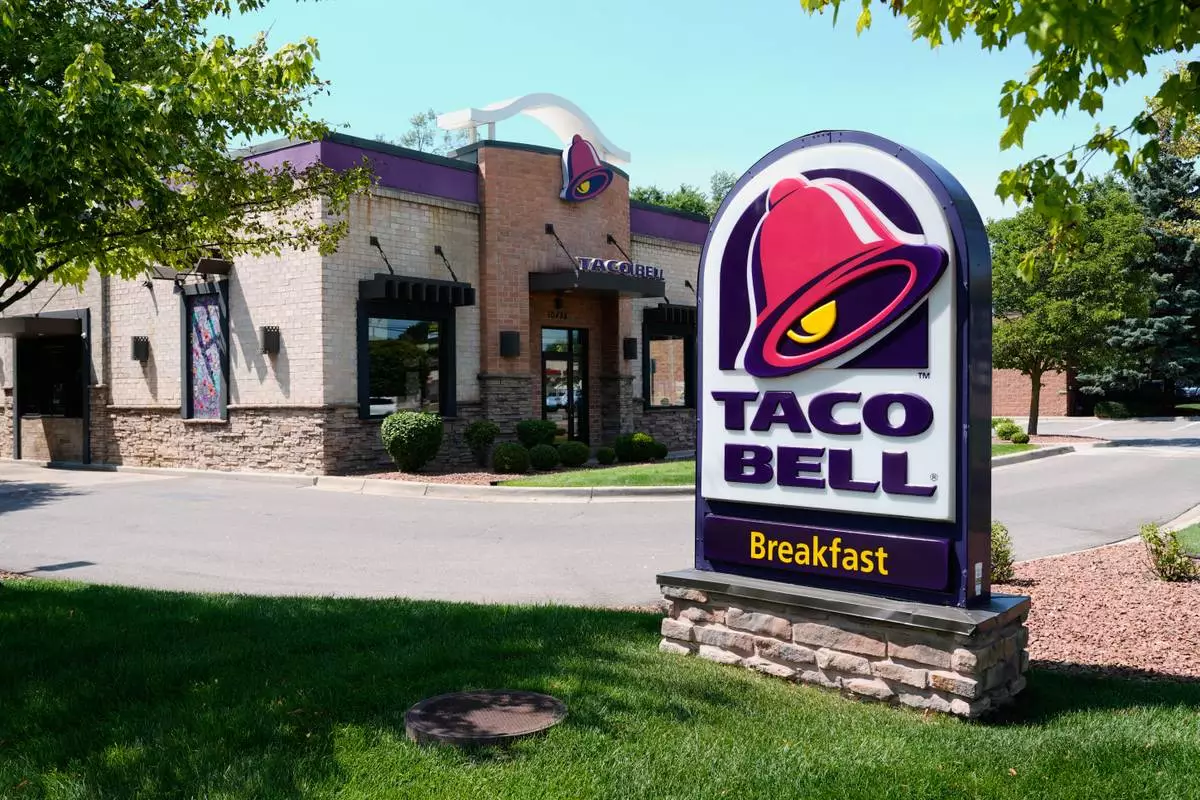
A Taco Bell fast food restaurant is shown Tuesday, July 14, 2026, in Taylor, Mich. (AP Photo/Paul Sancya)