LONDON (AP) — Brenda Fricker, who won an Academy Award for her role as Bridget Fagan Brown in the 1989 film “My Left Foot,’’ has died. She was 81.
The Irish character actor died Thursday night in Dublin after a period of ill health, her agent, Phil Belfield said in a statement.
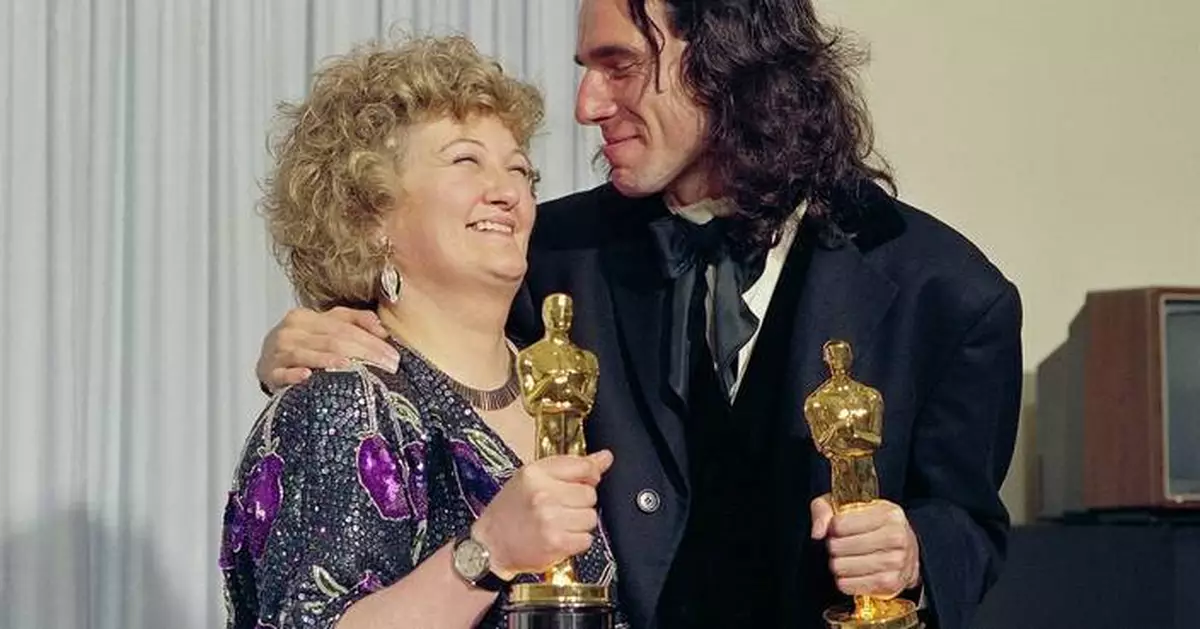
Fricker became the first Irish woman to win an Academy Award in 1990 for best supporting actress for her portrayal of the determined mother of Christy Brown, who was born with cerebral palsy and could control only his left foot. Daniel Day-Lewis, who played Christy Brown, won the award for best actor.
“We will never see her like again and the world is lesser for the lack of her,’’ Belfield said. “I was honored to know, love and work with her and she will always have a place in my heart and in the heart of so many film and TV fans the world over.”
Fricker, who appeared in more than 90 films and television shows between 1964 and 2024, was known for her role as the “pigeon lady” in the 1992 film “Home Alone 2: Lost in New York,” where she played a homeless woman who befriended Macaulay Culkin’s character in New York’s Central Park.
She also featured in the original cast of the BBC medical drama “Casualty” and appeared alongside Cate Blanchett in “Veronica Guerin,” the story of an Irish investigative journalist who was murdered in 1996.
Born in Dublin in 1945, Fricker received the city’s highest honor earlier this year when she was awarded the Freedom of the City.
In her autobiography “She Died Young: A Life in Fragments,” Fricker describes both happy childhood escapades with her sister Grania and her struggles to overcome sexual violence and mental health issues, which caused her to be institutionalized several times. Published in September 2025, the book appeared on the Irish Sunday Times bestseller list.
Simon Harris, Ireland’s deputy prime minister, said the country had lost a national treasure.
“She truly was among the greatest exports this country has ever produced and an ambassador for Irish talent on the world stage,'' he said. "Quite simply, we will never see the like of her ever again.
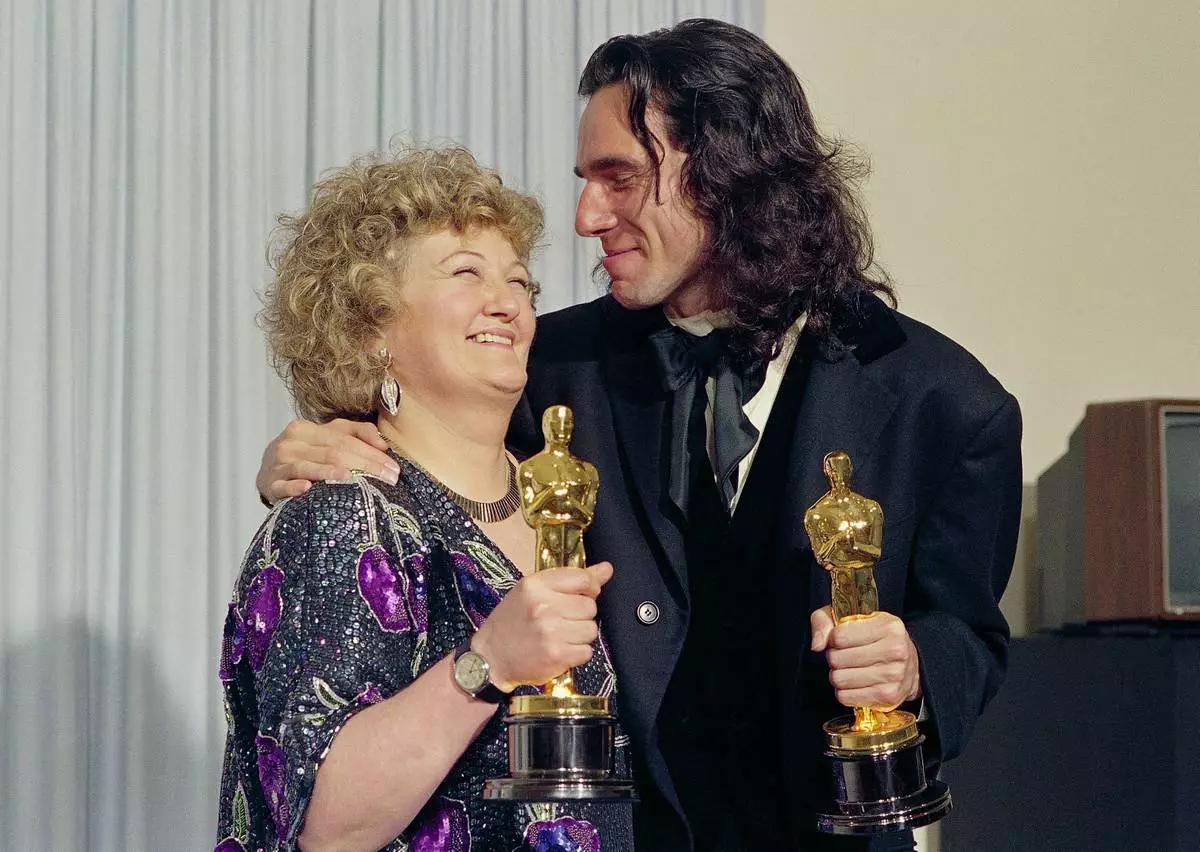
FILE - "My Left Foot" stars Brenda Fricker, winner of Oscar for best supporting actress, and Daniel Day Lewis, winner of Oscar for best actor, at the 62nd Annual Academy Awards in Los Angeles, March 26, 1990. (AP Photo/Bob Galbraith, File)
MOSCOW (AP) — Boris Nadezhdin, who criticized Moscow’s military action in Ukraine and tried to challenge President Vladimir Putin in the 2024 election, was convicted Friday of displaying “extremist symbols” — an action that will keep him out of this year's parliamentary race.
The verdict underlined the determination by authorities to stamp out any remaining sign of dissent ahead of September's vote as the fuel crisis caused by Ukrainian strikes on oil facilities across Russia threatened to erode public support for the Kremlin.
The charges against Nadezhdin, 63, were based on a 2023 online video in which he briefly showed a picture of the late opposition leader Alexei Navalny, who at that time was serving a 19-year prison sentence on charges of extremism that were widely seen as politically motivated. Navalny later died in an Arctic penal colony on Feb. 16, 2024.
Nadezhdin rejected the case against him as absurd and argued authorities were trying to keep him from campaigning in September's parliamentary vote. The court in Dolgoprudny, a town on Moscow’s northern outskirts where he lives, convicted him and ordered him to pay a fine of 1,000 rubles (about $13).
The Kremlin's main United Russia party is seeking to preserve its dominance in the lower house of parliament in a race against so-called “systemic” opposition, including the Communist Party and a couple of other parties that vote in sync with the Kremlin on key issues. The campaign comes amid signs of growing public fatigue as fuel shortages and economic pain from the Ukraine conflict increase, an environment that reduces the tolerance by the authorities for even token opposition.
In January 2024, Nadezhdin collected thousands of signatures in his run for president as he openly called for a halt to the fighting in Ukraine. But he was kept off the March 2024 ballot after Russia’s Supreme Court ruled that more than 9,000 signatures submitted by his campaign were invalid — enough to disqualify him. Putin faced only token opposition in the election and easily won a fifth term.
A veteran politician, Nadezhdin worked in the government in the 1990s when he was an adviser to Sergei Kiriyenko, now a top Putin aide. He also served as a lawmaker and more recently became a member of a municipal council, one of the few remaining liberal voices on Russia's political scene.
Last month, Nadezhdin declared his bid to run for the lower house of parliament, the State Duma, but the Justice Ministry quickly branded him a “foreign agent” — a designation that carries strong pejorative connotations and brings additional government scrutiny. It also bars him from holding public office, but he was still able to wage his symbolic campaign for a parliament seat until Friday’s verdict.
Another blow came Monday, when police detained Nadezhdin for a few hours before making the charges that were punishable by a fine or a 15-day jail term. He said he was considering going abroad but was barred from leaving Russia.
He told the court that he was too sick to serve any prison time, saying he “will just die” behind bars. “The real goal of what's going on here is to shut my mouth and prevent me from running for the State Duma,” he said.
Nadezhdin complained of feeling sick at Friday’s hearing, which was interrupted to let an ambulance team check his condition.
After the Kremlin sent troops into Ukraine in February 2022, authorities ramped up their crackdown on dissent and free speech, relentlessly targeting rights organizations, independent media, members of civil society organizations, LGBTQ+ activists and some religious groups. Hundreds of people have been jailed and thousands of others have fled the country.
Also on Friday, Ilya Remeslo, a pro-Kremlin activist and blogger who has become a Putin critic, was arrested in St. Petersburg on charges of spreading false information about the Russian military — an accusation widely used against those who oppose the government's policies.
The state Tass news agency reported that he would be taken to Moscow to face a court hearing.
In March, Remeslo criticized the military action in Ukraine and called for Putin's resignation. Soon after, he was placed in a psychiatric clinic and spent a month there in what he cast as a punishment for his remarks.
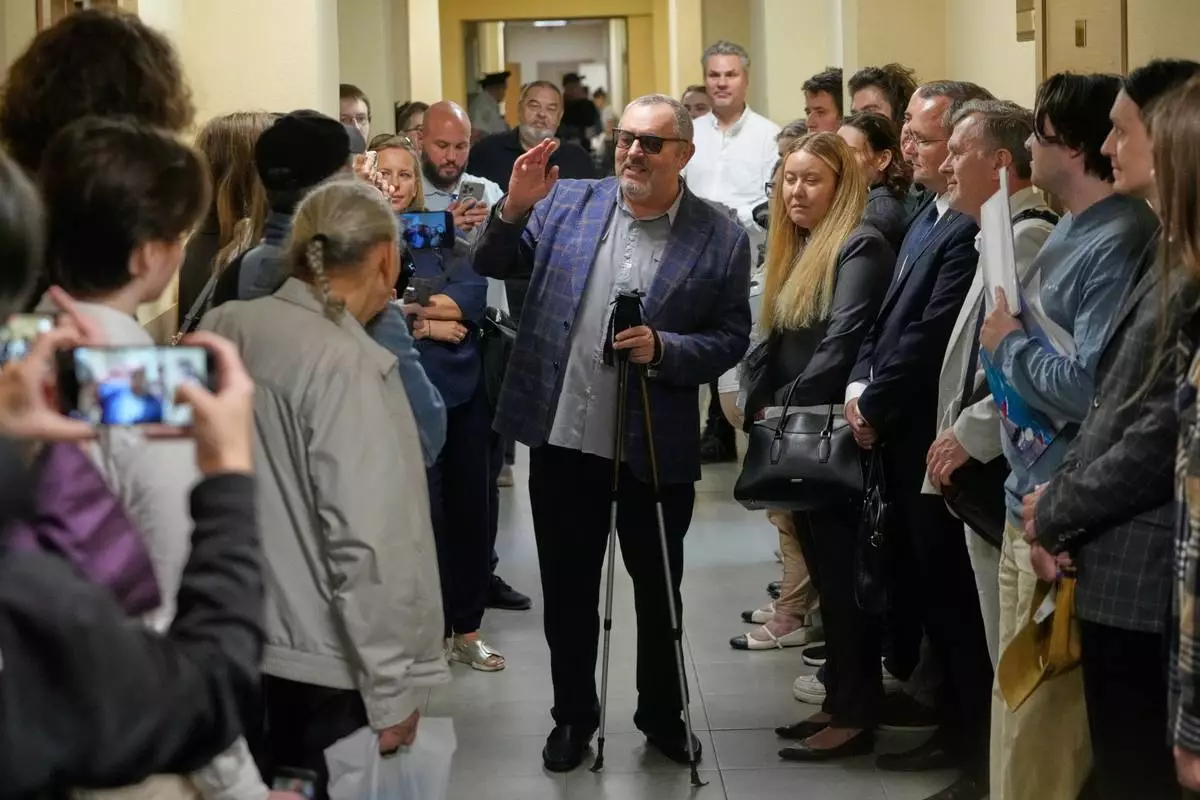
Russian politician Boris Nadezhdin, accused of displaying "extremist symbols," speaks to journalists as he arrives at the courtroom in the town of Dolgoprudny outside Moscow, Russia, Friday, July 17, 2026. (AP Photo/Pavel Bednyakov)
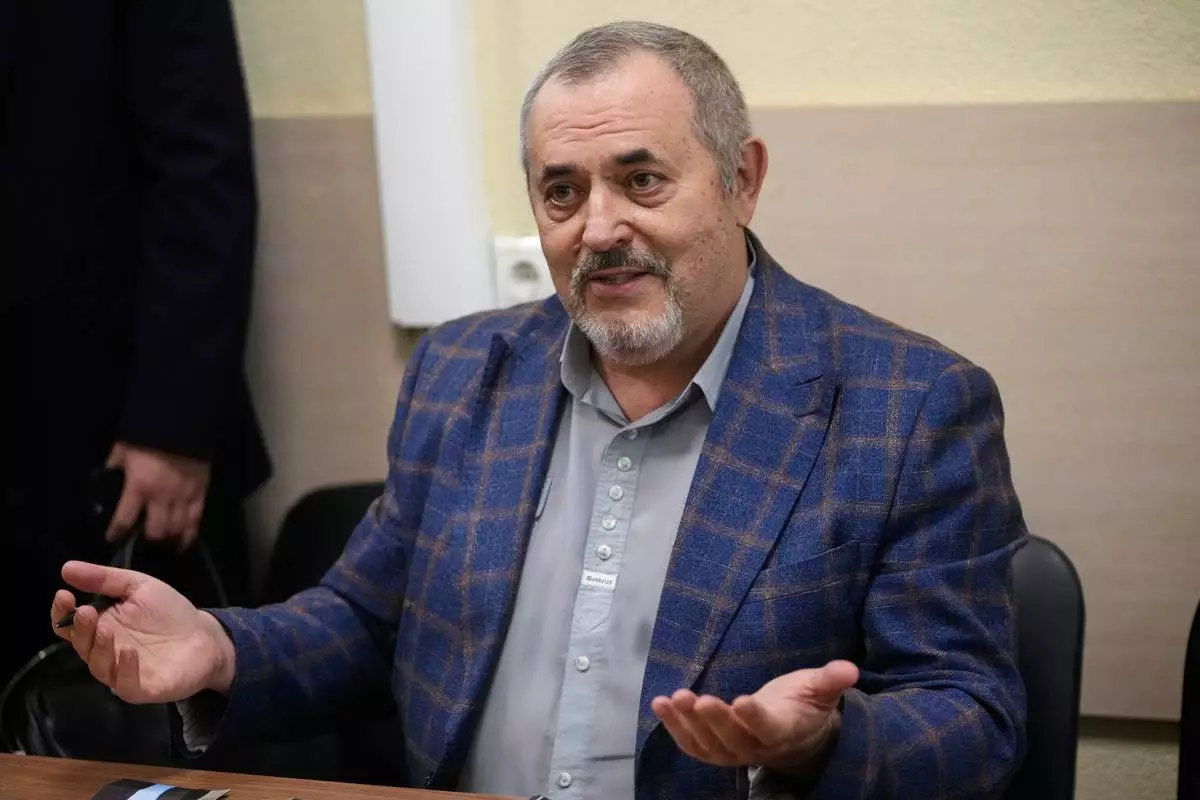
Russian politician Boris Nadezhdin, accused of displaying "extremist symbols," speaks at the courtroom in the town of Dolgoprudny outside Moscow, Russia, Friday, July 17, 2026. (AP Photo/Pavel Bednyakov)
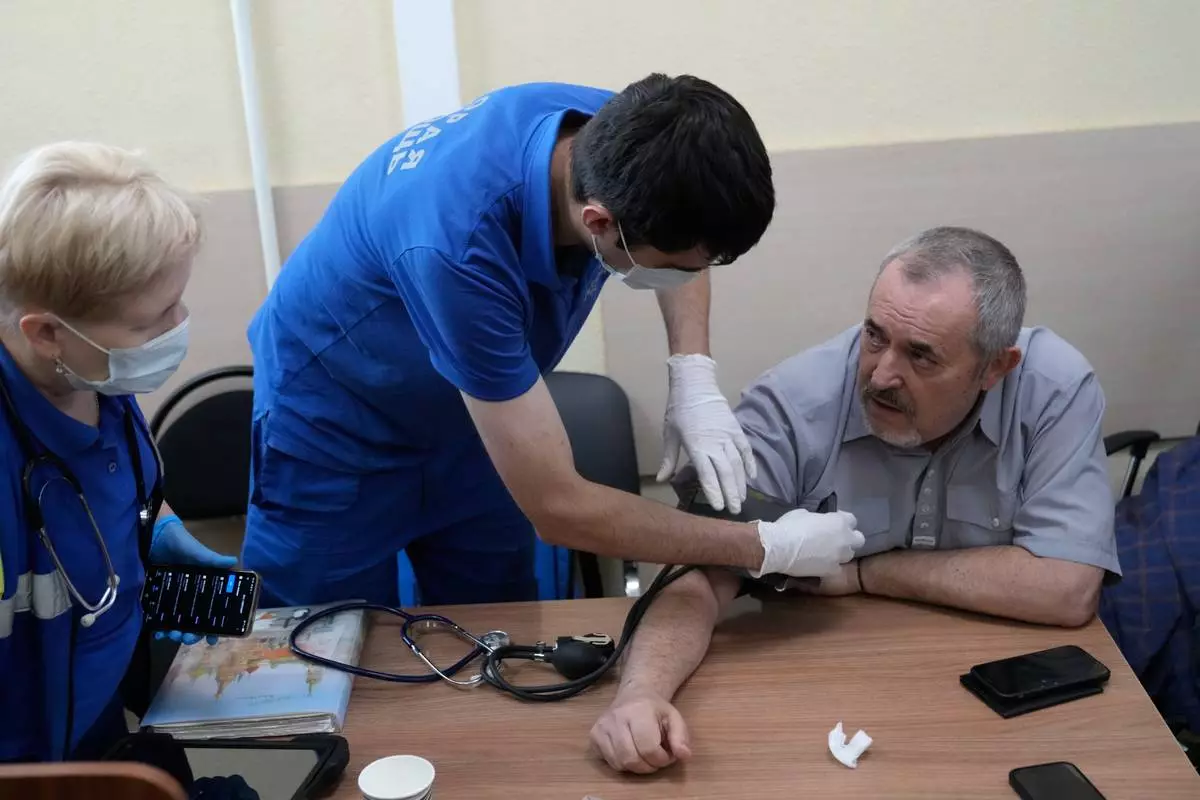
Emergency medical personnel provide care to Russian politician Boris Nadezhdin, right, accused of displaying "extremist symbols," during a break at a courtroom in the town of Dolgoprudny, outside Moscow, Russia, Friday, July 17, 2026. (AP Photo/Pavel Bednyakov)
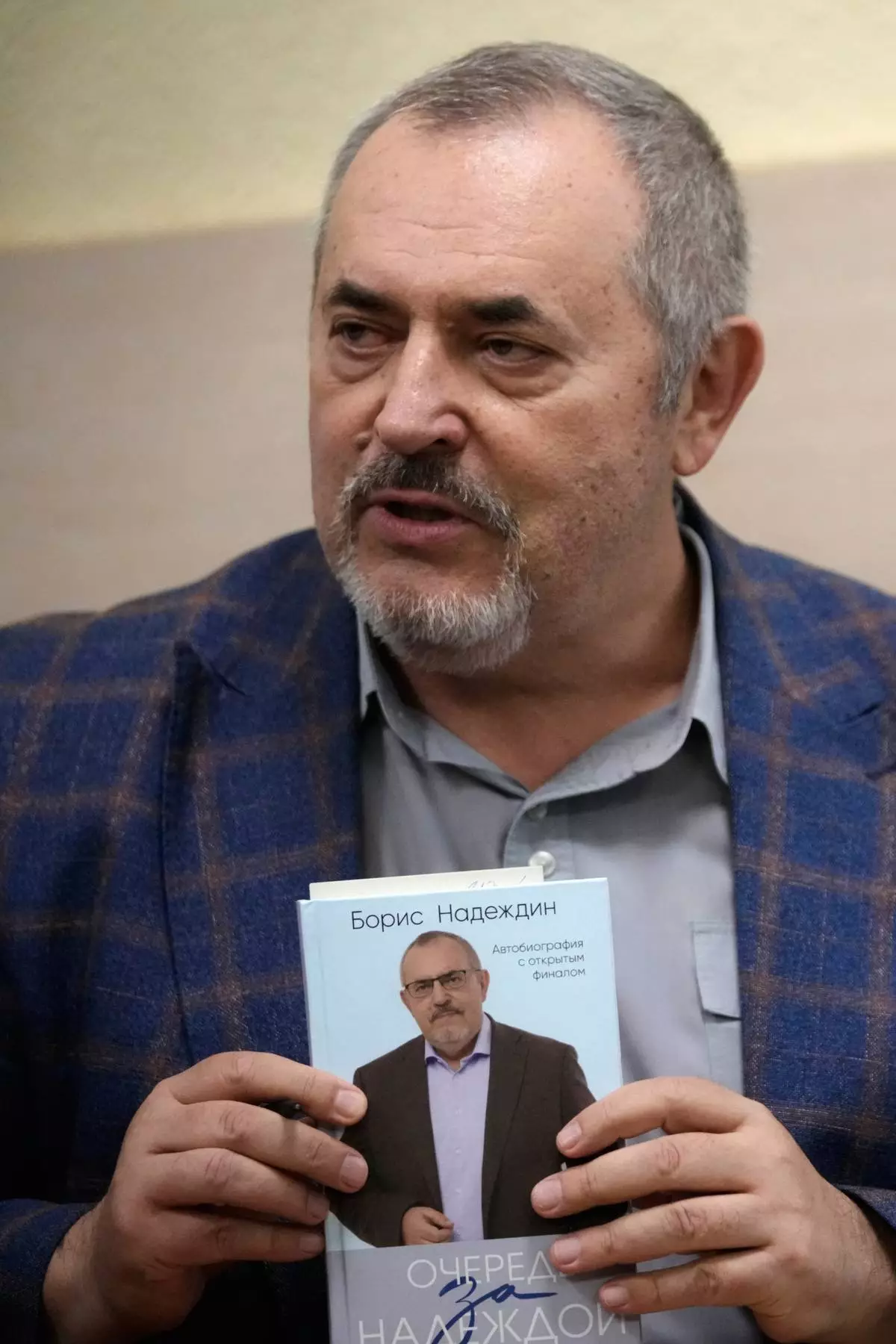
Russian politician Boris Nadezhdin, accused of displaying "extremist symbols," holds an autobiography while attending a court session in the town of Dolgoprudny outside Moscow, Russia, Friday, July 17, 2026. (AP Photo/Pavel Bednyakov)
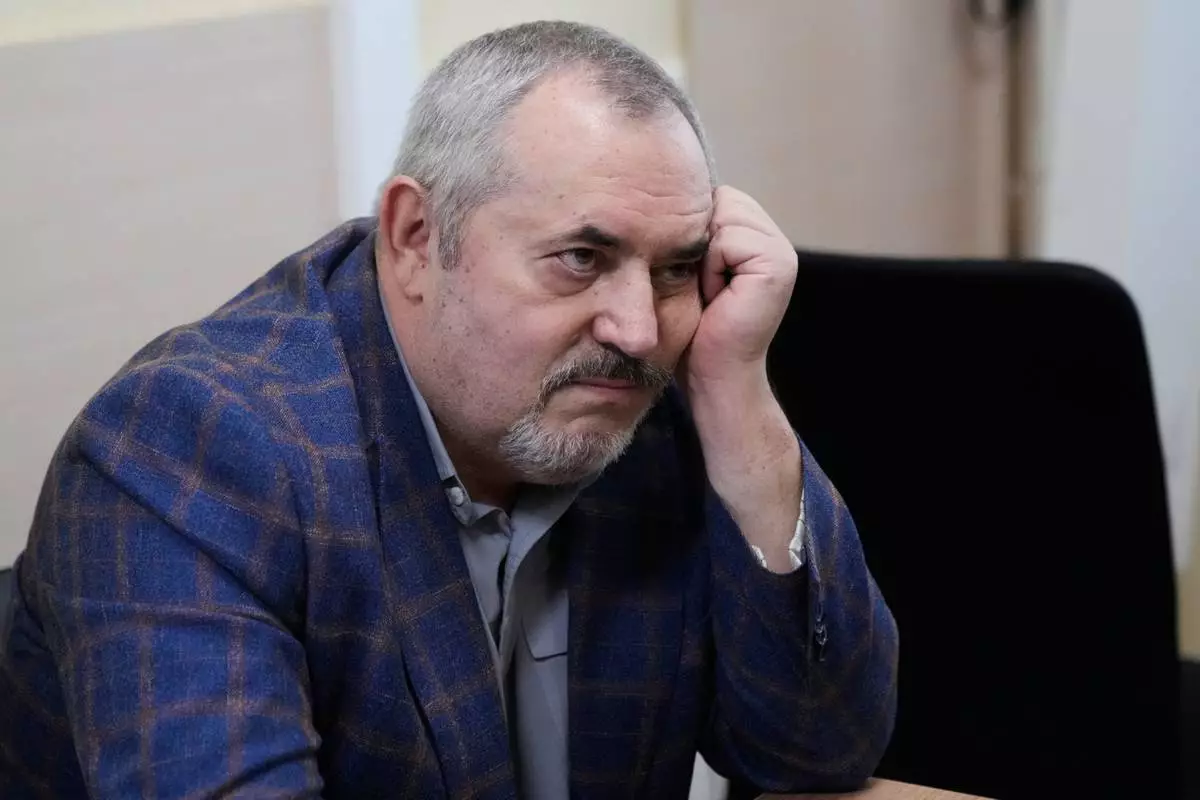
Russian politician Boris Nadezhdin, accused of displaying "extremist symbols," attends a court session in the town of Dolgoprudny outside Moscow, Russia, Friday, July 17, 2026. (AP Photo/Pavel Bednyakov)