Skip to Content Facebook Feature Image

A Putin critic is convicted on charges that will keep him from campaigning for Russia's parliament

News

A Putin critic is convicted on charges that will keep him from campaigning for Russia's parliament
News

News

A Putin critic is convicted on charges that will keep him from campaigning for Russia's parliament

2026-07-18 02:26 Last Updated At:02:30

MOSCOW (AP) — Boris Nadezhdin, who criticized Moscow’s military action in Ukraine and tried to challenge President Vladimir Putin in the 2024 election, was convicted Friday of displaying “extremist symbols” — an action that will keep him out of this year's parliamentary race.

The verdict underlined the determination by authorities to stamp out any remaining sign of dissent ahead of September's vote as the fuel crisis caused by Ukrainian strikes on oil facilities across Russia threatened to erode public support for the Kremlin.

More Images
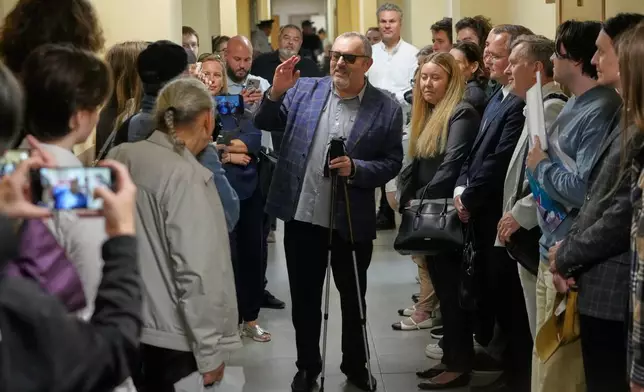
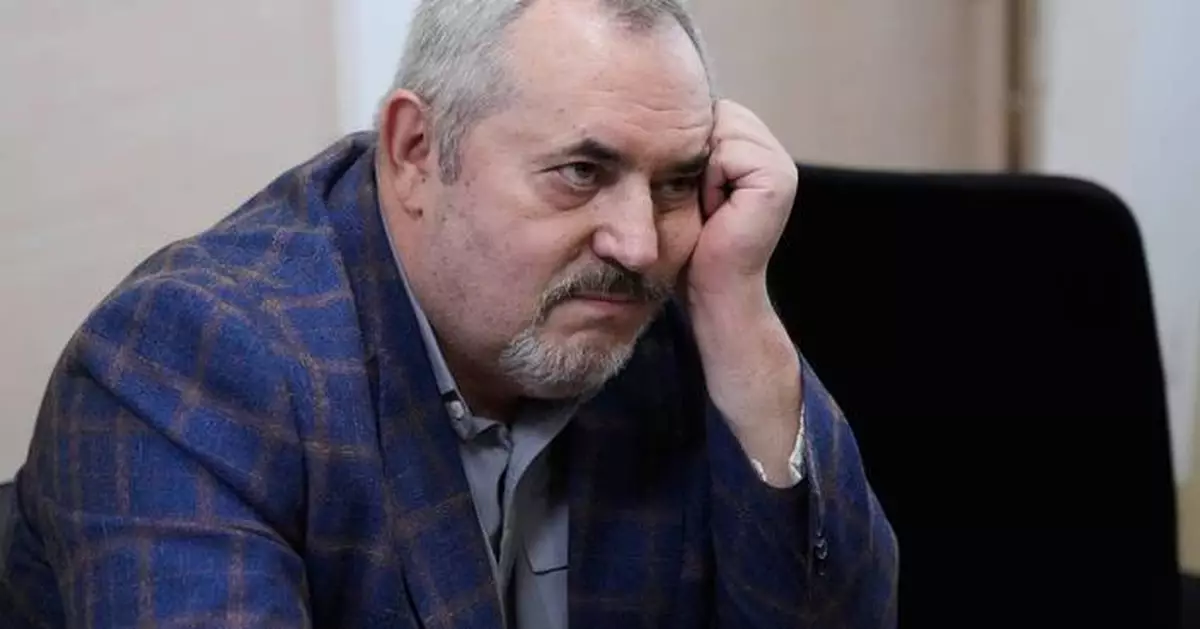
Russian politician Boris Nadezhdin, accused of displaying "extremist symbols," attends a court session in the town of Dolgoprudny outside Moscow, Russia, Friday, July 17, 2026. (AP Photo/Pavel Bednyakov)
Russian politician Boris Nadezhdin, accused of displaying "extremist symbols," attends a court session in the town of Dolgoprudny outside Moscow, Russia, Friday, July 17, 2026. (AP Photo/Pavel Bednyakov)
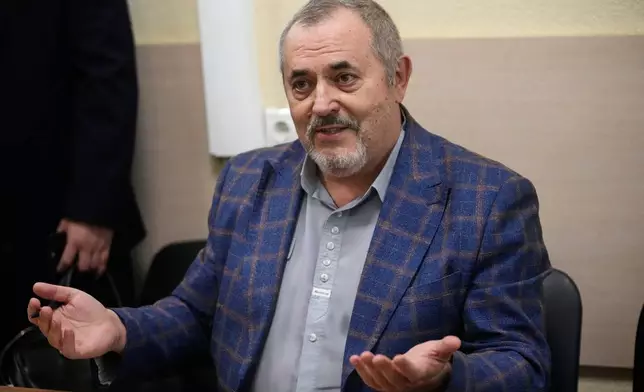
Russian politician Boris Nadezhdin, accused of displaying "extremist symbols," speaks to journalists as he arrives at the courtroom in the town of Dolgoprudny outside Moscow, Russia, Friday, July 17, 2026. (AP Photo/Pavel Bednyakov)

Russian politician Boris Nadezhdin, accused of displaying "extremist symbols," speaks to journalists as he arrives at the courtroom in the town of Dolgoprudny outside Moscow, Russia, Friday, July 17, 2026. (AP Photo/Pavel Bednyakov)

Russian politician Boris Nadezhdin, accused of displaying "extremist symbols," speaks at the courtroom in the town of Dolgoprudny outside Moscow, Russia, Friday, July 17, 2026. (AP Photo/Pavel Bednyakov)

Russian politician Boris Nadezhdin, accused of displaying "extremist symbols," speaks at the courtroom in the town of Dolgoprudny outside Moscow, Russia, Friday, July 17, 2026. (AP Photo/Pavel Bednyakov)

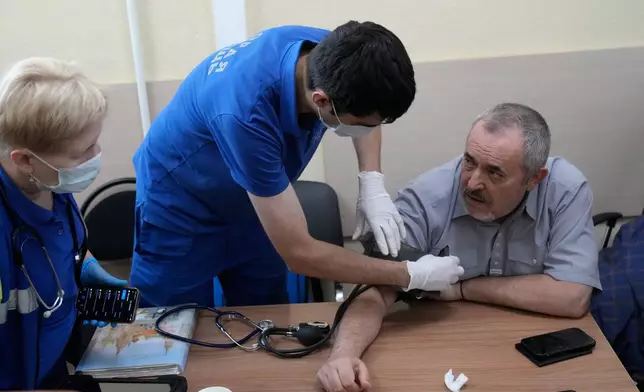
Emergency medical personnel provide care to Russian politician Boris Nadezhdin, right, accused of displaying "extremist symbols," during a break at a courtroom in the town of Dolgoprudny, outside Moscow, Russia, Friday, July 17, 2026. (AP Photo/Pavel Bednyakov)
Emergency medical personnel provide care to Russian politician Boris Nadezhdin, right, accused of displaying "extremist symbols," during a break at a courtroom in the town of Dolgoprudny, outside Moscow, Russia, Friday, July 17, 2026. (AP Photo/Pavel Bednyakov)

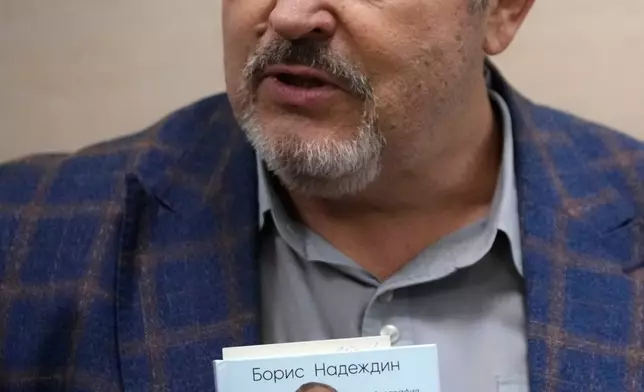
Russian politician Boris Nadezhdin, accused of displaying "extremist symbols," holds an autobiography while attending a court session in the town of Dolgoprudny outside Moscow, Russia, Friday, July 17, 2026. (AP Photo/Pavel Bednyakov)
Russian politician Boris Nadezhdin, accused of displaying "extremist symbols," holds an autobiography while attending a court session in the town of Dolgoprudny outside Moscow, Russia, Friday, July 17, 2026. (AP Photo/Pavel Bednyakov)

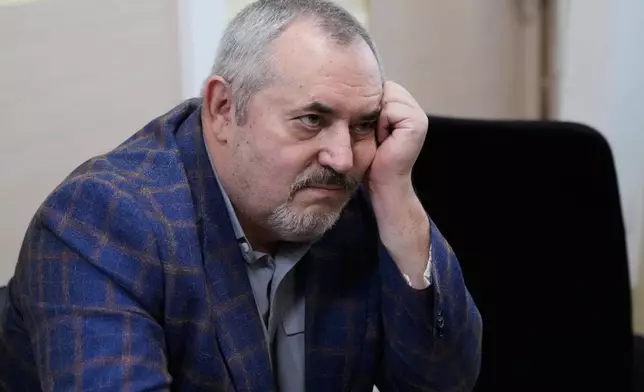
Russian politician Boris Nadezhdin, accused of displaying "extremist symbols," attends a court session in the town of Dolgoprudny outside Moscow, Russia, Friday, July 17, 2026. (AP Photo/Pavel Bednyakov)

Russian politician Boris Nadezhdin, accused of displaying "extremist symbols," attends a court session in the town of Dolgoprudny outside Moscow, Russia, Friday, July 17, 2026. (AP Photo/Pavel Bednyakov)

The charges against Nadezhdin, 63, were based on a 2023 online video in which he briefly showed a picture of the late opposition leader Alexei Navalny, who at that time was serving a 19-year prison sentence on charges of extremism that were widely seen as politically motivated. Navalny later died in an Arctic penal colony on Feb. 16, 2024.

Nadezhdin rejected the case against him as absurd and argued authorities were trying to keep him from campaigning in September's parliamentary vote. The court in Dolgoprudny, a town on Moscow’s northern outskirts where he lives, convicted him and ordered him to pay a fine of 1,000 rubles (about $13).

The Kremlin's main United Russia party is seeking to preserve its dominance in the lower house of parliament in a race against so-called “systemic” opposition, including the Communist Party and a couple of other parties that vote in sync with the Kremlin on key issues. The campaign comes amid signs of growing public fatigue as fuel shortages and economic pain from the Ukraine conflict increase, an environment that reduces the tolerance by the authorities for even token opposition.

In January 2024, Nadezhdin collected thousands of signatures in his run for president as he openly called for a halt to the fighting in Ukraine. But he was kept off the March 2024 ballot after Russia’s Supreme Court ruled that more than 9,000 signatures submitted by his campaign were invalid — enough to disqualify him. Putin faced only token opposition in the election and easily won a fifth term.

A veteran politician, Nadezhdin worked in the government in the 1990s when he was an adviser to Sergei Kiriyenko, now a top Putin aide. He also served as a lawmaker and more recently became a member of a municipal council, one of the few remaining liberal voices on Russia's political scene.

Last month, Nadezhdin declared his bid to run for the lower house of parliament, the State Duma, but the Justice Ministry quickly branded him a “foreign agent” — a designation that carries strong pejorative connotations and brings additional government scrutiny. It also bars him from holding public office, but he was still able to wage his symbolic campaign for a parliament seat until Friday’s verdict.

Another blow came Monday, when police detained Nadezhdin for a few hours before making the charges that were punishable by a fine or a 15-day jail term. He said he was considering going abroad but was barred from leaving Russia.

He told the court that he was too sick to serve any prison time, saying he “will just die” behind bars. “The real goal of what's going on here is to shut my mouth and prevent me from running for the State Duma,” he said.

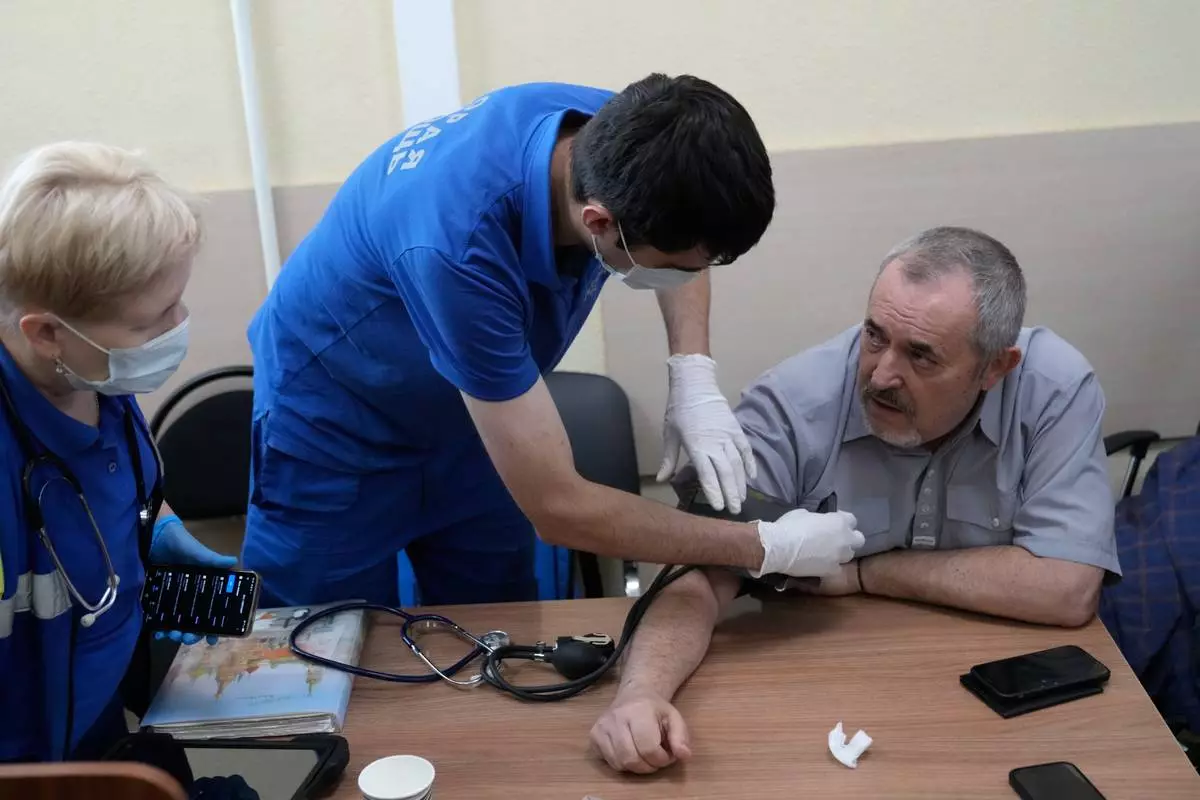
Nadezhdin complained of feeling sick at Friday’s hearing, which was interrupted to let an ambulance team check his condition.

After the Kremlin sent troops into Ukraine in February 2022, authorities ramped up their crackdown on dissent and free speech, relentlessly targeting rights organizations, independent media, members of civil society organizations, LGBTQ+ activists and some religious groups. Hundreds of people have been jailed and thousands of others have fled the country.

Also on Friday, Ilya Remeslo, a pro-Kremlin activist and blogger who has become a Putin critic, was arrested in St. Petersburg on charges of spreading false information about the Russian military — an accusation widely used against those who oppose the government's policies.

Remeslo was escorted to Moscow, where a court ordered him to remain in jail for two months pending an official investigation, according to his lawyer, Sergei Badamshin.

The charges against Remeslo were based on his criticism of the military action in Ukraine and calls for Putin’s resignation that he made in March. Soon after, he was placed in a psychiatric clinic and spent a month there in what he cast as a punishment for his remarks.
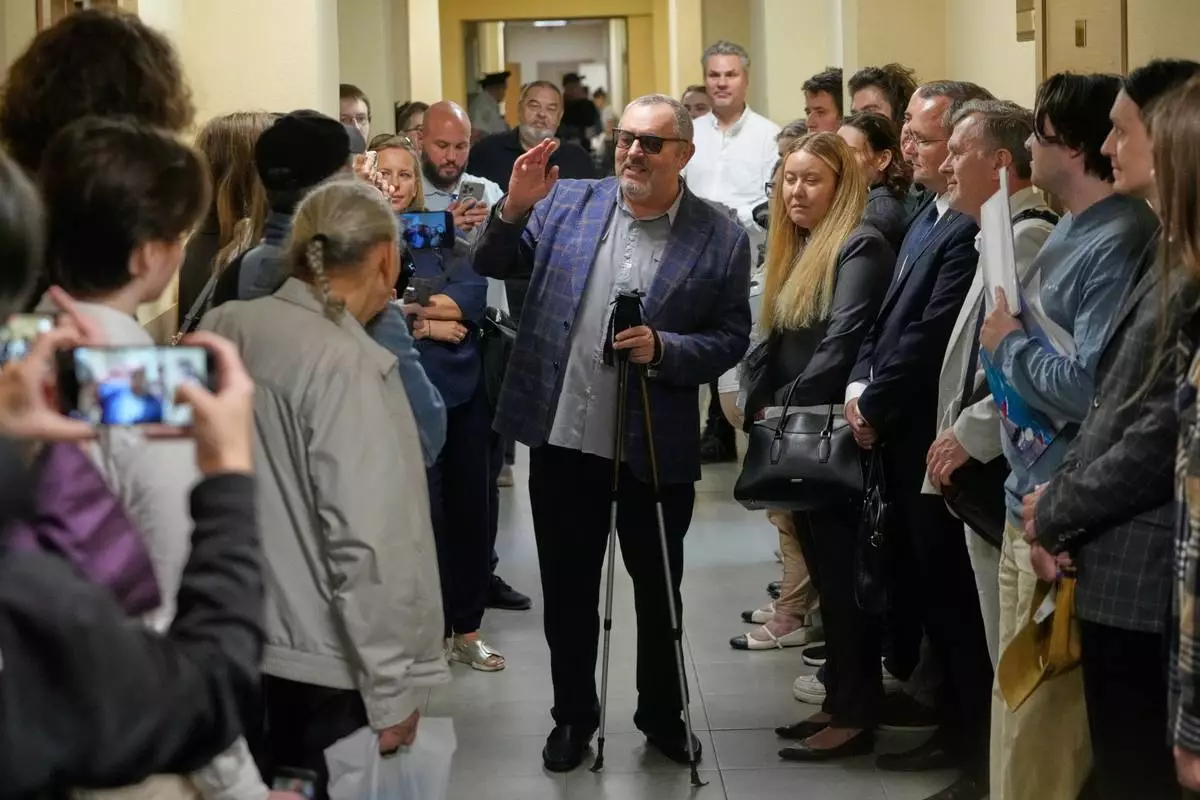
Russian politician Boris Nadezhdin, accused of displaying "extremist symbols," attends a court session in the town of Dolgoprudny outside Moscow, Russia, Friday, July 17, 2026. (AP Photo/Pavel Bednyakov)
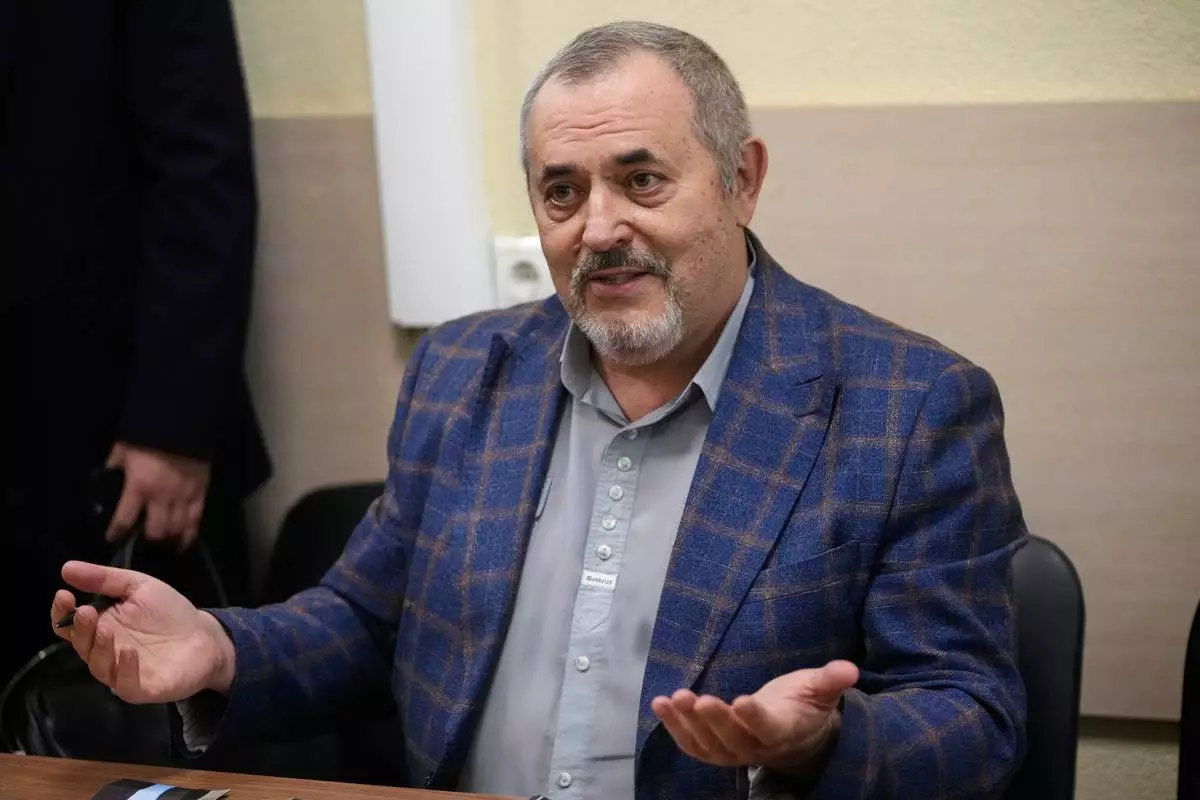
Russian politician Boris Nadezhdin, accused of displaying "extremist symbols," attends a court session in the town of Dolgoprudny outside Moscow, Russia, Friday, July 17, 2026. (AP Photo/Pavel Bednyakov)
Russian politician Boris Nadezhdin, accused of displaying "extremist symbols," speaks to journalists as he arrives at the courtroom in the town of Dolgoprudny outside Moscow, Russia, Friday, July 17, 2026. (AP Photo/Pavel Bednyakov)

Russian politician Boris Nadezhdin, accused of displaying "extremist symbols," speaks to journalists as he arrives at the courtroom in the town of Dolgoprudny outside Moscow, Russia, Friday, July 17, 2026. (AP Photo/Pavel Bednyakov)

Russian politician Boris Nadezhdin, accused of displaying "extremist symbols," speaks at the courtroom in the town of Dolgoprudny outside Moscow, Russia, Friday, July 17, 2026. (AP Photo/Pavel Bednyakov)

Russian politician Boris Nadezhdin, accused of displaying "extremist symbols," speaks at the courtroom in the town of Dolgoprudny outside Moscow, Russia, Friday, July 17, 2026. (AP Photo/Pavel Bednyakov)

Emergency medical personnel provide care to Russian politician Boris Nadezhdin, right, accused of displaying "extremist symbols," during a break at a courtroom in the town of Dolgoprudny, outside Moscow, Russia, Friday, July 17, 2026. (AP Photo/Pavel Bednyakov)
Emergency medical personnel provide care to Russian politician Boris Nadezhdin, right, accused of displaying "extremist symbols," during a break at a courtroom in the town of Dolgoprudny, outside Moscow, Russia, Friday, July 17, 2026. (AP Photo/Pavel Bednyakov)

Russian politician Boris Nadezhdin, accused of displaying "extremist symbols," holds an autobiography while attending a court session in the town of Dolgoprudny outside Moscow, Russia, Friday, July 17, 2026. (AP Photo/Pavel Bednyakov)
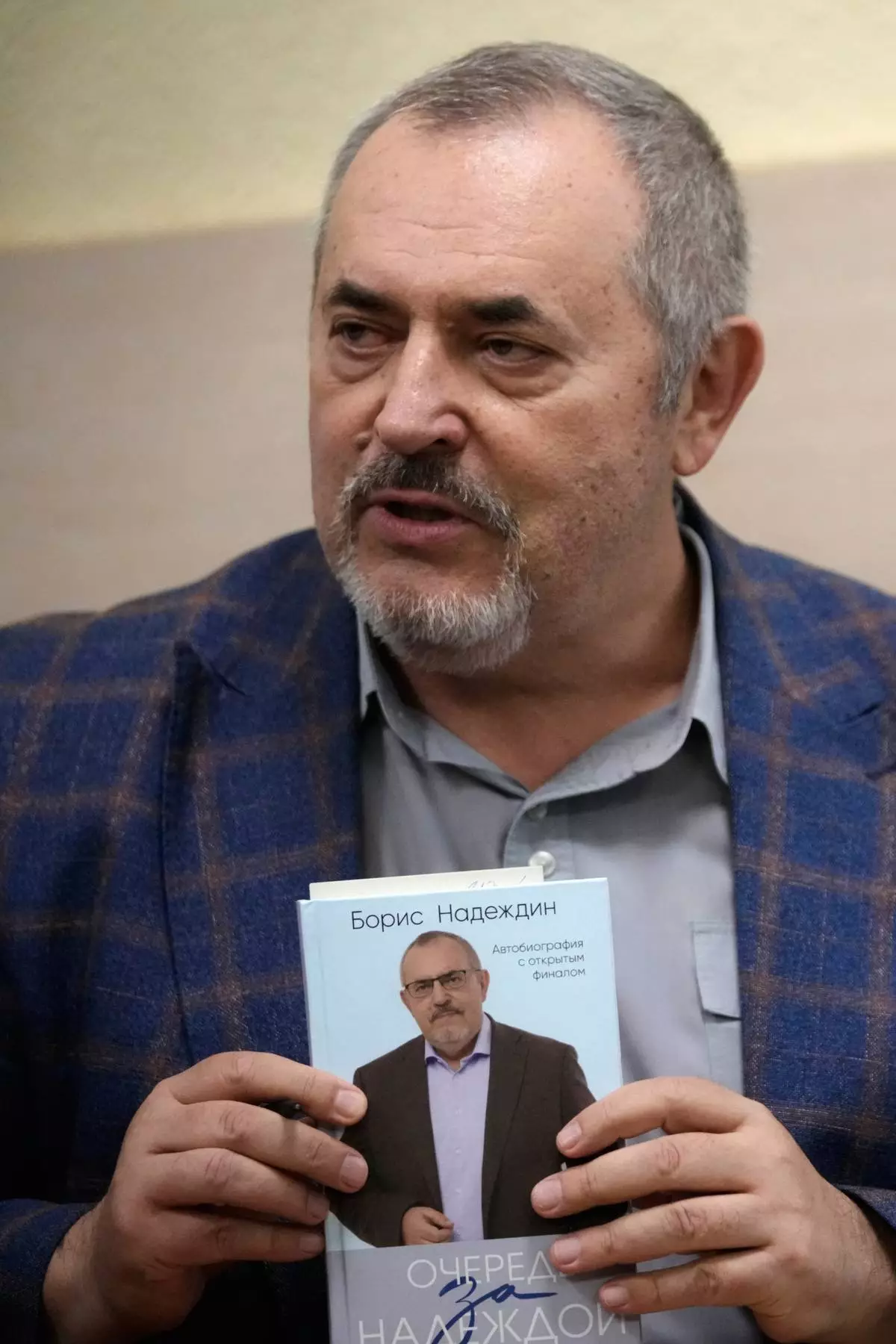
Russian politician Boris Nadezhdin, accused of displaying "extremist symbols," holds an autobiography while attending a court session in the town of Dolgoprudny outside Moscow, Russia, Friday, July 17, 2026. (AP Photo/Pavel Bednyakov)


Russian politician Boris Nadezhdin, accused of displaying "extremist symbols," attends a court session in the town of Dolgoprudny outside Moscow, Russia, Friday, July 17, 2026. (AP Photo/Pavel Bednyakov)
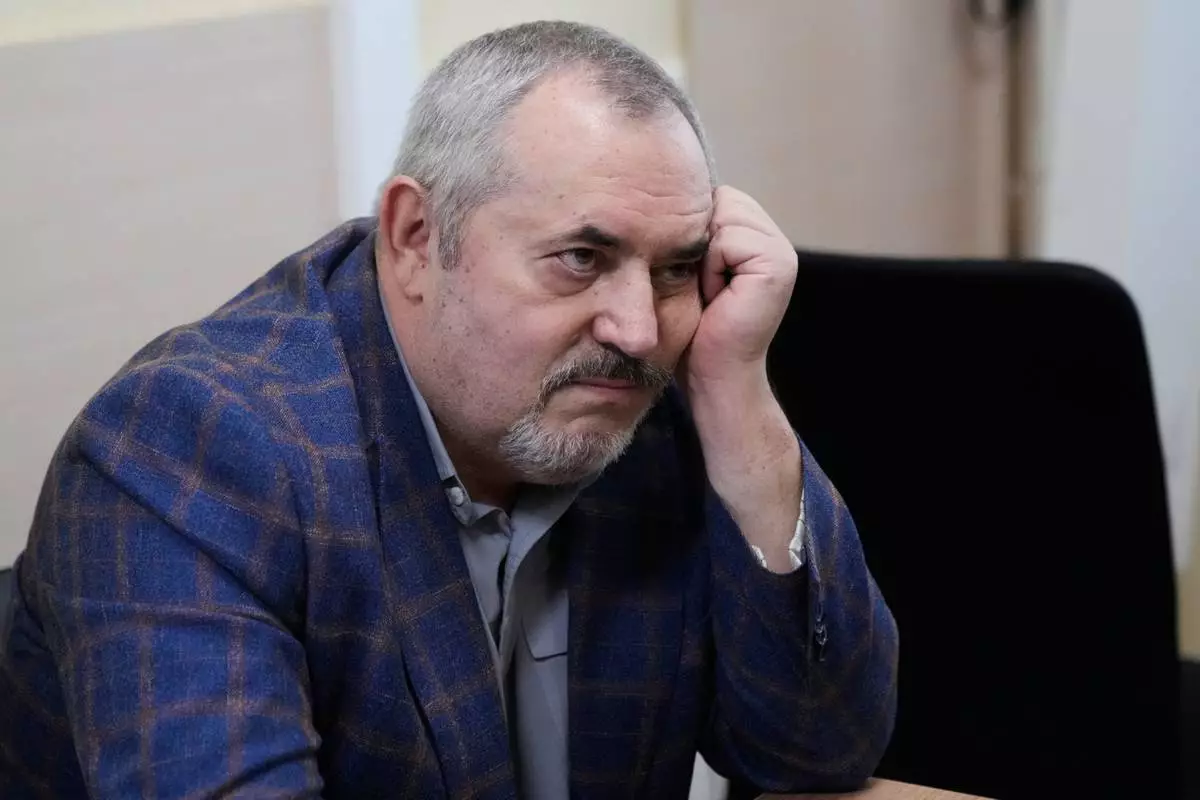
Russian politician Boris Nadezhdin, accused of displaying "extremist symbols," attends a court session in the town of Dolgoprudny outside Moscow, Russia, Friday, July 17, 2026. (AP Photo/Pavel Bednyakov)

Congressional Democrats said they are investigating the Trump administration's efforts to deport military service members and their families after The Associated Press found more than 50 active-duty troops’ spouses and parents have been detained by immigration authorities.

In a letter sent Sunday evening to the Department of Homeland Security, the Defense Department and the Department of Veterans Affairs, the Democrats said they will investigate whether the Pentagon and DHS are coordinating to deport military service members and their families.

“These efforts imperil military readiness, weaken service members’ morale, and betray America’s promises to the people who put their lives on the line for our nation,” according to the letter, which was signed by more than 60 lawmakers and provided to the AP.

The Pentagon declined to comment, stating it would “reply directly to the authors of the letter.”

DHS told the AP that it values service members' contributions and “U.S. military service alone does not automatically grant lawful immigration status, or exempt aliens from the consequences of violating U.S. immigration laws.”

The VA did not immediately respond to a request for comment.

In their letter, the Democrats provided an extensive list of questions to the agencies. They said the apparent collaboration between DHS and the military to deport troops’ families “raises both ethical and legal concerns.”

“Donald Trump is breaking our country’s promises to service members by tearing apart dozens of military families who were promised immigration protections,” Massachusetts Sen. Elizabeth Warren said. “That’s just plain cruel, and it’s hurting our military readiness and morale.”

Warren's office is leading the probe alongside Connecticut Sen. Richard Blumenthal, Illinois Sen. Tammy Duckworth and several House Democrats.

The AP investigation found President Donald Trump's administration has rolled back protections for military families and departed from longstanding bipartisan consensus to carry out its mass deportation agenda. Service members have been forced to take leave of their duties, including delaying deployment, to care for their children after their spouses were detained.

The lawmakers pressed the administration on why military recruiters are still promoting immigration protections.

Citing the AP's reporting, the lawmakers urged the Trump administration to restore policies that had previously shielded military service members' families from immigration enforcement while allowing them to adjust their legal status.

“This report is appalling and shows the unbelievable cruelty at the center of the Trump immigration agenda,” said Blumenthal, the ranking Democrat on the Senate Committee on Veterans' Affairs. “We will be demanding answers and accountability.”

The Republican chairs of the armed services and veterans’ affairs committees, Mississippi Sen. Roger Wicker and Kansas Sen. Jerry Moran, did not respond to requests for comment.

Last week, Trump established the Military Spouse Commission, chaired by Defense Secretary Pete Hegseth’s wife, Jennifer Rauchet, to develop policies and recommendations for improving life for troops' spouses.

“Military spouses are intrinsically linked to the good order, readiness, and retention of our military,” Trump stated in a letter published in the Federal Register on Aug. 6. “Their support and contributions to our Armed Forces are crucial to mission success.”

The White House did not respond to a request for comment.

The Defense Department said in a December letter to Democratic lawmakers, obtained by the AP, that it had not implemented any recent policy changes for noncitizen family members in the military and has not conducted analysis on how deportations impact troop readiness and morale.

Danitza James, president of Repatriate Our Patriots, an organization providing support to military families and veterans facing deportation, said troops are being betrayed.

“Our military service members are the ones that sign on the dotted line to go and defend our country and maybe not come back,” James said. “They trust our government to take care of their families, and they’re not doing that.”

Brook is a corps member for The Associated Press/Report for America Statehouse News Initiative. Report for America is a nonprofit national service program that places journalists in local newsrooms to report on undercovered issues.

Air Force Tech. Sgt. Wendy Gbeve, not pictured, shows pictures of her parents in her home in Marysville, Calif., on Thursday, July 23, 2026. (AP Photo/Haven Daley)

Air Force Tech. Sgt. Wendy Gbeve, not pictured, shows pictures of her parents in her home in Marysville, Calif., on Thursday, July 23, 2026. (AP Photo/Haven Daley)

Army Staff Sgt. Alexis Jaramillo shows photos of his wife, Maisa Lopes Eliaser, a Brazilian national who is detained by ICE, near the South Louisiana ICE Processing Center where she is currently held, in Basile, La., Sunday, Aug. 2, 2026. (AP Photo/Joseph Vidrine)

Army Staff Sgt. Alexis Jaramillo shows photos of his wife, Maisa Lopes Eliaser, a Brazilian national who is detained by ICE, near the South Louisiana ICE Processing Center where she is currently held, in Basile, La., Sunday, Aug. 2, 2026. (AP Photo/Joseph Vidrine)

Army Staff Sgt. Alexis Jaramillo poses with a photo of his wife, Maisa Lopes Eliaser, a Brazilian national who is being detained by ICE, before visiting her at the South Louisiana ICE Processing Center in Basile, La., Sunday, Aug. 2, 2026. (AP Photo/Joseph Vidrine)

Army Staff Sgt. Alexis Jaramillo poses with a photo of his wife, Maisa Lopes Eliaser, a Brazilian national who is being detained by ICE, before visiting her at the South Louisiana ICE Processing Center in Basile, La., Sunday, Aug. 2, 2026. (AP Photo/Joseph Vidrine)

Recommended Articles