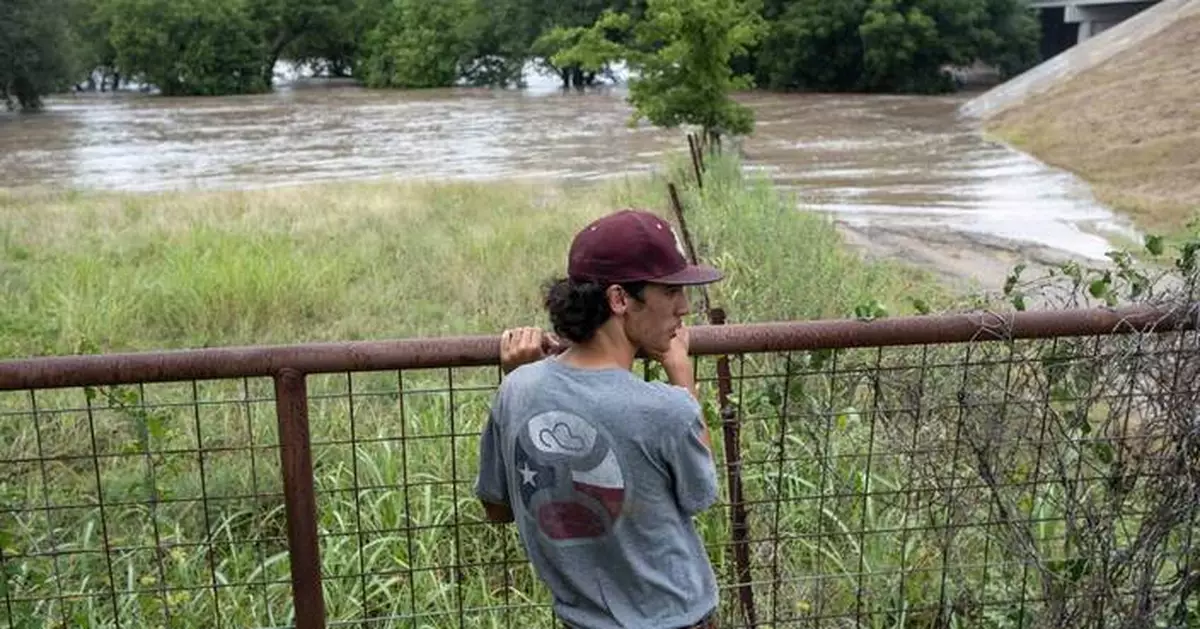
WASHINGTON (AP) — Long before sunrise in Texas, a shallow spot of the Guadalupe River rose above the height of a two-story house in just five hours on Thursday, sending a rush of water through a region still weary from last summer's fatal flash floods.
The dangerous flooding for a second consecutive year set off dozens of high-water rescues, washed out roads and killed at least one person, authorities said. Relentless downpours served as another frightening reminder of the flood-prone Texas Hill Country, following what experts say was fueled this time by the right mix of air and lots available moisture.
“Last year, it was one big wave that came through. And it wiped everything out, and then it receded, and then we could deal with the damage. This time, we’re on day three of heavy rain and everything keeps continuing to rise, and it’s expected to rain today and tonight,” said Suzanne Sutphin Gschwind of Kerrville, where some of the worst flooding took place.
Hot weather over the middle of the continental United States ensured storms that formed would move slowly, and rounds of rain over roughly the last three days at times reached several inches an hour. The flooding is “about as bad as it gets” — conditions that are typically rare, said Bob Oravec, a meteorologist with the National Weather Service.
“Obviously, something like this doesn’t occur every year, but it has occurred over two years in a row and it has occurred over a region that is prone to flash flooding by its topography,” Oravec said.
Nearly 1 trillion gallons of water fell on the three hardest-hit counties in Texas over three days — Uvalde County alone got more rain in that period than California has seen over the last month, according to Ryan Maue, former chief scientist at the National Oceanic and Atmospheric Association.
Flooding over the Fourth of July weekend last year killed more than 100 people, including roughly two dozen children and camp counselors at Camp Mystic, a now-shuttered Christian camp for girls. These storms dumped rain on a wider area, overlapping with some of the places where floodwaters overturned cars, ripped down trees and sent rescuers hustling to save lives last July.
A local official in Travis County, which includes Austin, said people were trapped on barn roofs and in trees. Texas Gov. Greg Abbott said drones and helicopters were airborne for rescues.
"We are looking at every square inch of the entire area for anybody who may be stranded anywhere. And there will be help coming very rapidly to whoever may be displaced, wherever they are,” Abbott said.
The rain hit Texas Hill Country, a part of central and south Texas with steep terrain. Shallow soil covers limestone hills that have been soaked for days. Instead of the land absorbing the water, it shoots into rivers with steep banks.
That causes water to rise fast, a dangerous scenario that catches people by surprise.
When rivers rise so fast “it’s almost like a river tsunami,” said Tyler Roys, a senior meteorologist with the forecasting company AccuWeather. These conditions are so deadly because water is heavy and moves quickly. Just one cubic foot of water — imagine a box a bit larger than the size of a basketball — weighs about 62 pounds (28 kilograms).
Compared to last year's flood, the rain fell hard, but in some places it wasn't quite as intense and rivers in many places didn't rise quite as quickly, Texas State Climatologist John Nielsen-Gammon said. Plus, the previous days of rain previewed the flood threat.
“This one is producing greater overall precipitation totals, but it is mostly doing it with lower rain rates. They are still fairly high, but they aren't as high as they were last year," he said.
While swollen from rainfall, so far Guadalupe River levels have largely remained below record levels, some of which were reached during last year’s deadly floods. The river did surpass last year's mark at the small community of Comfort, rising to 37 feet (11.3 meters) early Thursday, a mark 1.5 feet (0.5 meters) higher than it reached last year. At its height then, water weighing as much as the Empire State Building flowed downstream roughly every minute.
The river's record at this spot is 42.3 feet (12.9 meters) set in 1869.
It is difficult, especially as storms are happening, to know whether climate change has made the event more likely or worse.
Oravec said that the conditions that created this storm — hot air that steers and slows storms — have long occurred, but that climate change could make these conditions more common. A warmer atmosphere also has the potential to hold more moisture and heavier rains.
Last year's flooding did raise awareness of the dangers floods create, especially when they occur at night, Oravec said.
“I think overall it has been a good forecast. The effects are catastrophic, but the signal was there for potential heavy rainfall,” he said.
Associated Press writers Christopher L. Keller in Albuquerque, New Mexico, Claudia Lauer in Philadelphia and Kathy McCormack in Concord, New Hampshire, contributed.
The Associated Press receives support from the Walton Family Foundation for coverage of water and environmental policy. The AP is solely responsible for all content. For all of AP’s environmental coverage, visit https://apnews.com/hub/climate-and-environment
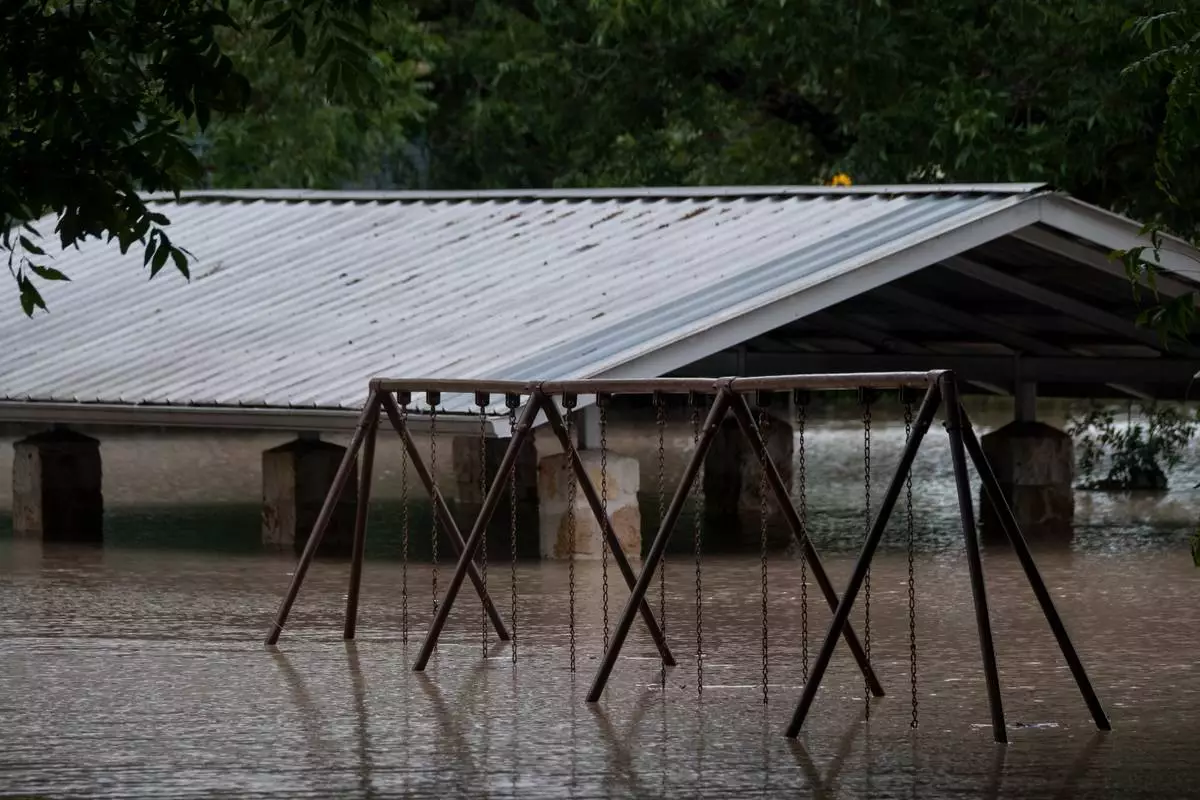
Water along the Pedernales River floods the Gillespie County Safety Rest Area on Thursday, July 16, 2026, in Stonewall, Texas. (AP Photo/Joel Angel Juarez)
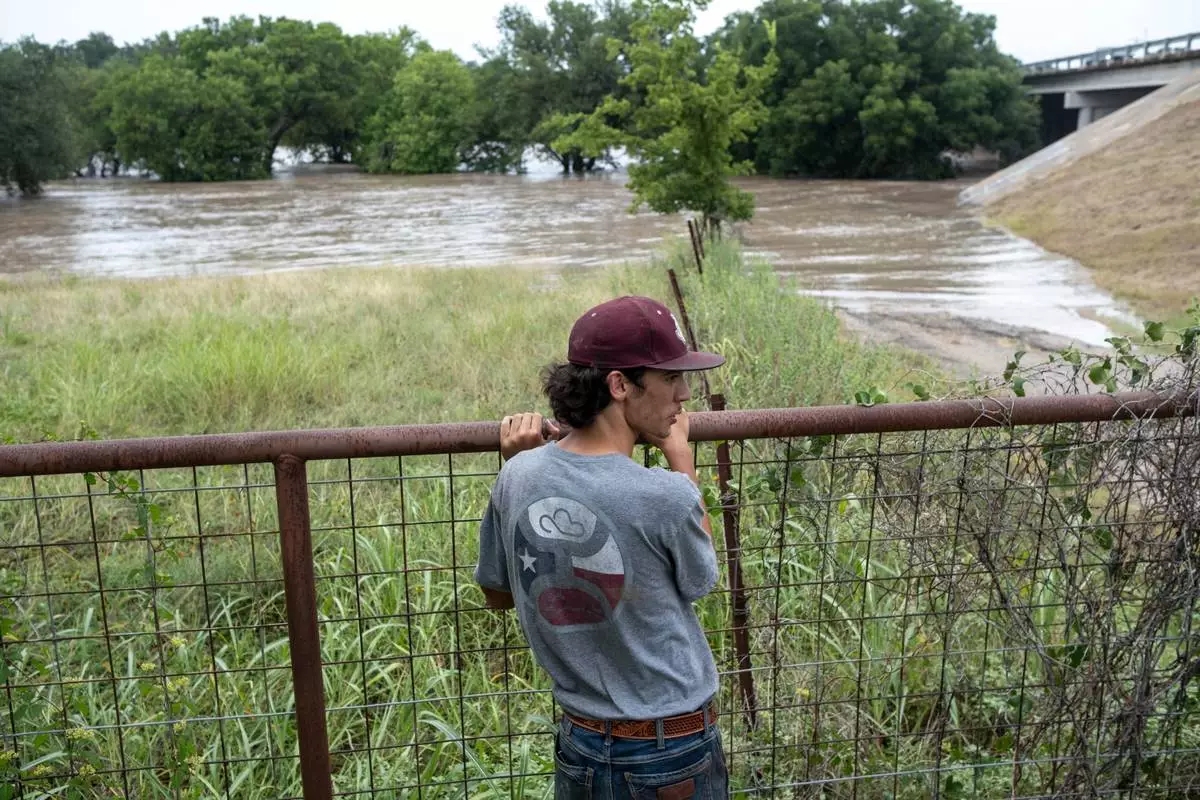
Hugh Ghormley watches as water moves along the Pedernales River at the Blanco County Fair and Rodeo on Thursday, July 16, 2026, in Johnson City, Texas. (AP Photo/Joel Angel Juarez)
DUBAI, United Arab Emirates (AP) — The United States intensified its strikes against Iran on Thursday, hitting targets farther north and firing into a ship the U.S. accused of trying to break its naval blockade on the Islamic Republic. Iran retaliated by launching missiles and drones at U.S. allies in the region, and warned its attacks may escalate.
The interim ceasefire agreed to last month has collapsed, and the region has endured days of back-and-forth attacks by the U.S. and Iran as they battle for control of the Strait of Hormuz. Iranian officials say U.S. strikes have killed more than 35 people and wounded over 300 others.
For the first time in this latest round of violence, strikes also reached into areas around Iran’s capital, Tehran, showing a widening set of targets for the Americans. The U.S. launched a second wave of strikes late Thursday, saying it was aiming to “further degrade” Iran's military capabilities.
When the U.S. and Israel launched the war on Iran on Feb. 28, Tehran effectively closed the strait to shipping traffic, a move that sent the price of oil soaring and gave Iran major leverage in negotiations.
Col. Ebrahim Zolfaghari, a spokesperson for the Iranian military’s Khatam al-Anbiya Central Headquarters, threatened that Iran could launch widespread attacks on “all the infrastructure in the region” if the U.S. acts on President Donald Trump 's repeated warnings that America could hit Iranian bridges and power plants.
“Under no circumstances and in no way will we allow America, as a foreign and extraregional country, to interfere in the Strait of Hormuz,” he added. “This is Iran’s invincible red line.”
Iranian state media said the U.S. strikes Thursday hit around Tehran and Semnan province, home to Iran’s ballistic missile production and space program. State media also reported strikes around the provinces of Hamedan, Hormozgan, Khuzestan, Lorestan, Markazi, and Sistan and Baluchestan, as well as on Iran’s Qeshm island, near the Strait of Hormuz.
Seven people were wounded in a U.S. strike that hit the Allah-Akbar Hill residential neighborhood in the port city of Bandar Abbas, according to Iranian state media. Two more people were wounded in a U.S. attack on the Bandar Abbas railway junction station, state media said.
And just west of Bandar Abbas, witnesses reported that two bridges were struck in a U.S. attack, killing three people and wounding nine others, state media said.
An attack on Greater Tunb Island targeted Iranian defense and missile sites, U.S. Central Command said.
Greater Tunb Island is one of three small rocky islands that sit at the confluence of the Persian Gulf and the strait. The islands — seized in 1971 by Iran from what would become the United Arab Emirates — help the Islamic Republic exert significant control over the strait.
The U.S. military also said it disabled a Curacao-flagged oil tanker as it sailed toward Iran’s main oil export terminal, firing a missile after the ship “ignored multiple warnings.”
Another American strike Wednesday targeted a barracks for Iran’s 388th Mechanized Infantry Brigade, which operates tanks and armored vehicles, in Sistan and Baluchestan province, Iranian state television reported. The report said seven were killed in the attack, including conscripts and career soldiers.
Iran retaliated Thursday with missile and drone attacks on Bahrain, Jordan and Kuwait, authorities in those countries home to U.S. forces said. There was no immediate acknowledgment of damage or casualties from the attacks.
Iraqi Prime Minister Ali al-Zaidi condemned an overnight drone attack in Iraq’s semiautonomous northern Kurdish region. The drone, which authorities said had been intercepted, came during his trip to the U.S. in which he said Iraq would work to disarm non-state armed groups, including those backed by Iran.
A drone separately targeted a tanker Thursday in the Persian Gulf off the coast of Basra in southern Iraq, the state-run INA news agency reported. No casualties were reported.
The latest round of fighting is focused on the Strait of Hormuz, as Iran attacks ships using a U.S.-controlled route through the vital waterway.
Week-to-week cargo shipments through the strait dropped by almost a quarter at the beginning of the month, according to Maritime data firm Lloyd’s List Intelligence. And that was before the recent surge in tit-for-tat attacks.
Given the risks, some oil shippers are transiting the strait with their location devices turned off, but many are just staying put, Lloyd's said Thursday. A growing amount of the region’s energy is being shipped through pipelines, but not nearly enough to offset the decline in shipping through the strait.
U.S. forces have redirected three commercial vessels trying to run the blockade, disabled one that did not comply and boarded another “to ensure full compliance," U.S. Central Command said in a post on X.
“The Strait of Hormuz and the surrounding waters remain free and open, except for vessels attempting to violate America’s steel wall blockade,” the post said.
The U.S. has threatened to reopen the strait by force, but experts say that would require a much bigger armada if not tens of thousands of ground troops.
The price for Brent crude oil, the international standard, traded above $85 a barrel on Thursday, more than 15% higher than the price before the war, but still well below the nearly $120 reached at the height of the conflict.
Rising prices pose a particular challenge to Trump and his Republican Party, which hopes to retain control of Congress in elections in November.
The U.S. reimposed a naval blockade on Iranian ports Wednesday.
“They don’t like what we’re doing, and they do want to settle. We’ll find out whether or not we settle with them, or we just finish it off,” Trump said Wednesday at the U.S. Army War College in Pennsylvania.
Pakistan’s Foreign Ministry on Thursday said efforts were still underway to bring the U.S. and Tehran to the negotiating table but acknowledged that was becoming increasingly difficult.
Trump said on social media that Tehran made a goodwill gesture by releasing an American citizen wrongly detained in Iran since 2024. He did not release further details. Human rights lawyer Jared Genser released a statement identifying the detainee as his client Dena Karari, a U.S.-Iranian citizen who runs a nonprofit and was charged with espionage.
Iran did not immediately acknowledge the release, and her case was not publicly known, as sometimes happens with detentions in the Islamic Republic.
Associated Press writers Abby Sewell in Beirut, Mae Anderson in New York and Christopher Weber in Los Angeles contributed to this report.
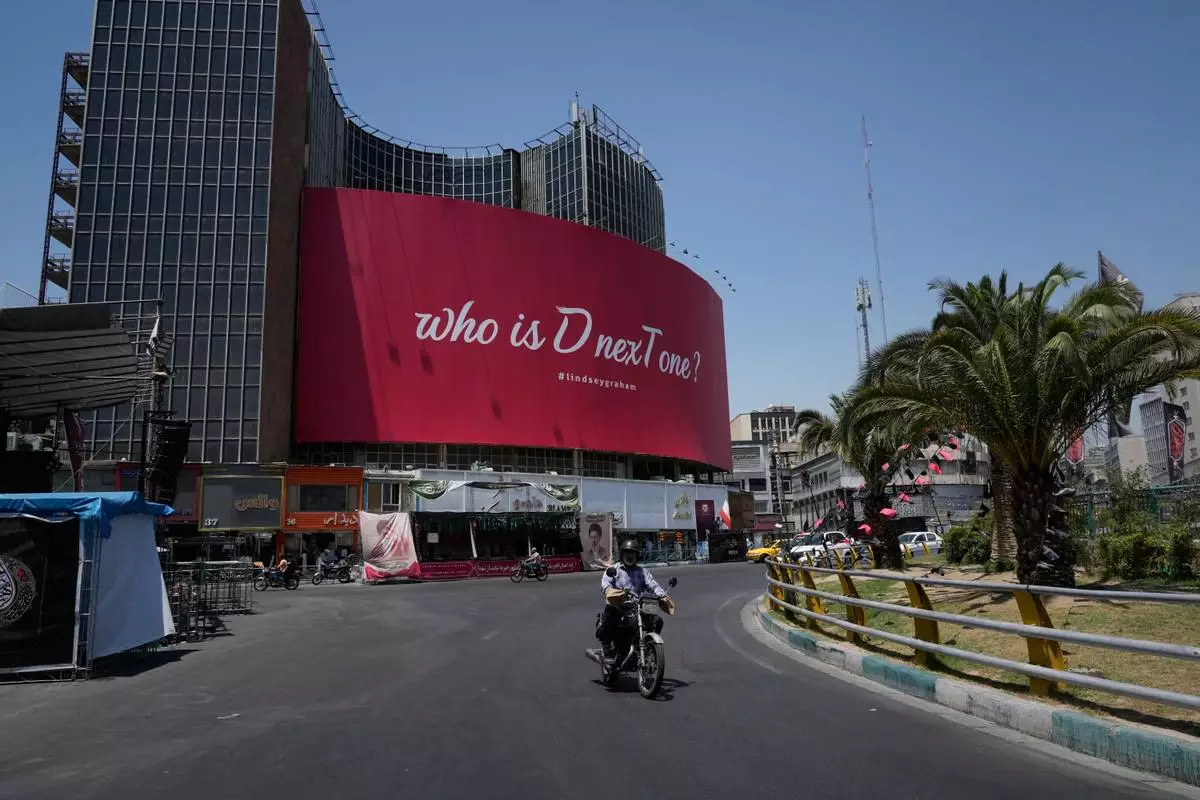
Vehicles drive by a billboard reading in English, "Who is D nexT one?" and "#lindseygraham," referring to late U.S. Sen. Lindsey Graham and using the capital letters "D" and "T" in an apparent play on the initials of U.S. President Donald Trump, in downtown Tehran, Iran, Thursday, July 16, 2026. (AP Photo/Vahid Salemi)
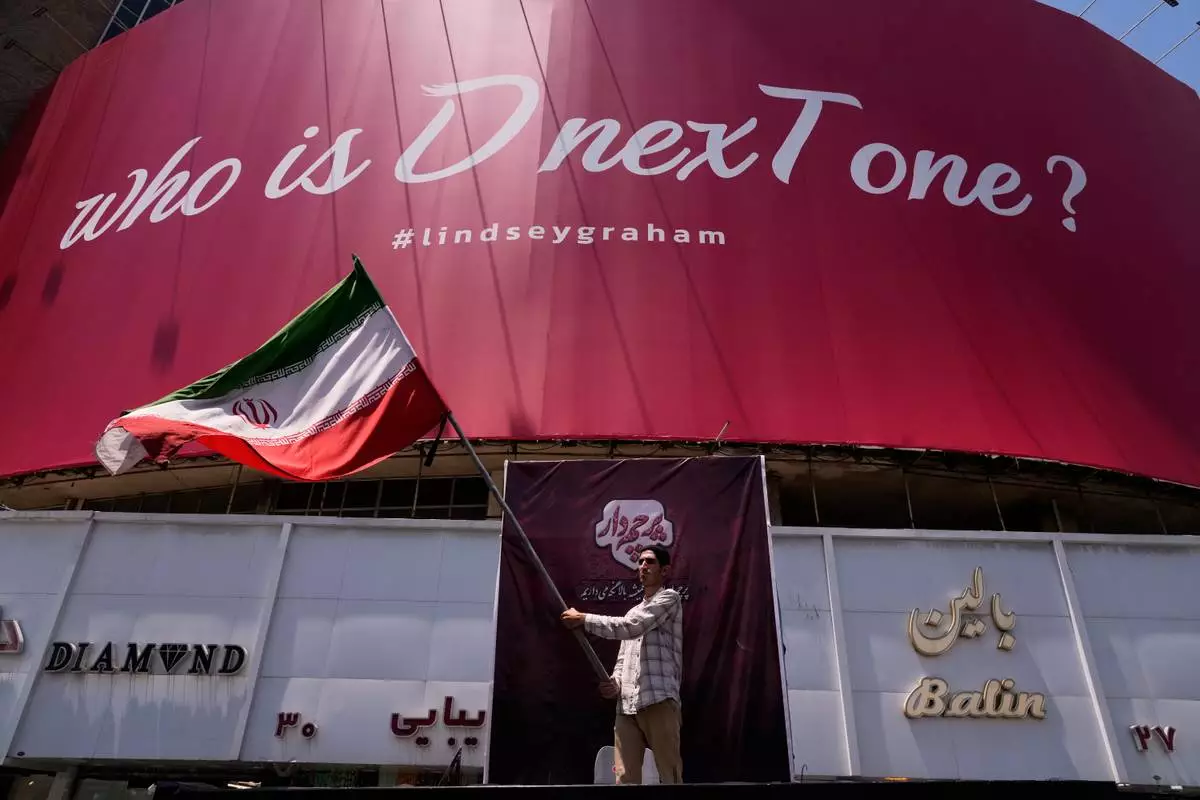
A man waves an Iranian flag beneath a billboard reading in English, "Who is D nexT one?" and "#lindseygraham," referring to late U.S. Sen. Lindsey Graham and using the capital letters "D" and "T" in an apparent play on the initials of U.S. President Donald Trump, in downtown Tehran, Iran, Thursday, July 16, 2026. (AP Photo/Vahid Salemi)
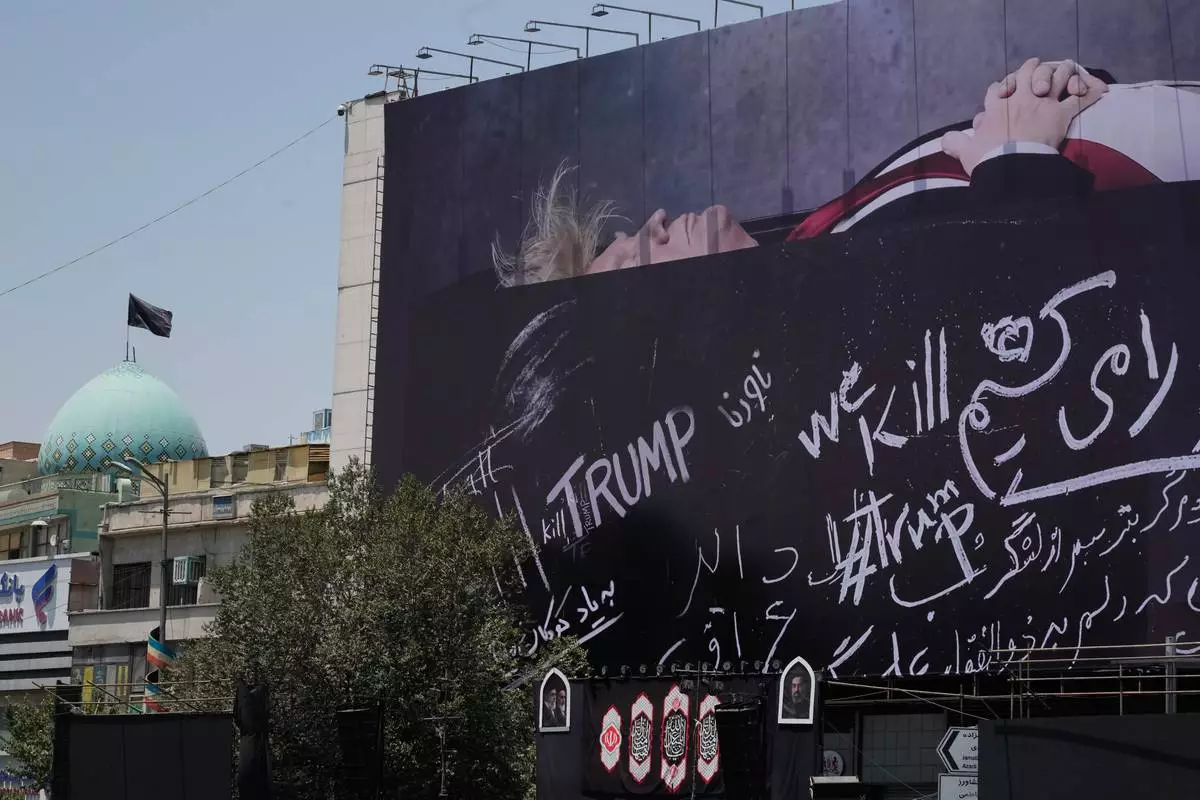
A billboard depicting U.S. President Donald Trump lying on what appears to be a coffin and bearing anti-Trump messages, including the phrase "We Kill Trump," is seen at Islamic Revolution Square in downtown Tehran, Iran, Wednesday, July 15, 2026. (AP Photo/Vahid Salemi)
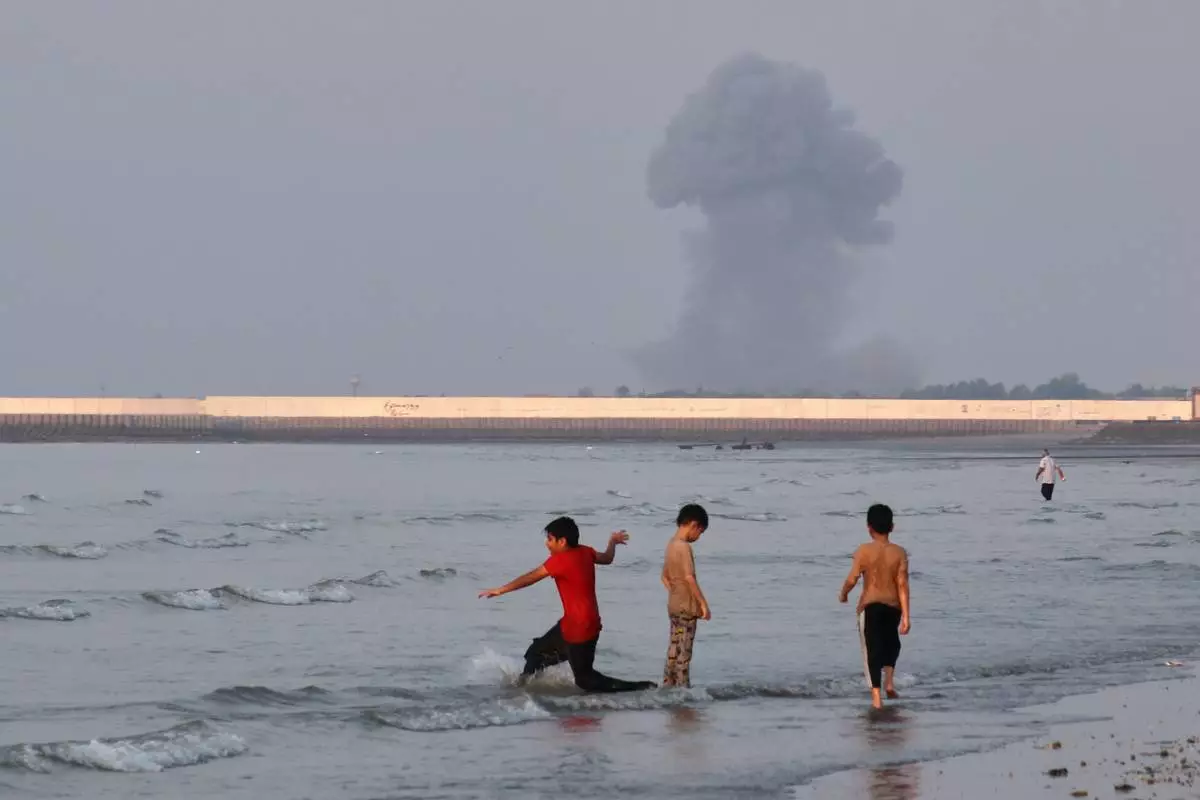
Three boys play in the shallow waters of the Strait of Hormuz, as a plume of smoke rises from an explosion in the background, off Bandar Abbas, Iran, Monday, July 13, 2026. (Razieh Poudat/ISNA via AP)