Intelligent robots showcased their rapidly evolving capabilities at a major AI conference in Shanghai, demonstrating tasks that, according to exhibitors, indicate these AI-powered machines are nearing suitability for widespread commercial use.
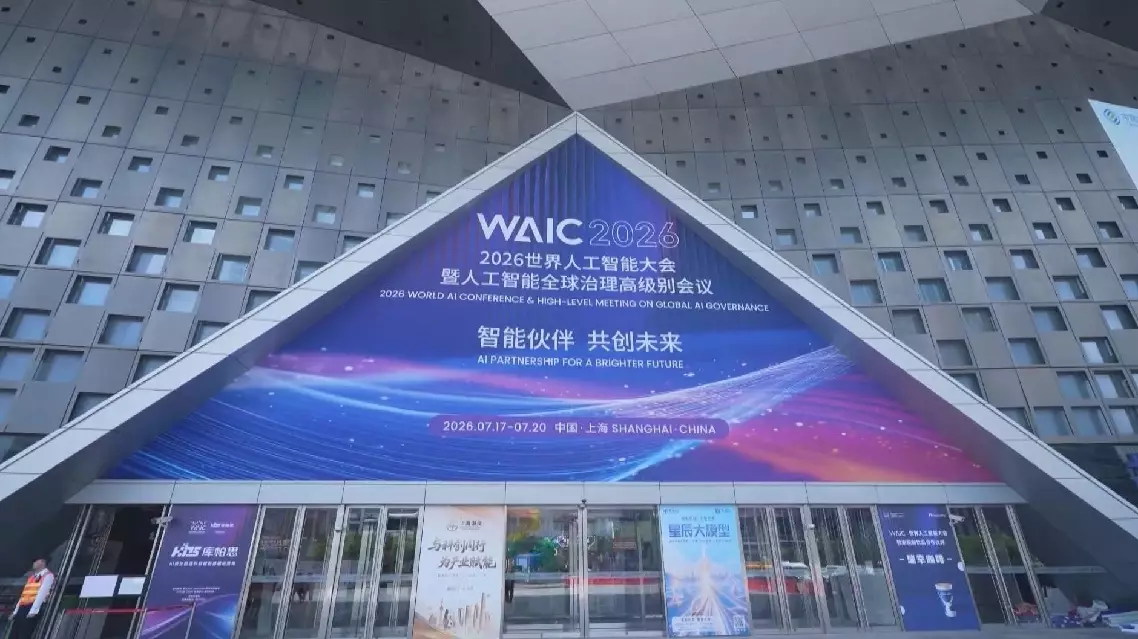
The unboxing of exhibits at the 2026 World AI Conference (WAIC) and High-Level Meeting on Global AI Governance, which kicked off Friday, diverged significantly from a typical exhibition, where staff manually carry exhibits out of shipping crates. At this event, many of the robots powered on and unboxed themselves.
The robots proved adept at helping out with everyday tasks, from using a typical camera to taking a photograph to serving as a table tennis opponent.
Many also demonstrated the kind of highly precise movements that are necessary for manufacturing and assembly tasks. In just five seconds, a robot can pick up a 5-millimeter screw and drive it into place with pinpoint accuracy, turning what used to be a manual labor task into a seamless automated process.
"We have integrated force control and multi-modal sensors, including vision systems, into these two robots. This allows us to guarantee an operational precision [with an error margin] of just 0.5 millimeters," said Zeng Lingwei, an engineer at JAKA Robotics.
While industrial embodied robots excel at high-precision manufacturing tasks, consumer-facing robots are also bringing creative, interactive surprises to the event.
"This is our Qiyuan T1, the world's first transformable personal robot. Yuanzai, transform. As you can see, it has now shifted into a dog-like form," said Li Wenzhuo, a delivery engineer at Qiyuan Robotics, triggering the robot with a voice command.
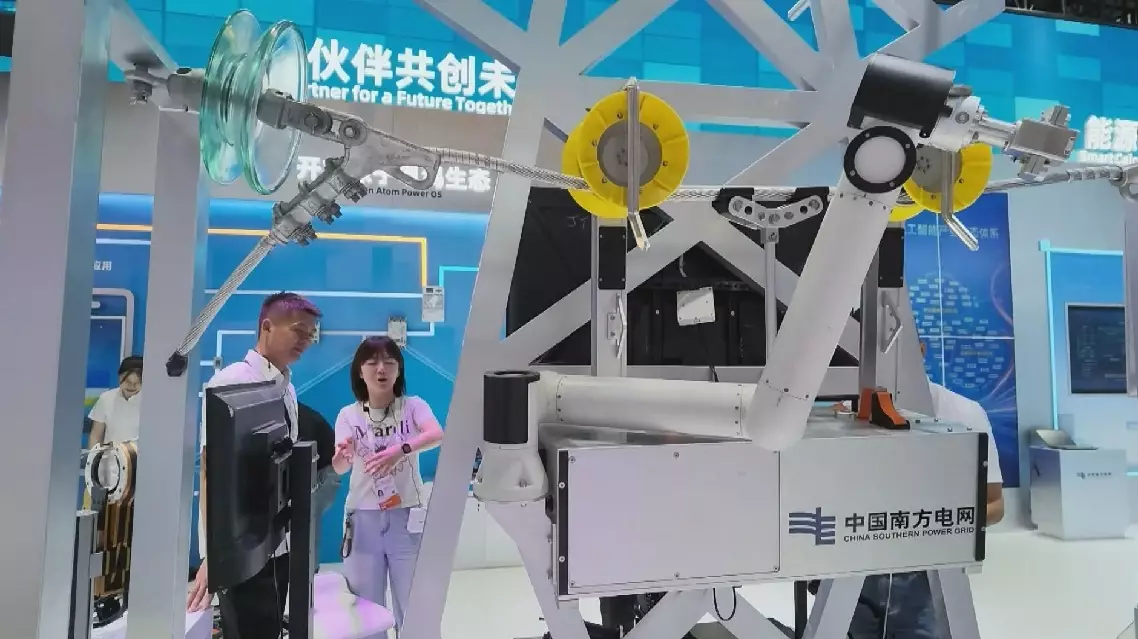
Beyond factory production and daily consumer use, embodied AI technology is also reshaping high-risk work in infrastructure maintenance, as demonstrated by a specialized high-altitude operation robot at the conference.
The robot glides steadily along a simulated power transmission line to perform pin repair work. Previously, fixing a tiny pin just a few millimeters wide required a team of workers to climb dozen-meter-high steel towers and carry out live-line operations. Now, a single high-altitude work robot can complete the entire repair process fully autonomously.
Zhang Letian, a technical expert at the AI Research Center of China Southern Power Grid Digital Group, breaks down how the robot achieves reliable autonomous performance in dangerous work scenarios.
"Across more than 10,000 kilometers of power supply lines, we recorded nearly 1,500 missing pin defects last year. This work is classified as high-risk as it involves both high altitudes and live power circuits. We collected over 10,000 data points from pin repair operations and trained the system with a multi-modal large model, enabling the robot to plan steps independently and perform precise matching," she said.
Themed "AI Partnership for a Brighter Future", the event is scheduled to run until July 20 and will include more than 140 forums, bringing together 1,400 guests from home and abroad.
For the first time, the exhibition area will exceed 100,000 square meters, with over 1,100 enterprises expected to participate.
High-precision robots take center stage at 2026 World AI Conference