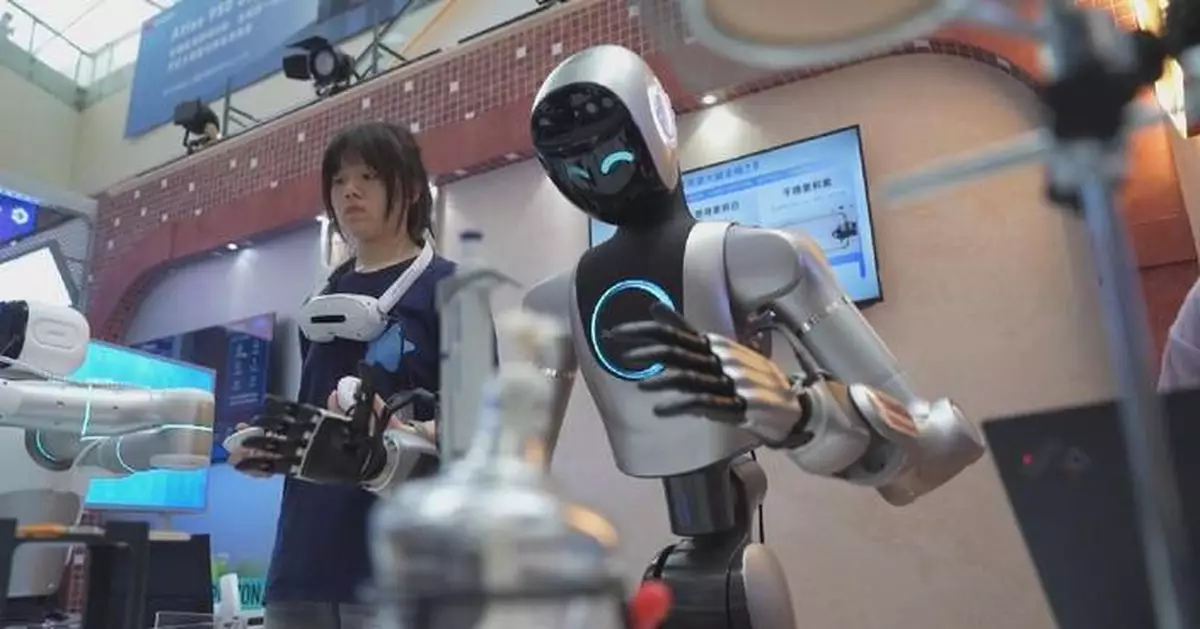
The global push for artificial intelligence (AI) must pursue the development of "collaborative AI" to ensure that humans and machines can work together productively, said Turing Award laureate Joseph Sifakis.
The future of collaborative AI is in the spotlight at this year's 2026 World Artificial Intelligence Conference (WAIC) in Shanghai, where Sifakis will make a virtual appearance. In an interview with China Media Group (CMG), he praised the event for bringing the concept into global view.
"I'm delighted to see WAIC this year promotes the vision of collaborative AI, in which machines work together with humans to advance the development of knowledge and harness intelligence for the wellbeing of humanity and society," said Sifakis.
The computer scientist cautioned that current AI systems are fundamentally limited, leaving users with no real agency. By contrast, his vision for a better AI would give humans ultimate control.
"Today, AI is primarily focused on conversation, as you know. You ask questions and give you answers, without giving you choice. It's either take it or leave it. Now, collaborative AI must be able to interact with humans. And to do so, AI must be able to explain its suggestions in a way that's clear and understandable to humans. We are far from having this type of AI today, and we must work actively to develop collaborative AI," he said.
The 2026 WAIC runs from Friday to next Monday under the theme of "AI Partnership for a Brighter Future." During the conference, Chinese President Xi Jinping delivered a keynote speech, raising the people-centered approach and the principle of AI for good. Xi stressed that the development of AI should always serve human well-being and that AI should be regulated to ensure its development safe, reliable and controllable.
Sifakis expressed strong alignment with this governance model.
"I fully agree with the principle. Nobody can disagree with this principle. You see, all technology, I mean, it's obvious that all technology, therefore AI, must serve humanity and the common good. However, this statement coming from a country like China on humans and AI is of great significance," said the Turing laureate.
As agreeable as these ideas are, however, Sifakis warned that some industry leaders attempt to muddy the waters, putting forward a toxic proposition that human subjugation to technology is inevitable.
"Tech giants believe that it's up to humanity to adapt to machines, not for to machines serve humanity. They seek to convince us that our subordination to machines is inevitable, for instance, by perpetrating theory of technological determinism. What says this theory? It predicts the triumph of machines over humans. Thereby, they consider that humans have no role, humans are not any more key actors in their own history and destiny. And this is too bad. So I'm quite glad that China adopts openly such a position," he said.
Turing Award Winner Sifakis calls for development of collaborative AI