Skip to Content Facebook Feature Image

A Brazilian bay’s surprise shark nursery sparks conservation project

News

A Brazilian bay’s surprise shark nursery sparks conservation project
News

News

A Brazilian bay’s surprise shark nursery sparks conservation project

2026-07-17 20:55 Last Updated At:21:00

ANGRA DOS REIS, Brazil (AP) — A fishing community in Brazil’s southeastern Ilha Grande bay once saw the blacktip sharks navigating the sparkling, emerald green water as potential food.

That perception has shifted, at least in part thanks to scientists who discovered that a nearby cove is frequented by dozens of pregnant blacktip sharks, prompting efforts to protect the area.

More Images
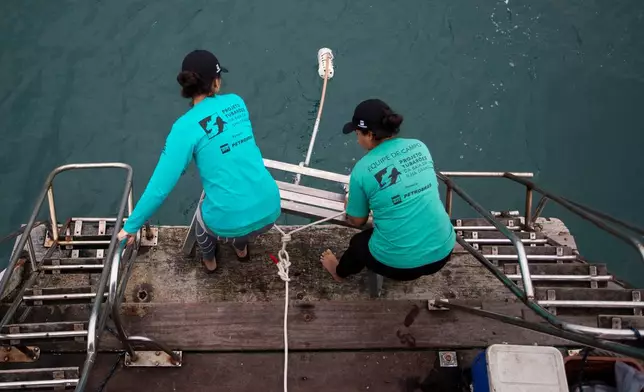
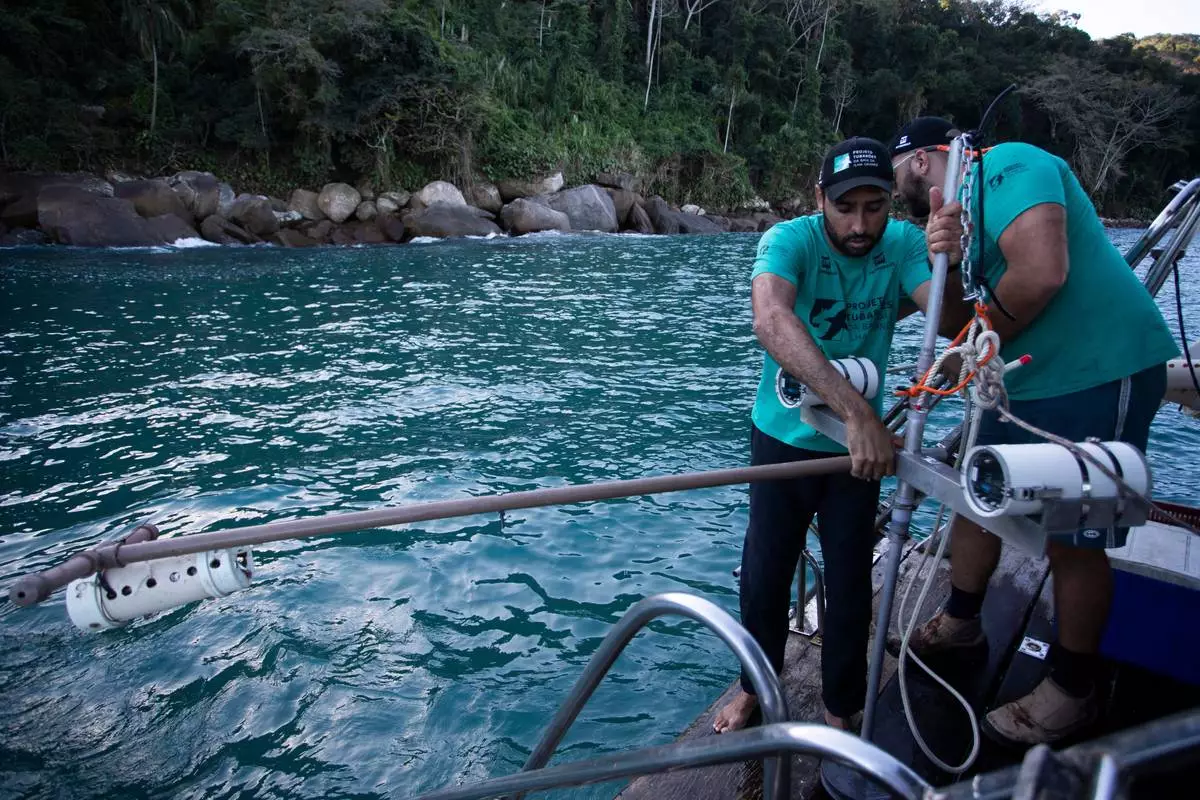
Researchers Beatriz da Costa e Castro, left, and Thaissa Albuquerque Ribeiro Augusto deploy a Baited Remote Underwater Video System as part of a shark project in Ilha Grande bay, Angra dos Reis, Rio de Janeiro state, Brazil, July 14, 2026. (AP Photo/Bruna Prado)
Researchers Beatriz da Costa e Castro, left, and Thaissa Albuquerque Ribeiro Augusto deploy a Baited Remote Underwater Video System as part of a shark project in Ilha Grande bay, Angra dos Reis, Rio de Janeiro state, Brazil, July 14, 2026. (AP Photo/Bruna Prado)

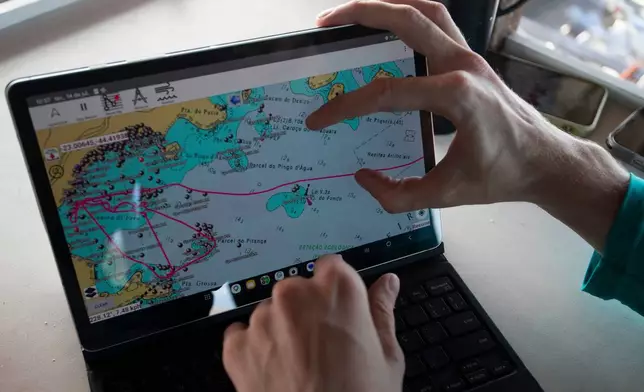
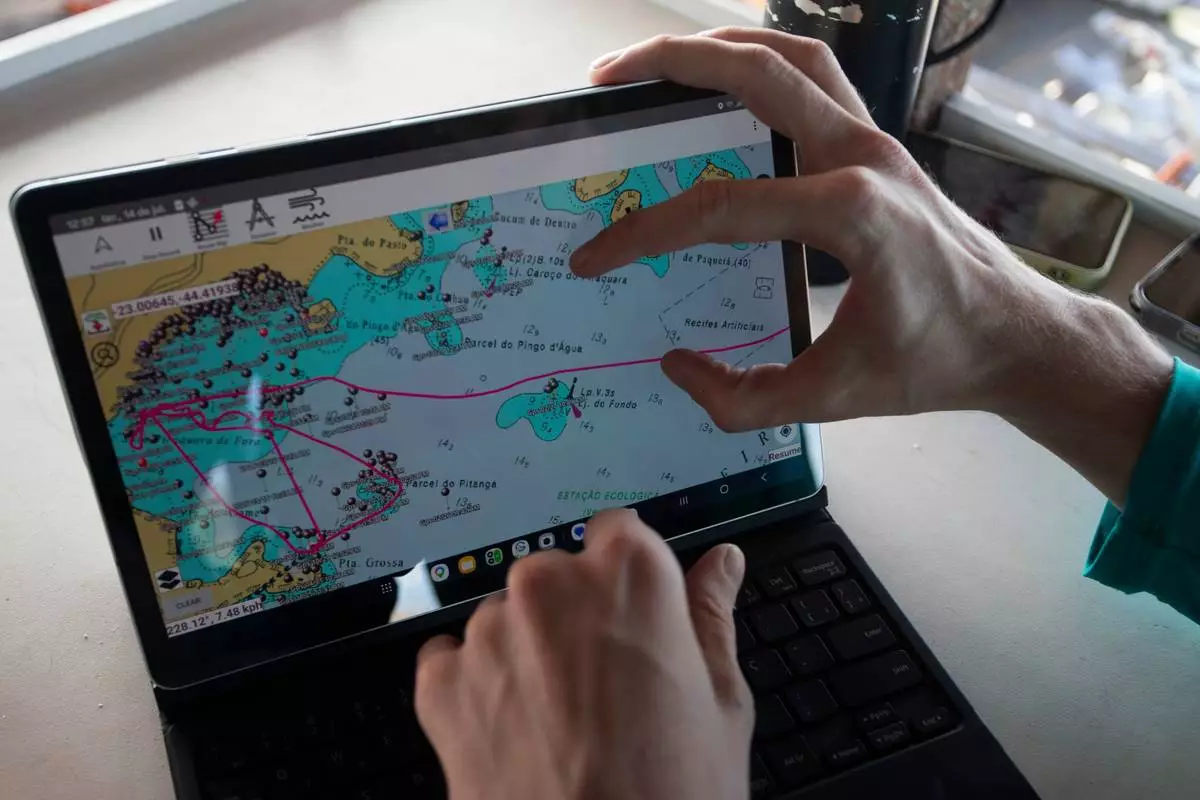
A researcher displays a tablet with a mapping system used to identify research sites for a shark project in Ilha Grande Bay, Angra dos Reis, Rio de Janeiro state, Brazil, July 14, 2026. (AP Photo/Bruna Prado)
A researcher displays a tablet with a mapping system used to identify research sites for a shark project in Ilha Grande Bay, Angra dos Reis, Rio de Janeiro state, Brazil, July 14, 2026. (AP Photo/Bruna Prado)
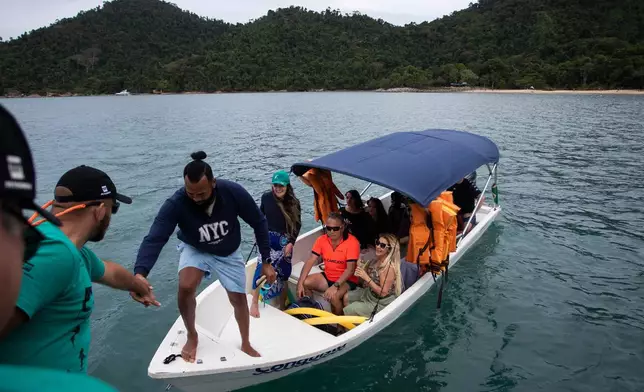
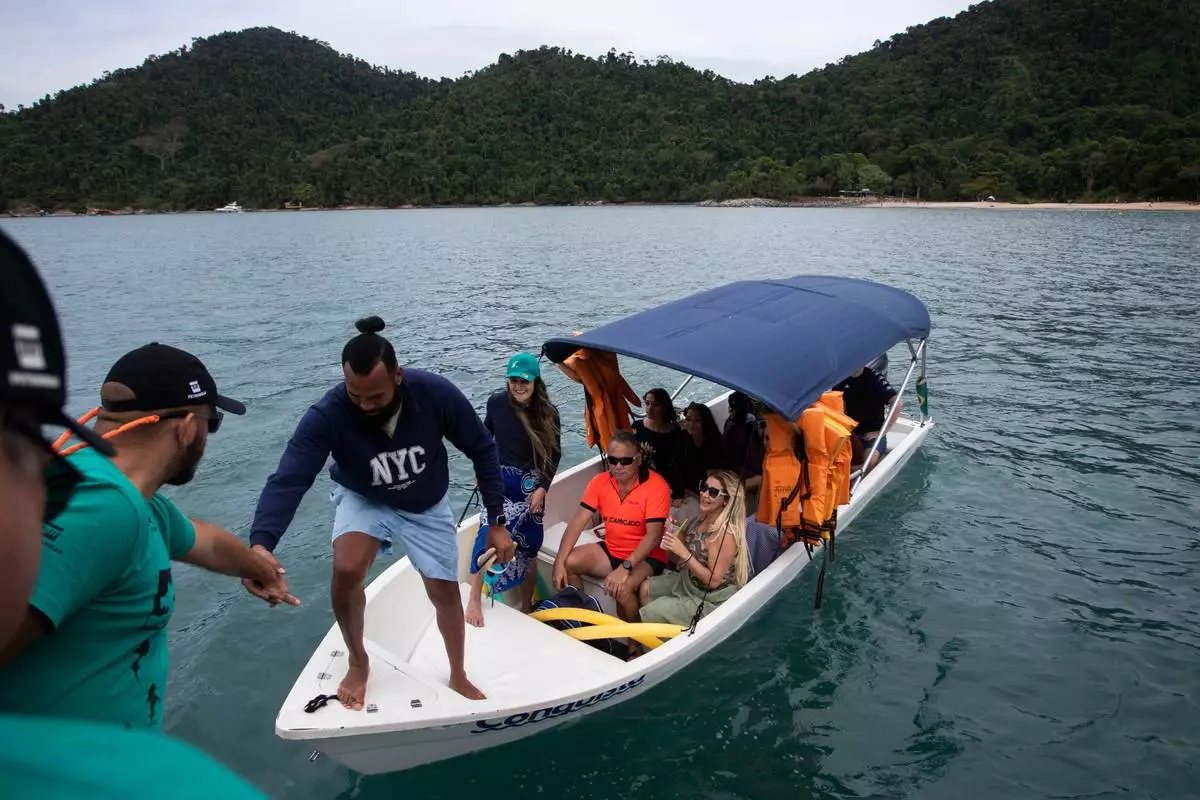
Fisherman Reinaldo Dias da Rocha boards a boat used by a shark protection project at Ilha Grande Bay, Angra dos Reis, Rio de Janeiro state, Brazil, July 14, 2026. (AP Photo/Bruna Prado)
Fisherman Reinaldo Dias da Rocha boards a boat used by a shark protection project at Ilha Grande Bay, Angra dos Reis, Rio de Janeiro state, Brazil, July 14, 2026. (AP Photo/Bruna Prado)

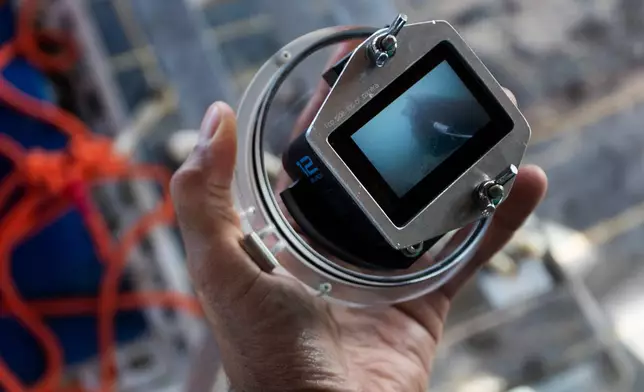
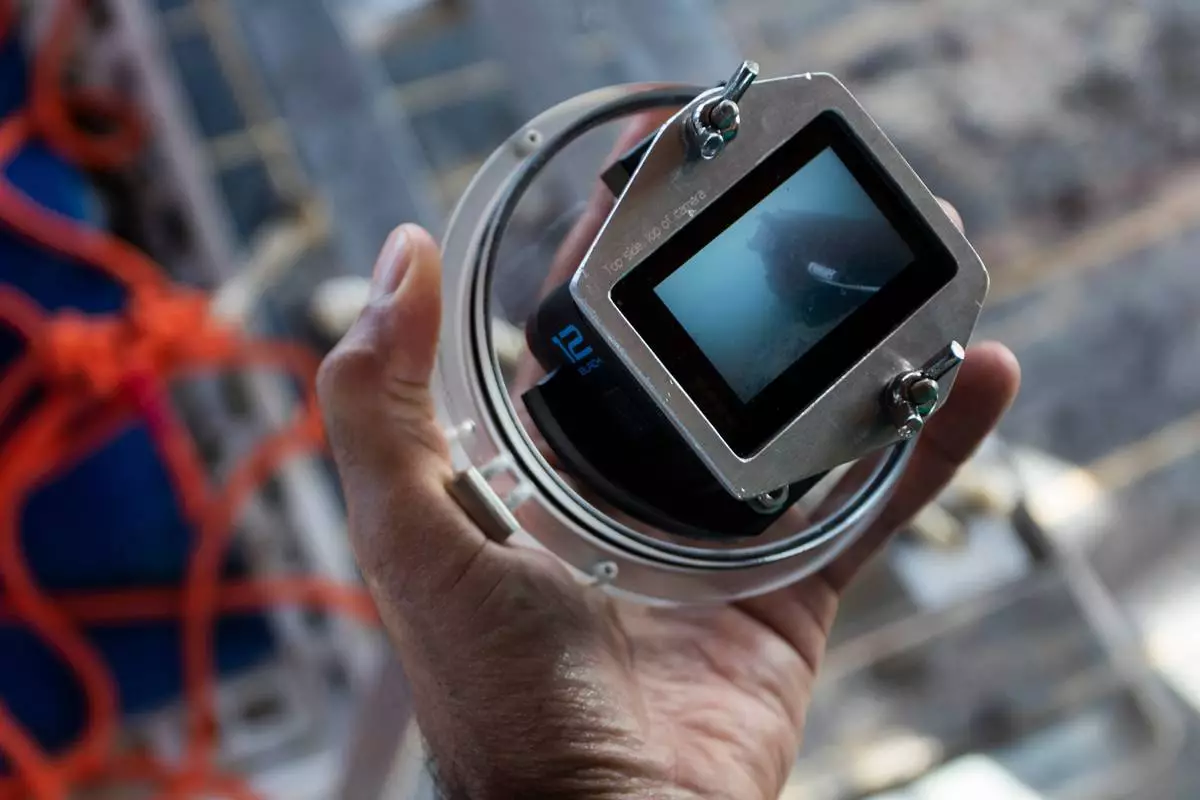
cientific coordinator Leonardo Mitrano Neves reviews footage recorded by a Baited Remote Underwater Video System during monitoring for a shark project in Ilha Grande Bay, Angra dos Reis, Rio de Janeiro state, Brazil, July 14, 2026. (AP Photo/Bruna Prado)

cientific coordinator Leonardo Mitrano Neves reviews footage recorded by a Baited Remote Underwater Video System during monitoring for a shark project in Ilha Grande Bay, Angra dos Reis, Rio de Janeiro state, Brazil, July 14, 2026. (AP Photo/Bruna Prado)

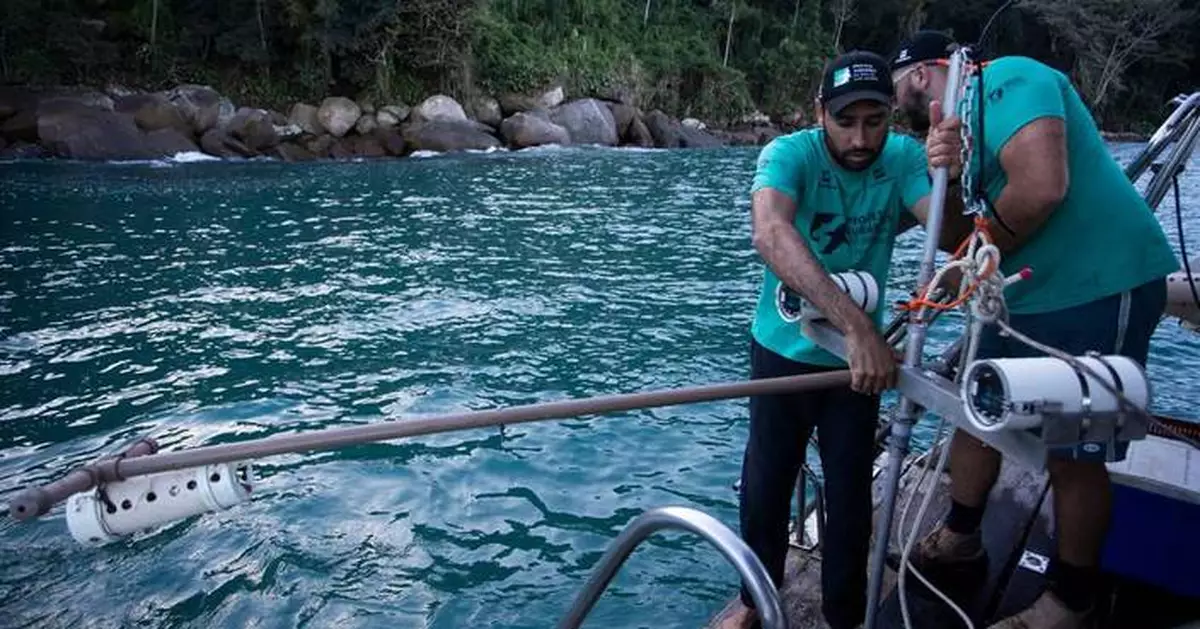
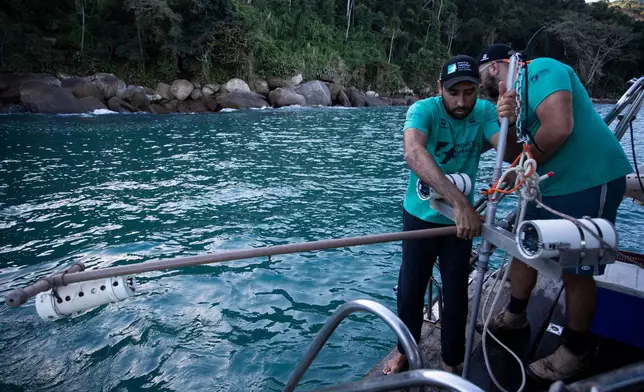
Scientific coordinator Leonardo Mitrano Neves, left, and field and logistics coordinator Daniel Shimada Brotto retrieve a Baited Remote Underwater Video System during monitoring as part of a shark project in Ilha Grande Bay, Angra dos Reis, Rio de Janeiro state, Brazil, July 14, 2026. (AP Photo/Bruna Prado)

Scientific coordinator Leonardo Mitrano Neves, left, and field and logistics coordinator Daniel Shimada Brotto retrieve a Baited Remote Underwater Video System during monitoring as part of a shark project in Ilha Grande Bay, Angra dos Reis, Rio de Janeiro state, Brazil, July 14, 2026. (AP Photo/Bruna Prado)

Recent studies describe Brazil as the largest consumer of shark meat. Yet sharks are among the most threatened group of vertebrates on Earth, with more than one-third of species at risk of extinction due to overfishing, habitat degradation and climate change, according to the International Union for Conservation of Nature (IUCN).

Brazil’s coastline harbors a large diversity of shark species and includes critical habitats for many threatened populations, making their protection an important part of global ocean conservation.

Key to those efforts is the identification of nurseries such as the one in Piraquara de Fora cove, according to experts who are part of the Brazilian Institute for Nature Conservation's Sharks of Ilha Grande Bay project.

“We used to fish and eat them,” said Marlene Fernanda do Nascimento Martins, a 35-year-old community leader. Conservationists “explained that we shouldn’t do that anymore because of the animals themselves and the need to protect them.”

Sharks reproduce slowly, with fewer offspring than many bony fishes, which increases their vulnerability.

“Breeding areas are fundamental to ensuring the species survives throughout this Atlantic ecoregion,” said Leonardo Mitrano Neves, who heads the scientific branch of the project.

On a recent weekday, Mitrano Neves and his team lowered monitoring equipment loaded with cameras into different parts of the cove, leaving them submerged for an hour alongside bait to attract the sharks.

That footage and drone images will later be analyzed in a laboratory, producing data that will be used to advocate for greater conservation efforts.

While blacktip sharks are most common in the region, the project also focuses on sand tiger sharks and hammerhead sharks.

The scheme also aims to start environmental education activities in schools so that sharks will come to be seen as part of the region’s natural heritage.

Communication materials highlight that the sharks do not represent a threat to humans and that there are no known shark incidents in the region.

Brazil prohibits targeted shark fishing, but nonprotected sharks may still be landed when caught incidentally as bycatch, whereas threatened species are protected from capture and commercialization and must be released if caught.

Identification can be imprecise, with shark meat often sold under the generic term “cação.”

José Truda Palazzo, the coordinator of the project in Ilha Grande bay, said their work to discourage local communities from eating shark meat is starting to have an impact.

During meetings with nearby populations, representatives of the project talked about the importance of the sharks for the ocean’s ecosystem and the health risks associated with eating shark meat, he said.

Research indicates that, as apex predators, sharks accumulate high levels of heavy metals — including arsenic, mercury and lead — in their blood and tissues. A 2024 study also found that some Brazilian sharpnose sharks tested positive for cocaine.

“We hope that more and more people come to understand that cação is shark, and shark meat is toxic, in addition to the fact that sharks are endangered animals,” said Palazzo.

As long as the sky and water are clear, local residents sometimes spot the sharks from the low-level, forest-covered mountains, above the sand-colored rocks that meet the ocean.

In time, observation of the sharks — on land, from boats and even underwater — could develop into an additional source of income thanks to ecotourism, Palazzo said.

Nascimento Martins fishes and sells ice on the beach to supplement her monthly income, which supports her and her three children. She said ecotourism would offer a big assist to the area.

“We’re a remote community with very limited resources. So anything that comes along that can help us preserve our village is a good thing,” she said.

Reinaldo Dias da Rocha, who is from the same community, said his father had already encouraged him not to hunt sharks, but the project had reinforced the importance of preserving the animals.

“We pass the information on to our nephews, to tourists who come to discover this place and enjoy our beautiful beaches, and further labor the point that what we call cação isn't to be eaten.”

Follow AP’s coverage of Latin America and the Caribbean at https://apnews.com/hub/latin-america
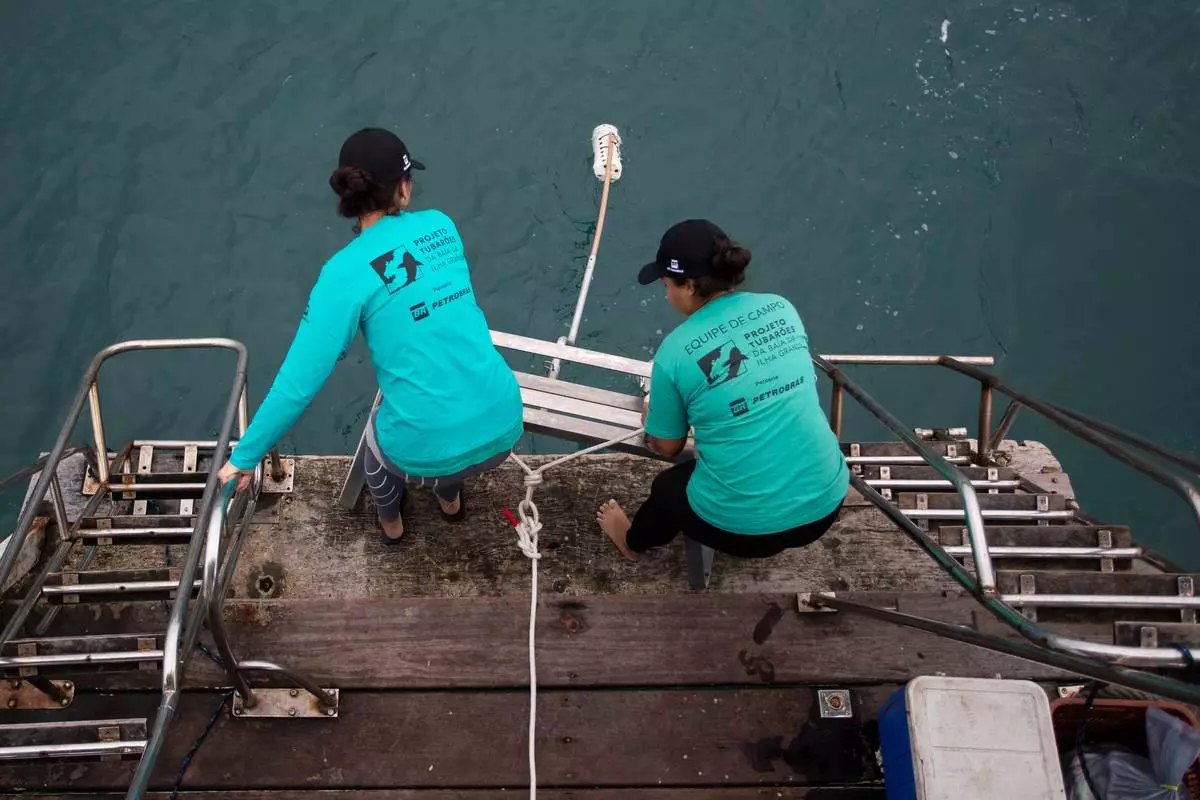
Researchers Beatriz da Costa e Castro, left, and Thaissa Albuquerque Ribeiro Augusto deploy a Baited Remote Underwater Video System as part of a shark project in Ilha Grande bay, Angra dos Reis, Rio de Janeiro state, Brazil, July 14, 2026. (AP Photo/Bruna Prado)
Researchers Beatriz da Costa e Castro, left, and Thaissa Albuquerque Ribeiro Augusto deploy a Baited Remote Underwater Video System as part of a shark project in Ilha Grande bay, Angra dos Reis, Rio de Janeiro state, Brazil, July 14, 2026. (AP Photo/Bruna Prado)

A researcher displays a tablet with a mapping system used to identify research sites for a shark project in Ilha Grande Bay, Angra dos Reis, Rio de Janeiro state, Brazil, July 14, 2026. (AP Photo/Bruna Prado)
A researcher displays a tablet with a mapping system used to identify research sites for a shark project in Ilha Grande Bay, Angra dos Reis, Rio de Janeiro state, Brazil, July 14, 2026. (AP Photo/Bruna Prado)
Fisherman Reinaldo Dias da Rocha boards a boat used by a shark protection project at Ilha Grande Bay, Angra dos Reis, Rio de Janeiro state, Brazil, July 14, 2026. (AP Photo/Bruna Prado)
Fisherman Reinaldo Dias da Rocha boards a boat used by a shark protection project at Ilha Grande Bay, Angra dos Reis, Rio de Janeiro state, Brazil, July 14, 2026. (AP Photo/Bruna Prado)


cientific coordinator Leonardo Mitrano Neves reviews footage recorded by a Baited Remote Underwater Video System during monitoring for a shark project in Ilha Grande Bay, Angra dos Reis, Rio de Janeiro state, Brazil, July 14, 2026. (AP Photo/Bruna Prado)
cientific coordinator Leonardo Mitrano Neves reviews footage recorded by a Baited Remote Underwater Video System during monitoring for a shark project in Ilha Grande Bay, Angra dos Reis, Rio de Janeiro state, Brazil, July 14, 2026. (AP Photo/Bruna Prado)

Scientific coordinator Leonardo Mitrano Neves, left, and field and logistics coordinator Daniel Shimada Brotto retrieve a Baited Remote Underwater Video System during monitoring as part of a shark project in Ilha Grande Bay, Angra dos Reis, Rio de Janeiro state, Brazil, July 14, 2026. (AP Photo/Bruna Prado)
Scientific coordinator Leonardo Mitrano Neves, left, and field and logistics coordinator Daniel Shimada Brotto retrieve a Baited Remote Underwater Video System during monitoring as part of a shark project in Ilha Grande Bay, Angra dos Reis, Rio de Janeiro state, Brazil, July 14, 2026. (AP Photo/Bruna Prado)
President Donald Trump used a primetime address to the nation to elevate his yearslong push to raise doubts about the legitimacy of U.S. elections and dispute his 2020 loss — this time, to justify his push to pass a strict voter ID bill.

His allegations Thursday night of interference and influence didn’t include key context. Nor did he produce evidence that votes had been manipulated or that the election outcome had been altered.

Trump also said he was releasing previously classified documents related to the 2020 and 2018 elections. Thus far, no credible intelligence — including repeated audits and reviews, many runby Republicans — has shown the vote count in 2020 was fraudulent or manipulated by foreign actors. Trump did not question his election wins in 2016 or 2024.

Here's the latest:

Secretary of State Marco Rubio is heading to the Philippines next week to attend meetings with foreign ministers at a gathering of the Association of Southeast Asian Nations, or ASEAN.

The State Department says Rubio is going to meet with his counterparts and senior officials from governments in the region as he pushes for a free and open Indo-Pacific.

Rubio is scheduled to leave for Manila on Sunday and head back to the U.S. on Thursday.

China on Friday said it has never interfered in U.S. elections and has no interest in doing so, urging Washington to stop making what it described as “groundless accusations” after President Trump accused Beijing of meddling in the 2020 election.

In an address to the nation Thursday, Trump again raised doubts about the U.S. elections results in 2020 and accused China of interfering in them.

“The relevant allegations by the U.S. are entirely fabricated and aimed at vilifying China,” said China’s Foreign Ministry spokesperson Lin Jian. “We have no interest in interfering in US elections and have never done so.”

In a daily briefing in Beijing, Lin called on the U.S. to stop making groundless accusations against China.

▶ Read more

Sue Gordon, principal deputy director of national intelligence in Trump’s first term, called the president’s address “a dangerous speech about an incredibly important topic.” She said the intelligence community throughout Trump’s first term was alarmed about foreign interference in elections, but Trump scoffed at them, angered at the investigation of his campaign’s relationship with Russia.

“He had an entire term to deal with it and I don’t know how you can believe how the same community that told him about it, that was excoriated about it” wouldn’t warn him in 2020, Gordon said on CNN.

Conservative commentator John Solomon, who joined the White House staff last month and was seated in the East Room for Trump’s speech, later told MS NOW “the intelligence community has zero evidence that someone has flipped — that a foreign power flipped — a vote in 2020, ’22 or ’24.”

But, he added, “We’re not through all the documents.”

President Donald Trump began Thursday night with a stark warning about what he described as flaws in the voting system and said he was releasing previously classified documents related to the 2020 and 2018 elections, when he lost the presidential election and when his party suffered losses.

Trump’s speech presented allegations of interference and influence in ways that lacked key context and did not produce evidence that votes had been manipulated or that the election outcome had been altered.

Notably, he focused on China but glossed over Russia, a country intelligence officials have said favored Trump in 2016 and 2020 and engaged in wide-ranging influence campaigns aimed at boosting him over Democrat Joe Biden in the latter campaign.

A twice-elected president complained about his one personal defeat, alleged a cover-up by officials in his own first administration and surfaced claims about countries attempting to harm his own prospects while staying silent on steps taken by other nations to boost him.

Trump used the remarks to justify his push to pass a strict voter ID bill in Congress that hasn’t advanced because it lacks enough support from his fellow Republicans.

“America is back and doing really well, but we still have a major challenge that must be urgently addressed, because no country can be great without fair and honest elections,” he said.

President Donald Trump speaks in the East Room of the White House, Thursday, July 16, 2026, in Washington. (Saul Loeb/Pool via AP)

President Donald Trump speaks in the East Room of the White House, Thursday, July 16, 2026, in Washington. (Saul Loeb/Pool via AP)

President Donald Trump speaks in the East Room of the White House, Thursday, July 16, 2026, in Washington. (Saul Loeb/Pool via AP)

President Donald Trump speaks in the East Room of the White House, Thursday, July 16, 2026, in Washington. (Saul Loeb/Pool via AP)

Recommended Articles