Skip to Content Facebook Feature Image

Wildfire smoke kills tens of thousands of people a year. Here's how it attacks the body

News

Wildfire smoke kills tens of thousands of people a year. Here's how it attacks the body
News

News

Wildfire smoke kills tens of thousands of people a year. Here's how it attacks the body

2026-07-17 22:25 Last Updated At:22:30

Smoke from wildfires — which are burning more of the Northern Hemisphere as Earth warms — attacks nearly every system in the human body, killing tens of thousands of people a year, numerous medical studies show.

It attacks the body immediately, spiking asthma cases with increased ambulance runs within hours, swamps emergency rooms in a day or so with people suffering from heart attacks and other cardiovascular and lung issues, as well as mental health issues, doctors and scientists told The Associated Press.

More Images
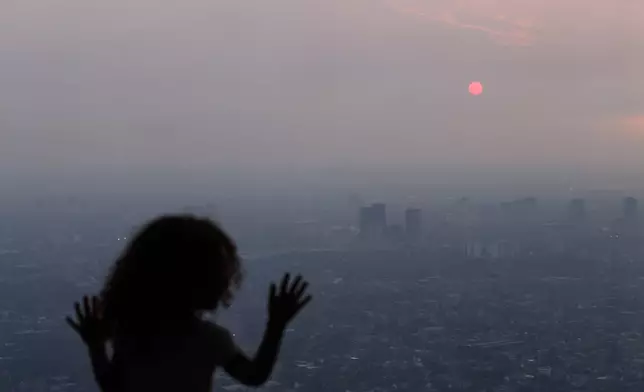
A child looks out from the observation deck of the CN Tower as smoke from wildfires in Northwestern Ontario blankets the city of Toronto, Thursday, July 16, 2026. (Cole Burston/The Canadian Press via AP)
A child looks out from the observation deck of the CN Tower as smoke from wildfires in Northwestern Ontario blankets the city of Toronto, Thursday, July 16, 2026. (Cole Burston/The Canadian Press via AP)

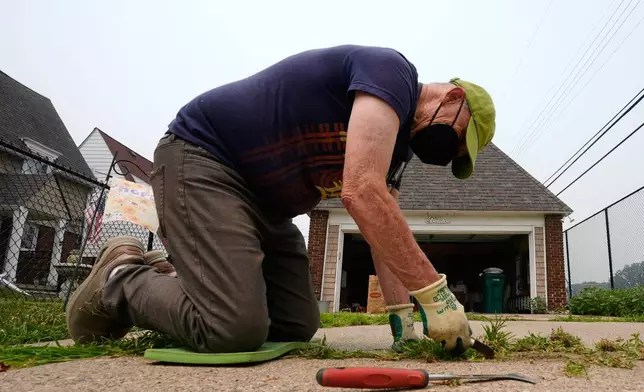
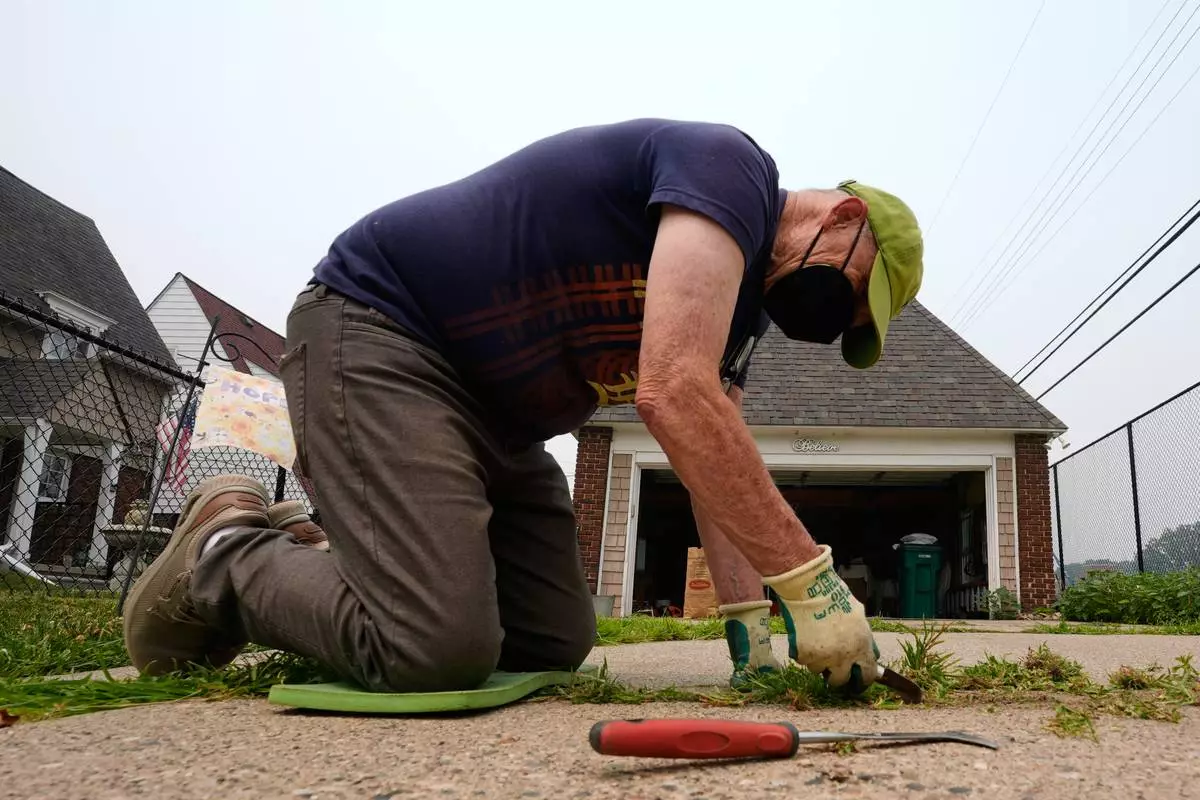
Michael Lesperance weeds his driveway wearing a mask during poor air quality due to smoke from Canadian wildfires Thursday, July 16, 2026, in Grosse Pointe Park, Mich.. (AP Photo/Paul Sancya)
Michael Lesperance weeds his driveway wearing a mask during poor air quality due to smoke from Canadian wildfires Thursday, July 16, 2026, in Grosse Pointe Park, Mich.. (AP Photo/Paul Sancya)

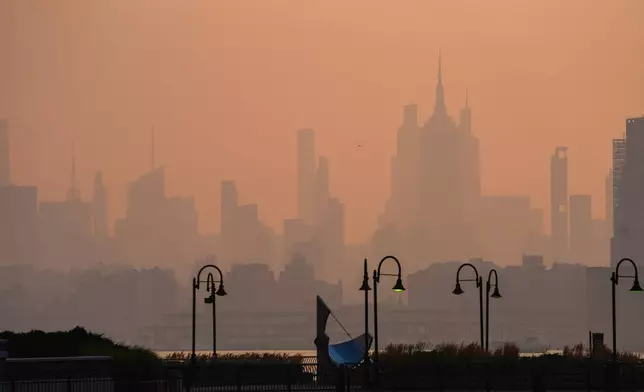
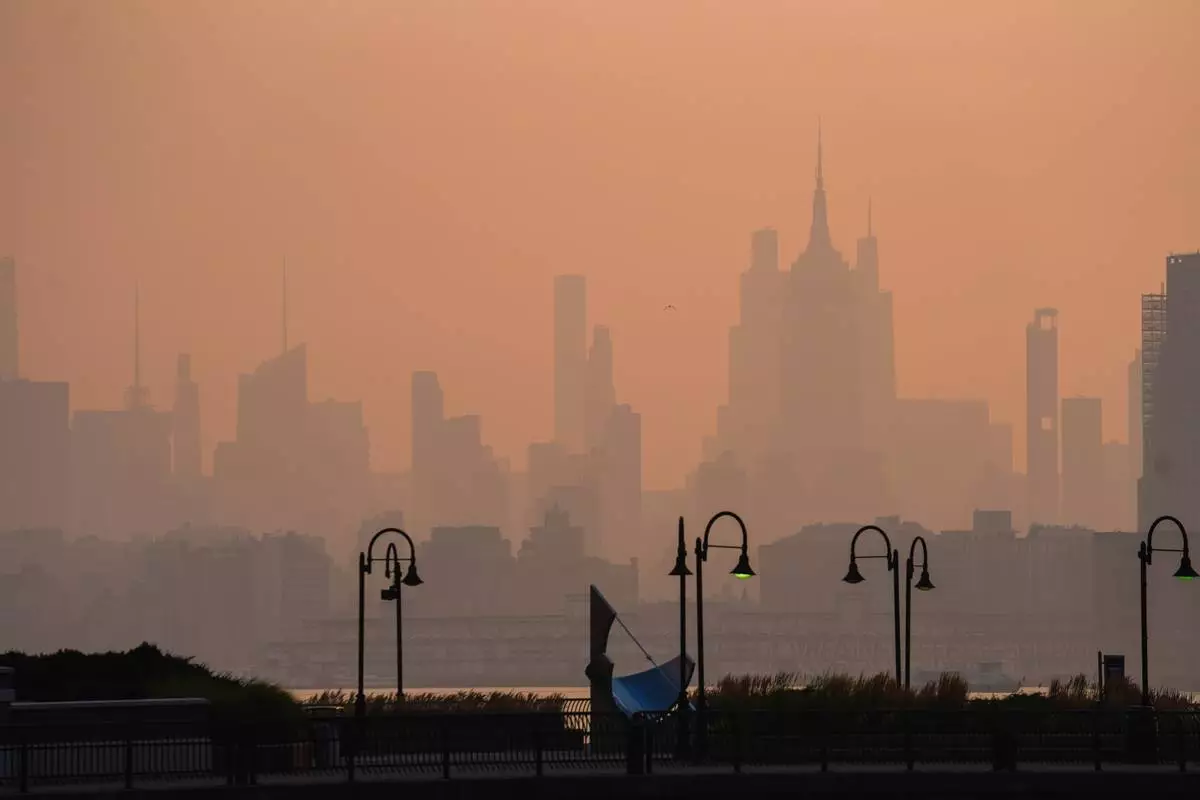
The New York City skyline is seen through a cover of wildfire smoke, in Jersey City, N.J., Friday, July 17, 2026. (AP Photo/Ryan Murphy)
The New York City skyline is seen through a cover of wildfire smoke, in Jersey City, N.J., Friday, July 17, 2026. (AP Photo/Ryan Murphy)

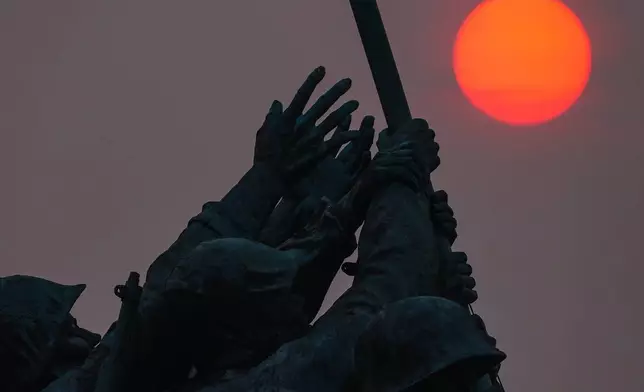
The sun is obscured by wildfire smoke as it rises behind the Marine Corps War Memorial, Friday, July 17, 2026, in Arlington, Va. (AP Photo/Julia Demaree Nikhinson)
The sun is obscured by wildfire smoke as it rises behind the Marine Corps War Memorial, Friday, July 17, 2026, in Arlington, Va. (AP Photo/Julia Demaree Nikhinson)

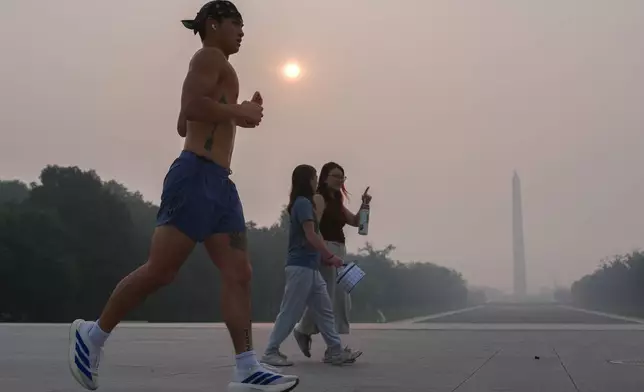
The sun is obscured by wildfire smoke as people run in front of the Washington Monument and Lincoln Memorial Reflecting Pool, Friday, July 17, 2026, on the National Mall in Washington. (AP Photo/Julia Demaree Nikhinson)
The sun is obscured by wildfire smoke as people run in front of the Washington Monument and Lincoln Memorial Reflecting Pool, Friday, July 17, 2026, on the National Mall in Washington. (AP Photo/Julia Demaree Nikhinson)

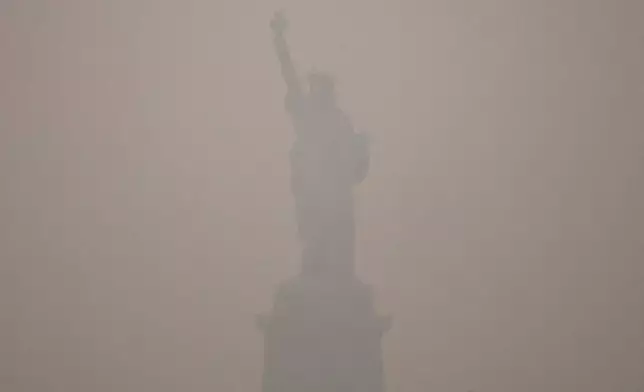
The Statue of Liberty stands during sunset as smoke from wildfires blankets the sky, Thursday, July 16, 2026, in the Brooklyn borough of New York. (AP Photo/Yuki Iwamura)
The Statue of Liberty stands during sunset as smoke from wildfires blankets the sky, Thursday, July 16, 2026, in the Brooklyn borough of New York. (AP Photo/Yuki Iwamura)

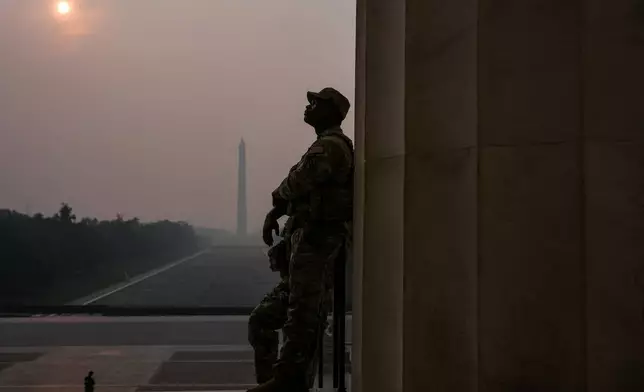
National Guardsmen patrol the Lincoln Memorial as the sun, obscured by wildfire smoke, rises above the Washington Monument and the Reflecting Pool, Friday, July 17, 2026, on the National Mall in Washington. (AP Photo/Julia Demaree Nikhinson)
National Guardsmen patrol the Lincoln Memorial as the sun, obscured by wildfire smoke, rises above the Washington Monument and the Reflecting Pool, Friday, July 17, 2026, on the National Mall in Washington. (AP Photo/Julia Demaree Nikhinson)

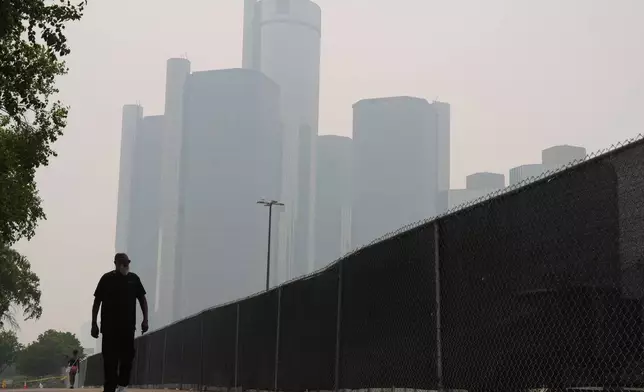
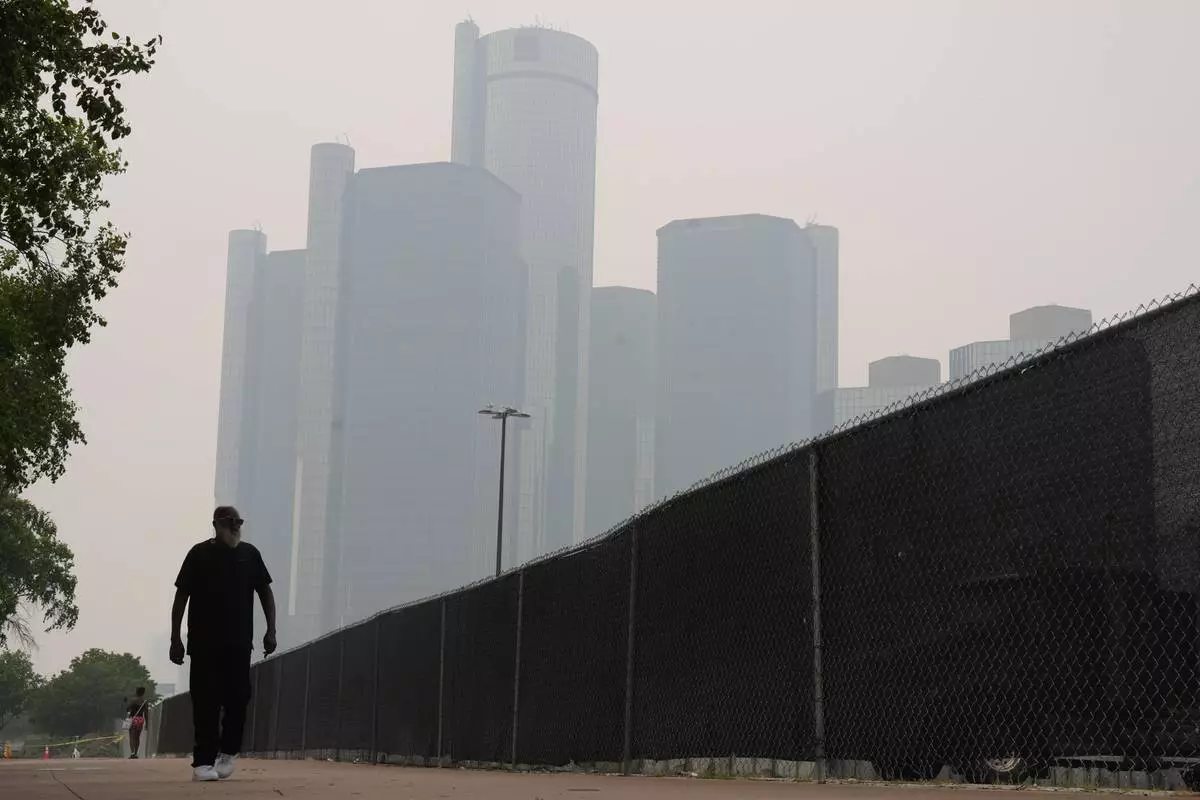
Jimmy Tyner walks along the Detroit River during poor air quality due to smoke from Canadian wildfires Thursday, July 16, 2026, in Detroit. (AP Photo/Paul Sancya)
Jimmy Tyner walks along the Detroit River during poor air quality due to smoke from Canadian wildfires Thursday, July 16, 2026, in Detroit. (AP Photo/Paul Sancya)

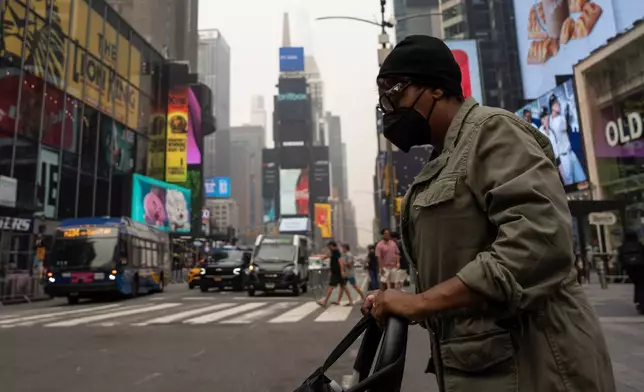
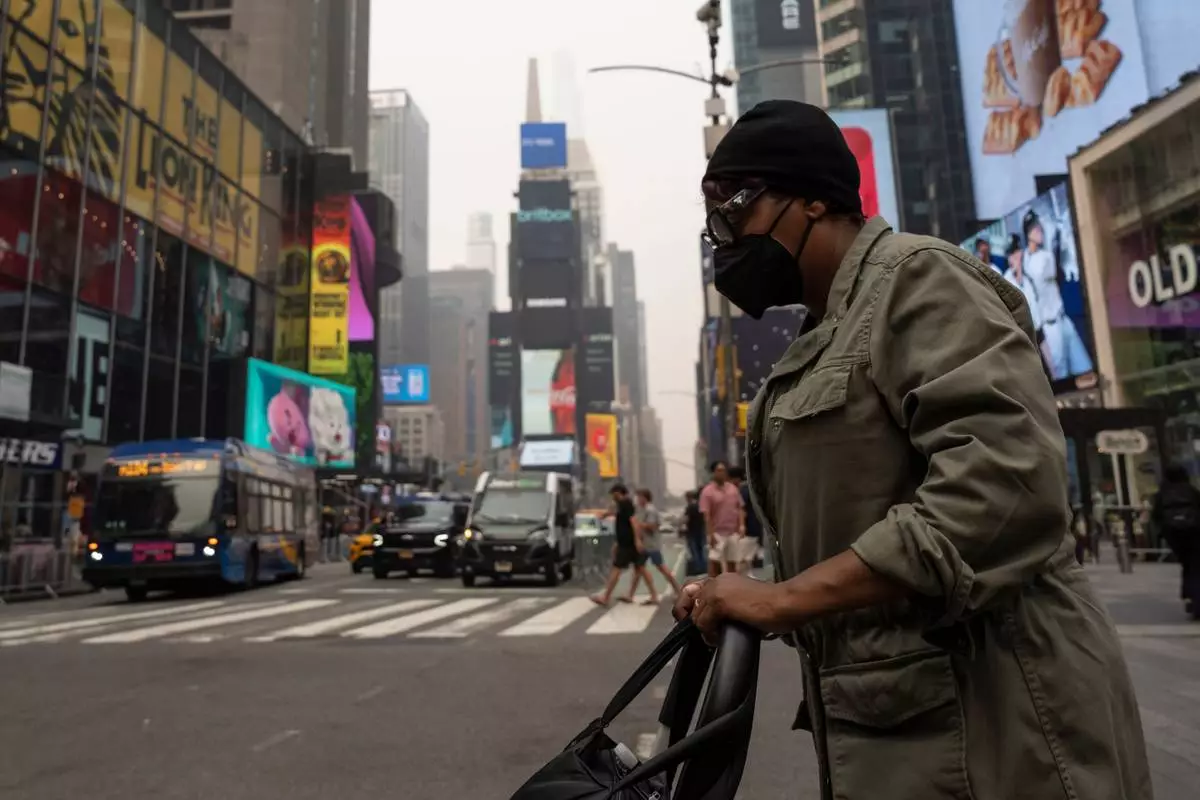
A person wearing a mask walks in Times Square as smoke from wildfires blankets the sky, Thursday, July 16, 2026, in New York. (AP Photo/Yuki Iwamura)
A person wearing a mask walks in Times Square as smoke from wildfires blankets the sky, Thursday, July 16, 2026, in New York. (AP Photo/Yuki Iwamura)

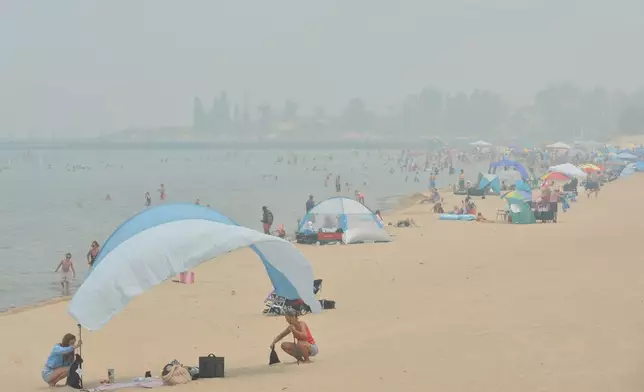
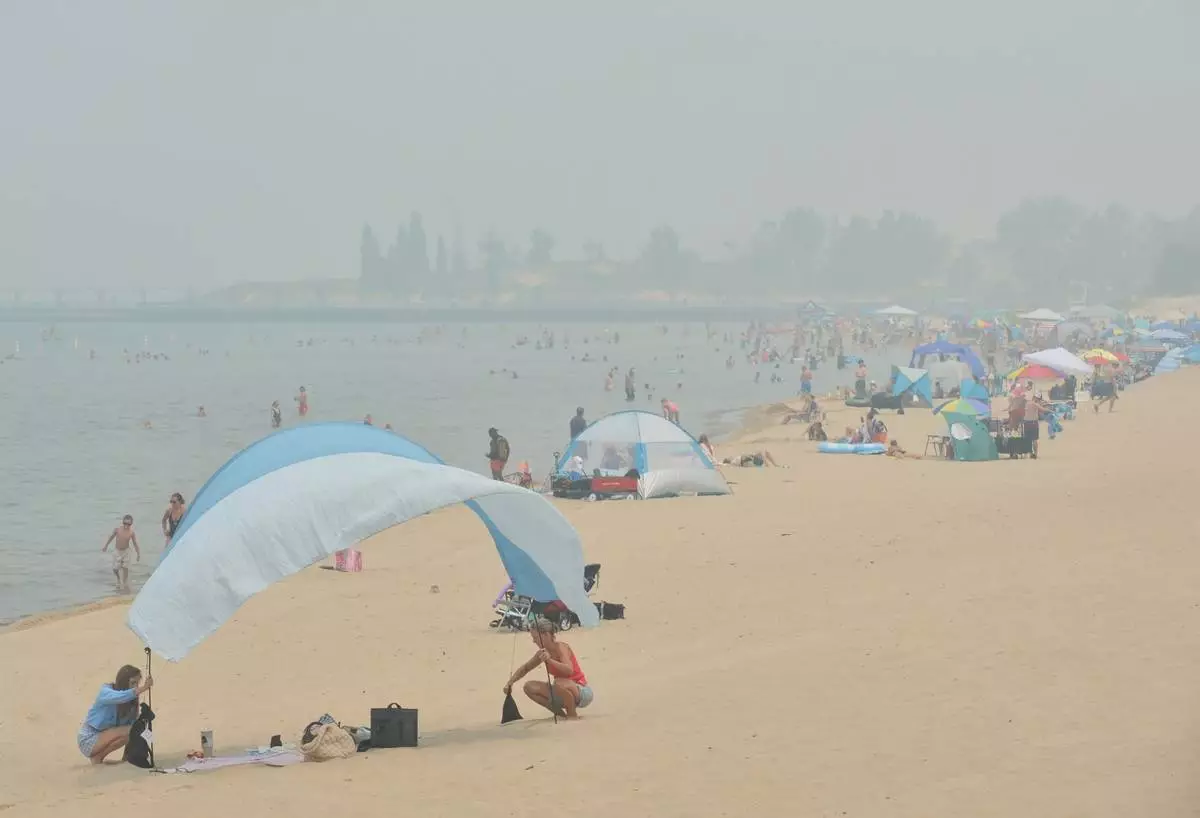
Hazy skies from Canadian wildfires cover Silver Beach and Lake Michigan, Thursday, July 16, 2026, in St. Joseph, Mich. (Don Campbell/The Herald-Palladium via AP)
Hazy skies from Canadian wildfires cover Silver Beach and Lake Michigan, Thursday, July 16, 2026, in St. Joseph, Mich. (Don Campbell/The Herald-Palladium via AP)

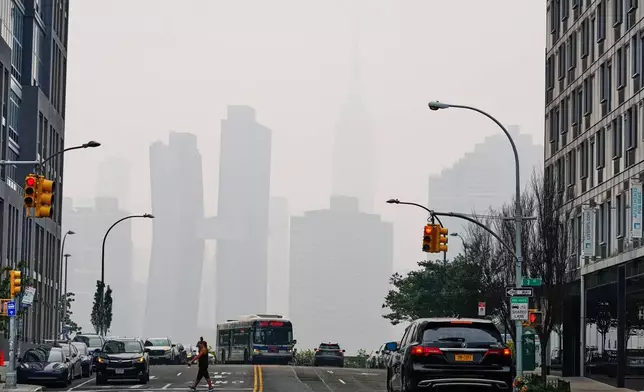
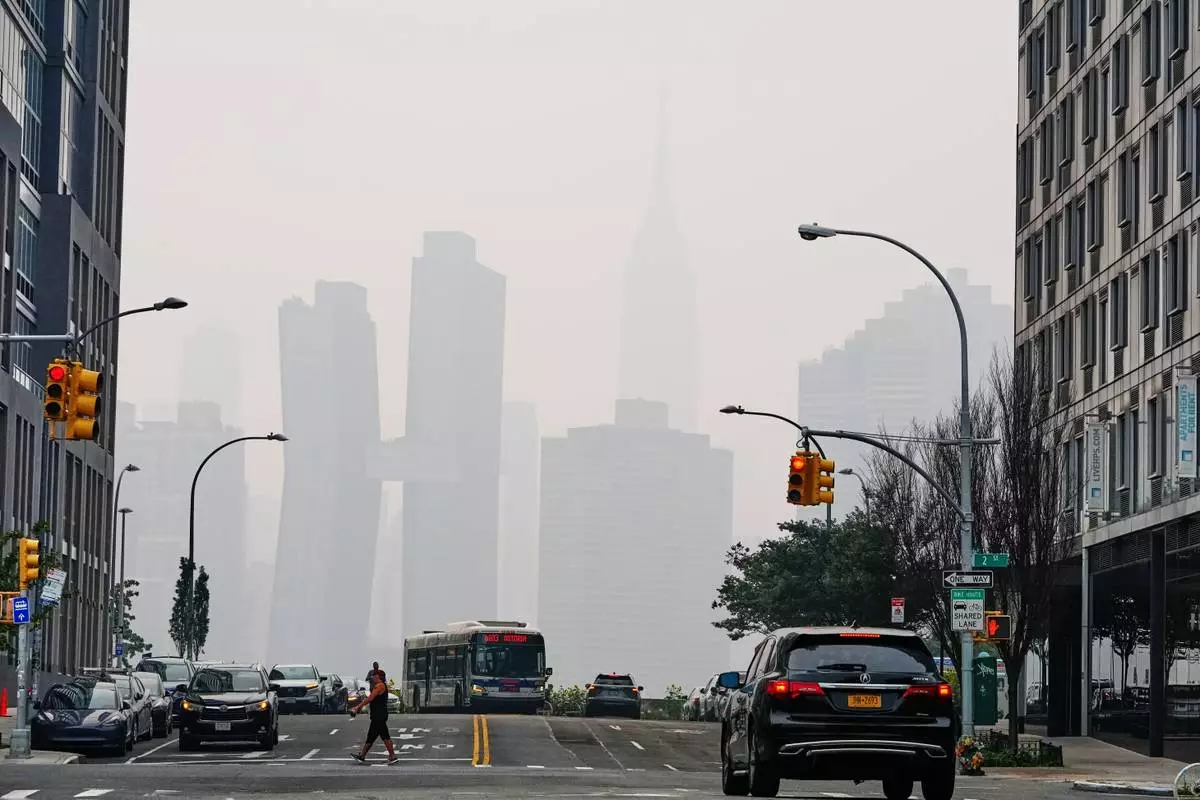
Pedestians cross Borden Avenue as the New York City skyline is obscured during poor air quality due to smoke from Canadian wildfires Thursday, July 16, 2026, in the Queens borough of New York. (AP Photo/Frank Franklin II)
Pedestians cross Borden Avenue as the New York City skyline is obscured during poor air quality due to smoke from Canadian wildfires Thursday, July 16, 2026, in the Queens borough of New York. (AP Photo/Frank Franklin II)

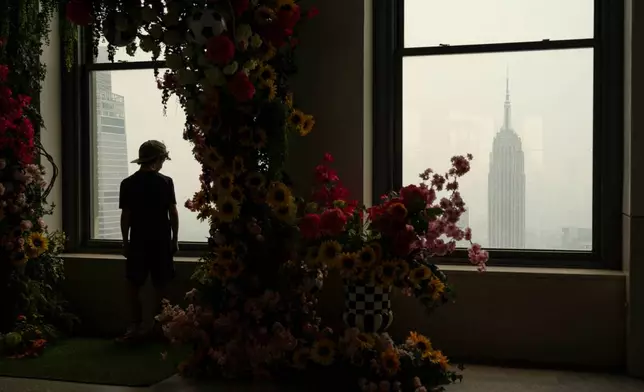
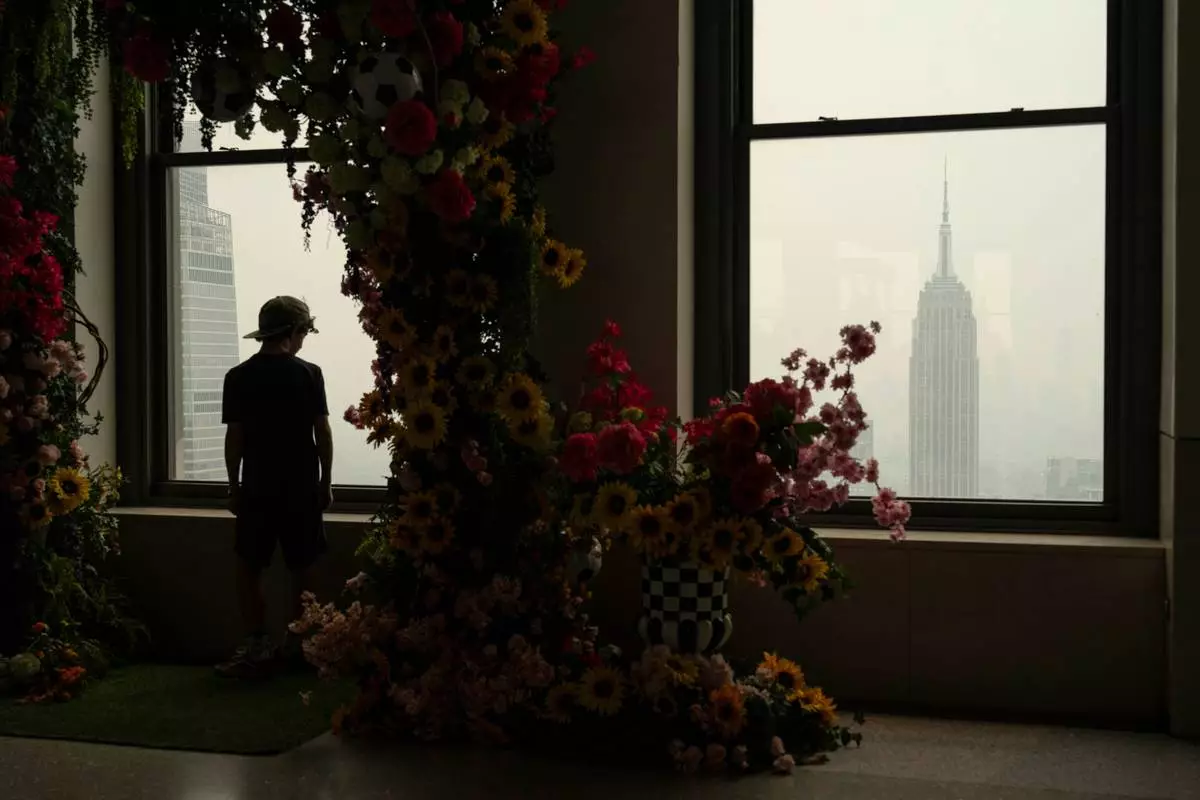
A person looks out a window at the Top of the Rock Observation Deck as wildfire smoke hangs over New York, Thursday, July 16, 2026. (AP Photo/Yuki Iwamura)
A person looks out a window at the Top of the Rock Observation Deck as wildfire smoke hangs over New York, Thursday, July 16, 2026. (AP Photo/Yuki Iwamura)

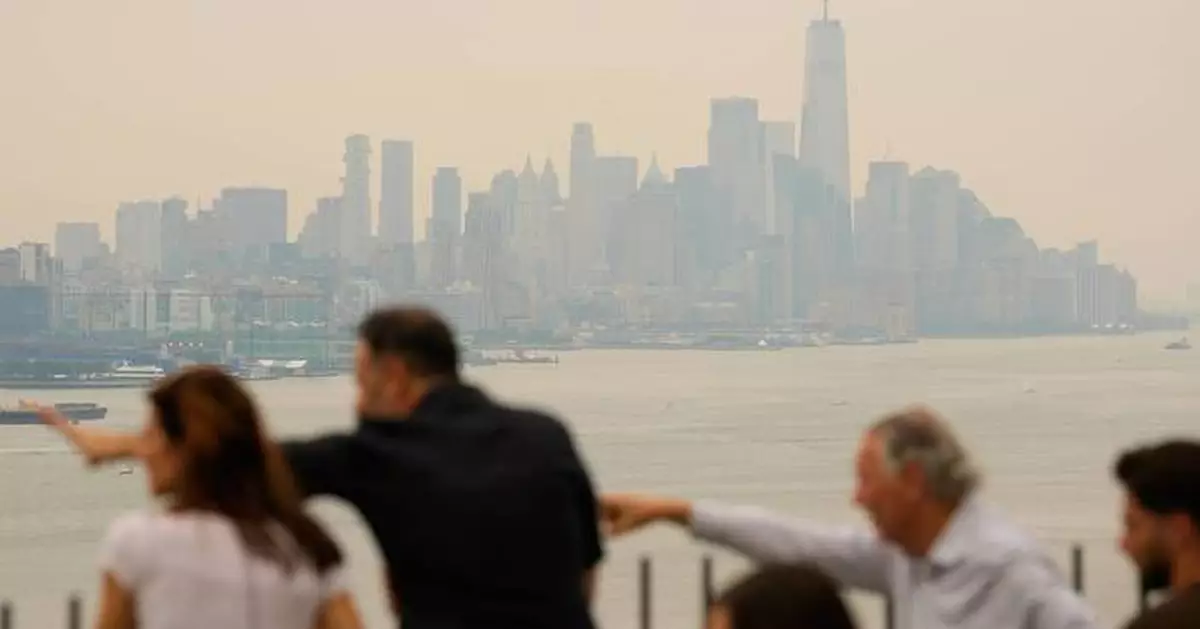
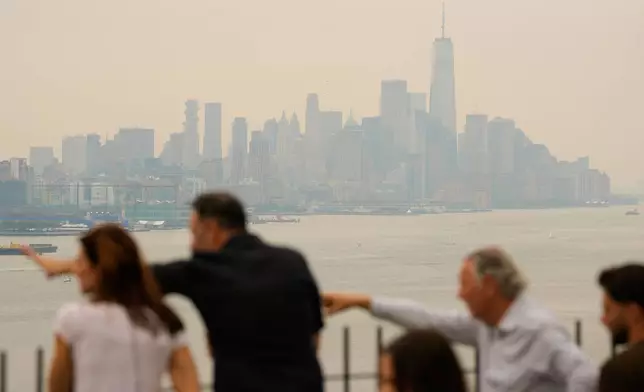
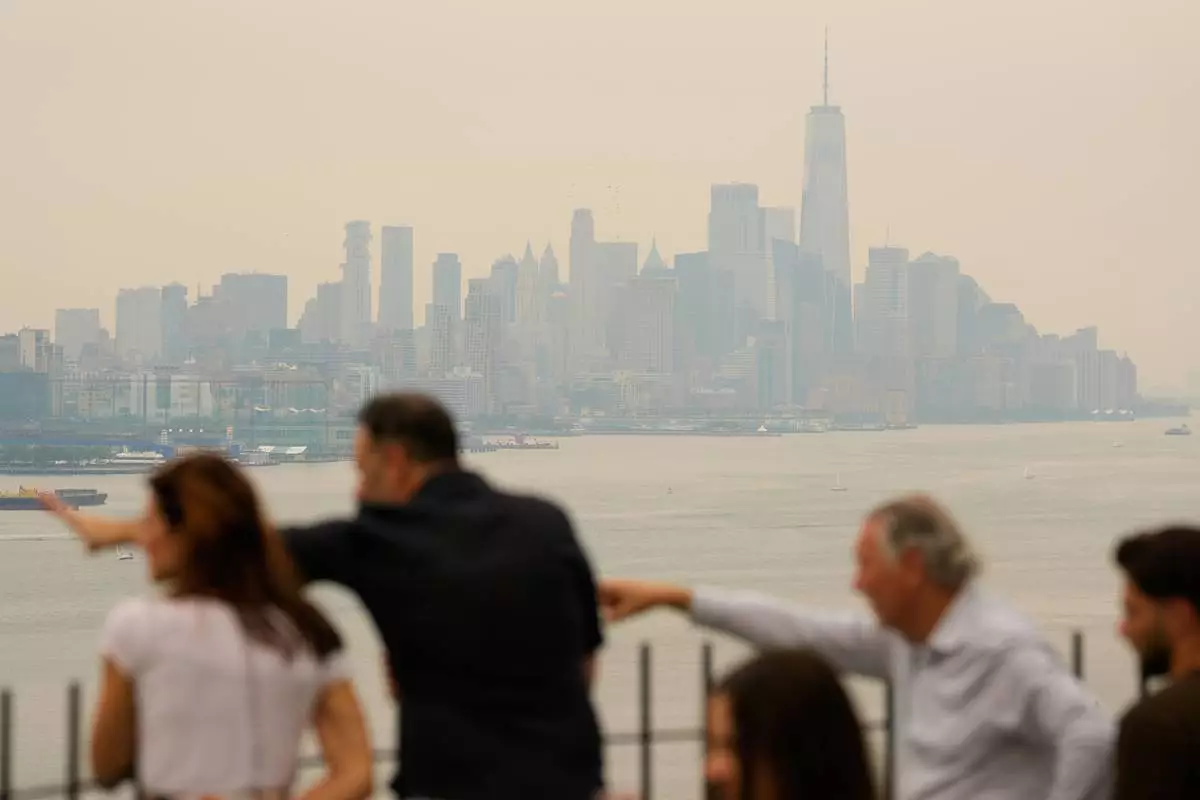
People look over the New York City skyline shrouded in smoke in Weehawken, N.J., Thursday, July 16, 2026. (AP Photo/Seth Wenig)

People look over the New York City skyline shrouded in smoke in Weehawken, N.J., Thursday, July 16, 2026. (AP Photo/Seth Wenig)

Smoke also harms pregnant women, increasing the risk of premature births and low-weight babies who could have breathing problems the rest of their lives, doctors and studies say. And then there are long-term risks connecting prolonged smoke and other air pollution exposure to some cancers and dementia.

After huge global fires in 2018 and 2019, the medical and science communities started looking at the health effects from the smoke with “more and more studies coming out finding that there’s all types of impacts that may not have been so obvious before,” said Dr. Mary Johnson, a Harvard School of Public Health environmental health scientist.

Smoke causes inflammation by triggering the body's immune system to go into overtime to fight the irritant. Scientists have found it can harm the brain, the skin and men's sperm, with almost no system of the body spared, Johnson said. People over 60 become more prone to stroke in wildfire smoke, she said.

“Wildfire smoke is the toxic product of combustion of whatever burned,” which could include houses and cars, said Dr. Courtney Howard, an emergency room physician, chair of the Global Climate and Health Alliance and president-elect of the Canadian Medical Association.

“So really it's a big giant toxic soup of particles and gases.”

Scientists have counted at least 1,000 toxins in wildfire smoke, according to Colorado State University environmental toxicologist Luke Montrose.

“If I gave you a list, you would recognize some of these as being very bad, oftentimes associated with the burning of diesel fuel or cigarette smoke, things like formaldehyde or volatile organic compounds,” Montrose said. “So just the smoke itself can be bad.”

So far this year, more than 5,740 square miles (more than 14,860 square kilometers) of the United States has burned from wildfires, which is 31% more than the average of the previous 10 years on this date, according to the National Interagency Fire Center. The amount of U.S. land burned each year in the 2020s — averaged out over a decade — is now more than twice what it was 30 years ago.

Europe saw a record high amount of land burned in 2025, Canada has had several record or near-record fire years in the 2020s and the Arctic recently has had unprecedented levels of burning.

“Wildfires are becoming more frequent and intense because of climate change, and when a fire happens, you have smoke,” said Colleen Reid, a University of Colorado geographic health professor.

Most of the biggest particles in wildfire smoke fall close to where a blaze is burning, while the smallest particles — the ones that scientists say do the most damage — travel the farthest. In a typical wildfire, the nasty particles that harm human health are about the size of one micron, Reid said.

First those particles have to get by your body's protection, mainly nose hairs and mucus, then they get into your lungs and from there the bloodstream.

Montrose said the particles can be coated in lots of chemicals and have large surface areas. That triggers the body's defense system to “send signals to other cells that say, ‘We have a problem. We need to mount an immune response to this.’ And that’s where you get your acute effect or your effect within minutes, hours or even that day.” It's mostly happening in the hearts and lungs, he said.

And many people die.

On average 24,100 people died each year in the Lower 48 states between 2006 and 2020 due to long-term exposure to tiny particles from wildfire smoke, according to a study this year in the journal Science Advances. A Stanford study projects that U.S. wildfire smoke deaths will increase with climate change and by midcentury hit an annual cost of $244 billion in terms of the economic value the government puts on each life.

On a global scale, wildfire smoke particles cause 677,745 deaths annually, with almost 39% of them children under age 5, according to a 2021 study that combined observations, studies on how the body responds to the particles and computer models to calculate the toll.

The biggest nonlethal effects have to do with the way people breathe, especially those with asthma.

“We did a study here in 2014 after we had about two-and-a-half months of smoke off and on, because we’re in the subarctic so we’re warming at triple the global rate, so in a way we’re kind of canaries in the coal mine of the health impacts of climate change,” Howard said on a clear day from Yellowknife, Canada. “We found a full doubling of emergency department visits for asthma and about 50% increase in pneumonia.”

“Even in individuals that don’t have asthma, the air can be so irritating that you could have difficulty with your respiratory system regardless,” Johnson said, “whether it’s coughing, whether it's chest tightness, whether it’s sore throat, headache.”

Studies have linked smoke to people having more trouble with decision making and other cognitive issues. People come to the emergency room depressed, Howard said. That's why it's important to find a place with clean air — including designated shelters or libraries — to get a break from the smoke and possibly exercise, she said.

Experts suggest people wear high-quality masks when outdoors, even though they don't provide perfect protection. Inside, check windows and doors for seals, invest in a good ventilation system and check air filters, they say.

“Staying away from the smoke is No. 1 if you can,” Johnson said.

The Associated Press’ climate and environmental coverage receives financial support from multiple private foundations. AP is solely responsible for all content. Find AP’s standards for working with philanthropies, a list of supporters and funded coverage areas at AP.org.
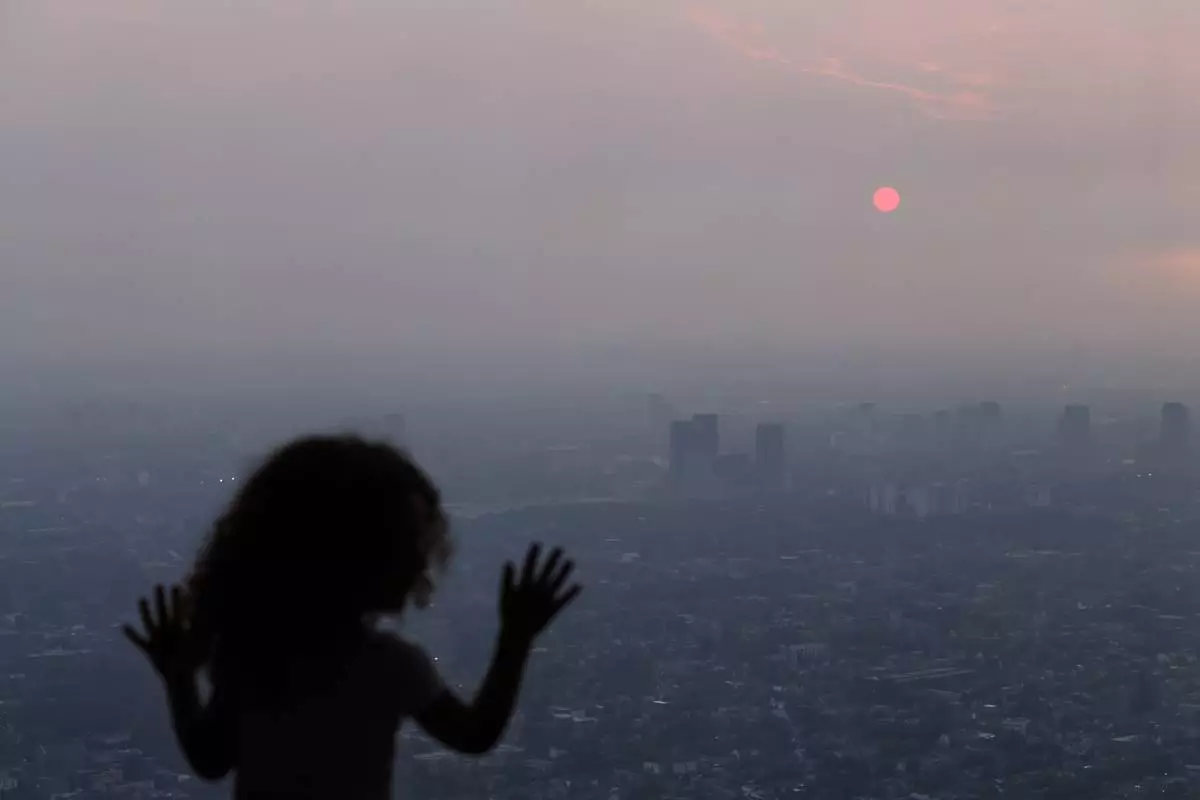
A child looks out from the observation deck of the CN Tower as smoke from wildfires in Northwestern Ontario blankets the city of Toronto, Thursday, July 16, 2026. (Cole Burston/The Canadian Press via AP)
A child looks out from the observation deck of the CN Tower as smoke from wildfires in Northwestern Ontario blankets the city of Toronto, Thursday, July 16, 2026. (Cole Burston/The Canadian Press via AP)

Michael Lesperance weeds his driveway wearing a mask during poor air quality due to smoke from Canadian wildfires Thursday, July 16, 2026, in Grosse Pointe Park, Mich.. (AP Photo/Paul Sancya)
Michael Lesperance weeds his driveway wearing a mask during poor air quality due to smoke from Canadian wildfires Thursday, July 16, 2026, in Grosse Pointe Park, Mich.. (AP Photo/Paul Sancya)

The New York City skyline is seen through a cover of wildfire smoke, in Jersey City, N.J., Friday, July 17, 2026. (AP Photo/Ryan Murphy)
The New York City skyline is seen through a cover of wildfire smoke, in Jersey City, N.J., Friday, July 17, 2026. (AP Photo/Ryan Murphy)

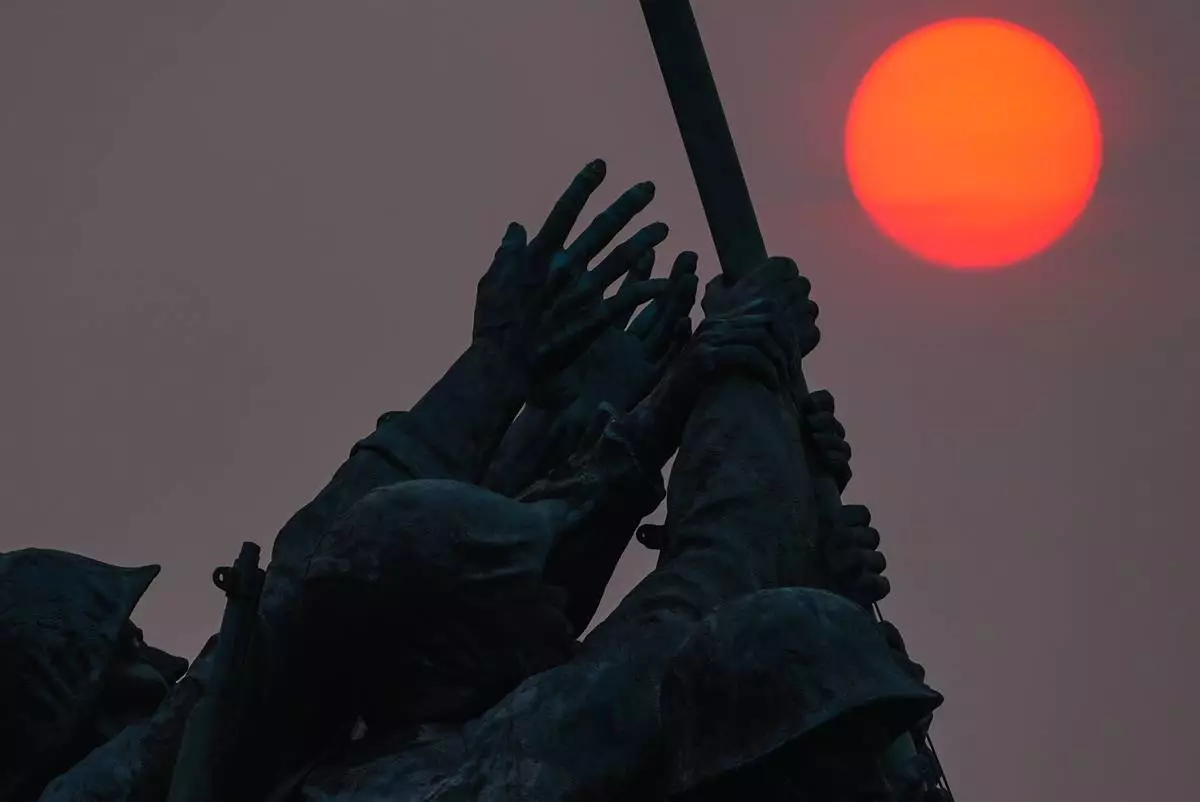
The sun is obscured by wildfire smoke as it rises behind the Marine Corps War Memorial, Friday, July 17, 2026, in Arlington, Va. (AP Photo/Julia Demaree Nikhinson)
The sun is obscured by wildfire smoke as it rises behind the Marine Corps War Memorial, Friday, July 17, 2026, in Arlington, Va. (AP Photo/Julia Demaree Nikhinson)

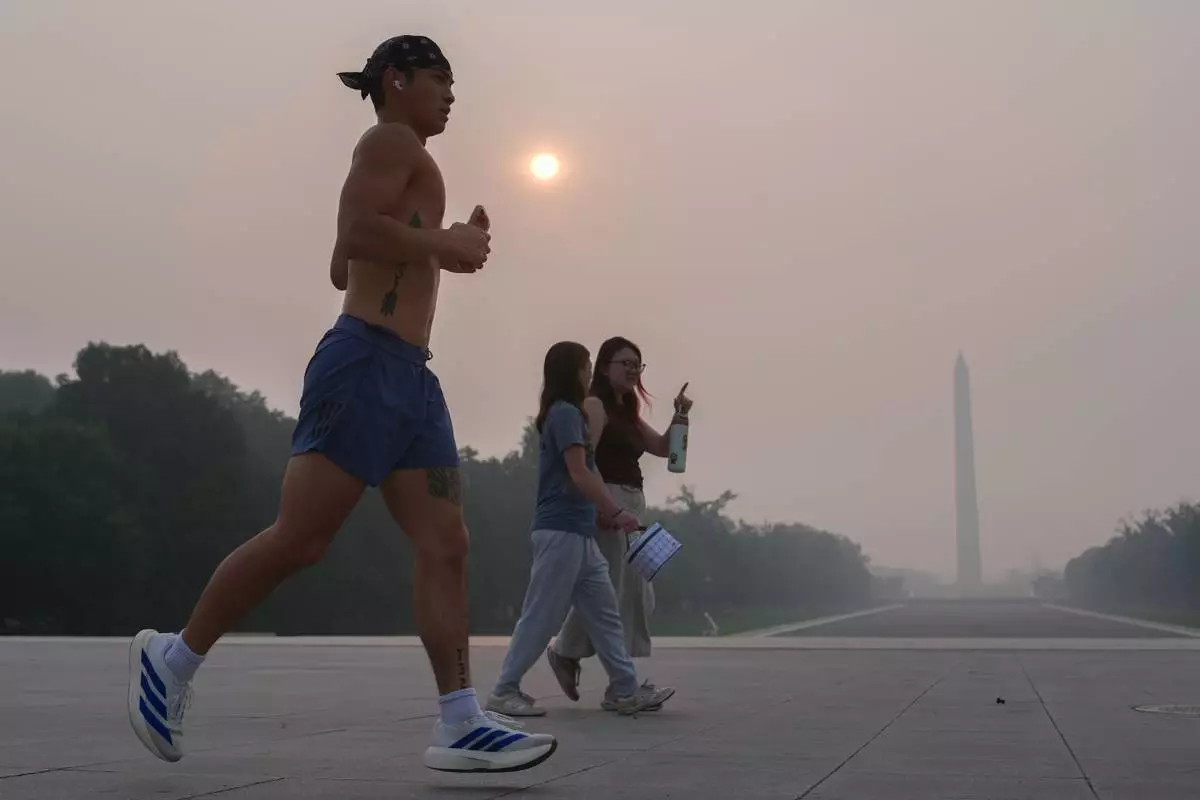
The sun is obscured by wildfire smoke as people run in front of the Washington Monument and Lincoln Memorial Reflecting Pool, Friday, July 17, 2026, on the National Mall in Washington. (AP Photo/Julia Demaree Nikhinson)
The sun is obscured by wildfire smoke as people run in front of the Washington Monument and Lincoln Memorial Reflecting Pool, Friday, July 17, 2026, on the National Mall in Washington. (AP Photo/Julia Demaree Nikhinson)

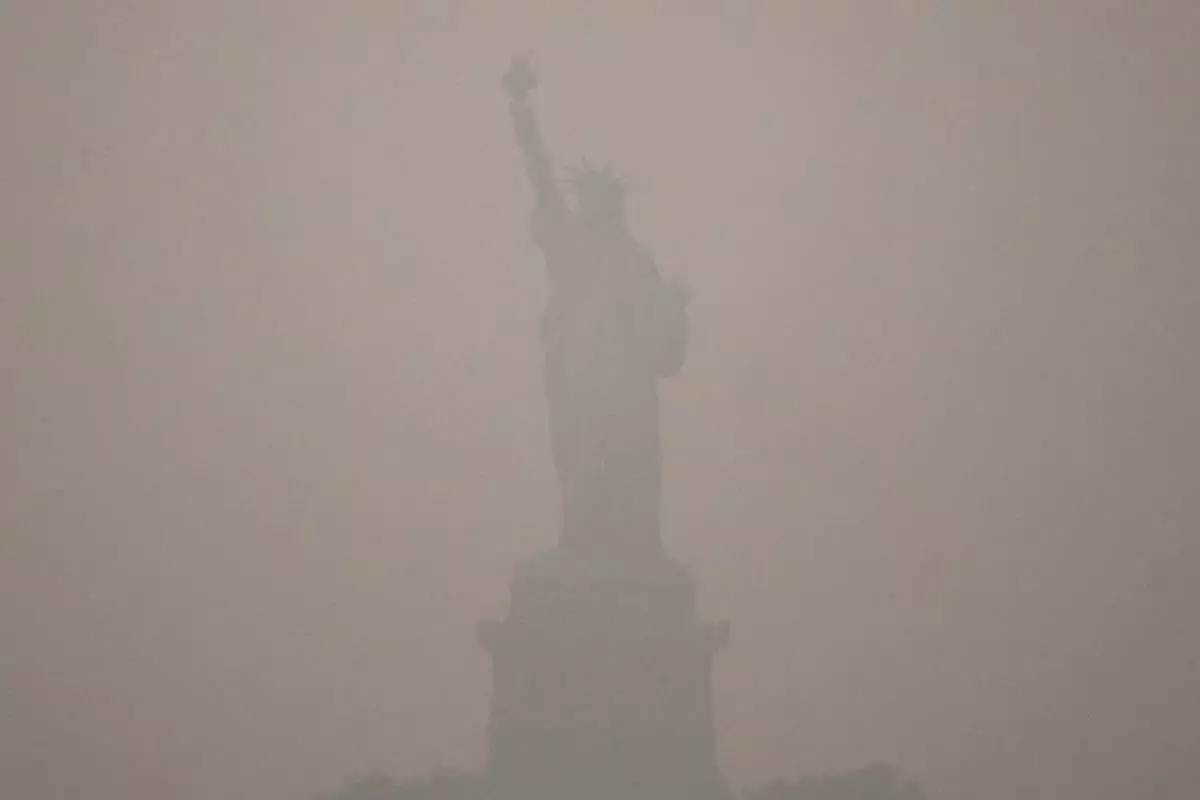
The Statue of Liberty stands during sunset as smoke from wildfires blankets the sky, Thursday, July 16, 2026, in the Brooklyn borough of New York. (AP Photo/Yuki Iwamura)
The Statue of Liberty stands during sunset as smoke from wildfires blankets the sky, Thursday, July 16, 2026, in the Brooklyn borough of New York. (AP Photo/Yuki Iwamura)

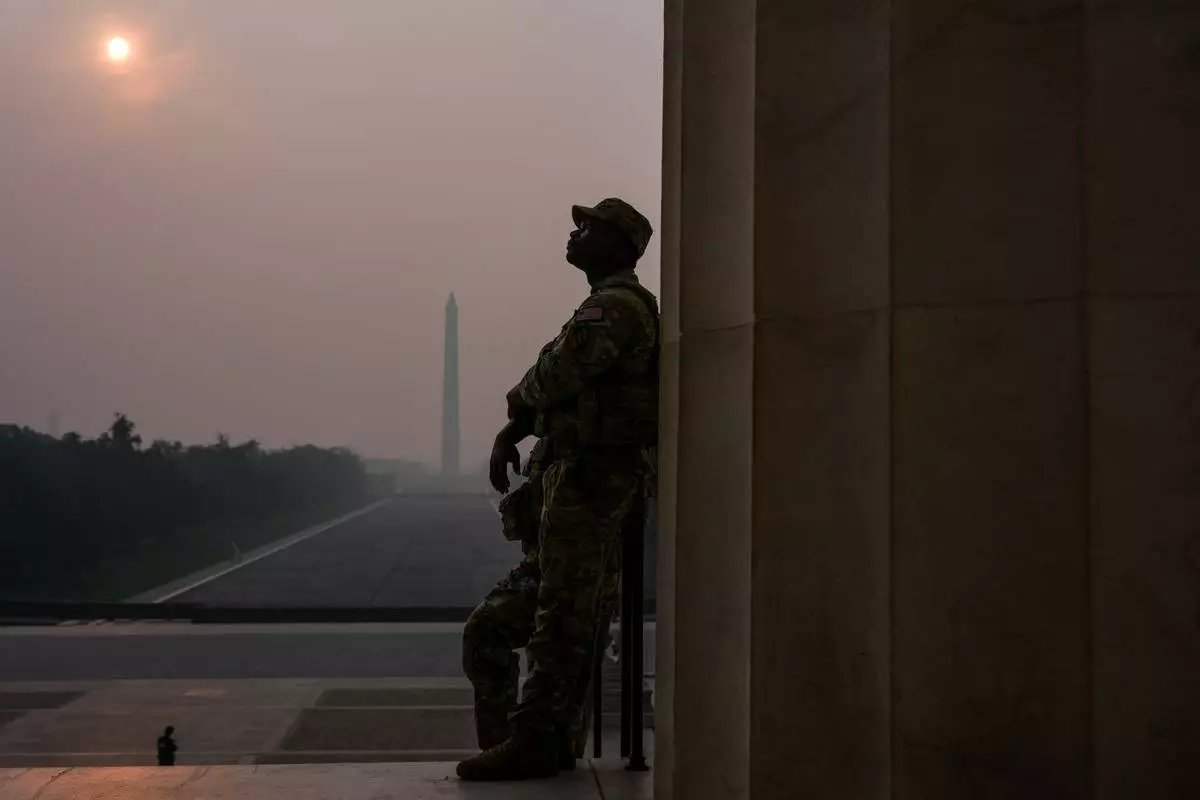
National Guardsmen patrol the Lincoln Memorial as the sun, obscured by wildfire smoke, rises above the Washington Monument and the Reflecting Pool, Friday, July 17, 2026, on the National Mall in Washington. (AP Photo/Julia Demaree Nikhinson)
National Guardsmen patrol the Lincoln Memorial as the sun, obscured by wildfire smoke, rises above the Washington Monument and the Reflecting Pool, Friday, July 17, 2026, on the National Mall in Washington. (AP Photo/Julia Demaree Nikhinson)

Jimmy Tyner walks along the Detroit River during poor air quality due to smoke from Canadian wildfires Thursday, July 16, 2026, in Detroit. (AP Photo/Paul Sancya)
Jimmy Tyner walks along the Detroit River during poor air quality due to smoke from Canadian wildfires Thursday, July 16, 2026, in Detroit. (AP Photo/Paul Sancya)

A person wearing a mask walks in Times Square as smoke from wildfires blankets the sky, Thursday, July 16, 2026, in New York. (AP Photo/Yuki Iwamura)
A person wearing a mask walks in Times Square as smoke from wildfires blankets the sky, Thursday, July 16, 2026, in New York. (AP Photo/Yuki Iwamura)

Hazy skies from Canadian wildfires cover Silver Beach and Lake Michigan, Thursday, July 16, 2026, in St. Joseph, Mich. (Don Campbell/The Herald-Palladium via AP)
Hazy skies from Canadian wildfires cover Silver Beach and Lake Michigan, Thursday, July 16, 2026, in St. Joseph, Mich. (Don Campbell/The Herald-Palladium via AP)

Pedestians cross Borden Avenue as the New York City skyline is obscured during poor air quality due to smoke from Canadian wildfires Thursday, July 16, 2026, in the Queens borough of New York. (AP Photo/Frank Franklin II)
Pedestians cross Borden Avenue as the New York City skyline is obscured during poor air quality due to smoke from Canadian wildfires Thursday, July 16, 2026, in the Queens borough of New York. (AP Photo/Frank Franklin II)

A person looks out a window at the Top of the Rock Observation Deck as wildfire smoke hangs over New York, Thursday, July 16, 2026. (AP Photo/Yuki Iwamura)
A person looks out a window at the Top of the Rock Observation Deck as wildfire smoke hangs over New York, Thursday, July 16, 2026. (AP Photo/Yuki Iwamura)

People look over the New York City skyline shrouded in smoke in Weehawken, N.J., Thursday, July 16, 2026. (AP Photo/Seth Wenig)

People look over the New York City skyline shrouded in smoke in Weehawken, N.J., Thursday, July 16, 2026. (AP Photo/Seth Wenig)
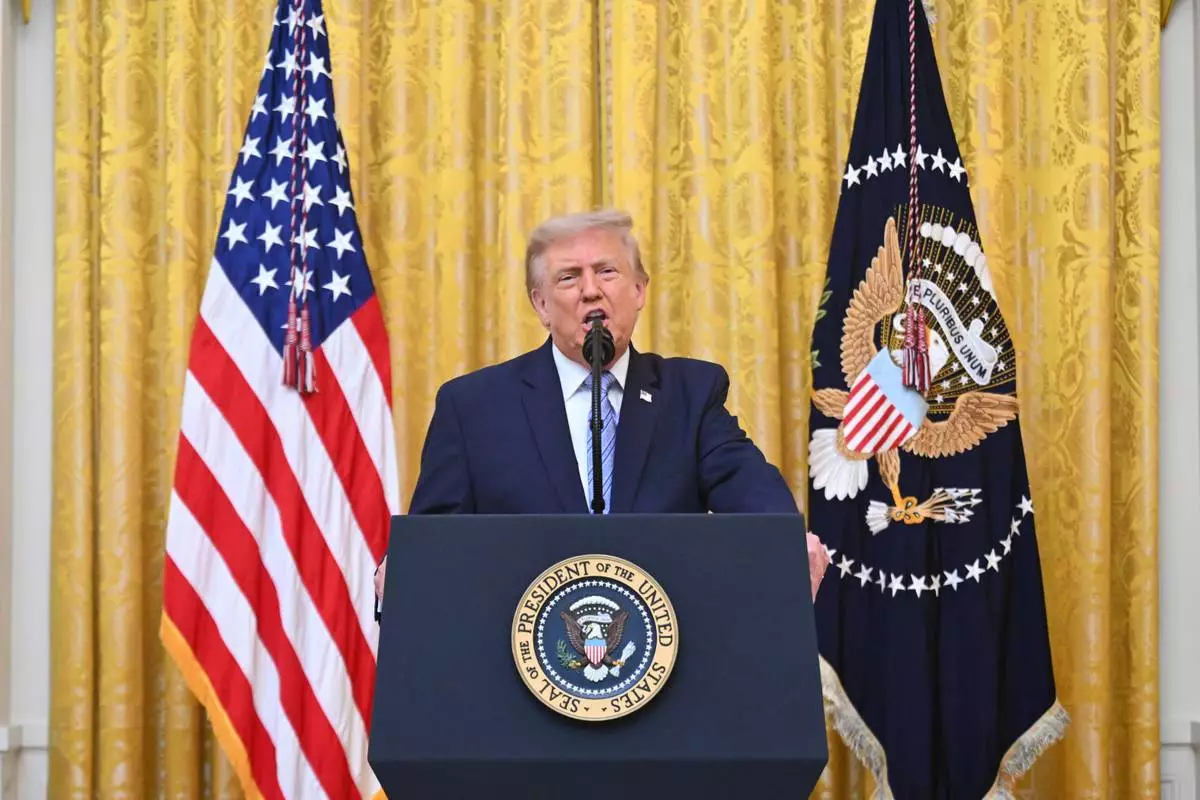
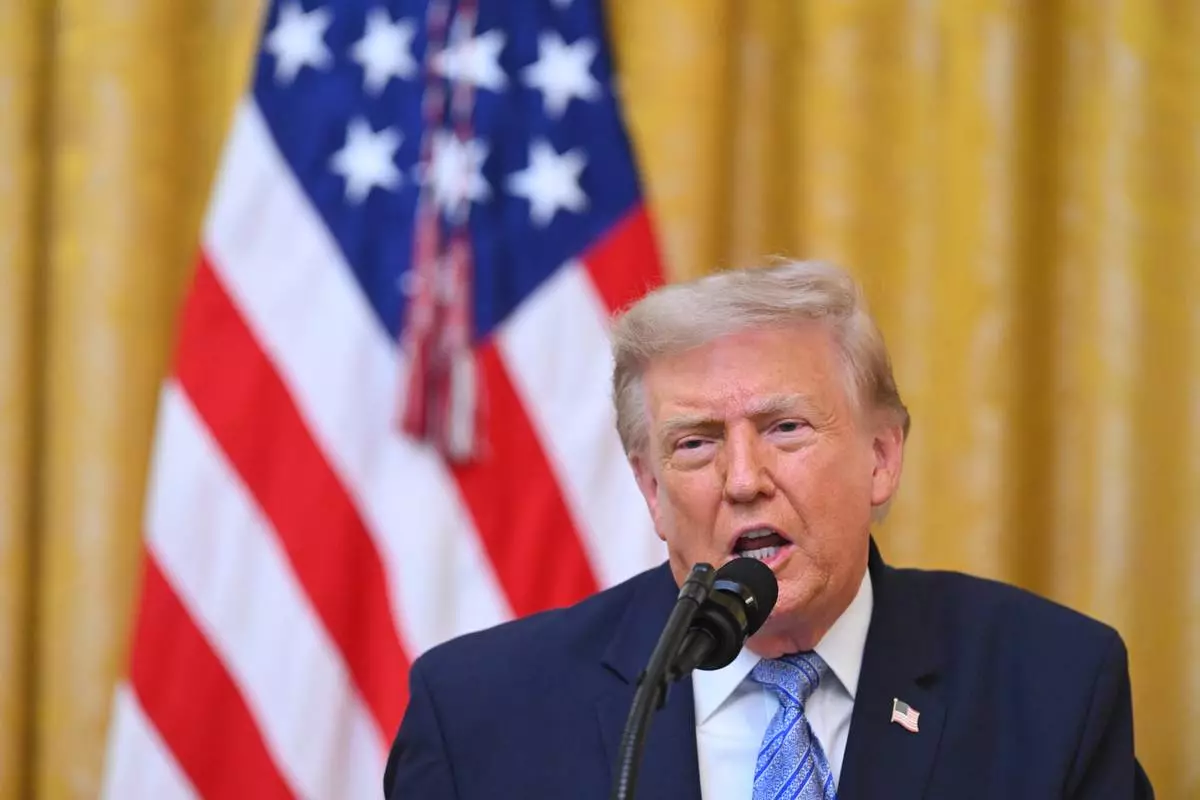
President Donald Trump used a primetime address to the nation to elevate his yearslong push to raise doubts about the legitimacy of U.S. elections and dispute his 2020 loss — this time, to justify his push to pass a strict voter ID bill.

His allegations Thursday night of interference and influence didn’t include key context. Nor did he produce evidence that votes had been manipulated or that the election outcome had been altered.

Trump also said he was releasing previously classified documents related to the 2020 and 2018 elections. Thus far, no credible intelligence — including repeated audits and reviews, many runby Republicans — has shown the vote count in 2020 was fraudulent or manipulated by foreign actors. Trump did not question his election wins in 2016 or 2024.

Here's the latest:

In his speech to the nation Thursday evening, President Trump said Americans deserve secure elections, and he claimed to be using federal authority to prevent them from being “stolen.”

In fact, one of the strongest security features of U.S. elections is the fact that they aren’t conducted at the federal level. America votes in more than 10,000 different election jurisdictions, each with different rules set by state and sometimes local governments.

That structure makes the nation’s elections extraordinarily complicated — and also safe from widespread fraud. And when misconduct does happen — rarely — security protocols frequently catch it.

▶ Read more

In January, Homeland Security said it had hired 12,000 new officers and agents since the hiring surge began and said thousands of those new officers were already out on the streets assisting with investigations. The number includes both deportation officers and agents for Homeland Security Investigations, a separate agency that falls under ICE.

ICE has said the majority of new hires are police and military veterans. But evidence has been mounting that applicants with questionable histories were either not fully vetted before they were brought on or were hired in spite of their past, an investigation by The Associated Press earlier this year found.

Immigration and Customs Enforcement has been rapidly expanding its workforce, hiring thousands of new officers as part of the Trump administration’s attempt to ramp up immigration arrests and deportations.

The supersizing of ICE — fueled by an infusion of billions of dollars granted by Congress — has raised concerns about the agency’s hiring practices and whether officers being brought on are receiving proper vetting. Those concerns have been rejected by the Department of Homeland Security.

Relatives of the ICE officer who shot a Colombian man in Maine this week told The Associated Press he struggled with serious mental health issues since early childhood and never should have been given a badge and gun to patrol American streets.

▶ Read more

Democratic members of Congress demanded answers about Homeland Security’s vetting and training of immigration enforcement agents after it was disclosed Thursday that the ICE officer involved in a deadly shooting this week in Maine had a history of mental health issues and violent behavior.

The Associated Press reported that David Brouillette, the Immigration and Customs Enforcement officer who shot a Colombian man in Maine, is an Army veteran who’s struggled with serious mental health issues since early childhood, according to several of his close relatives.

The AP reached out to congressional leaders and several key lawmakers of both parties for response.

The top Democrat on the House Homeland Security Committee, Rep. Bennie Thompson of Mississippi, said Brouillette’s history of violence and mental health issues, as well as the death in Maine, “directly call into question the supposed vetting and training ICE does of its recruits.”

▶ Read more

As President Trump threatened sanctions for those who didn’t cover his address live Thursday night, the nation’s broadcast and cable news operations wrestled with the thorniest of questions: To air or not to air?

Networks and their news operations, broadcast and cable alike, spent the hours leading up to Trump’s address debating how to cover it — and struggling to balance delivering the news with handing over their airwaves to potential falsehoods about the 2020 elections.

In the end, a patchwork quilt of coverage was largely united by one common strategy: real-time fact-checking as much as was possible even while the president was still speaking.

The dilemma took place against a backdrop of deep tension between the media and a president working to exert control over it by whatever means he can. Even in his speech itself, Trump excoriated networks that chose not to carry it live.

▶ Read more

Secretary of State Marco Rubio is heading to the Philippines next week to attend meetings with foreign ministers at a gathering of the Association of Southeast Asian Nations, or ASEAN.

The State Department says Rubio is going to meet with his counterparts and senior officials from governments in the region as he pushes for a free and open Indo-Pacific.

Rubio is scheduled to leave for Manila on Sunday and head back to the U.S. on Thursday.

China on Friday said it has never interfered in U.S. elections and has no interest in doing so, urging Washington to stop making what it described as “groundless accusations” after President Trump accused Beijing of meddling in the 2020 election.

In an address to the nation Thursday, Trump again raised doubts about the U.S. elections results in 2020 and accused China of interfering in them.

“The relevant allegations by the U.S. are entirely fabricated and aimed at vilifying China,” said China’s Foreign Ministry spokesperson Lin Jian. “We have no interest in interfering in US elections and have never done so.”

In a daily briefing in Beijing, Lin called on the U.S. to stop making groundless accusations against China.

▶ Read more

Sue Gordon, principal deputy director of national intelligence in Trump’s first term, called the president’s address “a dangerous speech about an incredibly important topic.” She said the intelligence community throughout Trump’s first term was alarmed about foreign interference in elections, but Trump scoffed at them, angered at the investigation of his campaign’s relationship with Russia.

“He had an entire term to deal with it and I don’t know how you can believe how the same community that told him about it, that was excoriated about it” wouldn’t warn him in 2020, Gordon said on CNN.

Conservative commentator John Solomon, who joined the White House staff last month and was seated in the East Room for Trump’s speech, later told MS NOW “the intelligence community has zero evidence that someone has flipped — that a foreign power flipped — a vote in 2020, ’22 or ’24.”

But, he added, “We’re not through all the documents.”

President Donald Trump began Thursday night with a stark warning about what he described as flaws in the voting system and said he was releasing previously classified documents related to the 2020 and 2018 elections, when he lost the presidential election and when his party suffered losses.

Trump’s speech presented allegations of interference and influence in ways that lacked key context and did not produce evidence that votes had been manipulated or that the election outcome had been altered.

Notably, he focused on China but glossed over Russia, a country intelligence officials have said favored Trump in 2016 and 2020 and engaged in wide-ranging influence campaigns aimed at boosting him over Democrat Joe Biden in the latter campaign.

A twice-elected president complained about his one personal defeat, alleged a cover-up by officials in his own first administration and surfaced claims about countries attempting to harm his own prospects while staying silent on steps taken by other nations to boost him.

Trump used the remarks to justify his push to pass a strict voter ID bill in Congress that hasn’t advanced because it lacks enough support from his fellow Republicans.

“America is back and doing really well, but we still have a major challenge that must be urgently addressed, because no country can be great without fair and honest elections,” he said.

President Donald Trump speaks in the East Room of the White House, Thursday, July 16, 2026, in Washington. (Saul Loeb/Pool via AP)

President Donald Trump speaks in the East Room of the White House, Thursday, July 16, 2026, in Washington. (Saul Loeb/Pool via AP)

President Donald Trump speaks in the East Room of the White House, Thursday, July 16, 2026, in Washington. (Saul Loeb/Pool via AP)

President Donald Trump speaks in the East Room of the White House, Thursday, July 16, 2026, in Washington. (Saul Loeb/Pool via AP)

Recommended Articles