The tight timeline to replace former Maine Senate nominee Graham Platner has left Democratic hopefuls scrambling to woo his progressive base while trying to turn the focus from the disgraced oysterman to defeating Republican Sen. Susan Collins in November.
It's a delicate balance for the candidates, who are vying to face Collins in a contest that could decide control of the Senate as Platner’s shadow hangs over the race. In their first debate Thursday night, one of the first questions candidates were asked was: What was Graham Platner's best idea?
Click to Gallery

From left, U.S. Senate candidates David Costello, Elizabeth Dickerson, Dan Kleban, and Ashley Webb prepare for a televised debate at the WCSH-6 studio, Thursday, July 16, 2026, in Portland, Maine. (AP Photo/Robert F. Bukaty)
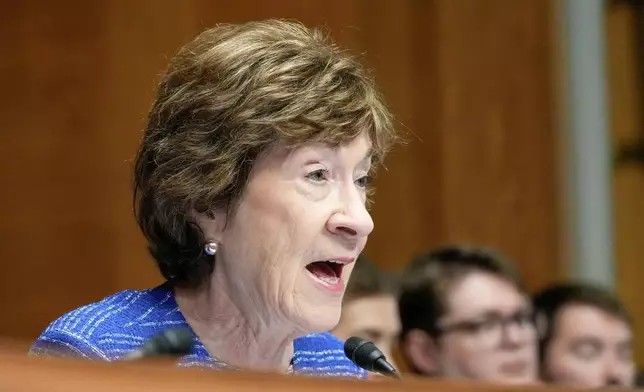
Sen. Susan Collins, R-Maine, asks a question during a Senate Health Education Labor and Pension committee confirmation hearing for Keith Sonderling to be the Labor Secretary, on Capitol Hill, Thursday, July 16, 2026, in Washington. (AP Photo/Mariam Zuhaib)
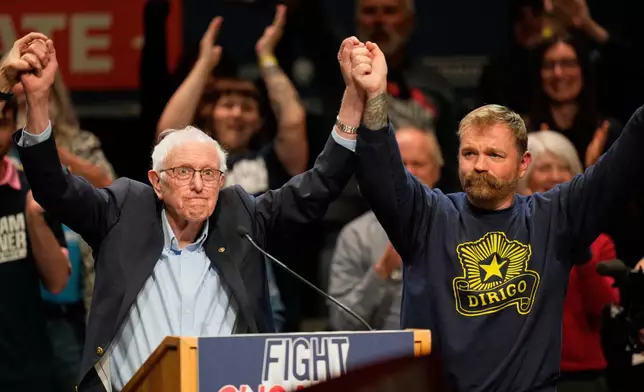
FILE - Graham Platner, Democratic candidate for U.S. Senate, and Sen. Bernie Sanders, I-Vt., left, join hands at an event in Orono, Maine, May 24, 2026. (AP Photo/Robert F. Bukaty, File)

Campaign signs for former Democratic candidate for U.S. Senate Graham Platner are seen at his headquarters Thursday, July 9, 2026, in Ellsworth, Maine. (AP Photo/Robert F. Bukaty)

From podium left, U.S. Senate candidates Shenna Bellows, Troy Jackson, Dr. Nirav Shah, and Jordan Wood talk with moderator Phil Hirschkorn at WCSH-6 before a televised debate at the WCSH-6 studio Thursday, July 16, 2026, in Portland, Maine. (AP Photo/Robert F. Bukaty)
Moving past Platner is just one of the challenges facing Democrats. The never-before-used process to pick a new nominee means candidates have less than three weeks to pull off what typically takes campaigns months or years, from organizing volunteers to raising money and preparing for debates.
The whiplash many of the candidates are facing was on display Thursday.
Asked by debate moderators about President Donald Trump's decision to capture Venezuelan President Nicolás Maduro and his wife earlier this year, Secretary of State Shenna Bellows gave inaccurate information about Collins not pushing back against Trump, a Republican. When a moderator called her on it, Bellows said she was on vacation on the Kennebec River last week after previously focusing on her unsuccessful gubernatorial campaign and hadn't expected to be running for the Senate.
“When I need to know the facts, I will. I’ll do my homework," said Bellows, who lost to Collins in 2014.
The field of 12 candidates also includes former public health leader Nirav Shah and union-backed logger Troy Jackson, who campaigned alongside Platner in a failed bid for governor.
Platner quit the Senate race last week after he was accused of rape, which he denies, and his campaign quickly imploded as supporters revoked their endorsements and resources.
Democrats have until July 27 to choose a new nominee, according to state law. The Maine Democratic Party's succession plan calls for a state party convention at which 601 delegates will meet on July 25 and vote for Platner's replacement. The majority of the convention delegates will be selected this weekend from each of the state’s 16 counties.
Candidates hoping to replace Platner have been recruiting delegates who will vote for them at the convention. The candidates also must collect 500 voter signatures needed to qualify for the convention vote.
“I don’t think anyone’s happy that we’re in this situation,” said Dan Jenkins, a Maine Democrat who has applied to be a delegate. “We would have preferred that this had broken many, many months ago and then Graham had exited the race when there was a time for a democratic process. But it's where we are.”
Jackson is among the handful of candidates pivoting to the Senate race after running for other political offices, likely giving them a leg up in not having to launch from scratch.
Our Revolution, a progressive organization founded by Sen. Bernie Sanders of Vermont that had originally backed Platner, has thrown its support behind Jackson, the former Maine Senate president. Sanders, an independent who caucuses with Democrats, has not endorsed in the race.
Shah, former director of Maine’s Center for Disease Control and Prevention, also unsuccessfully ran in this year’s Maine Democratic governor’s primary. He has been pitching Platner’s supporters that he’s also an outsider who can unify a fractured Democratic Party.
“You have an important place in this campaign, and we welcome your voices,” Shah said earlier this month speaking to Platner’s base.
Bellows also ran for governor. She's hoping that her previous battles with Trump will bolster her argument that she’ll be an advocate for the working class.
Bellows previously attempted to run against Collins in 2014 as the Senate Democratic nominee and lost in a landslide. She later went on to win a seat as a state senator before becoming Maine’s secretary of state. She’s since downplayed her prior loss to Collins by pointing to the Democratic establishment’s unwillingness to take on the Republican in 2014.
Another candidate, Jordan Wood, initially announced his intent to run in the Maine Democratic Senate primary. He dropped out last fall to run in the state’s 2nd District but lost that race.
The fatal shooting by Immigration and Customs Enforcement in Maine this week has been top of mind among the potential Senate nominees.
The Embassy of Colombia has identified the man killed Monday in Biddeford, roughly 15 miles (24 kilometers) southwest of Portland, as Johan Sebastián Durán Guerrero, a 26-year-old Colombian national. The Department of Homeland Security has since said an ICE officer fired his weapon when the man officers were pursuing attempted to flee the scene, threatening “public safety.”
Many have rushed to connect Collins to the embattled federal agency.
All the candidates who debated Thursday said they agreed with the call to “abolish ICE,” though Wood stopped short of saying the agency should be completely dissolved.
“I believe that when I say we have to abolish it, what I mean is that we need a new law enforcement agency that has the trust of the people,” Wood said.
Jackson disagreed, calling ICE a “rogue agency that goes around doing things that they’re being told to on high.”
Platner attracted more than 150,000 votes during the June 9 primary, an eye-opening number that signaled a progressive base eager to support a candidate known for his promise to defend the working class and ability to rally large crowds.
With little more than a week until the state convention to find Platner's replacement, it still remains unknown just who will be able to capture that same excitement seen among Platner's base.
When pressed during Thursday's debate about Platner's best idea on the campaign trail, Jackson pointed to his commitment to “Medicare for All.” As a gubernatorial candidate, Jackson also voiced support for replacing job-based and individual private health insurance with a government-run plan that guarantees coverage for all with no premiums, no deductibles and only minimal copays for certain services.
Bellows said that she agreed with Platner’s description that democracy in the U.S. has been corrupted by those in power.
Shah said he would take up Platner's commitment to “abolish ICE,” while Wood said he admired Platner's decision to say that Israel is committing genocide in Gaza, something Israel denies.
“Graham got into this race saying, ‘this is genocide.’ And I learned that it is so important in these moments to draw those moral lines,” Wood said.
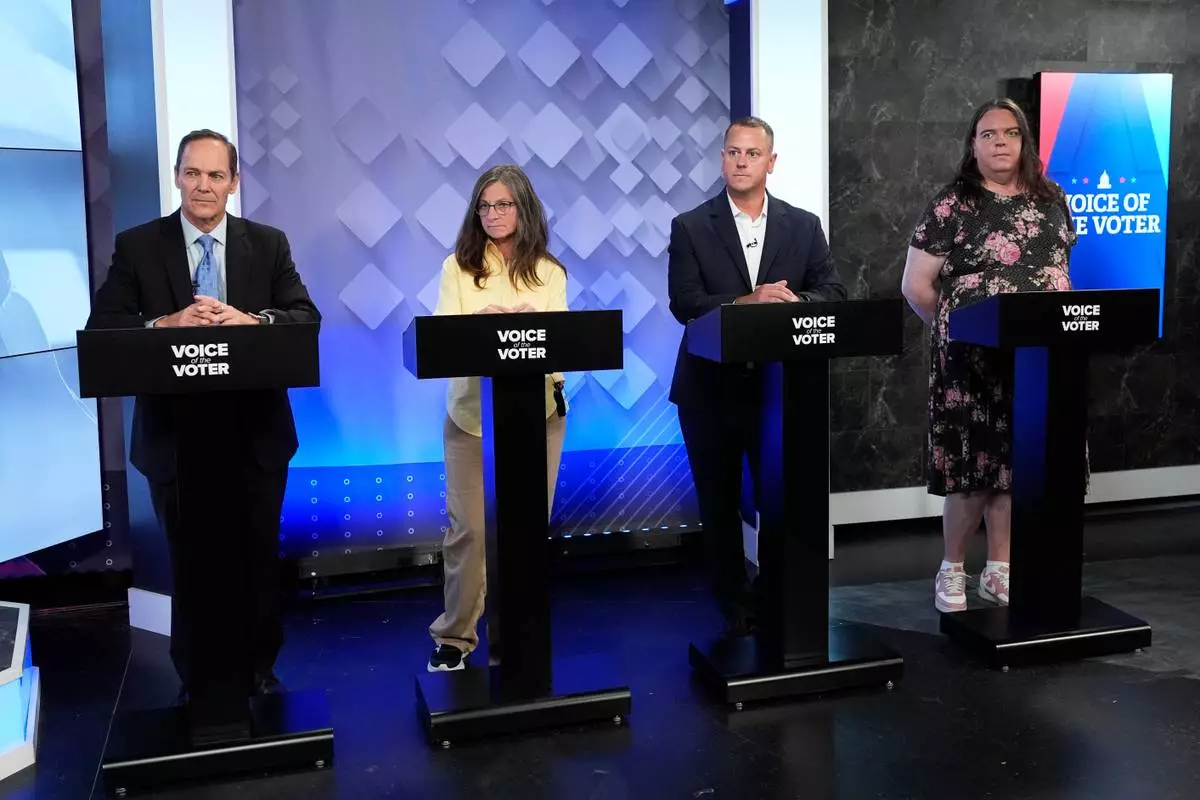
From left, U.S. Senate candidates David Costello, Elizabeth Dickerson, Dan Kleban, and Ashley Webb prepare for a televised debate at the WCSH-6 studio, Thursday, July 16, 2026, in Portland, Maine. (AP Photo/Robert F. Bukaty)
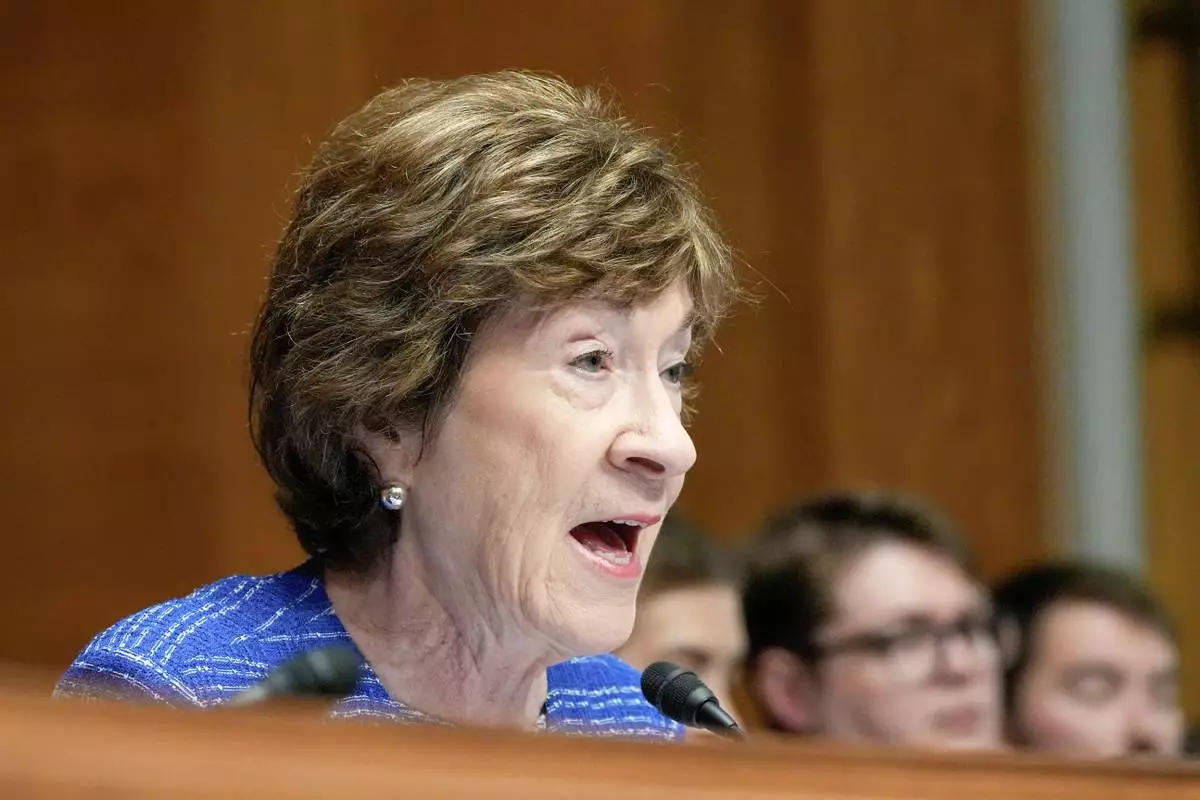
Sen. Susan Collins, R-Maine, asks a question during a Senate Health Education Labor and Pension committee confirmation hearing for Keith Sonderling to be the Labor Secretary, on Capitol Hill, Thursday, July 16, 2026, in Washington. (AP Photo/Mariam Zuhaib)
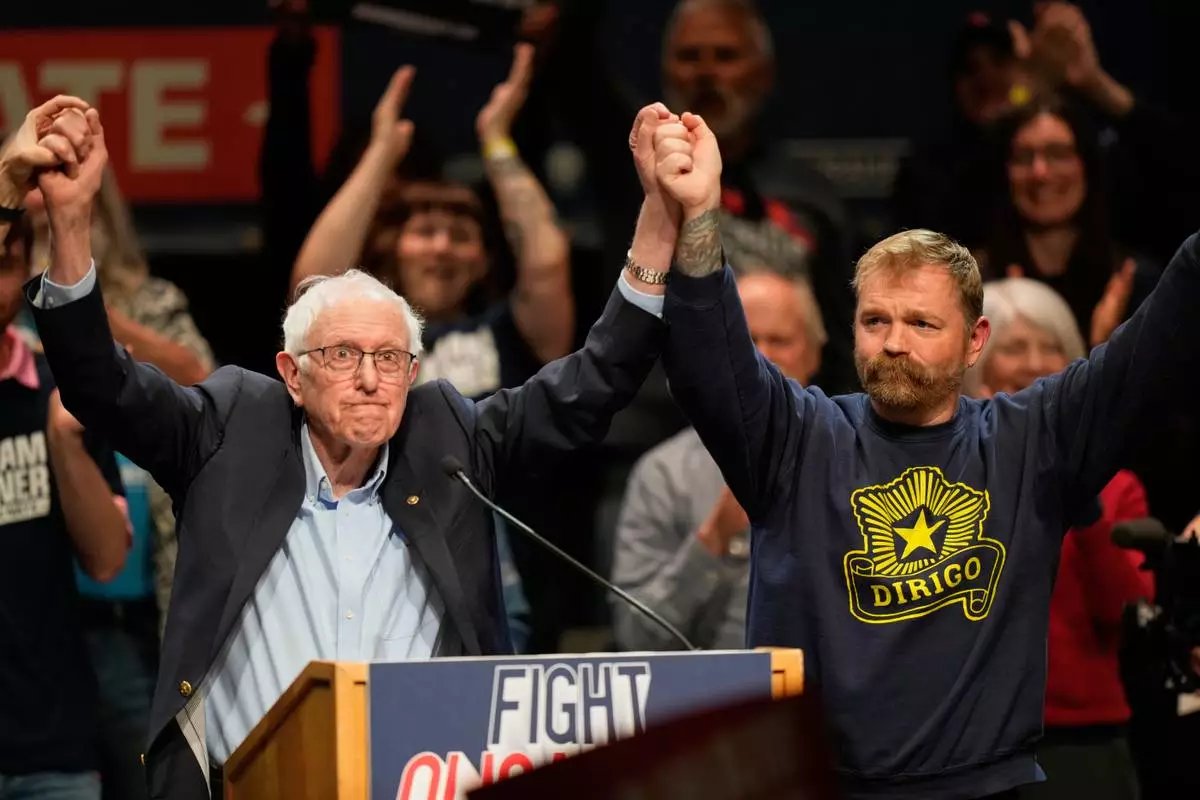
FILE - Graham Platner, Democratic candidate for U.S. Senate, and Sen. Bernie Sanders, I-Vt., left, join hands at an event in Orono, Maine, May 24, 2026. (AP Photo/Robert F. Bukaty, File)

Campaign signs for former Democratic candidate for U.S. Senate Graham Platner are seen at his headquarters Thursday, July 9, 2026, in Ellsworth, Maine. (AP Photo/Robert F. Bukaty)

From podium left, U.S. Senate candidates Shenna Bellows, Troy Jackson, Dr. Nirav Shah, and Jordan Wood talk with moderator Phil Hirschkorn at WCSH-6 before a televised debate at the WCSH-6 studio Thursday, July 16, 2026, in Portland, Maine. (AP Photo/Robert F. Bukaty)