BUENOS AIRES, Argentina (AP) — Cervantes and Borges. Tortilla and asado. Flamenco and tango.
Argentines and Spaniards have long been united by blood ties and a relationship of mutual admiration, but the World Cup final between these two Spanish-speaking nations has placed many of them at a crossroads: Should they support La Furia or La Albiceleste on Sunday?
“It feels like being caught between a rock and a hard place,” admitted Juan Manuel Posada, a 75-year-old Spaniard originally from Asturias who settled in Buenos Aires in 1968.
The clash in New Jersey will mark the first All-Spanish-speaking World Cup final since the inaugural 1930 tournament, when host Uruguay defeated Argentina 4–2 in Montevideo.
It was a Spaniard, Pedro de Mendoza, who founded Buenos Aires in the mid-16th century. The battles for independence did not alter the strong cultural influence of the Iberian Peninsula on the young nation — an influence that deepened with the waves of Spanish migration in the first half of the 20th century.
“It’s as if I’d arrived just yesterday. My heart is in Asturias, in Spain, and with the Spanish national team. Without a doubt,” said Posada, a fan of the Spanish club Sporting de Gijón who, in his adopted country, became a supporter of Independiente de Avellaneda. “If Spain wins, great, but if Argentina wins, I won’t be upset at all,” he added in the Asturian accent he still retains.
Manuel Fernández Acevedo is 81 years old; he left Baiona, in Vigo, with his family when he was very young to settle in Argentina, where his daughter and granddaughter were born. Torn between the two countries, he said, “May the best team win. If Spain wins, that’s great, and if it’s Argentina’s turn, that’s fine, too.”
Just as literature, gastronomy, and music were enriched by that bond of brotherhood, football also felt its impact, with Argentina's Alfredo Di Stéfano and Lionel Messi standing out as the greatest icons at Real Madrid and Barcelona, respectively.
Surprisingly, there is no classic football rivalry between the two countries, partly because, in nearly a century of World Cup history, the Spanish and Argentines have faced each other only once. That encounter was during the group stage of the 1966 World Cup, resulting in a victory for La Albiceleste.
Of course, a final is a different story altogether.
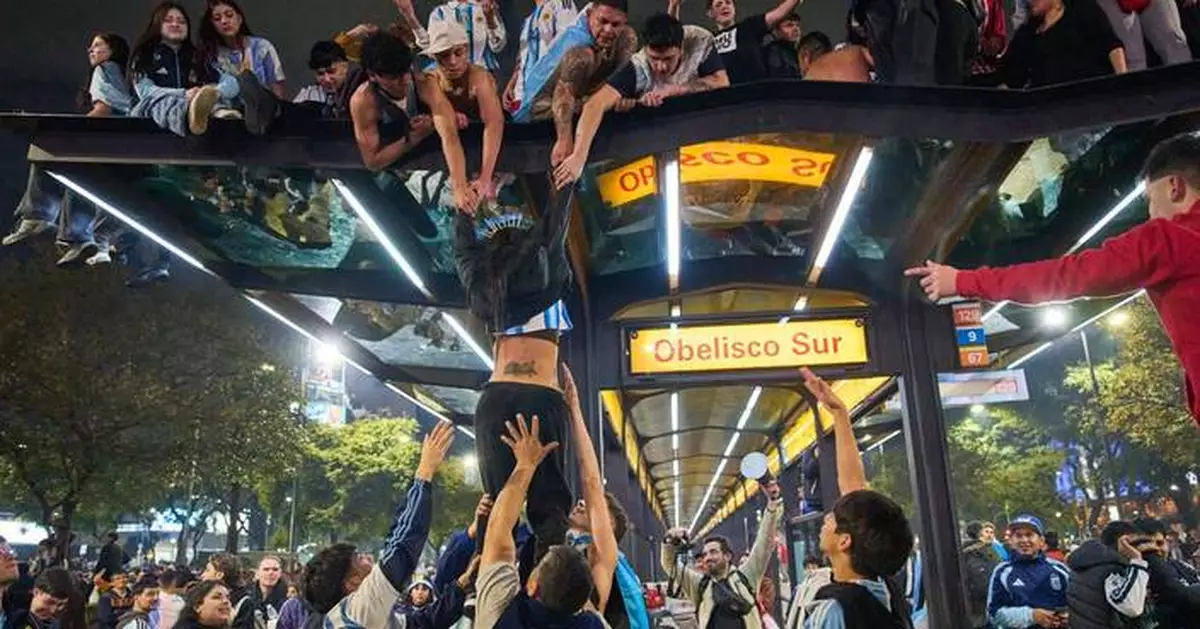
Back to Posada. “I have an Argentine grandson who said to me the other day, ‘Grandpa, if Spain wins, I’ll wear the Spain shirt and carry the flag, and we’ll celebrate. But if Argentina wins, you have to come wearing my country’s shirt and carrying its flag.’ I told him that was fine, but I don’t think we could go out to the Obelisk to celebrate wearing a Spain shirt.” The laughing Posada was referring to the Buenos Aires monument that serves as the epicenter of celebrations for La Albiceleste’s victories.
First, the military dictatorship from 1976-83, and later, consecutive economic crises starting in the 2000s, drove thousands of Argentines to settle in Spain in search of a better quality of life. According to the most recent Spanish census figures (as of January 2025), 450,883 people born in Argentina were residing in Spain.
For them, too, Sunday’s final is a special occasion.
“I see them as just another rival but with respect — knowing we’re in their country and that, in the end, we’re all brothers,” said Nahuel Barreta, 19, who has been living in Málaga for a year. “It feels like home here. We’re going to watch the match at a downtown bar with friends — it’s our usual ritual. I’ve never experienced a World Cup like this.”
In recent days, social media has seen a wave of viral posts featuring Argentine-Spanish couples temporarily parting ways until after Sunday’s match, as well as the amusing tactics they use to convince their children to root for one of the finalists.
It really feels like a familia affair.
AP correspondent Suman Naishadham in Madrid contributed to this report.
See more of AP’s World Cup coverage here
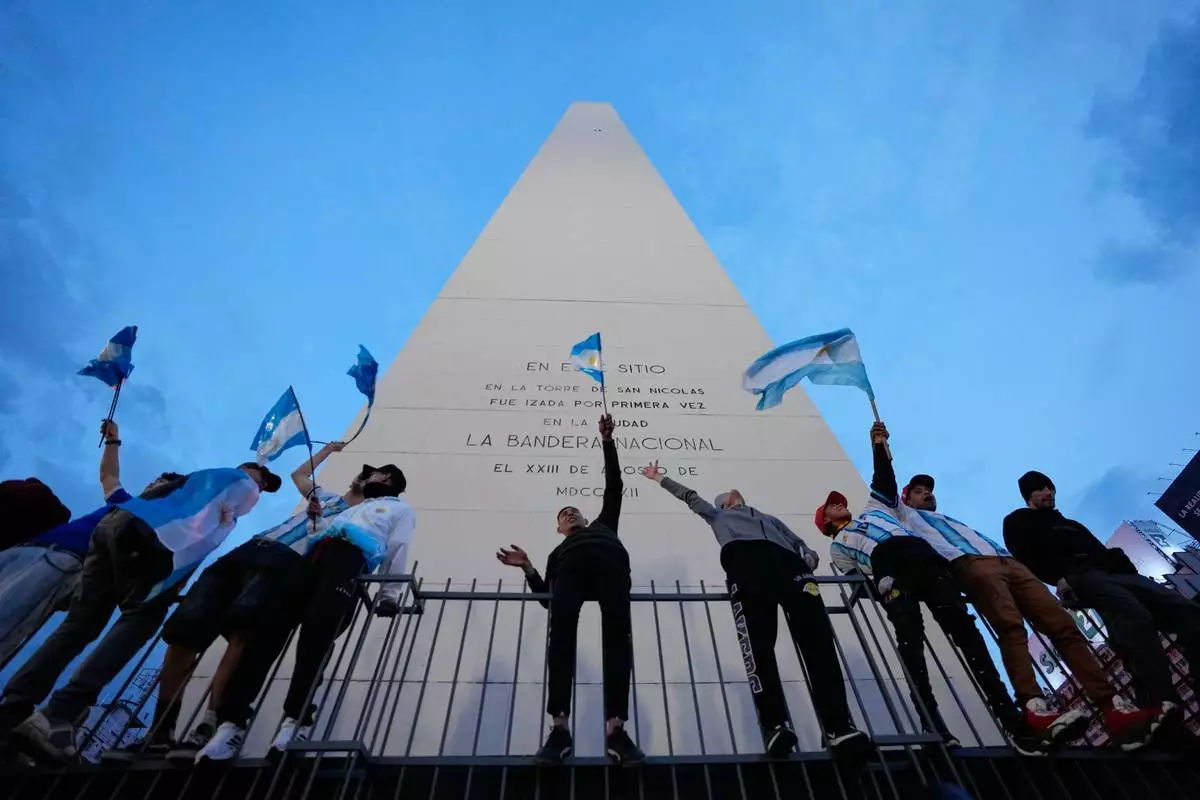
Fans celebrate after Argentina defeated England in a World Cup semifinal soccer match in downtown Buenos Aires, Argentina, Wednesday, July 15, 2026. (AP Photo/Natacha Pisarenko)
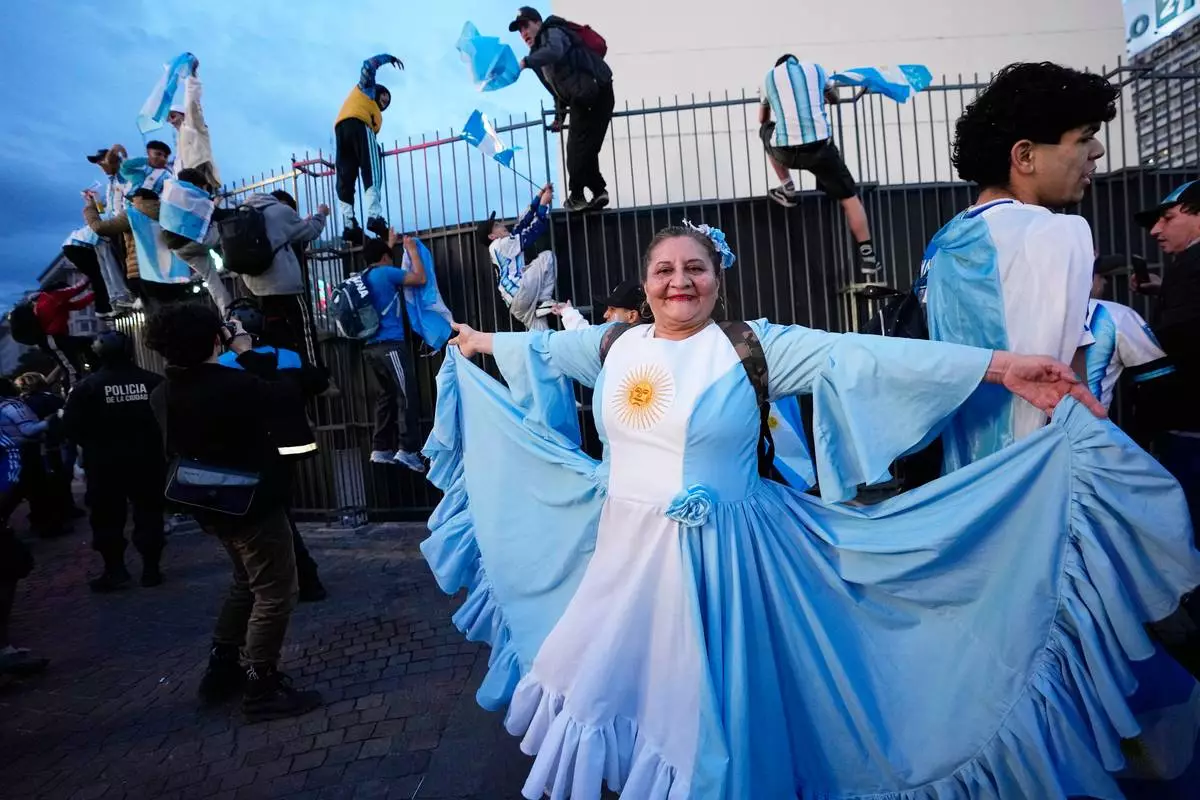
Fans celebrate after Argentina defeated England in a World Cup semifinal soccer match in downtown Buenos Aires, Argentina, Wednesday, July 15, 2026. (AP Photo/Natacha Pisarenko)
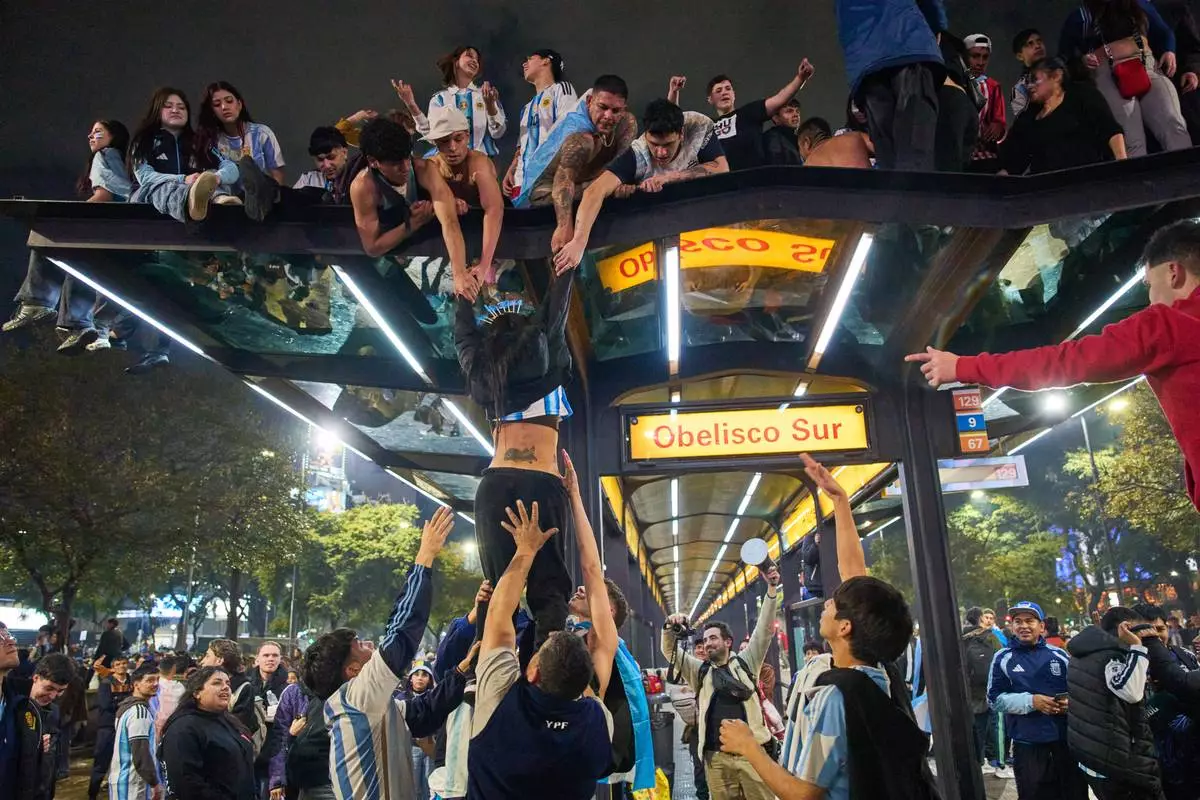
Fans climb on to a bus stop during celebrations of Argentina's victory over England in a World Cup semifinal soccer match in downtown Buenos Aires, Argentina, Wednesday, July 15, 2026. (AP Photo/Rodrigo Abd)