COLUMBIA, S.C. (AP) — Sen. Darline Graham has privately expressed interest in running for a full U.S. Senate term after getting appointed as a temporary replacement for her late brother, Lindsey Graham, according to four people familiar with the deliberations.
The people, who were not authorized to speak publicly, said she has started having conversations about a potential campaign. Two of them said Darline Graham has been talking to the White House.
Although President Donald Trump was enthusiastic about her filling the seat for a time, it's unclear if he would support her campaign. Trump has previously suggested he could back a potential candidacy from Rep. Russell Fry.
Plans for Lindsey Graham's funeral were also announced on Friday. There will be a service in Washington on July 28 and more in South Carolina on July 29.
Darline Graham's eventual decision could dramatically shake up the scramble to fill her late brother's seat after he died last weekend. The filing period for a special primary runs from July 21 to July 28, and the primary is scheduled for Aug. 11.
Several other noteworthy politicians — including Fry, Rep. Nancy Mace, Rep. Ralph Norman and Lt. Gov. Pamela Evette — have been eyeing a run.
Darline Graham's conversations were first reported by Semafor.
South Carolina Gov. Henry McMaster appointed Darline Graham to serve the remainder of her brother's term, which ends in January.
The first woman to represent the state in the Senate, Darline Graham called it "such an honor,” as dozens of her brother’s staffers and campaign advisers stood behind her, some with eyes glassy from welling tears.
“Lindsey has always been there for me. And now, I will be there for him," she said.
Lindsey Graham died on Saturday at age 71. A preliminary report from the medical examiner said he suffered a tear in his aorta.
He never married or had a family of his own, but his sister was often by his side for the political touch points of his career, speaking at events and appearing in some of his campaign ads.
In his announcement on Monday, McMaster made no reference to her as a placeholder or symbolic appointment.
However, a person familiar with McMaster's thinking but unauthorized to speak publicly said the governor, in selecting Darline Graham, had never contemplated that she would run for the seat herself.
Sen. Tim Scott, another South Carolina Republican, said he would not endorse any candidate in the primary because he also serves as chairman of the National Republican Senatorial Committee.
But, he said, “as Tim Scott, the voter of South Carolina, I might indeed wade into the water at some point.”
“I think the truth of the matter is that Darline has so far been off to a remarkable start,” Scott told reporters, asking about her as a possible special primary contender. “‘Why not her?’ would be my question.”
When he died, Lindsey Graham had millions in his campaign account and was expected to raise much more heading into the general election. But those aren’t funds that Darline Graham could directly access, if she were to run, according to Bradley A. Smith, a former chairman of the Federal Election Commission.
Under federal rules, Lindsey Graham's campaign would be limited to transferring just $2,000 to a potential Darline Graham candidacy. However, Smith said there is no limit on how much it could transfer to the National Republican Senatorial Committee, which could — thanks to a Supreme Court decision last month — “spend an unlimited amount in coordination with Darline’s campaign.”
“It can’t be earmarked for Darline’s campaign, but in those circumstances I’m sure that the party will make sure she’s not short of cash,” said Smith, now serving as a professor at Capital University Law School in Ohio.
Kim reported from Washington. Associated Press reporter Thomas Beaumont contributed from Des Moines, Iowa.
Meg Kinnard can be reached at http://x.com/MegKinnardAP
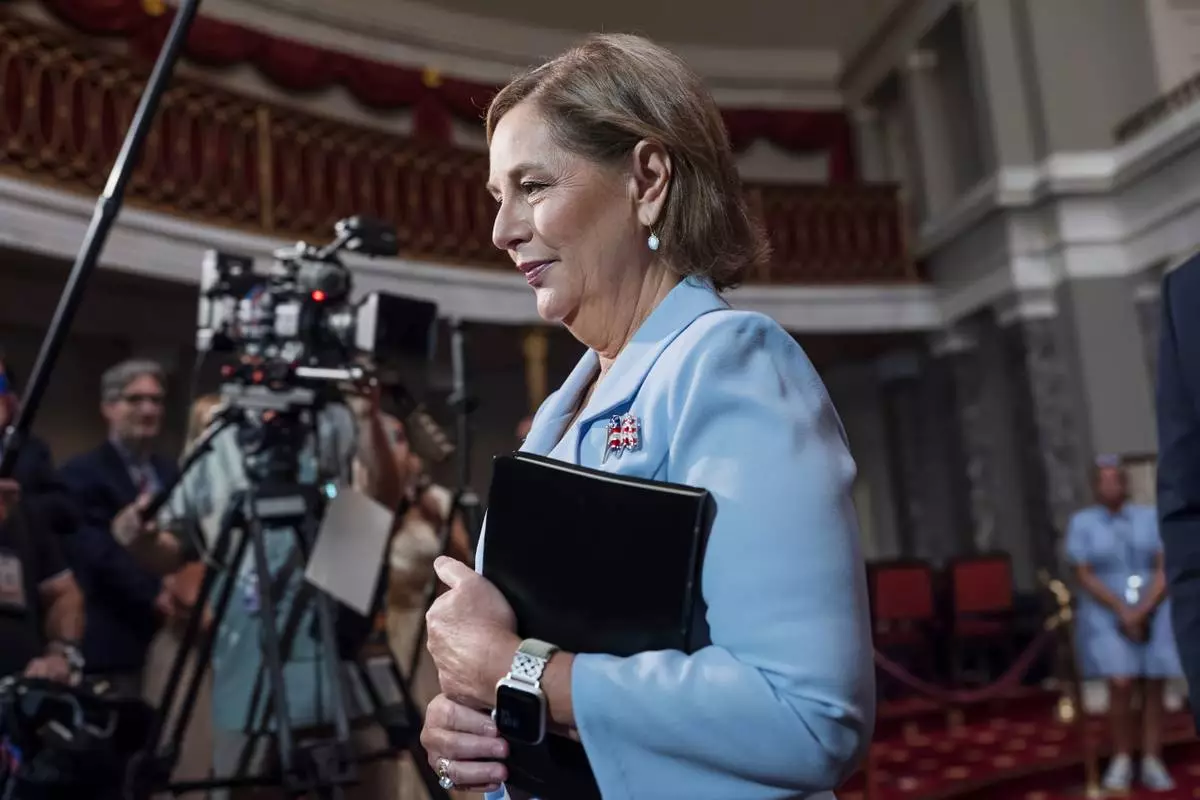
Newly-sworn Sen. Darline Graham, R-S.C., sister of Lindsey Graham, walks past cameras as she leaves the Old Senate Chamber following a cermonial oath of office ceremony allowing her to serve as her late brother's temporary replacement, at the Capitol in Washington, Tuesday, July 14, 2026, (AP Photo/J. Scott Applewhite)
ANGRA DOS REIS, Brazil (AP) — A fishing community in Brazil’s southeastern Ilha Grande bay once saw the blacktip sharks navigating the sparkling, emerald green water as potential food.
That perception has shifted, at least in part thanks to scientists who discovered that a nearby cove is frequented by dozens of pregnant blacktip sharks, prompting efforts to protect the area.
Recent studies describe Brazil as the largest consumer of shark meat. Yet sharks are among the most threatened group of vertebrates on Earth, with more than one-third of species at risk of extinction due to overfishing, habitat degradation and climate change, according to the International Union for Conservation of Nature (IUCN).
Brazil’s coastline harbors a large diversity of shark species and includes critical habitats for many threatened populations, making their protection an important part of global ocean conservation.
Key to those efforts is the identification of nurseries such as the one in Piraquara de Fora cove, according to experts who are part of the Brazilian Institute for Nature Conservation's Sharks of Ilha Grande Bay project.
“We used to fish and eat them,” said Marlene Fernanda do Nascimento Martins, a 35-year-old community leader. Conservationists “explained that we shouldn’t do that anymore because of the animals themselves and the need to protect them.”
Sharks reproduce slowly, with fewer offspring than many bony fishes, which increases their vulnerability.
“Breeding areas are fundamental to ensuring the species survives throughout this Atlantic ecoregion,” said Leonardo Mitrano Neves, who heads the scientific branch of the project.
On a recent weekday, Mitrano Neves and his team lowered monitoring equipment loaded with cameras into different parts of the cove, leaving them submerged for an hour alongside bait to attract the sharks.
That footage and drone images will later be analyzed in a laboratory, producing data that will be used to advocate for greater conservation efforts.
While blacktip sharks are most common in the region, the project also focuses on sand tiger sharks and hammerhead sharks.
The scheme also aims to start environmental education activities in schools so that sharks will come to be seen as part of the region’s natural heritage.
Communication materials highlight that the sharks do not represent a threat to humans and that there are no known shark incidents in the region.
Brazil prohibits targeted shark fishing, but nonprotected sharks may still be landed when caught incidentally as bycatch, whereas threatened species are protected from capture and commercialization and must be released if caught.
Identification can be imprecise, with shark meat often sold under the generic term “cação.”
José Truda Palazzo, the coordinator of the project in Ilha Grande bay, said their work to discourage local communities from eating shark meat is starting to have an impact.
During meetings with nearby populations, representatives of the project talked about the importance of the sharks for the ocean’s ecosystem and the health risks associated with eating shark meat, he said.
Research indicates that, as apex predators, sharks accumulate high levels of heavy metals — including arsenic, mercury and lead — in their blood and tissues. A 2024 study also found that some Brazilian sharpnose sharks tested positive for cocaine.
“We hope that more and more people come to understand that cação is shark, and shark meat is toxic, in addition to the fact that sharks are endangered animals,” said Palazzo.
As long as the sky and water are clear, local residents sometimes spot the sharks from the low-level, forest-covered mountains, above the sand-colored rocks that meet the ocean.
In time, observation of the sharks — on land, from boats and even underwater — could develop into an additional source of income thanks to ecotourism, Palazzo said.
Nascimento Martins fishes and sells ice on the beach to supplement her monthly income, which supports her and her three children. She said ecotourism would offer a big assist to the area.
“We’re a remote community with very limited resources. So anything that comes along that can help us preserve our village is a good thing,” she said.
Reinaldo Dias da Rocha, who is from the same community, said his father had already encouraged him not to hunt sharks, but the project had reinforced the importance of preserving the animals.
“We pass the information on to our nephews, to tourists who come to discover this place and enjoy our beautiful beaches, and further labor the point that what we call cação isn't to be eaten.”
Follow AP’s coverage of Latin America and the Caribbean at https://apnews.com/hub/latin-america
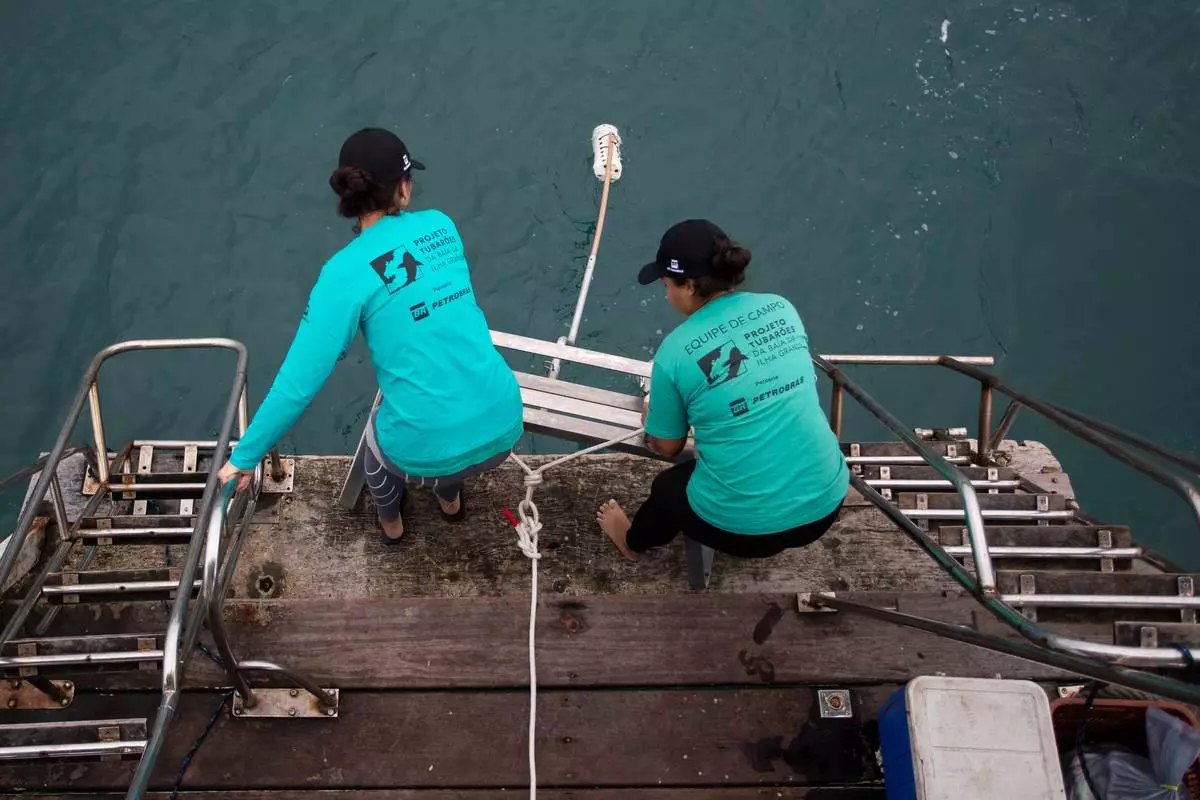
Researchers Beatriz da Costa e Castro, left, and Thaissa Albuquerque Ribeiro Augusto deploy a Baited Remote Underwater Video System as part of a shark project in Ilha Grande bay, Angra dos Reis, Rio de Janeiro state, Brazil, July 14, 2026. (AP Photo/Bruna Prado)
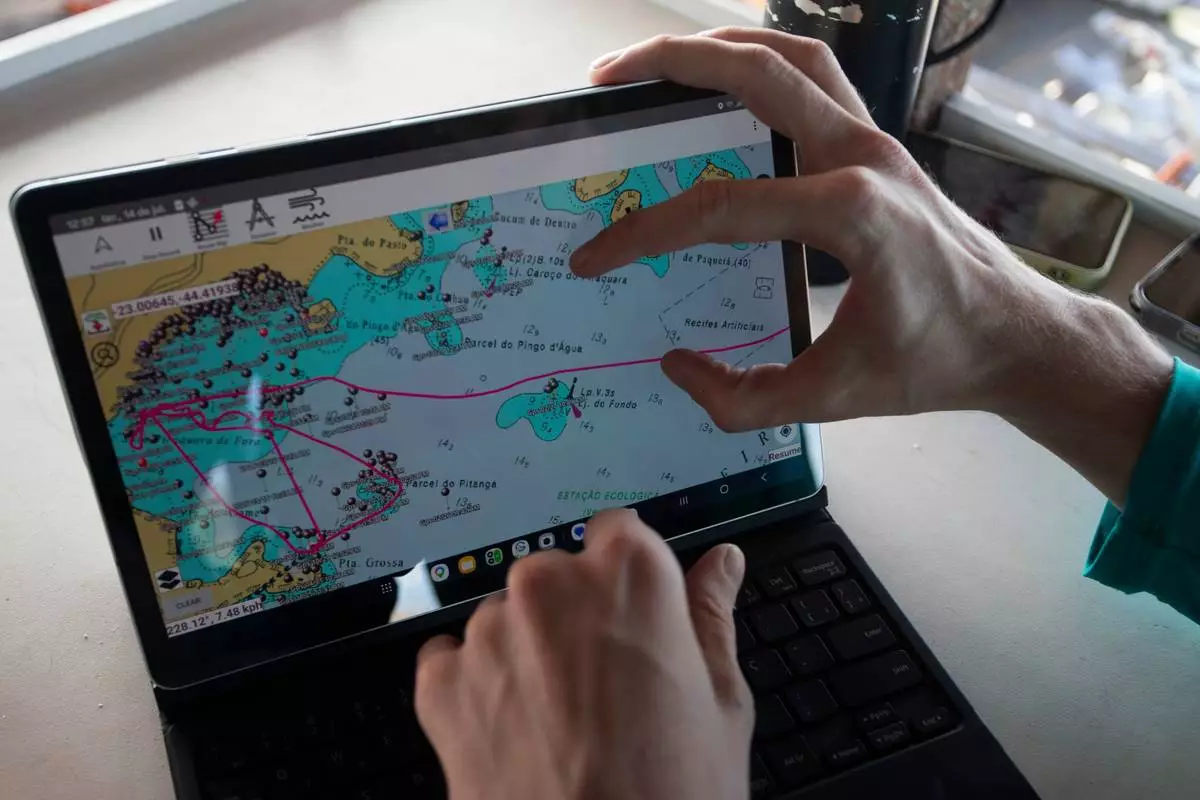
A researcher displays a tablet with a mapping system used to identify research sites for a shark project in Ilha Grande Bay, Angra dos Reis, Rio de Janeiro state, Brazil, July 14, 2026. (AP Photo/Bruna Prado)
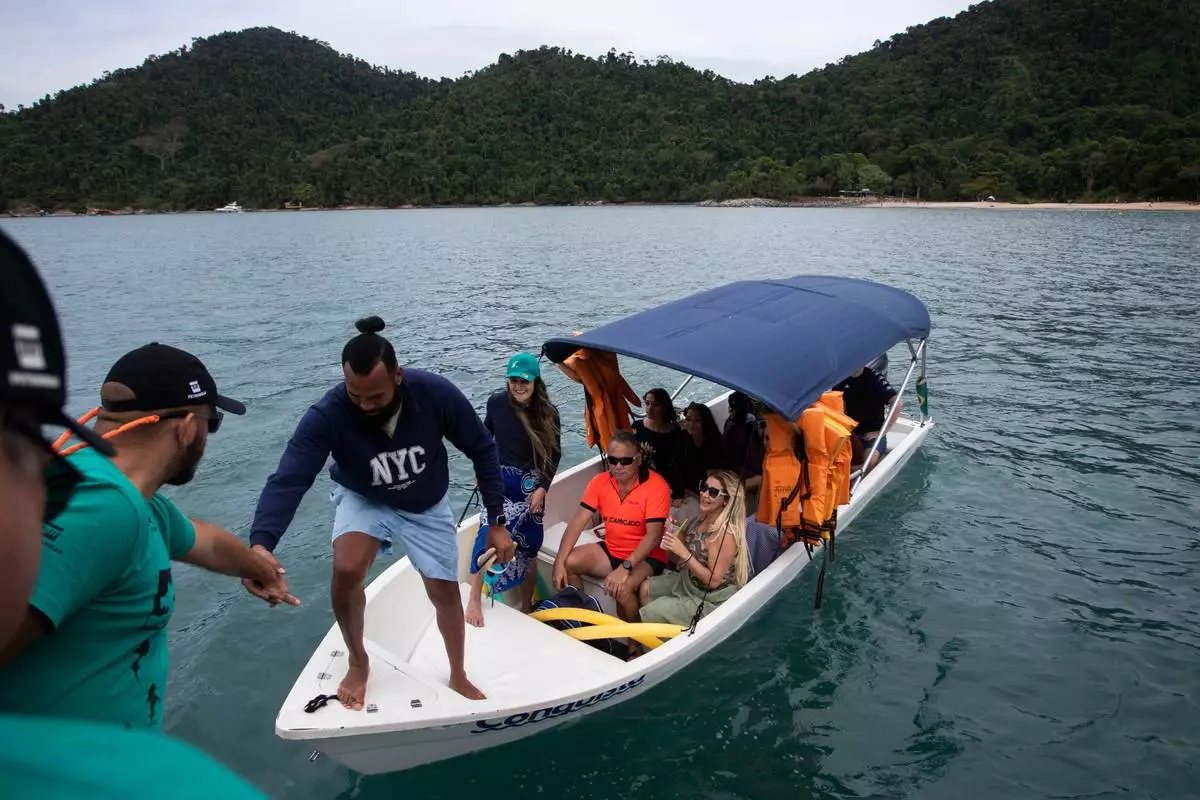
Fisherman Reinaldo Dias da Rocha boards a boat used by a shark protection project at Ilha Grande Bay, Angra dos Reis, Rio de Janeiro state, Brazil, July 14, 2026. (AP Photo/Bruna Prado)

cientific coordinator Leonardo Mitrano Neves reviews footage recorded by a Baited Remote Underwater Video System during monitoring for a shark project in Ilha Grande Bay, Angra dos Reis, Rio de Janeiro state, Brazil, July 14, 2026. (AP Photo/Bruna Prado)
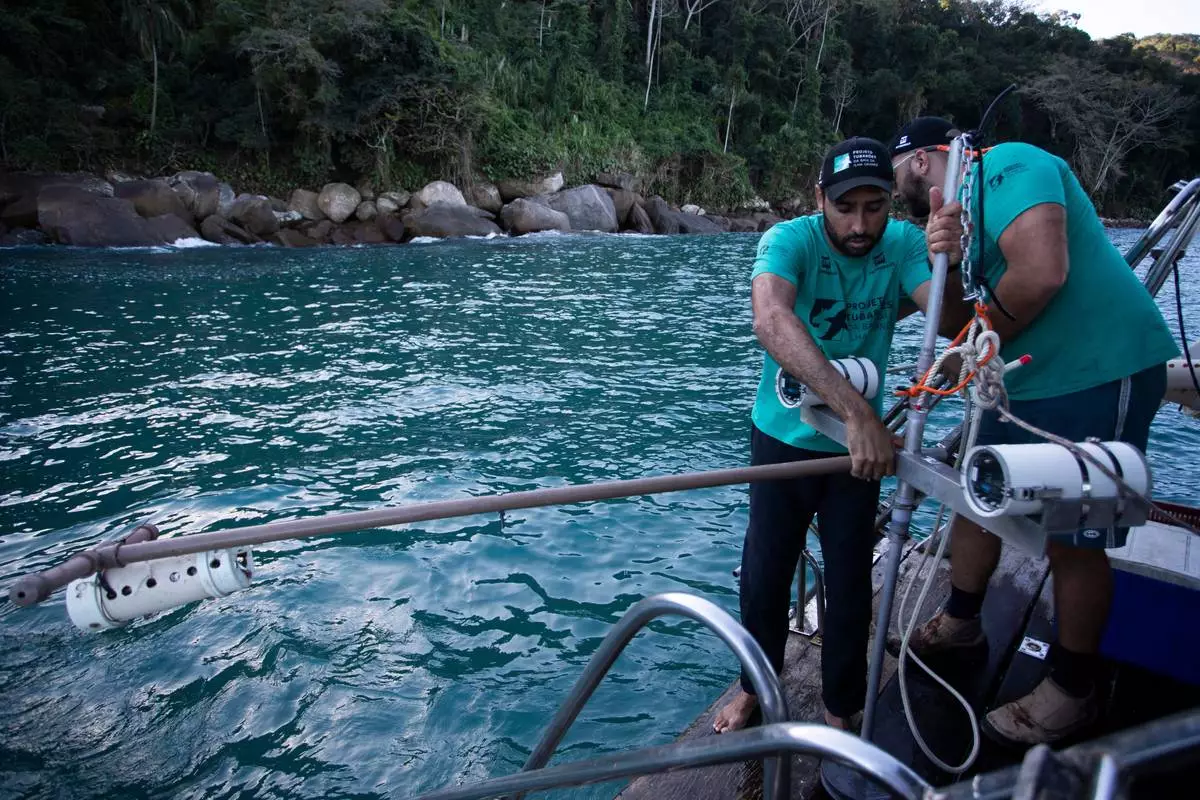
Scientific coordinator Leonardo Mitrano Neves, left, and field and logistics coordinator Daniel Shimada Brotto retrieve a Baited Remote Underwater Video System during monitoring as part of a shark project in Ilha Grande Bay, Angra dos Reis, Rio de Janeiro state, Brazil, July 14, 2026. (AP Photo/Bruna Prado)