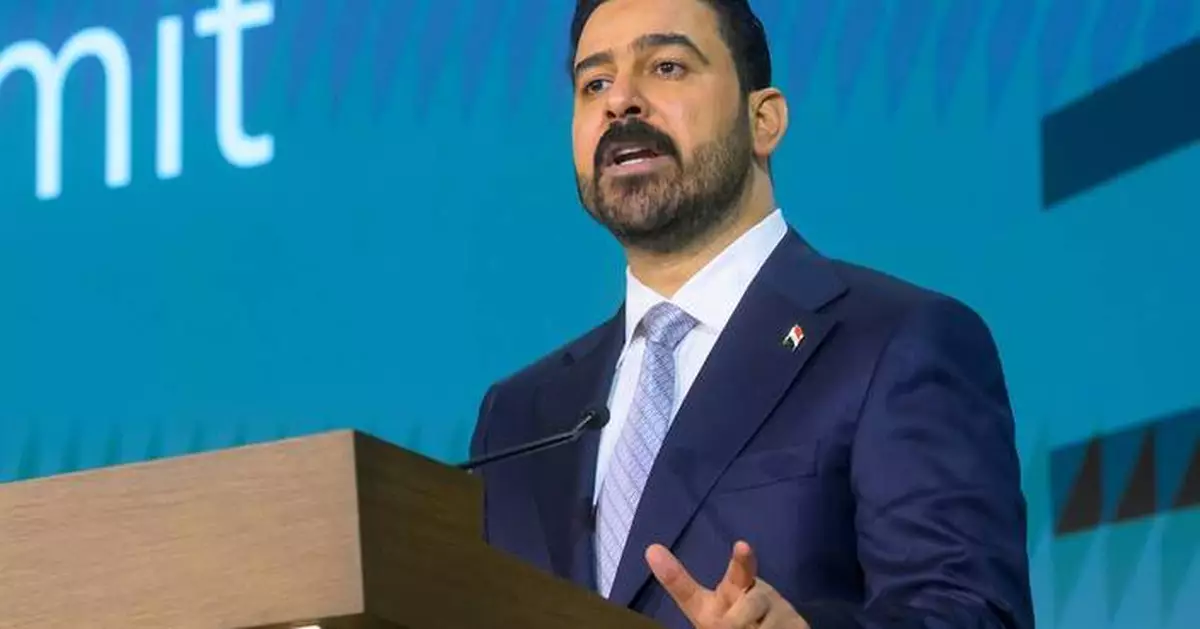
WASHINGTON (AP) — U.S. companies signed roughly $60 billion in agreements and partnerships with the Iraqi government Friday, including deals intended to create alternative routes for shipping oil out of the Persian Gulf.
The deals, signed at the U.S. Chamber of Commerce, also involved other industries, including healthcare, communications and infrastructure.
It's not clear when the oil deals will be able to create viable alternatives to the Strait of Hormuz, through which about a fifth of the world's oil flows. Goldman Sachs estimates that pipelines in just one country take at least two and a half years to build, and these pipelines would travel through two or more nations.
Iran has sought to close the Strait repeatedly since the U.S.-Iran war began Feb. 28, causing sharp gyrations in oil and gas prices.
On Friday afternoon, the price of West Texas crude rose nearly 5% to $88 a barrel, up from about $67 before the war began. It had topped $110 in early April before falling back after a truce was reached. It has since risen on renewed conflict between U.S. and Iran.
Thomas Barrack, U.S. Ambassador to Turkey, said the oil pipeline agreements would lead to a program “that will make the Strait of Hormuz an afterthought.”
The signings followed a meeting between Iraqi Prime Minister Ali Falah al-Zaidi Thursday with executives of Chevron in Houston, at which al-Zaidi urged the U.S. energy company to expand and accelerate its investments in Iraq.
In a speech Friday, al-Zaidi said Iraq’s economy is seeking long-term investment and partnerships, not merely contractors to carry out projects.
Al-Zaidi stressed his government’s commitment to communication, dialogue and cooperation with the U.S. Chamber of Commerce, describing it as “the place where economic decisions are made."
On Friday, Chevron signed three agreements with the Iraqi government. Jake Spiering, Chevron's president of corporate business development, said two would focus on boosting oil production, while a third would involve “investing in a pipeline that’s going to create another export route out of Iraq to world markets. This is very important for energy security.”
Also Friday, the State Department welcomed an agreement between Iraq and Syria “to advance the rehabilitation and reconstruction of the Iraq-Syria crude oil pipeline as a priority infrastructure project."
“The United States welcomes the engagement of a U.S.-led international consortium to execute the technical and financial aspects of this project,” the department said.
The pipeline will connect southern Iraq’s Basra to western Iraq’s Haditha and go from there to the Ceyhan port in Turkey and the port of Baniyas on Syria’s coast, Iraqi officials have said. The pipeline is projected to carry about 2 million barrels of oil per day.
In a note released earlier this week, analysts at Goldman Sachs estimated that seven different pipelines in the region under development could, by the end of 2028, carry about 60% of the oil currently shipped through the Strait.
The pipelines could carry roughly 14 million barrels per day by then, Goldman estimated. Roughly 23 million barrels per day were shipped through Hormuz before the Iran war.
After the U.S. and Israel launched their war on Iran Feb. 28, oil-rich Iraq — which is home to both Iran-backed militias and U.S. bases — found itself in the crosshairs. Syria, meanwhile, has been one of the few regional countries that has managed to stay on the sidelines of the conflict. Damascus has promoted Syria — still grappling with the aftermath of its own 14-year civil war — as a bastion of stability and has offered it as an alternative transit route for energy shipments.
With the war dramatically reducing oil exports through the Strait of Hormuz, some oil shipments have instead been trucked from Iraq into Syria and shipped to European markets via Syria’s Baniyas port, bypassing the Hormuz route. A key border crossing between northern Iraq and Syria reopened in April after being closed for more than a decade, with officials touting it as an additional route for energy exports.
The overland route is less efficient and more expensive than shipping exports through the strait. The pipeline project envisioned would allow for exporting a larger volume of oil from Iraq to Syria and Turkey.
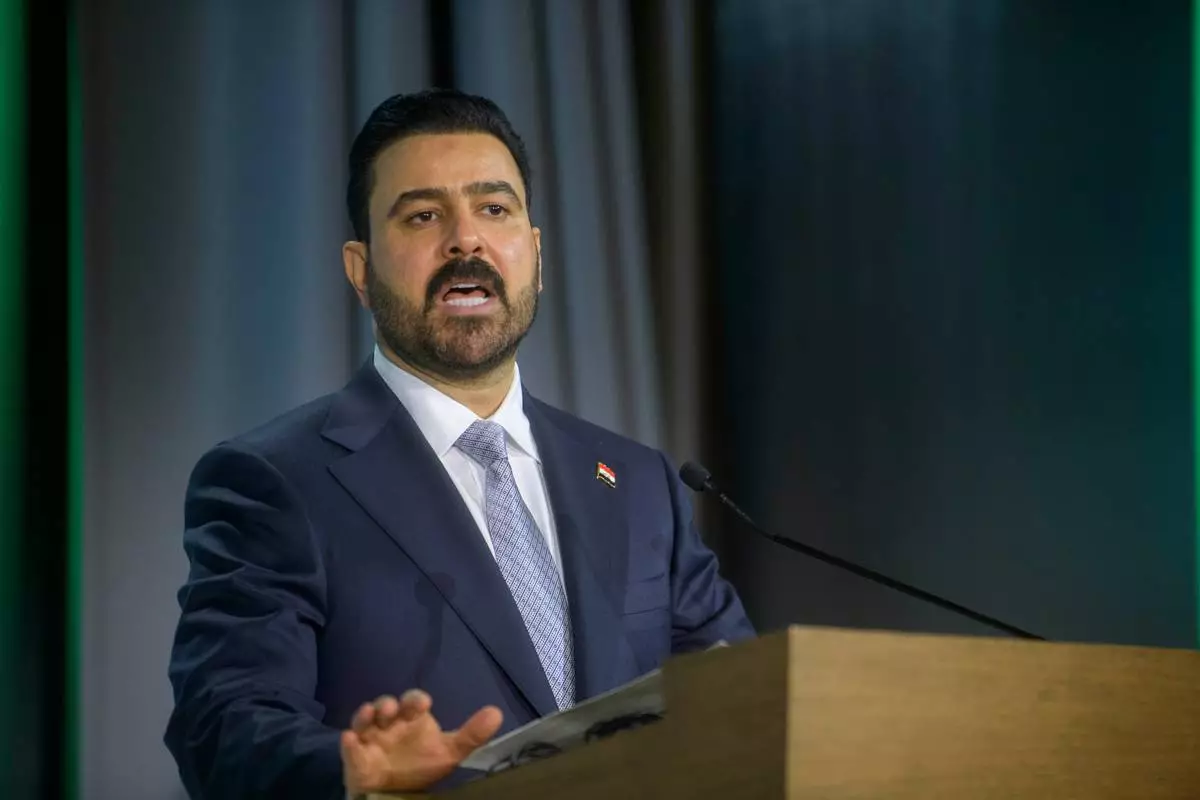
Iraqi Prime Minister Ali al-Zaidi speaks at the U.S. Iraq Business Summit at the U.S. Chamber of Commerce, Friday, July 17, 2026, in Washington. (AP Photo/Rod Lamkey, Jr.)
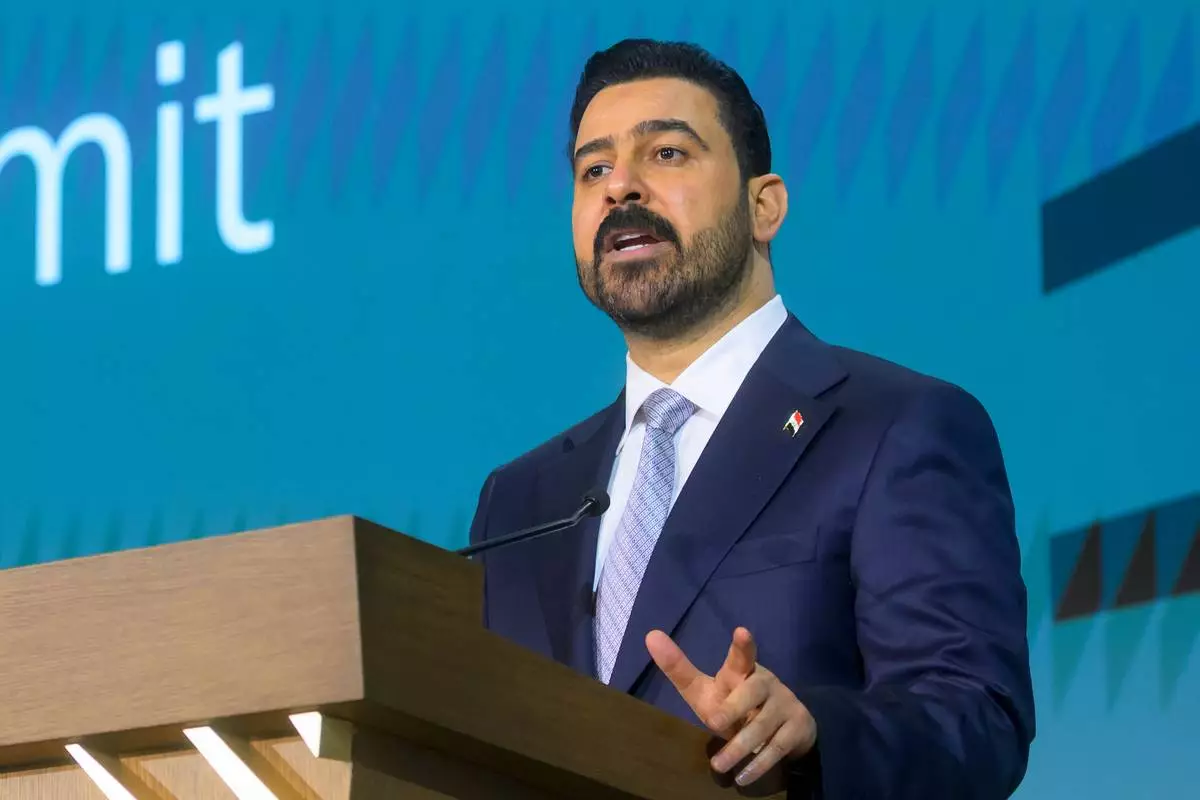
Iraqi Prime Minister Ali al-Zaidi speaks at the U.S. Iraq Business Summit at the U.S. Chamber of Commerce, Friday, July 17, 2026, in Washington. (AP Photo/Rod Lamkey, Jr.)