PORTLAND, Ore.--(BUSINESS WIRE)--Jul 17, 2026--
Today Pacific Seafood, provider of the healthiest protein on the planet, and Ocean Beauty Seafoods, announced they have merged distribution businesses, bringing together two family-owned seafood companies to leverage the growing demand for high quality seafood products. Both companies grew from humble beginnings into legacy businesses built on service, reliability, and long-term relationships.
This press release features multimedia. View the full release here: https://www.businesswire.com/news/home/20260717268803/en/
Commenting on the merger, Frank Dulcich, President & CEO of Pacific Seafood, stated, “We are excited to bring our teams together by combining the best of both our respective companies, which will make us stronger and better together to serve our valued customers, our communities in which we serve, and our joint teams and their families.”
Ocean Beauty Seafoods distribution operations will remain focused on serving customers with the reliability and consistency they depend on, while gaining access to Pacific Seafood’s broader resources and network.
As a longtime investor in the Ocean Beauty Seafoods business, Michael Link, CEO of Bristol Bay Economic Development Corporation describes the merger as “a combination of two companies that are complementary and will create a sustainable and exciting future for all of Ocean Beauty Seafoods customers and team members.”
The merged businesses include Ocean Beauty’s distribution operations in Astoria, Oregon; Boise, Idaho; Dallas, Texas; Helena, Montana; Portland, Oregon; and Renton, Washington.
The merger supports Pacific Seafood’s continued expansion further east and advances its long-term growth strategy, including its Mission 31 initiative.
The transaction closed effective July 13, 2026. Ocean Beauty’s Salt Lake City distribution facility was not part of the transaction at the time of closing. Financial terms were not disclosed.
About Ocean Beauty Seafoods: Ocean Beauty Seafoods LLC has upheld longstanding standards in seafood quality and food safety in the United States for more than 100 years. With seven distribution facilities across the western U.S., Ocean Beauty Seafoods remains committed to responsible seafood resource management.
About Pacific Seafood Group: Founded in 1941 by Frank Dulcich Sr., Pacific Seafood remains a family-owned and operated company dedicated to providing the healthiest protein on the planet. Pacific Seafood manages all parts of the supply chain from harvesting, fishing, processing, aquaculture, and distribution to provide customers with fresh and frozen, sustainable, and high-quality products. Pacific Seafood Group is headquartered in Clackamas, Ore. Learn more at PacificSeafood.com.

Pacific Seafood Clackamas Headquarters
ATLANTA (AP) — Federal health officials have identified lettuce from Mexico served at Taco Bell locations across five U.S. states as a source of a widespread outbreak of diarrhea-causing parasite cyclospora.
The Centers for Disease Control and Prevention late Thursday warned consumers not to eat shredded iceberg lettuce from Taco Bell restaurants in Indiana, Kentucky, Michigan, Ohio and West Virginia. A record number of cyclospora cases have been reported in more than 30 states, and experts have said not every recent U.S. illness might be caused by a single source.
A Food and Drug Administration investigation so far has identified a single supplier of the lettuce. The federal warnings to consumers did not identify the company, but Taylor Fresh Foods, of Salinas, California, said FDA testing indicated it was “a specific independent farm” affiliated with the company.
The FDA was working with the supplier “to determine if potentially contaminated shredded iceberg lettuce remains on the market,” including in other states, the CDC said. “Taco Bell has committed to stop using any lettuce from the supplier identified by FDA’s traceback investigation.”
Taylor Farms has been tied to foodborne outbreaks in the past. The company said in a statement Friday afternoon that it was voluntarily removing all iceberg lettuce sourced from central Mexico from the U.S. market.
“As a family owned and operated company, we are deeply concerned for those who became ill, their families, and the many Americans whose trust in the safety of their fresh produce has been shaken,” the statement said.
CDC, FDA and public health officials in several states have been investigating a multistate outbreak of cyclospora infections.
The illness is not usually life threatening and is typically treated with antibiotics.
On Thursday, ahead of the federal government's confirmation, Taco Bell issued a statement saying that it had taken “immediate action to voluntarily remove potentially impacted lettuce from a supplier in select states. The affected ingredient from our supplier is being indefinitely removed from our supply chain nationwide and will be replaced within 24 hours in select states.”
In a statement, federal health officials stressed that other “brands, restaurants, retailers, or distribution channels” could be tied to the outbreak as the investigation continues.
Michigan investigators are trying to figure out if the lettuce went to other restaurants or stores because many of the ill people said they didn’t eat at Taco Bell, state health officials said Friday.
There is no evidence the outbreak “is related to poor food handling or preparation at any single restaurant or fast-food chain,” Michigan health officials said in a statement.
For that reason, they continue to recommend that consumers purchase whole heads of lettuce instead of pre-washed, bagged lettuce or pre-mixed salad kits. Taylor Fresh Foods said in its statement that no Taylor Farms-branded salad kits contain iceberg lettuce.
Some past outbreaks linked to the company involved products sold under different brand names.
Cyclospora is a microscopic, spherical parasite that commonly causes watery diarrhea “with frequent and sometimes explosive bowel movements,” according to the CDC. Outbreaks tend to occur most often in the late spring and summer.
The heat-loving parasite infects the bowels and spreads through feces. In the past, people have been infected by consuming fruits or vegetables that were exposed to feces-contaminated irrigation water.
The illness, called cyclosporiasis, is less common than foodborne illnesses caused by other germs, including salmonella and E. coli. Many cases are never linked to a specific food or other source and, for years, few U.S. cyclospora outbreaks were reported. But the number started rising about a decade ago, with a particularly notable spike in 2018 and 2019.
Previously, 2019 saw the most reported U.S. cyclosporiasis cases, with about 4,700. The current surge has far surpassed that. Michigan — the apparent epicenter of the current outbreak — is reporting more than 5,000 cases, and more than 2,000 additional probable and suspected cases have been reported in other states.
No deaths have been reported. But Michigan officials say more than 100 people in that state have been hospitalized, and federal health officials say dozens more have been hospitalized in other states.
Experts attribute the increasing trend in cases to climate change and better detection. They also say it’s likely that cyclospora cases historically were underreported, for several reasons.
Some common tests used to check for food poisoning have not been geared to detect cyclospora. Technicians aren’t able to grow the parasite in labs, making it hard to draw evidence from contaminated produce. And it can be hard to figure out what food sick people had in common because sometimes it’s a single ingredient that might be common in multiple recipes — like basil or cilantro.
The FDA’s traceback investigation identified a single supplier of iceberg lettuce from Mexico used by the Taco Bell locations where people who got sick ate, federal officials said.
The Mexican food chain is among the restaurants linked to foodborne illness outbreaks in the past.
Taylor Farms also was tied to a 2013 cyclosporiasis outbreak linked to salad mix and a 2024 E. coli outbreak tied to onions served at McDonald's.
Stobbe reported from New York.
The Associated Press Health and Science Department receives support from the Howard Hughes Medical Institute’s Department of Science Education and the Robert Wood Johnson Foundation. The AP is solely responsible for all content.
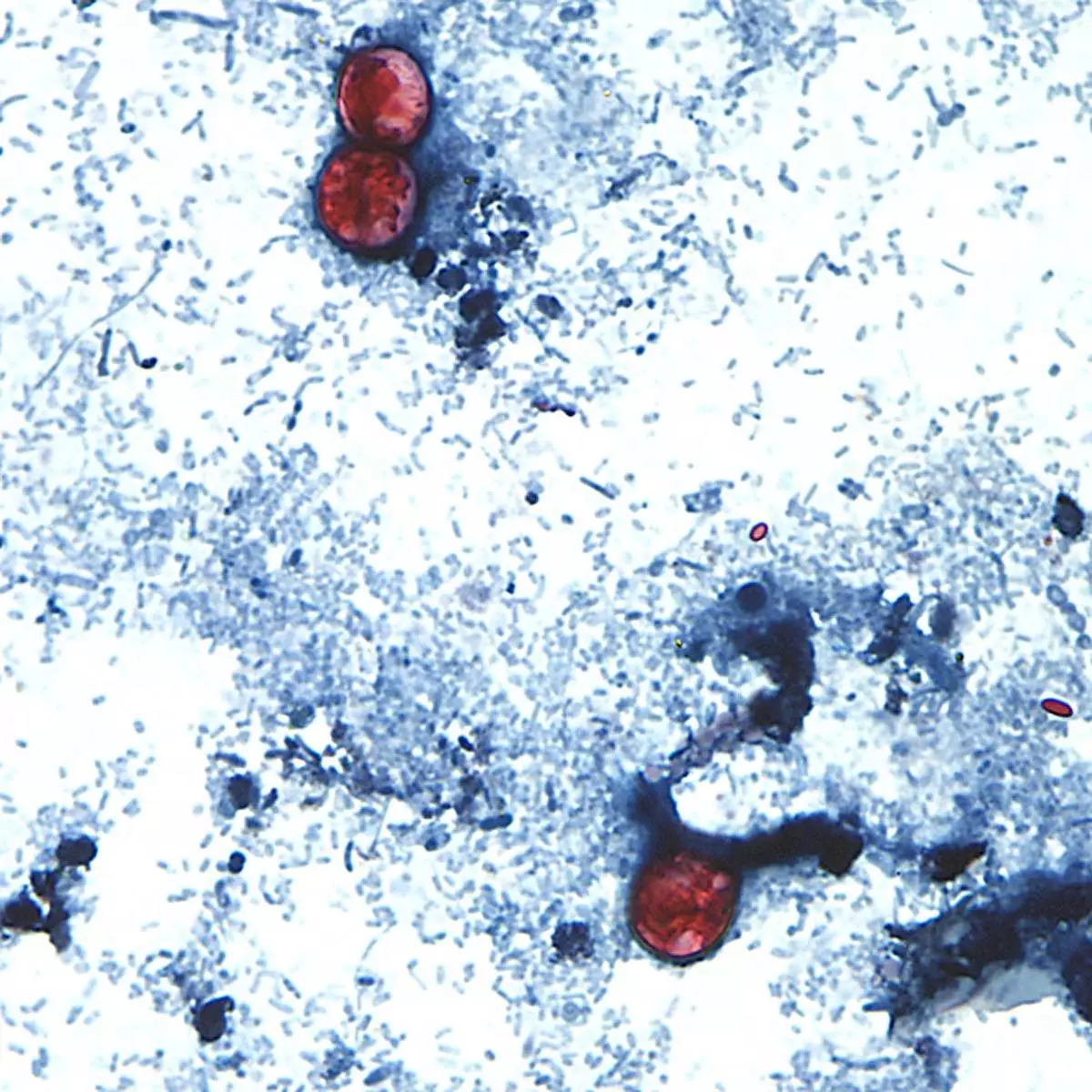
This undated photo taken through a microscope provided by the CDC shows Cyclospora cayetanensis oocysts found in a fresh stool sample which had been prepared with a formalin solution and stained with safranin. (CDC via AP)
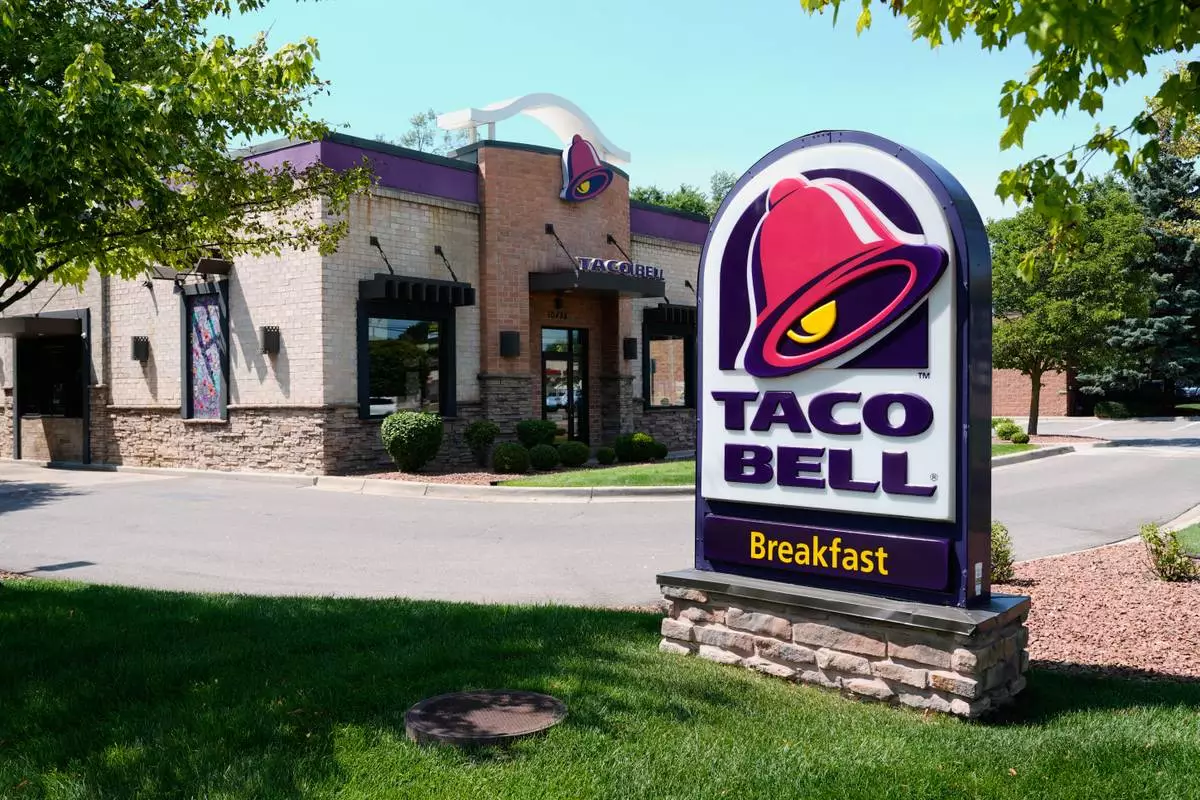
A Taco Bell fast food restaurant is shown Tuesday, July 14, 2026, in Taylor, Mich. (AP Photo/Paul Sancya)